
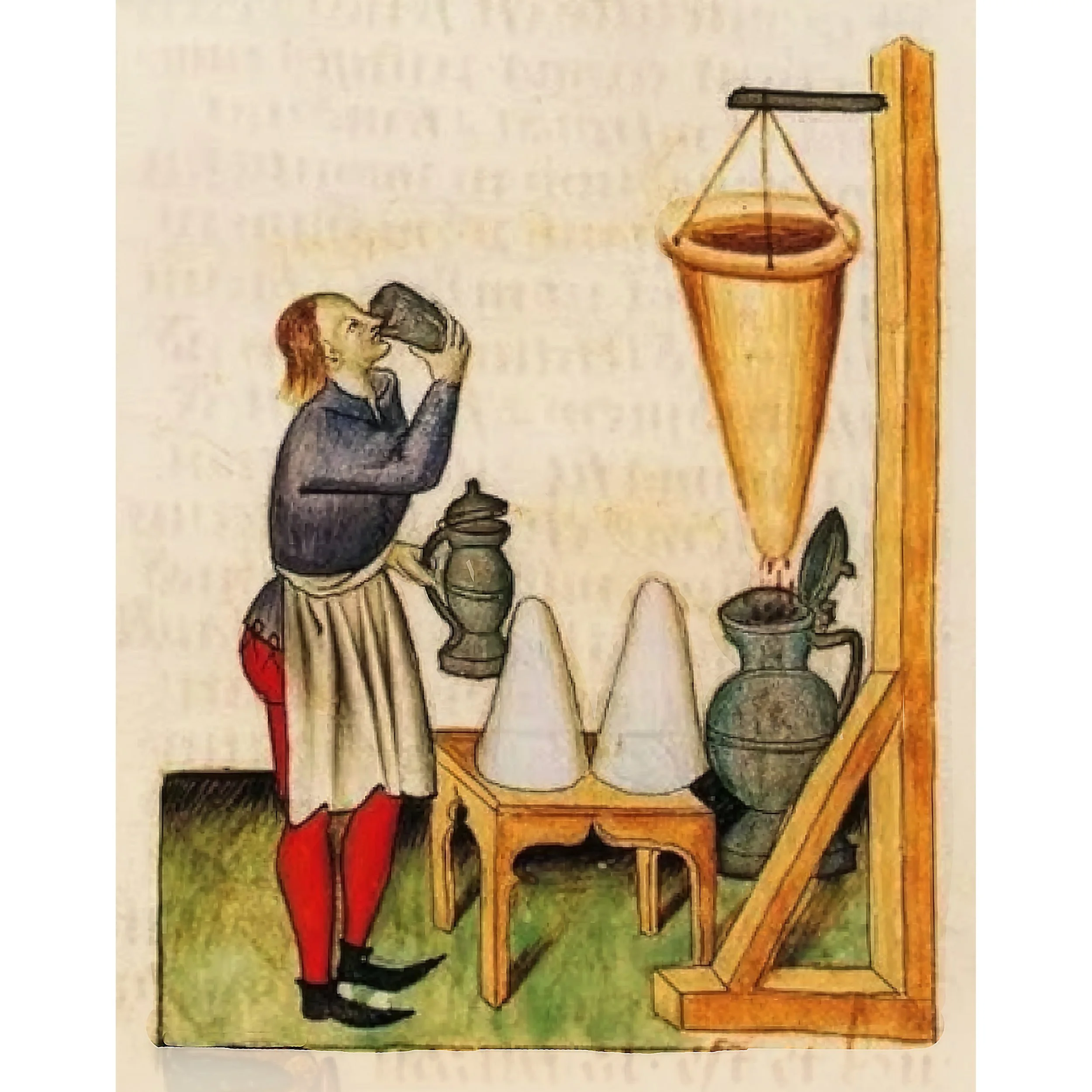
At the end of a medieval banquet, when the noise of eating faded into quiet conversation, something special was brought to the table. Not just another jug of wine, but a carefully prepared drink—sweet, fragrant, and slightly mysterious.
This was Hypocras.
It arrived warm or gently cooled, its aroma shaped by spices that had travelled vast distances: cinnamon, ginger, galangal, sometimes cardamom or nutmeg. Mixed with red or white wine and sweetened with sugar or honey, it was a drink that spoke of trade routes, wealth, and refined taste.
But hypocras was more than a luxury. It was also a promise.
In the medieval imagination, this spiced wine helped the body recover from excess. Physicians believed it aided digestion, strengthened the heart, and even improved the quality of blood. In a world guided by balance—between heat and cold, dryness and moisture—hypocras seemed to restore order after indulgence.
Its preparation reflected that same desire for control and refinement. After wine and spices were mixed and left to rest, the liquid was filtered through a conical cloth known as the “Hippocrates sleeve.” What emerged was clear, bright, and carefully purified—just as the body itself was meant to be.
To serve hypocras was to make a statement. At courts, especially in France, it became a favored drink, sometimes described as the “wine of the gods.” It marked not only the end of the meal, but the social standing of those present.
And so the evening would close: cups in hand, conversation lingering, the warmth of spices still in the air.
A simple drink, perhaps—but one that carried the taste of an entire world.