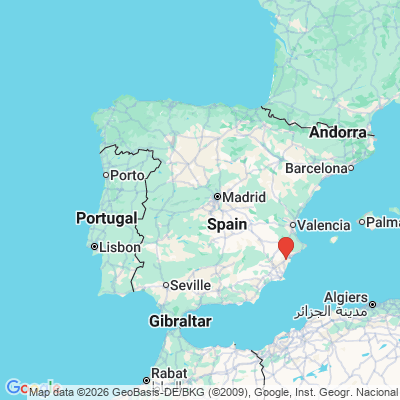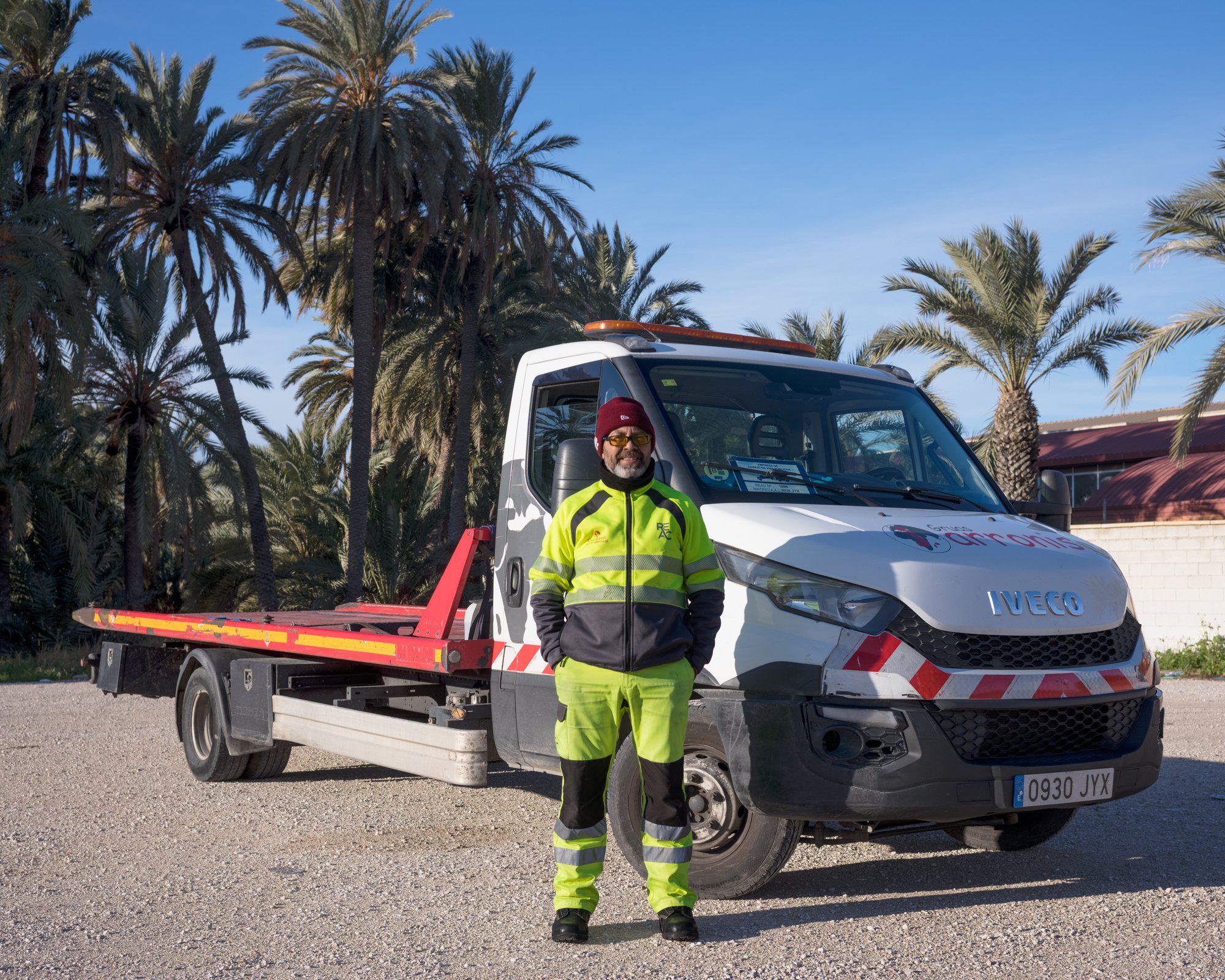
Paco (Francisco) in front of his truck in Elche (Spain).
In Elche I met Francisco … or rather — I met Paco.
Paco runs a car transport business with an autotransporter, collecting and delivering vehicles all over the region. Friendly, practical and endlessly cheerful, he agreed to have his picture taken. He explained that although he is officially Francisco, he prefers to be called Paco, and immediately he explained me all about teh Spanish naming conventions.
“Officially, I’m Francisco,” he said. “But nobody calls me that. I’ve always been Paco.”
In Spain, that is perfectly normal.
Behind Paco’s name lies a long tradition that reaches deep into Spanish history, shaped by religion, monasteries and medieval writing habits. Spaniards don’t just have one name — they often live with two: a formal one for documents, and a familiar one for real life.
The hidden history behind Paco
The name Francisco comes from Saint Francis of Assisi, founder of the Franciscan order. In medieval monasteries he was referred to in Latin as:
P.A.C.O. — Pater Comunitatis (Father of the community)
This abbreviation was written in manuscripts and later spoken aloud as “Paco”. Over time, Paco became the recognised familiar form of Francisco — not a nickname, but a name with its own history.
And what about Pepe?
The same happened with José.
In religious texts Saint Joseph was often called:
P.P. — Pater Putativus (the “putative” or supposed father of Jesus)
Read aloud, P.P. became Pepe — and Pepe remains the traditional everyday name for José across Spain.
A country of double names
For centuries Spanish children were named after saints: José, Francisco, Juan, María, Antonio. These names carried dignity and tradition. But in daily life, people preferred warmer, more personal forms. So a parallel naming system emerged: formal on paper, familiar in conversation.
Some of these everyday names sound nothing like their official counterparts — yet every Spaniard instantly recognises them.
A few classic examples
Men
Francisco → Paco, Pancho, Curro
José → Pepe
Manuel → Manolo
Antonio → Toni, Toño
Ignacio → Nacho
Joaquín → Quino
Fernando → Nando
Guillermo → Guille
Women
Josefa → Pepa
Francisca → Paca
Dolores → Lola
Concepción → Concha
Rosario → Charo
Mercedes → Merche
Encarnación → Encarna
Guadalupe → Lupe
So Paco from Elche is not an exception. He is part of a centuries-old tradition where names carry both formality and familiarity — depending on who is speaking, and how well they know you.
On his business card it says Francisco.
But in real life, he is Paco.