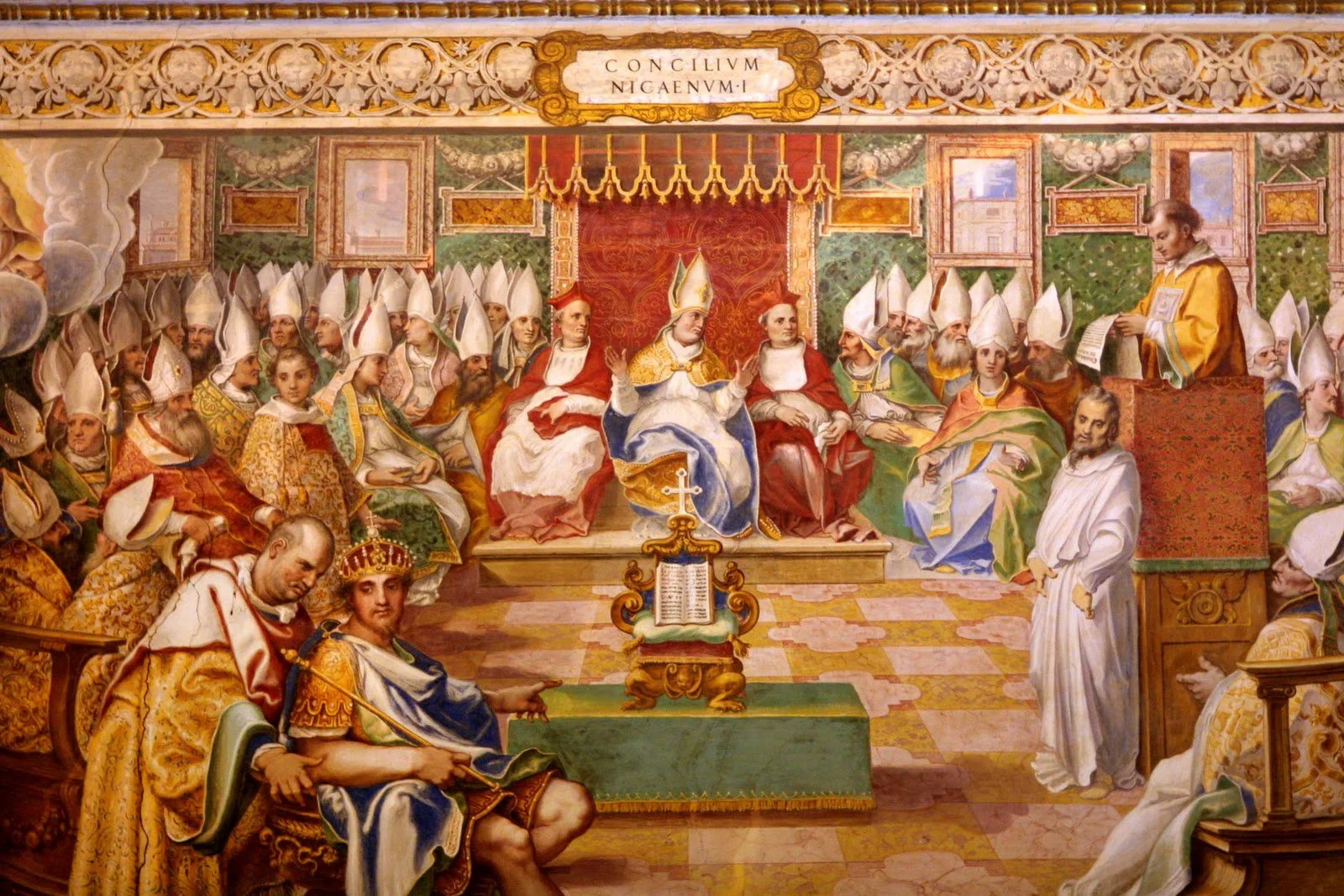
In 325 AD, a gathering took place in the ancient city of Nicaea that would shape the trajectory of Christianity—and by extension, Western civilization—for centuries. The First Council of Nicaea, convened by Emperor Constantine, was far more than a theological summit. It was the moment when imperial power met religious doctrine, laying the foundation for what would become the Christian Roman Empire and, eventually, Christendom.
This blog post explores the Council of Nicaea in the broader context of the late Roman Empire—why it was convened, what it achieved, and how its impact continues to echo through history.
The Roman Empire in Transition
By the early 4th century, the Roman Empire was undergoing a profound transformation. The old pagan order, though still dominant in many areas, was gradually being displaced by a new force: Christianity. This once-marginal sect had grown substantially since the first century, fueled by missionary efforts and its appeal to both the oppressed and the elite.
Contrary to popular belief, Christian persecution in the Roman Empire had been sporadic rather than constant. Many Christians lived peacefully, some even holding high office. But tensions remained. When Emperor Constantine rose to power after years of civil war, he did something revolutionary: he embraced the Christian faith.
The Edict of Milan in 313 AD legalized Christian worship and returned confiscated Church property. For Constantine, Christianity was not just a matter of personal conviction—it was a political unifier. But to serve that function, the religion itself needed unity.
The Crisis That Sparked a Council
At the heart of the crisis was a theological dispute over the nature of Jesus Christ. A priest named Arius of Alexandria taught that Jesus was not co-eternal with God the Father, but a created being—divine, perhaps, but not equal to God.
Arianism, as it came to be known, quickly gained traction and sparked intense debate. For Constantine, religious disunity threatened political stability. He took the extraordinary step of calling an ecumenical council to resolve the matter.
The Council of Nicaea was unprecedented. Over 300 bishops were summoned from across the empire—some bearing the scars of earlier persecution. They came together not merely to debate theology, but to safeguard the unity of a now-imperial faith.
Defining Orthodoxy
The key issue was Christology: Was Jesus the same as God the Father, or was he distinct and subordinate?
Arius maintained that Jesus was created and therefore not divine in the same way as God. His opponents, led by Bishop Alexander of Alexandria and his deacon Athanasius, argued that Jesus was “begotten, not made,” and of the same divine essence—homoousios—as the Father.
After months of heated debate, the council rejected Arianism and endorsed the doctrine of Christ’s full divinity. This consensus was codified in the Nicene Creed, which affirmed belief in one God, in Jesus Christ as “God from God, Light from Light, true God from true God,” and in the Holy Spirit.
The creed marked a foundational moment in Christian theology. Though the debate would continue for centuries, the council had drawn a theological line in the sand.