spain

A City Woven Around a Theatre: Roman Cartagena Revealed

The Roman Theatre of Cartagena (Spain).

At first glance, Cartagena doesn’t give much away. Traffic, shops, everyday life — and then a doorway draws you inside a modern building that quietly functions as a museum. What begins as an exhibition visit slowly turns into something else.

You move upward first, not down. On the upper floor, a long, enclosed passage opens — a tunnel that leads you forward in time as much as in space. And then, almost without warning, the Roman theatre appears.

You emerge halfway into the structure, suspended between the highest rows of seats and the orchestra below. It is an unusual entrance, and a deliberate one. Rather than discovering the theatre under the city, you enter it within the city — inserted into its surviving geometry.

A stage for a rising empire

The theatre was built at the very beginning of the Roman Empire, during the age of Augustus. Its scale alone tells a clear story. This was not a peripheral town. Carthago Nova was prosperous, strategically located, and confident enough to claim a monumental public building at its core.

Roman theatres were never just places for entertainment. They were instruments of civic identity. To build one was to declare that this city belonged to the Roman world — culturally, politically and socially.

Politics carved into space

In antiquity, visitors passed beneath inscriptions honouring the imperial family before taking their seats. The message was subtle but constant: Rome was present here, watching, legitimising, ordering the city’s public life.

Inside, society was arranged in stone. The best seats lay closest to the orchestra, reserved for those whose status mattered. Architecture reinforced hierarchy long before a word was spoken on stage. Even today, standing among the tiers, that logic remains visible and instinctively readable.

Architecture that directs attention

Roman theatres are machines for focus. The rising cavea pulls your gaze downward, towards the orchestra and the stage. Movement, sightlines and sound were carefully controlled. Cartagena’s theatre still demonstrates this with remarkable clarity.

Behind the stage once stood a richly decorated architectural façade, filled with columns and statues. Performances unfolded within a setting designed to communicate order, authority and permanence — values Rome was eager to project.

Rediscovered, not reconstructed

For centuries, the theatre disappeared beneath later construction. Houses, streets and churches reused its stone and obscured its form. It was not dramatically destroyed, but slowly absorbed by the city that grew on top of it.

Its rediscovery in the late twentieth century returned a missing chapter to Cartagena’s story. Today, the museum route does not try to recreate the illusion of a buried ruin. Instead, it guides you carefully into the structure itself, allowing the theatre to reveal its scale and logic gradually.

A city that faces the sea

Carthago Nova is a Mediterranean harbour city, outward-looking and well connected. Trade, administration and wealth passes through its port. The theatre belongs to that identity: public, ambitious, confident.

What makes the visit especially powerful is the contrast. Modern buildings press close around the ancient structure. The theatre is not isolated; it coexists with the present. You do not step back into a distant past — you step into a layer of the city that still shapes it.

Rome here is not a postcard ruin. It is architecture that still commands space, attention and meaning.

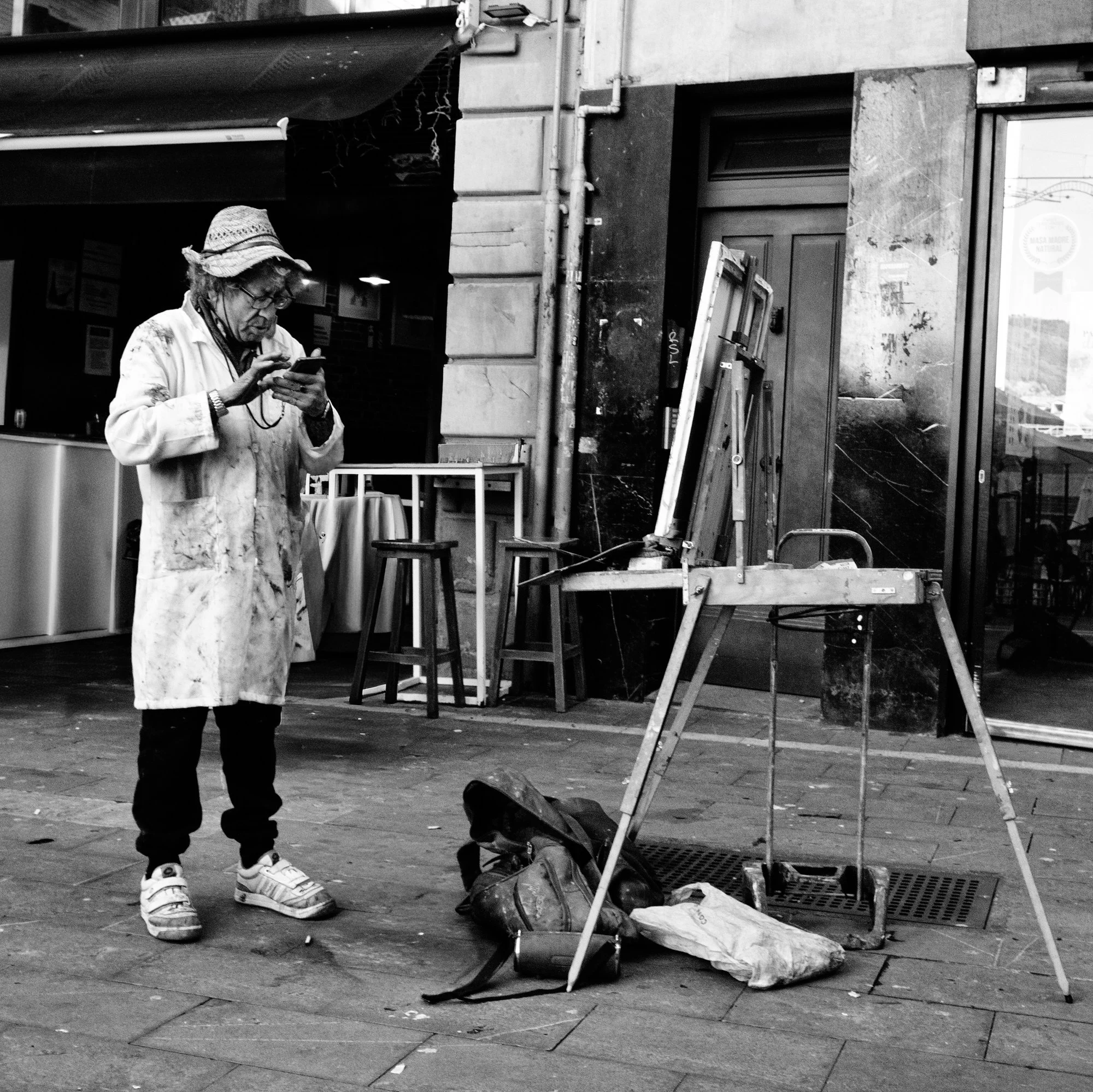
The Next Generation of Bomberos of Sanlúcar de Barrameda (Spain)

The Next Generation of Bomberos of Sanlúcar de Barrameda (Spain).

They stand there in the bright Andalusian light—Sanlúcar’s newest firefighters in training, a mix of nerves, pride, and that unmistakable spark of people who’ve chosen a life of stepping forward when others step back. These trainees aren’t just learning how to fight fires; they’re learning how to read a crisis, trust each other, and serve a community that depends on them.

The Silent Prophets Above the Gate of Chains (Santa María de Ciudad Rodrigo, Spain)

The silent guardians of the Puerta de las Cadenas of the Cathedral of Ciudad Rodrigo (13th century).

Above the Puerta de las Cadenas of the Cathedral of Ciudad Rodrigo stretches a striking frieze of Old Testament figures, carved in stone like a solemn assembly presiding over the cathedral’s northern entrance. According to Sendín, the sculptor gathered Abraham, Isaiah, the Queen of Sheba, Solomon, Ezekiel, Moses, Melchizedek, Balaam, David, Elijah, Saint John the Baptist, and Jeremiah—twelve figures who together trace the long arc of biblical history.
At the beginning stands Abraham, the patriarch of faith, followed by Isaiah holding the scroll of prophecy. The Queen of Sheba, crowned and elegant, brings a rare feminine presence, representing the nations recognizing divine wisdom; beside her, Solomon embodies that wisdom in royal calm. Ezekiel appears with the intensity of a visionary, while Moses—marked by his staff or the tablets of the Law—represents the covenant and its commandments.

Melchizedek, the mysterious priest-king who offered bread and wine, stands close to Balaam, the foreign prophet compelled to bless Israel. Their inclusion highlights the ways God’s voice, in medieval understanding, could emerge from unexpected places. David, with his crown and poetic bearing, re-establishes royal lineage before the frieze turns to Elijah, the fiery prophet taken to heaven in a whirlwind.

Only one figure belongs to the New Testament: Saint John the Baptist, the final herald before Christ, the bridge between old and new. The cycle closes with Jeremiah, carved in a gesture of lament, embodying the sorrow and longing that permeate Israel’s story.

Why place this assembly above a cathedral door? In the Middle Ages, façades were meant to teach. These prophets form a visual overture to the Gospel proclaimed inside, affirming that Christianity rises not in isolation but from a long, unfolding tradition. Together they create a threshold of memory and meaning: a carved chorus of voices preparing the visitor to step from the world into the sacred story beyond the gate.

The Cathedral of Ciudad Rodrigo (13th century) with the Puerta de las Cadenas.

A Vessel with Two Faces: Bird and Deer at El Tolmo de Minateda (Spain)

Painted Iberian crater, El Tolmo de Minateda, early 1st century BCE. Bird and deer appear on opposite sides of the vessel, forming a symbolic dialogue placed in a funerary context.

In the first half of the 1st century BCE, in what is now southeastern Spain, a large painted vessel was placed in a grave at El Tolmo de Minateda (Albacete). It was not an ordinary container. This crater — a Greek vessel form reinterpreted by Iberian potters — was chosen to accompany someone into death.

What makes it remarkable is that it speaks in two images, one on each side.

On one face, a bird with outstretched wings stands upright, surrounded by flowers and vegetal motifs. On the opposite face, a deer lowers its head, calm and contained, again framed by floral elements. Both images were painted deliberately, each occupying its own panel, as if inviting the viewer to walk around the vessel and read it in the round.

This crater comes from a funerary context, and that matters. In Iberian ceramics from El Tolmo, birds and deer are not random decorations. Archaeological research shows that deer appear almost exclusively in burial contexts, where they are often interpreted as psychopomps — animals associated with transition, guidance, and the passage between worlds. The bird, frequently depicted with spread wings, may echo similar ideas of movement between earth and sky.

Together, the two animals form a quiet visual dialogue: land and air, stillness and motion, body and soul. This is not storytelling in the modern sense, but symbolic language, meant to work within ritual rather than explanation.

By the time this vessel was made, Roman power was already present in Iberia. Yet the imagery is deeply local. The form may echo the Mediterranean world, but the meaning belongs to the community that buried its dead here, using symbols that had carried weight for generations.

This crater was never meant for display. It was made to stand beside ashes, to protect, to accompany, and perhaps to explain what words could not.

Two animals. One vessel.
And a final journey, told in clay.

The Idol of Rena: A Human Face from Deep Prehistory

The idol of Rena (Archaeological Museum of Badajoz, Spain).

If you travel through the quiet plains of Extremadura, it is hard to imagine that beneath this landscape lay some of Europe’s richest Copper Age communities (about 2500 BCE). Among their most intriguing creations is the Idol of Rena—a small, beautifully carved human figure now displayed in the Archaeological Museum of Badajoz.

Carved from pale, marble-like stone, the idol shows a stylised human form: straight legs, a narrow torso, and arms bent inward at the waist. The incised face suggests brows, a strong nose, and faint tattoos. On the back, zigzag lines evoke hair or a head covering. It is unmistakably human, but abstract enough to feel symbolic and enigmatic.

A Regional Tradition of Human-Shaped Figures

The Rena idol belongs to a remarkable group of anthropomorphic figures found across southern Iberia. These objects are rare and carefully crafted, usually discovered in or near significant Copper Age settlements. Extremadura stands out as the region with the largest concentration, especially around the great site of La Pijotilla.

Although similar idols appear in Almería, Jaén, Cádiz, Sevilla, and Portugal, the marble idols of Badajoz have a distinct style and a strong sense of local tradition. Most show the same rigid posture, emphasised brows, tattoo-like markings, and stylised hairlines.

Symbol, Ancestor, or Social Marker?

What these idols represent remains uncertain. Earlier generations imagined gods or a Mother Goddess, but modern interpretations see them more as expressions of identity, status, or leadership emerging within increasingly complex societies. The consistent posture—arms forward, gaze direct—may have conveyed authority or belonging rather than depicting a literal individual.

Whatever their meaning, these figures sit within a broad symbolic world that also produced slate plaque idols, engraved cylindrical figures with large eyes, and many other ritualised objects. Taken together, they show a society experimenting with the human image as a powerful carrier of meaning.

Why the Idol of Rena Endures

Today, the Idol of Rena feels small, quiet, and intimate. Yet it speaks of a world in transition—one where early farming communities were reshaping their landscapes, forming new social ties, and expressing their beliefs through stylised art.

In the absence of writing, figures like this are among the few messages we have from those communities. And the Idol of Rena, with its calm presence and careful craftsmanship, still carries a trace of the human stories it once embodied.

Further Reading

  • J.J. Enríquez Navascués – Nuevos ídolos antropomorfos calcolíticos de la cuenca media del Guadiana.

  • Víctor Hurtado – Ídolos, estilos y territorios de los primeros campesinos en el sur peninsular.

  • K. Lillios & V. Gonçalves – Studies on Iberian plaque idols.

  • C. Scarre – The Human Past.

Saints for the Shoemakers

A 16th-century tile panel from Plasencia

In a quiet corner of an exhibition you may suddenly meet two saints who feel surprisingly close to everyday life: Crispinus and Crispianus, the patron saints of shoemakers. The object that introduces them is an antique religious tile panel from Plasencia, possibly dating to the 16th century. It is devotional art, yes, but also a proud nod to craft, labour, and the dignity of skilled hands.

The panel shows the two brothers as holy figures, yet their fame is rooted in a very earthly story. According to tradition, Crispinus and Crispianus were Christian missionaries who supported themselves by making shoes. Their workshop became a kind of silent sermon: work honestly, live modestly, help others, and hold on to faith even when it costs you. That combination made them a natural spiritual home for guilds of cobblers and leatherworkers across Europe.

If the Plasencia panel is indeed 16th century, it sits in a fascinating moment: the age of strong urban identities, powerful guilds, and public devotion. Tiles were more than decoration. They were durable, visible, and meant to be lived with—perfect for chapels, convents, guild buildings, and private homes. A tile panel like this could function as an image for prayer, but also as a statement: this trade has a place in the moral order of the city.

What makes such an object compelling today is its double voice. On one level it speaks the language of saints and salvation. On another, it whispers about workshops and streets: the smell of leather, the rhythm of tools, the daily economy of a town like Plasencia. The saints stand there not as distant miracle-workers, but as companions of working people—patrons of a profession that literally shaped the shoes on which society moved.

Seen now, centuries later, the panel becomes a bridge between devotion and craft. It reminds us that religious imagery was often deeply practical: it blessed the things people did all day, every day. And in that sense, Crispinus and Crispianus still do their work—quietly guarding the makers.

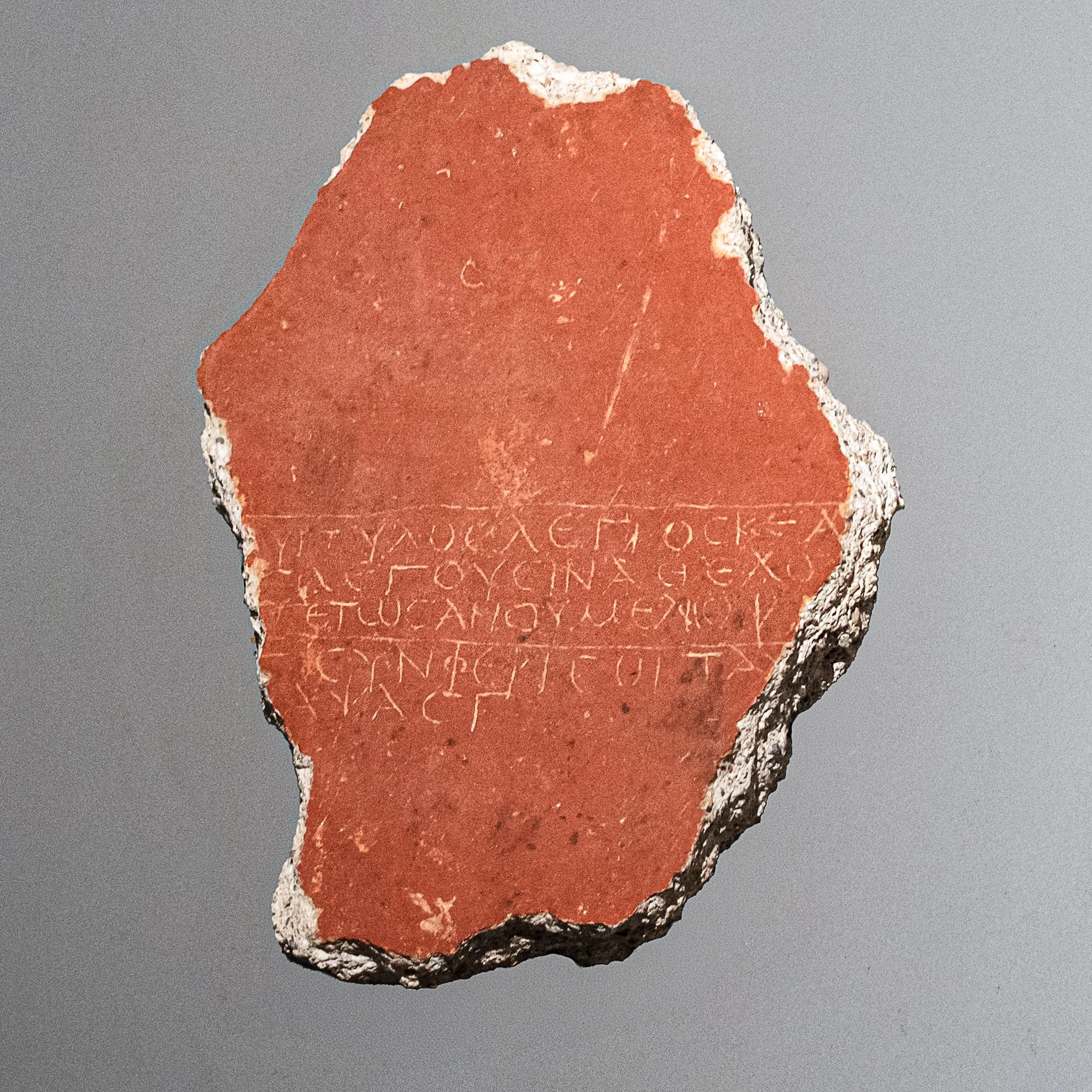
A 4th-Century Voice from Extremadura: The Tombstone of Pascentius

The tombstone of Pascentius (Archaeological Museum of Badajoz, Spain).

In the Archaeological Museum of Badajoz, a single limestone slab gives us an unusually intimate glimpse into late Roman life in the 4th century AD. Found in the necropolis of Torrebaja near Pueblonuevo del Guadiana, the tombstone of Pascentius reflects a moment when Christianity was reshaping the spiritual landscape of Roman Hispania.

Beneath a Chrismon carved between two palms, the text unfolds in long, elegant lines. Here is the core of the inscription:

Latin Text

PASCENTIVS AMA
TOR DEI CVLTORQVE FI
DELIS EX HAC LVCE MIGRAV
IT ANNORVM XXVIII
PROTINVS VT VOCEM AV
RIBVS PERCEPIT CARMIN
A CRISTI RENVNTIAVIT M
VNDO POM PISQVE LABEN
TIBVS EIVS FERALENQVE
VITAM TEMVLENTIAEQVE PO
CVLA BACCHI SOBRIVS VT
ANIMVS SPECVLARETV
R AETHERIA · REGNA · CVM I
N ISTO · CERTAMINE · FORTIS
DIMICARET · ACLETA PLACVI
T NAMQVE · DEO · VT · EVM · A
RCIRET · ANTE · TRIBVNAL DA
TVRVS · EI · PALMAM · STOLAM
ADVQVE · CORONAM · VOS
QVI · HAEC · LEGITIS · ADVQVE
SPE DELECTAMINI · VANA · D—
—SITE IVSTITIAM · M—
—OLITE C—

Translation

Pascentius, lover and devoted servant of God, departed from this light at the age of twenty-eight. As soon as he heard in his ears the voice of Christ, he renounced the world and its fading vanities, the pleasures of life, and the intoxicating cups of Bacchus, so that with a sober spirit his soul might contemplate the heavenly realms.

He fought bravely in this struggle, and since it pleased God, he was summoned before His tribunal to receive the palm, the robe, and the crown.

You who read this, and who delight in a vain hope—do not allow injustice to be done to him.

Even in its brevity, the inscription reveals a full story: a young man turning decisively toward the Christian life, rejecting the social spectacles and indulgences of the Roman world, and entering what his community saw as a spiritual contest. The final line—addressed directly to the reader—reminds us that tombstones were not only memorials but moral messages, intended to shape the living as much as to honor the dead.

Sixteen centuries later, Pascentius’ voice still reaches us from his stone in Badajoz.

Fire, Pride, and Coming of Age: San Antón in Valderrobres (Spain)

This year, we had the privilege of being guests at the San Antonio Abad festivities in Valderrobres—and guests is exactly how we were treated. From the first moment, the people of Valderrobres welcomed us with open arms, genuine warmth, and a quiet but unmistakable pride in their village and its traditions.

At the heart of the celebration are the kintos: the group of young people who turn eighteen that year and who take on the responsibility of organizing the festivities. The tradition of the kintos is widespread in Spain and marks a symbolic step into adulthood. What once had roots in military conscription has become something far more beautiful—a communal rite of passage in which a generation learns to carry, protect, and pass on local culture.

The festival begins on January 16 at 23:00hr, when the Christmas tree is set alight in the town square. Flames crackle, sparks drift into the cold night, and before you know it, the square turns into a living room under the stars. Music, laughter, food, and conversation keep the celebration going all night long.

As morning arrives, the fire is not allowed to die in vain. Using the still-glowing embers of the Christmas tree, sausages and pancetta are grilled for a communal breakfast. Everyone eats. Everyone belongs. It is simple, generous, and deeply human.

At 11:00hr in the morning, the rhythm slows. In a special mass at the church, the new kintos appear in traditional dress and receive a blessing. At the end of the service, blessed bread is shared with the congregation. Outside, on the square below, the priest continues with the blessing of the animals, honoring San Antonio Abad as the patron saint of animals and rural life.

What makes San Antón in Valderrobres so special is not just the rituals themselves, but the way the entire village carries them—by the village, for the village, passed on from generation to generation. Nothing feels staged. Everything feels lived.

For us, being allowed to witness and share in this celebration felt truly special. It was a rare glimpse into a tradition that still burns as warmly as the fire at its heart.

Benidorm in Winter: The Great Boulevard Parade

In winter, Benidorm turns into Europe’s sunniest retirement campus. While the rest of the continent pulls on scarves and curses the rain, thousands of cheerful seniors migrate south and take over the Levante boulevard like it’s their personal catwalk.

Every morning the parade begins. Trainers on, sunglasses ready, they march up and down the promenade with Olympic dedication. The route is always the same: walk, wave at familiar faces, pause for coffee, walk again — and then surrender to the irresistible pull of a sunny terrace.

A beer becomes a wine. A wine becomes lunch. Preferably something that tastes like home: fish and chips, schnitzel, Sunday roast, or a heroic full English Breakfast that would make any cardiologist nervous.

The terraces become open-air living rooms. Conversations float between football results, grandchildren, and the weather back home (“Still raining, of course”). The Mediterranean sun does the rest.

In Benidorm, winter isn’t a season. It’s a lifestyle — best enjoyed one boulevard lap and one glass of wine at a time.

Alfonso VIII of Castile: The Child-King Who Forged a New Castile

Alfonso VIII’s statue in Palencia (Spain).

Few medieval rulers left a deeper mark on Iberian history than Alfonso VIII of Castile (1155–1214). His life stretched from a fragile childhood as a contested child-king to a triumphant adulthood as the architect of a new political order on the peninsula. His reign was long, turbulent, and transformative — and the ripple effects reached far beyond Castile.

Born into Two Powerful Dynasties

Alfonso descended from two formidable bloodlines. On his father’s side, he belonged to the House of Ivrea, the dynasty that had shaped the kingdoms of León and Castile since the 11th century. His father, Sancho III of Castile, reigned only briefly, dying suddenly in 1158 and leaving the young Alfonso, barely three years old, as king.

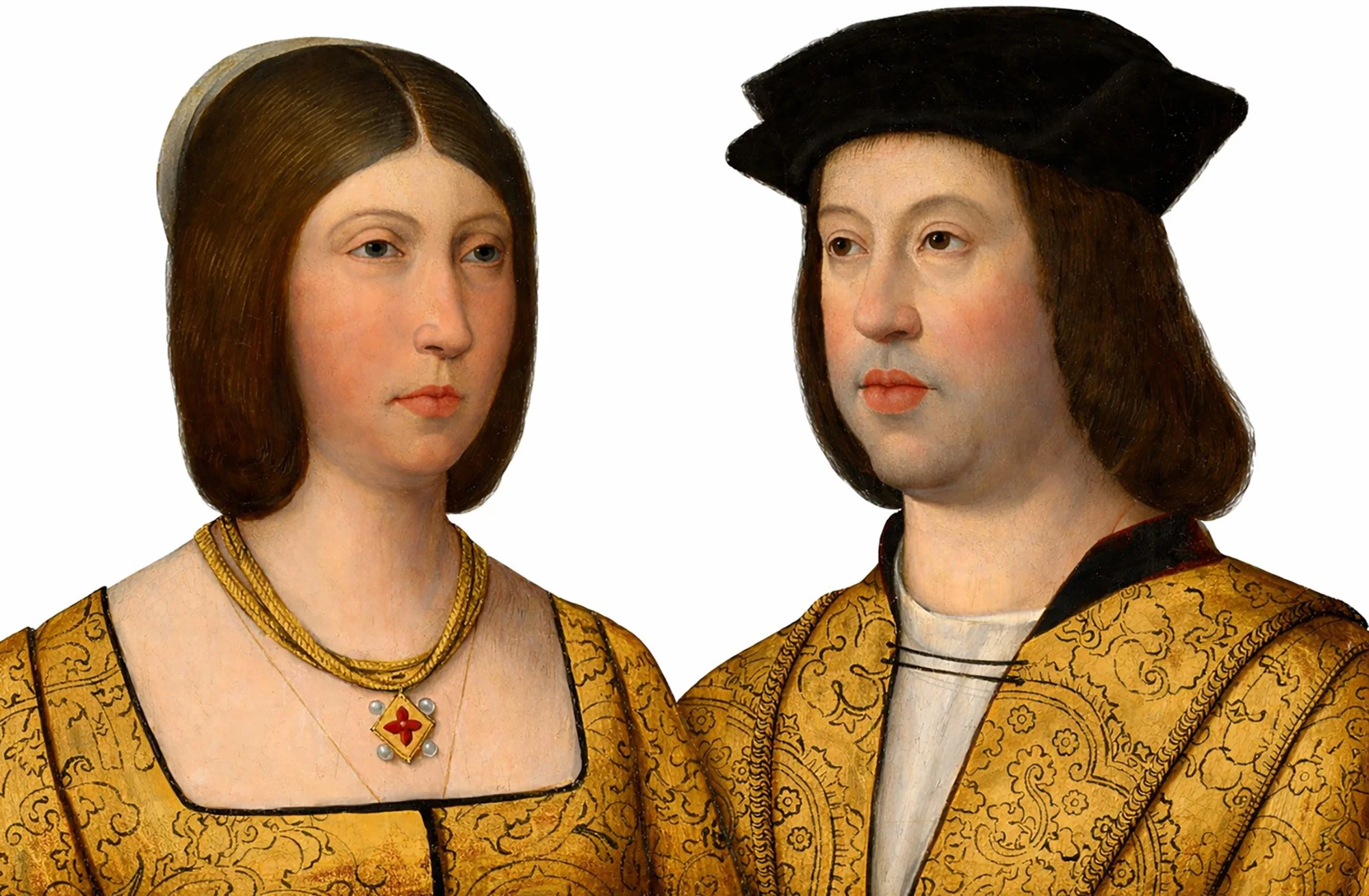
His mother, Blanca of Navarre, connected him to the royal family of Pamplona, giving Alfonso political legitimacy on Castile’s northeastern frontier. But perhaps even more significant were the alliances forged through his marriage. In 1170, Alfonso wed Eleanor Plantagenet, daughter of Henry II of England and Eleanor of Aquitaine — two of the most influential figures in medieval Europe. This union tied Castile to the transcontinental Plantagenet empire and injected the Castilian court with new cultural and diplomatic currents.

A Kingdom He Fought to Keep

Alfonso’s early life was far from secure. Castile’s great noble houses — the Laras and the Castros — fought bitterly for control of the realm and for influence over the child-king. For years, Alfonso was moved between strongholds to keep him safe, and at one point he was even rumoured kidnapped. When he finally took full command in his teens, he inherited not a stable kingdom but a fractured one.

He spent the next decades imposing royal authority, building alliances, and expanding Castile’s reach. His conquest of Cuenca in 1177 marked one of the symbolic victories of his early reign, securing a strategic stronghold and cementing Castile’s position in central Iberia.

A Royal Family with Continental Echoes

Alfonso and Eleanor Plantagenet had a large family — at least ten children, many of whom played decisive roles in European politics:

  • Berengaria, his eldest daughter, briefly became Queen of Castile in her own right and then ensured the accession of her son, Ferdinand III, the monarch who would eventually unify Castile and León.

  • Blanche married Louis VIII of France; their son became Louis IX (Saint Louis), one of the most celebrated kings in French history.
  • Urraca, Leonor, and Constanza married into the royal families of Portugal, Aragon, and into major European noble houses, strengthening Castile’s diplomatic network.

  • Henry, Alfonso’s only surviving son, succeeded him as Henry I, though his reign was short.

Through these marriages, Alfonso became the patriarch of a web of dynastic ties that stretched across the continent, influencing France, Portugal, Aragon, England, and the future of united Spain.

The Battle That Changed Iberia

Nothing defined Alfonso’s reign more than the Battle of Las Navas de Tolosa in 1212. In a rare moment of unity, he persuaded the often-rival kingdoms of the peninsula — Castile, Navarre, and Aragon — to join forces, bolstered by crusading knights from across Europe. Their victory shattered the power of the Almohad Caliphate, the most formidable Muslim force in Iberia at the time.

This was no ordinary triumph. It ended a balance of power that had lasted generations and opened the door for the great southern conquests of the 13th century. After Las Navas, the Christian advance became almost unstoppable. Córdoba, Jaén, Sevilla — all would fall within decades. Alfonso VIII set the stage.

Why Alfonso VIII Matters for Spain

To understand the shape of medieval Spain, one must understand Alfonso. His reign marked the moment when Castile shifted from a contested frontier realm into the dominant force of the peninsula.

He was a stabilizer: a king who inherited chaos and methodically rebuilt authority. He was a diplomat: his Plantagenet marriage plugged Castile into the bloodstream of European power politics. He was a patron of learning: his foundation of the Studium Generale of Palencia signalled a dawning intellectual ambition. And above all, he was a strategist whose greatest victory reordered the Iberian world.

By the time he died in 1214, Alfonso had transformed Castile from a vulnerable kingdom ruled by baronial factions into a confident, outward-looking power — one whose heirs would eventually create a unified Spain.

A Legacy That Reaches into Modern Spain

Alfonso VIII’s life is a reminder that history often turns on the abilities of a single, determined ruler. His political instincts, his dynastic savvy, and his decisive military leadership reshaped Iberia’s future. Through his daughter Berengaria and his grandson Ferdinand III, his legacy lived on in the union of Castile and León — the nucleus of what would become the Spanish nation.

Alfonso VIII is more than a medieval king; he is a hinge in the story of Spain itself.

An Ode to the Encina: Heart of the Extremadura Landscape

The encina (Quercus ilex subsp. ballota).

Across the sun-blasted plains of Extremadura stands a tree that seems older than memory itself: the Quercus ilex subsp. ballota, the encina. These holm oaks, with their twisted trunks and low, sheltering crowns, are more than trees — they are the quiet storytellers of the dehesa.

Each encina appears carved by time. Their bark is creased like the face of someone who has lived deeply, weathering centuries of drought, wind, and long summers. Under their branches Romans marched, medieval herdsmen rested, and generations of travellers found shade in the shimmering heat. Every curve in their silhouette suggests another chapter of the land’s unwritten history.
Yet the encina’s gift is not only its presence but its bounty. Its acorns — the bellotas — fall each autumn like small polished gems, feeding deer, birds, and most famously the Iberian pigs. These pigs roam freely beneath the canopy, fattening on nothing but bellotas and wild herbs. From this ancient relationship emerges one of Spain’s greatest treasures: jamón ibérico de bellota, the silky, aromatic ham revered around the world.

In a region of sharp light and deep silence, the encina remains evergreen — a symbol of endurance and quiet generosity. Stand beneath one at dusk and you feel it: the tree is not just part of the landscape; it is its memory and its heartbeat. As long as the encinas endure, so too will the spirit of Extremadura.

Paloma de plástico

Paloma de plástico, nacida del mar,
llevas la paz donde falta amar.
No vienes del cielo, sino del suelo,
donde los hombres pierden su anhelo.

Tu vuelo recuerda, humilde y sincero,
que aun del despojo renace lo entero.
Paloma del mundo, no de un altar,
enséñanos juntos de nuevo a amar.

The Toro de Osborne

Drive long enough through Spain, and sooner or later it will appear — proud, silent, and impossible to miss. A giant black bull, standing tall on a hill, horns sharp against the blazing sky. The Toro de Osborne.

It was never meant to be a symbol of a nation. In the 1950s, it was simply an advertisement — a clever idea from the Osborne sherry company to promote their brand along the newly growing highways. The bulls were made of sheet metal, more than ten meters high, each one painted black to withstand the sun. They carried the word “Osborne” in white letters across their flanks.

But time, and affection, changed everything. When new laws later banned roadside advertising, people protested the removal. By then, the bull had stopped being a billboard and had become something else entirely — a silhouette of identity. The government relented, and the Osborne bulls stayed, stripped of their commercial lettering but not of their pride.

Today, there are about ninety of them scattered across the country. You see them guarding the horizon of La Mancha, watching over the olive fields of Andalusia, or gazing out toward the sea near Cádiz. They are both monumental and strangely poetic — frozen mid-step, eternal guardians of the Spanish road.

For travelers, the sight always stirs something. Perhaps it’s the simplicity: black shape, blue sky, sunlit hills. Or perhaps it’s the feeling that this creature, born of commerce, now carries the soul of a land that refuses to forget its symbols.

The Toro de Osborne no longer sells sherry. It sells Spain itself — its pride, its history, and the stubborn beauty of a country that still knows how to stand tall against the light.

A Crown for Begoña, A Future for Bilbao

Coronación de La Madre de Dios de Begoña, by José Etxenagusia (1902).

On 8 September 1900, Bilbao staged a celebration that fused devotion with civic pride: the canonical crowning of the Madre de Dios de Begoña—the “Amatxu”—timed to the city’s 600th anniversary. Bells, banners, and an entire town in procession set the tempo.

In 1902, José Etxenagusia (Echena) turned that day into a sweeping canvas for the Basilica of Begoña. He sets the scene outside the west portal: the crowned image lifted high, clergy massed around her, guards framing a dense, recognizably urban crowd. Look closer and the painting becomes a civic portrait as much as a devotional one, a who’s who of Bilbao under one crown.

Crucially, the coronation marked a leap into modern light. Under the guidance of diocesan architect José María Basterra, electric lighting illuminated the festivities—processions stepping out of candlelight into a steady, urban glow. Etxenagusia paints that quiet voltage on faces and fabrics: a city confident enough to bless the future without dimming the past.

Stand before the canvas today and grandeur draws you in, but belonging lingers. Here Bilbao remembers itself—a community stitching faith to progress, incense to electricity—and leaves the proof on a single, generous sheet of light and color.

Castillo de Santa Olalla del Cala

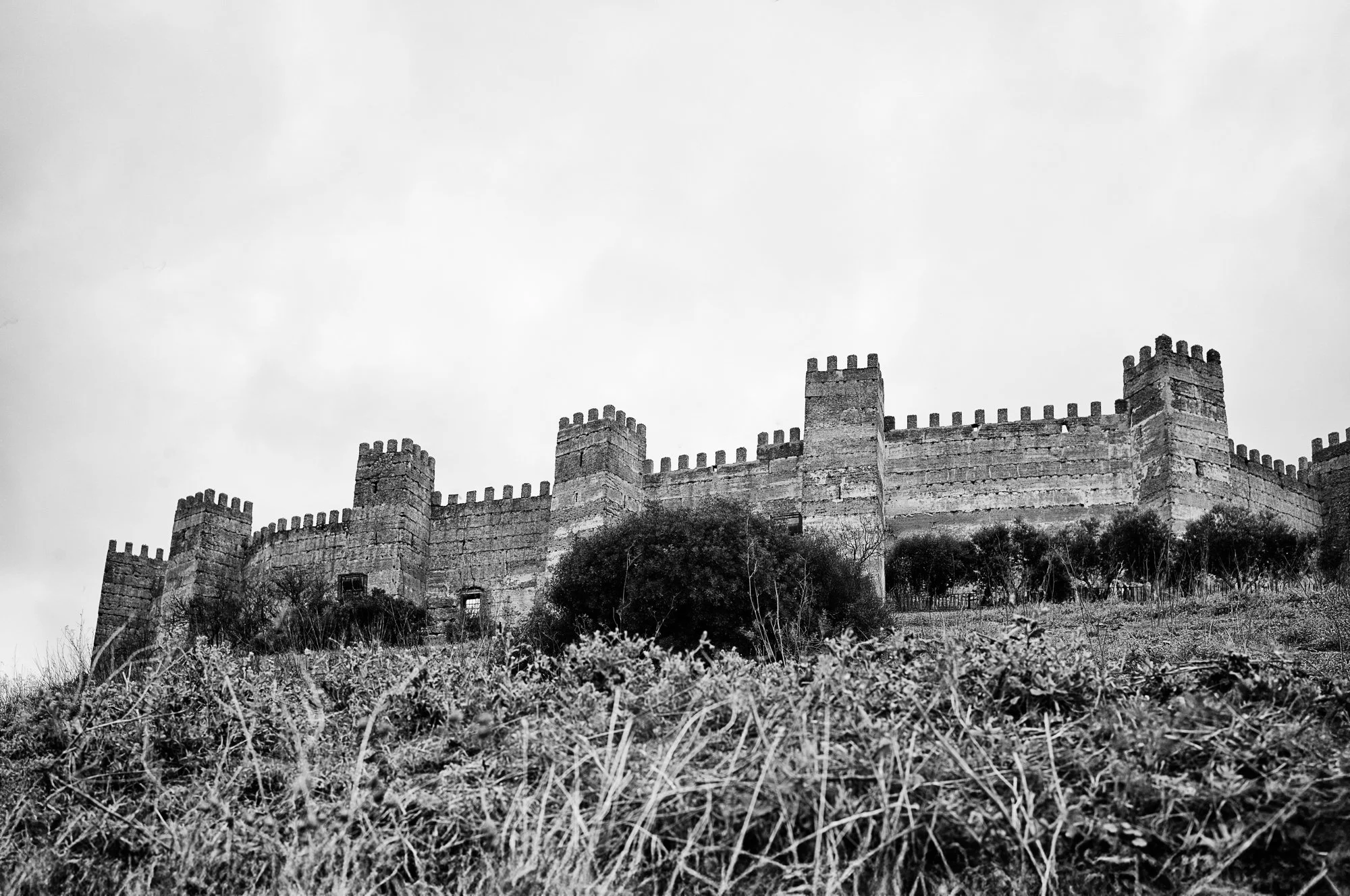
Castillo de Santa Olalla del Cala.

The castle of Santa Olalla del Cala rises from a rocky ridge in the Sierra de Aracena, in the province of Huelva, Andalusia. It was commissioned by King Sancho IV of Castile in 1293 as part of the Banda Gallega, a defensive line guarding the frontier against Portugal.

It was built over an earlier Muslim fortress, which itself may have occupied a Roman site. The walls follow the natural contours of the ridge, reinforced by ten towers — four round and six rectangular — and built from rough stone and brick.

Throughout the late Middle Ages, the castle saw several conflicts: the wars between Castile and Portugal in the 14th century, and the internal struggles that shook the Kingdom of Seville in the 1460s. Later, when its military value declined, the fortress took on humbler roles; for a time it even served as the village cemetery, with tombs carved into its inner walls.

The Ferry at Coria del Río (Spain)

The ferrymen of the ferry over the Guadalquivir.

Downstream from Seville, at Coria del Río, the Guadalquivir widens and slows. Here, a small ferry still crosses the water — two men, a handful of cars, and the quiet rhythm of a river that has seen empires come and go.

The ferrymen move with practiced grace: one guides the rudder, the other collects the money. No hurry, no noise — just the hum of the engine and the slap of water against steel. In a world of speed and schedules, their crossing feels like a pause in time — a reminder that not every journey needs a bridge.

San Manuel Bueno, mártir (1931) – Miguel de Unamuno

Miguel de Unamuno’s San Manuel Bueno, mártir (1931) is a deeply philosophical and existential novel that explores the tension between faith and doubt, truth and illusion. Set in a small Spanish village, the story follows Don Manuel, a beloved priest known for his kindness, self-sacrifice, and ability to comfort his community. However, through the perspective of the narrator, Angela Carballino, we discover a shocking secret: despite his outward devotion, Don Manuel does not believe in God or the afterlife.

Despite his personal disbelief, he continues to teach Christian doctrine, convinced that faith provides his people with the strength to endure their harsh lives. He ultimately dies as a revered figure, remembered as a saint by the villagers, while only a select few know of his internal struggle.

Unamuno, the author and a key figure in the ‘Generación de 1898’, uses the paradox in the story to reflect on the nature of belief, the role of religious institutions, and the existential struggle between reason and faith. The novel’s timeless themes make it not only a significant work of Spanish literature but also a universal meditation on the human condition, challenging readers to consider the value of faith even in the face of doubt.

Portrait of Miguel de Unamuno (1925). Gallica Digital Library.

The 'Cruz de los Ángeles' - Oviedo's Golden Emblem

Oviedo’s Cruz de los Ángeles.

Step into the dim stone of the Cámara Santa and the light finds its target. Behind glass, a small golden cross glows like a held breath. This is the Cruz de los Ángeles—Oviedo’s emblem, the city’s oldest signature in metal and light.

The story begins in 808, when King Alfonso II “the Chaste” endowed the cathedral with a reliquary cross of gold, pearls, and colored stones. Legend adds a flourish: two mysterious craftsmen appeared, worked through the night, and vanished at dawn—angels, people said. Whether or not wings touched the workbench, the craftsmanship still feels unearthly: filigree like lace, geometry calm and exact, a willingness to shimmer without shouting.

Look at the cross and you see more than devotion. You see statecraft in an early-medieval key: a king gifting a radiant center to a capital he was shaping. In the decades that followed—by c. 813, when the shrine at Santiago gained royal recognition and the Camino Primitivo set out from Oviedo—the cross functioned as a compass of faith and cityhood. In time it moved from treasury to coat of arms, from shrine to street banners: the way Oviedo wrote its name.

The cross has known danger and repair. In the early hours of 12 October 1934, during the Asturian uprising, an explosion devastated the Cámara Santa and scarred its treasures. Then, on the night of 9–10 August 1977, thieves dismantled the cross to sell it in pieces. Most fragments were recovered, and a careful reconstruction returned the Cruz de los Ángeles to view between 1979 and 1986—scarred, like the city, yet standing.

How to look? Begin with the details: filigree borders like tiny braided rivers; stones cupped in their bezels; the hinge that reveals its truth as a reliquary. Step back, and the geometry resolves—four equal arms catching the room’s light like a compass. Then walk into the plaza, where the city’s heraldry echoes what you just saw. Gold and granite, myth and municipal seal, keep talking above your head.

In a world that loves spectacle, the Cruz de los Ángeles teaches a gentler amazement. It is small, portable, serious; it glitters not to dazzle but to endure. If you want to understand Oviedo, start here: a cross forged in 808, wounded in 1934 and 1977, restored by 1986—and still called by name.

The Spanish Wars: When Rome Met Its Fiercest Foes

Title page in Greek and English of the chapter on ‘The Wars in Spain’ in Appian’s Roman History (written in the 2nd century AD).

Most people know Rome’s great enemies: Hannibal in Carthage, Mithridates in Asia Minor, or Spartacus in Italy. Far fewer remember that in the rocky uplands of Spain, Rome fought some of its longest, most humiliating, and most tragic wars. The story comes to us through the Greek historian Appian of Alexandria, who in the 2nd century AD wrote his Roman History. One section, simply called The Spanish Wars (Iberica), describes how, from the 3rd to the 2nd century BCE, the legions tried to tame Hispania – and how fiercely the Iberian tribes resisted.
Appian begins with Rome’s arrival in Spain during the Second Punic War (218–201 BCE). At first, the task was simple: drive out Hannibal’s Carthaginian forces. Scipio Africanus succeeded in that mission, and Carthage was expelled. But Rome decided to stay, and that decision drew it into decades of bloody conflict with the native peoples. For the Iberians, it was a fight to preserve independence; for Rome, it was a struggle to secure a rich and strategic province full of grain, iron, and, above all, silver and gold.

From the start, the Iberians proved a different kind of enemy. The Celtiberians, living in the rugged central plateau, fought in small, mobile bands. They harried the legions, struck from mountain passes, and disappeared into the hills before Rome could retaliate. The Lusitanians, further west, did much the same. Roman armies, trained for set-piece battles on open ground, repeatedly stumbled into ambushes.

Appian’s account lingers on two unforgettable episodes. The first is the story of Viriathus, a Lusitanian shepherd who rose to become a general without equal. Between 155 and 139 BCE, he led his people in war against Rome. Time and again, he outwitted the consuls sent against him, luring them into narrow valleys, cutting off their supplies, and melting away before superior numbers could close in. Appian tells us that Rome came to fear this man so much that, when they could not beat him in battle, they bought his own envoys to murder him in his sleep. With his death, Lusitania’s resistance collapsed.

The second and even more dramatic episode is the siege of Numantia, the Arevaci stronghold in modern Soria. Between 154 and 133 BCE, Numantia became Rome’s nightmare. Generals and legions were humiliated; whole armies surrendered to the small hilltop town. Finally, Rome sent its most ruthless commander, Scipio Aemilianus – the very man who had razed Carthage to the ground. In 134 BCE, he surrounded Numantia with seven fortified camps and a system of ditches, walls, and watchtowers. Appian describes how he starved the Numantines into submission, sealing off every path of escape.

Inside the city, famine led to desperate measures. Some ate grass, others boiled leather; there are reports of cannibalism. Yet they refused to surrender. After almost a year, in 133 BCE, when all hope was gone, many Numantines chose suicide or burned their own homes rather than face slavery. Rome entered a silent, smoldering ruin. Appian’s stark lines capture the horror: the Numantines, he says, “preferred to perish in freedom rather than live in servitude.”
For Rome, Hispania was eventually secured – a province rich in mines, soldiers, and resources, essential to the empire’s future. But the cost was enormous, and the scars deep. For the Iberians, the wars of Viriathus and Numantia became symbols of heroic resistance, remembered centuries later by writers, poets, and even by Cervantes.

When you stand today among the ruins of Numancia, or in the hills where Viriathus once outmaneuvered legions, you see more than stones. You see the landscape of one of Rome’s hardest lessons: that conquest was never easy, and that freedom, for some, was worth more than life itself.

City plan of Numantia by Juan Loperraez (1788).

Further Reading

  • Appian, Roman History, Book VI (The Spanish Wars). Accessible online in English at Livius.org.

  • Appian, Roman History, Loeb Classical Library, vols. I–IV (Harvard University Press).

  • Schulten, A., Numantia: Die Ergebnisse der Ausgrabungen 1905–1912. Leipzig, 1914.

  • Richardson, J. S., Hispaniae: Spain and the Development of Roman Imperialism, 218–82 BC. Cambridge University Press, 1986.

The Camino, the Bridge, and the Hermitage (Sahagún, Spain)

The Ermita de la Virgen del Puente—founded in the 12th century beside the pilgrim bridge—still stands as a modest sanctuary of rest and remembrance on the Camino Francés.

East of Sahagún, where the flat lands of Tierra de Campos merge with the soft folds of the Páramo, the Valderaduey River glints in the sun. Here, just beyond the medieval bridge that once carried countless feet westward to Santiago, stands the Ermita de la Virgen del Puente—a small chapel whose silence belies centuries of human passage.

In the twelfth century this spot marked one of the most strategic crossings on the Camino Francés, the main route that drew pilgrims from France toward the tomb of Saint James. The Benedictine abbey of Sahagún, rich and powerful, controlled both bridge and chapel. Its monks built a hospital for weary travellers, managed by the Brotherhood of Our Lady of the Bridge—founded in 1188 and composed entirely of clerics loyal to the abbot. Here the poor, the sick, and the road-worn found shelter before facing the next stage toward León.

The rules were strict: no other parish or convent could be established on the site, no one buried here save pilgrims and servants of the hospital. The abbey’s authority extended not just through prayer but through stone, timber and toll—spiritual power intertwined with the control of movement itself.

Today, the bridge has been rebuilt, the hermitage restored, but the sense of passage endures. Walkers on the Camino still pause at the shrine, setting down their packs to rest in the shade and listen to the whisper of water below. The fields shimmer gold, as they must have done when Alfonso VI ruled and the world beyond seemed impossibly wide.

Here, faith and landscape merge: the bridge unites two shores, the road binds centuries, and the hermitage keeps its quiet watch over them all.

The old bridge over the Valderaduey, once guarded by Benedictine monks, carried pilgrims across this quiet river on their long road to Santiago.