A 16th-century tile panel from Plasencia
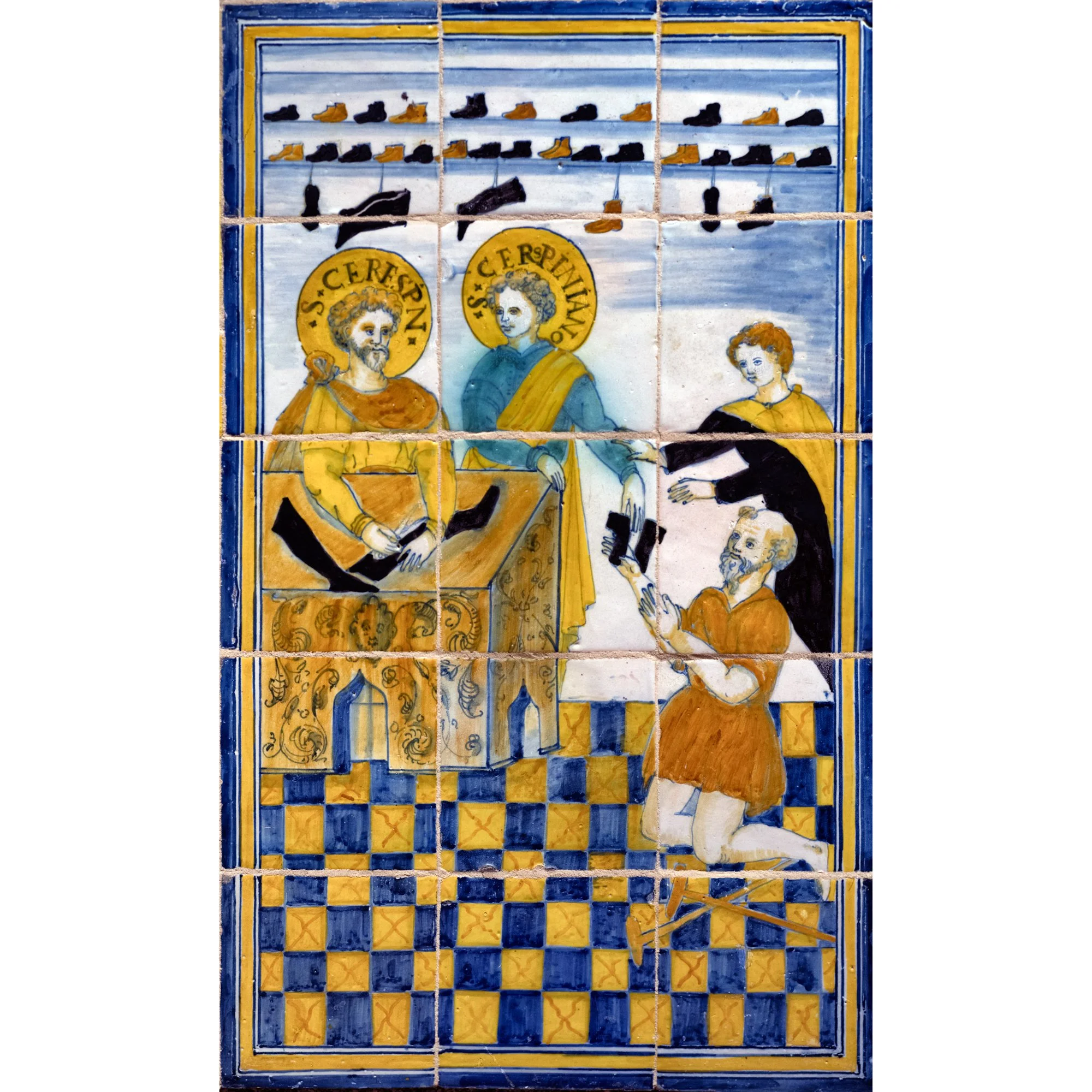
In a quiet corner of an exhibition you may suddenly meet two saints who feel surprisingly close to everyday life: Crispinus and Crispianus, the patron saints of shoemakers. The object that introduces them is an antique religious tile panel from Plasencia, possibly dating to the 16th century. It is devotional art, yes, but also a proud nod to craft, labour, and the dignity of skilled hands.
The panel shows the two brothers as holy figures, yet their fame is rooted in a very earthly story. According to tradition, Crispinus and Crispianus were Christian missionaries who supported themselves by making shoes. Their workshop became a kind of silent sermon: work honestly, live modestly, help others, and hold on to faith even when it costs you. That combination made them a natural spiritual home for guilds of cobblers and leatherworkers across Europe.
If the Plasencia panel is indeed 16th century, it sits in a fascinating moment: the age of strong urban identities, powerful guilds, and public devotion. Tiles were more than decoration. They were durable, visible, and meant to be lived with—perfect for chapels, convents, guild buildings, and private homes. A tile panel like this could function as an image for prayer, but also as a statement: this trade has a place in the moral order of the city.
What makes such an object compelling today is its double voice. On one level it speaks the language of saints and salvation. On another, it whispers about workshops and streets: the smell of leather, the rhythm of tools, the daily economy of a town like Plasencia. The saints stand there not as distant miracle-workers, but as companions of working people—patrons of a profession that literally shaped the shoes on which society moved.
Seen now, centuries later, the panel becomes a bridge between devotion and craft. It reminds us that religious imagery was often deeply practical: it blessed the things people did all day, every day. And in that sense, Crispinus and Crispianus still do their work—quietly guarding the makers.