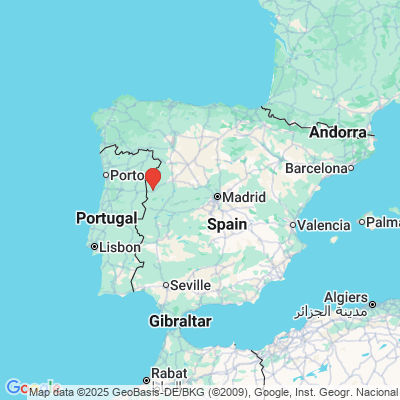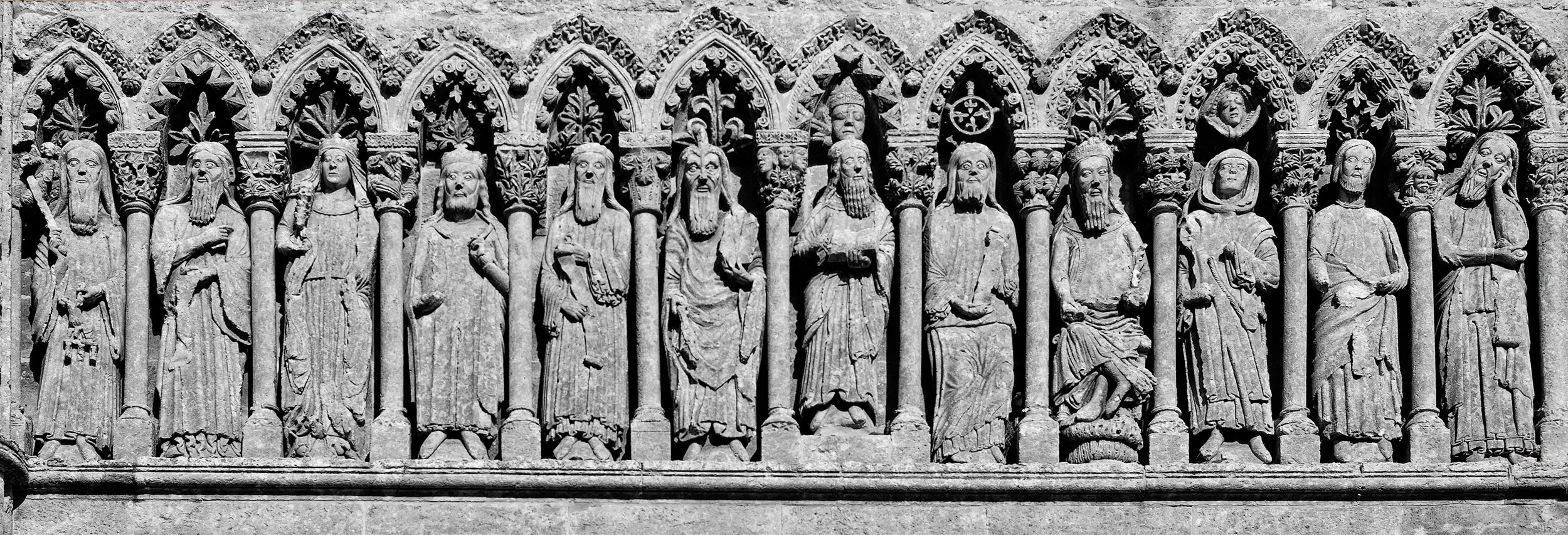
The silent guardians of the Puerta de las Cadenas of the Cathedral of Ciudad Rodrigo (13th century).
Above the Puerta de las Cadenas of the Cathedral of Ciudad Rodrigo stretches a striking frieze of Old Testament figures, carved in stone like a solemn assembly presiding over the cathedral’s northern entrance. According to Sendín, the sculptor gathered Abraham, Isaiah, the Queen of Sheba, Solomon, Ezekiel, Moses, Melchizedek, Balaam, David, Elijah, Saint John the Baptist, and Jeremiah—twelve figures who together trace the long arc of biblical history.
At the beginning stands Abraham, the patriarch of faith, followed by Isaiah holding the scroll of prophecy. The Queen of Sheba, crowned and elegant, brings a rare feminine presence, representing the nations recognizing divine wisdom; beside her, Solomon embodies that wisdom in royal calm. Ezekiel appears with the intensity of a visionary, while Moses—marked by his staff or the tablets of the Law—represents the covenant and its commandments.
Melchizedek, the mysterious priest-king who offered bread and wine, stands close to Balaam, the foreign prophet compelled to bless Israel. Their inclusion highlights the ways God’s voice, in medieval understanding, could emerge from unexpected places. David, with his crown and poetic bearing, re-establishes royal lineage before the frieze turns to Elijah, the fiery prophet taken to heaven in a whirlwind.
Only one figure belongs to the New Testament: Saint John the Baptist, the final herald before Christ, the bridge between old and new. The cycle closes with Jeremiah, carved in a gesture of lament, embodying the sorrow and longing that permeate Israel’s story.
Why place this assembly above a cathedral door? In the Middle Ages, façades were meant to teach. These prophets form a visual overture to the Gospel proclaimed inside, affirming that Christianity rises not in isolation but from a long, unfolding tradition. Together they create a threshold of memory and meaning: a carved chorus of voices preparing the visitor to step from the world into the sacred story beyond the gate.
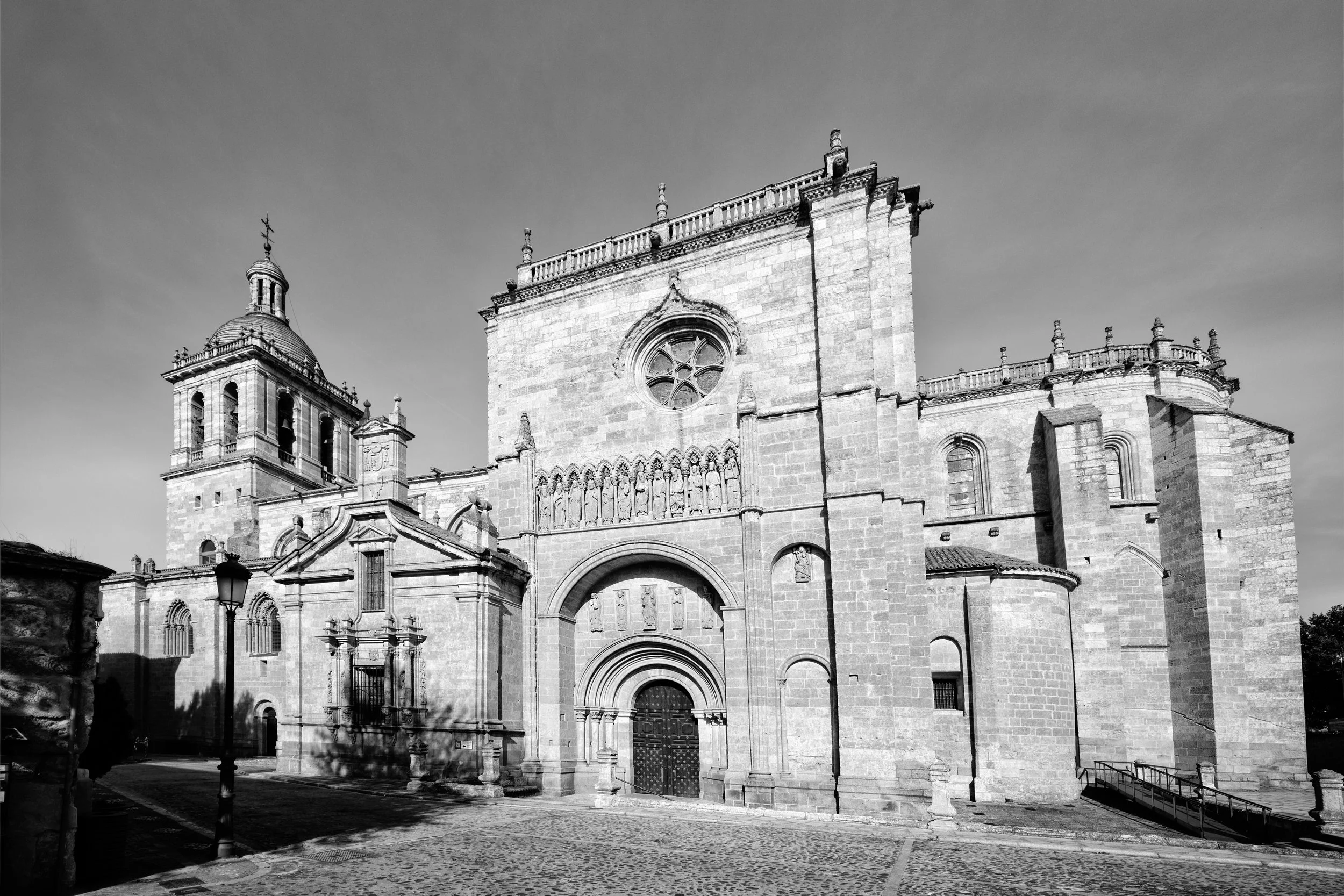
The Cathedral of Ciudad Rodrigo (13th century) with the Puerta de las Cadenas.