
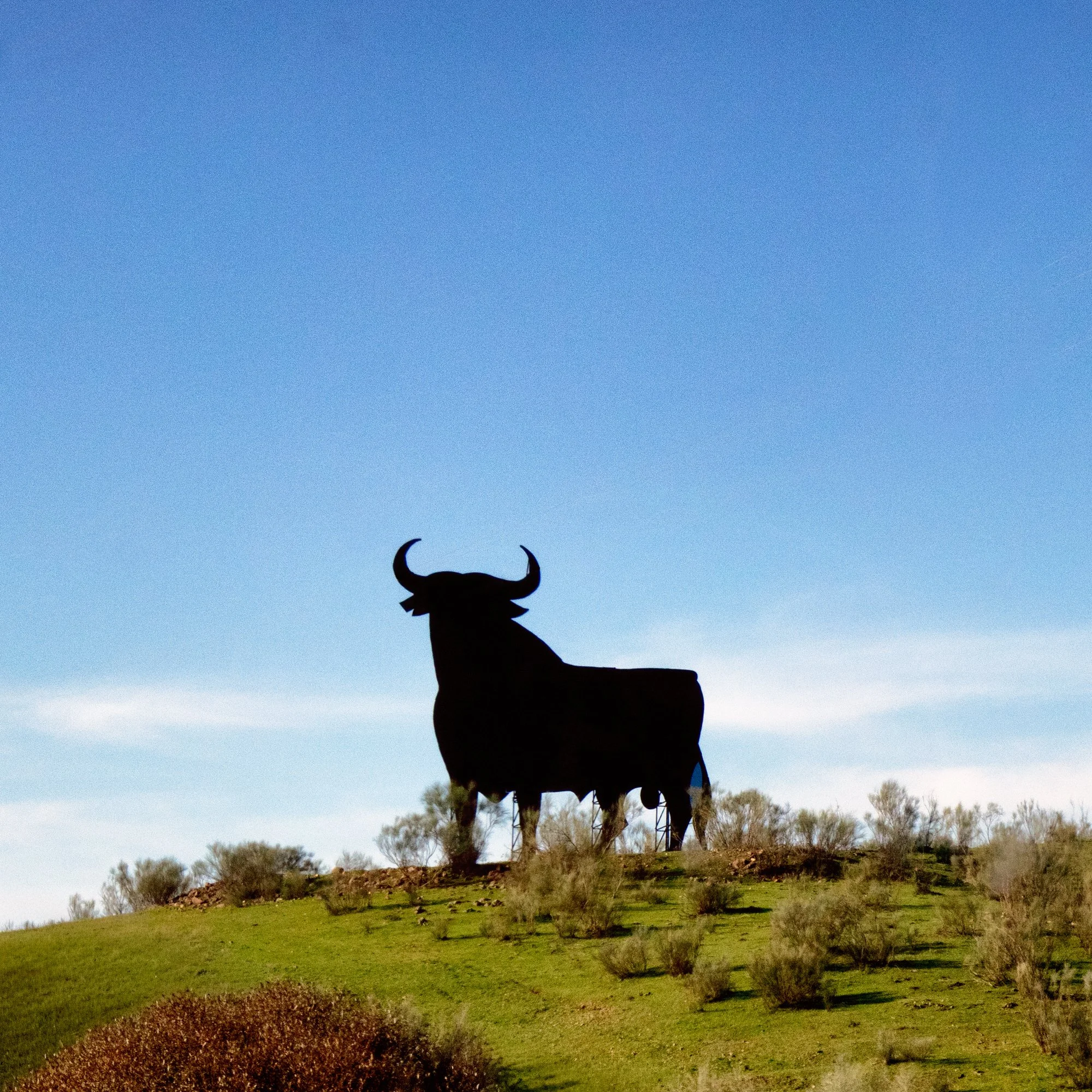
Drive long enough through Spain, and sooner or later it will appear — proud, silent, and impossible to miss. A giant black bull, standing tall on a hill, horns sharp against the blazing sky. The Toro de Osborne.
It was never meant to be a symbol of a nation. In the 1950s, it was simply an advertisement — a clever idea from the Osborne sherry company to promote their brand along the newly growing highways. The bulls were made of sheet metal, more than ten meters high, each one painted black to withstand the sun. They carried the word “Osborne” in white letters across their flanks.
But time, and affection, changed everything. When new laws later banned roadside advertising, people protested the removal. By then, the bull had stopped being a billboard and had become something else entirely — a silhouette of identity. The government relented, and the Osborne bulls stayed, stripped of their commercial lettering but not of their pride.
Today, there are about ninety of them scattered across the country. You see them guarding the horizon of La Mancha, watching over the olive fields of Andalusia, or gazing out toward the sea near Cádiz. They are both monumental and strangely poetic — frozen mid-step, eternal guardians of the Spanish road.
For travelers, the sight always stirs something. Perhaps it’s the simplicity: black shape, blue sky, sunlit hills. Or perhaps it’s the feeling that this creature, born of commerce, now carries the soul of a land that refuses to forget its symbols.
The Toro de Osborne no longer sells sherry. It sells Spain itself — its pride, its history, and the stubborn beauty of a country that still knows how to stand tall against the light.