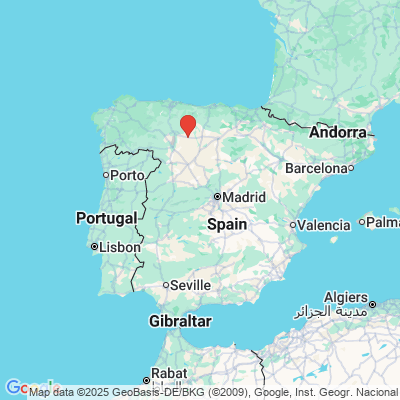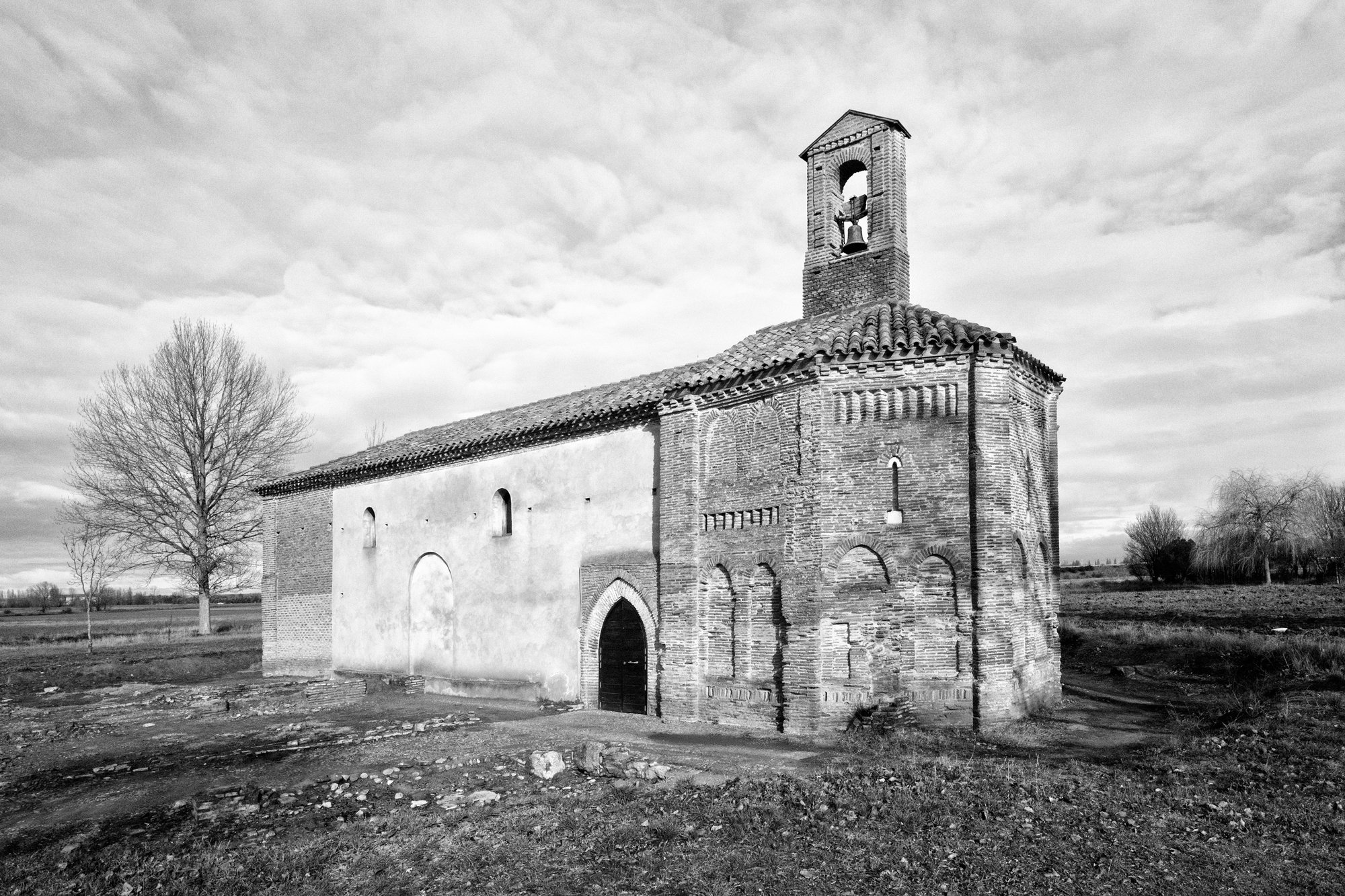
The Ermita de la Virgen del Puente—founded in the 12th century beside the pilgrim bridge—still stands as a modest sanctuary of rest and remembrance on the Camino Francés.
East of Sahagún, where the flat lands of Tierra de Campos merge with the soft folds of the Páramo, the Valderaduey River glints in the sun. Here, just beyond the medieval bridge that once carried countless feet westward to Santiago, stands the Ermita de la Virgen del Puente—a small chapel whose silence belies centuries of human passage.
In the twelfth century this spot marked one of the most strategic crossings on the Camino Francés, the main route that drew pilgrims from France toward the tomb of Saint James. The Benedictine abbey of Sahagún, rich and powerful, controlled both bridge and chapel. Its monks built a hospital for weary travellers, managed by the Brotherhood of Our Lady of the Bridge—founded in 1188 and composed entirely of clerics loyal to the abbot. Here the poor, the sick, and the road-worn found shelter before facing the next stage toward León.
The rules were strict: no other parish or convent could be established on the site, no one buried here save pilgrims and servants of the hospital. The abbey’s authority extended not just through prayer but through stone, timber and toll—spiritual power intertwined with the control of movement itself.
Today, the bridge has been rebuilt, the hermitage restored, but the sense of passage endures. Walkers on the Camino still pause at the shrine, setting down their packs to rest in the shade and listen to the whisper of water below. The fields shimmer gold, as they must have done when Alfonso VI ruled and the world beyond seemed impossibly wide.
Here, faith and landscape merge: the bridge unites two shores, the road binds centuries, and the hermitage keeps its quiet watch over them all.
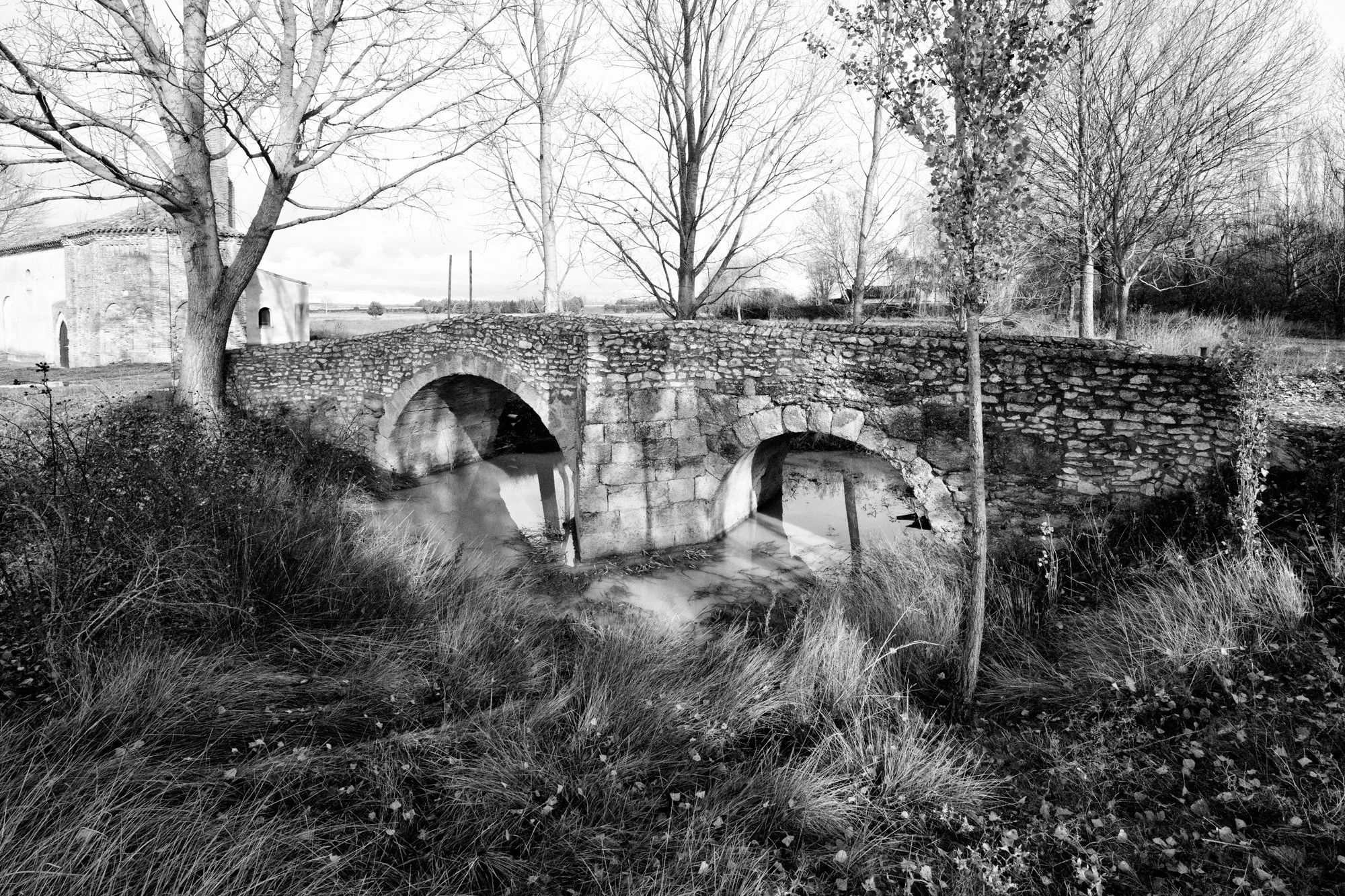
The old bridge over the Valderaduey, once guarded by Benedictine monks, carried pilgrims across this quiet river on their long road to Santiago.