Oviedo

The 'Cruz de los Ángeles' - Oviedo's Golden Emblem

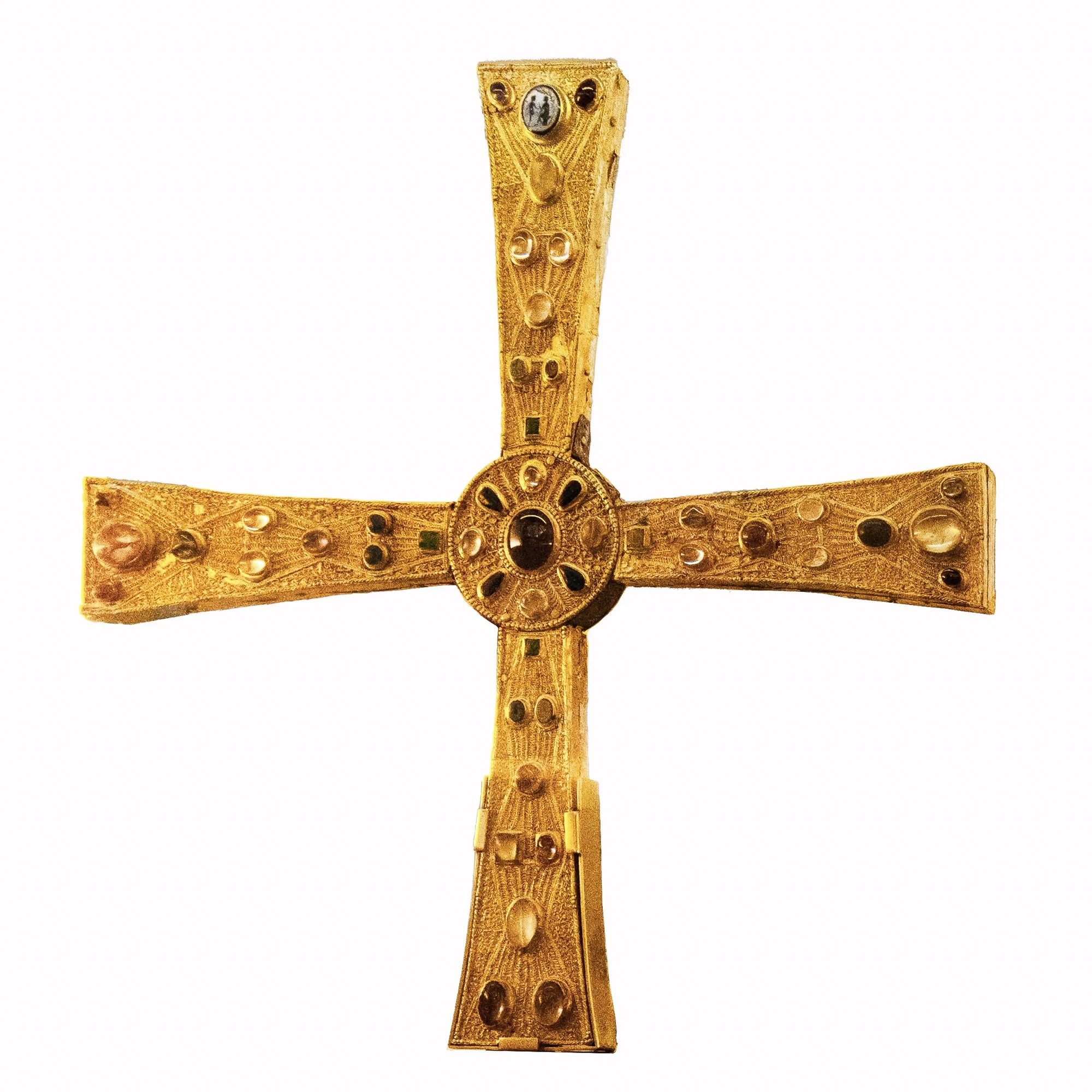
Oviedo’s Cruz de los Ángeles.

Step into the dim stone of the Cámara Santa and the light finds its target. Behind glass, a small golden cross glows like a held breath. This is the Cruz de los Ángeles—Oviedo’s emblem, the city’s oldest signature in metal and light.

The story begins in 808, when King Alfonso II “the Chaste” endowed the cathedral with a reliquary cross of gold, pearls, and colored stones. Legend adds a flourish: two mysterious craftsmen appeared, worked through the night, and vanished at dawn—angels, people said. Whether or not wings touched the workbench, the craftsmanship still feels unearthly: filigree like lace, geometry calm and exact, a willingness to shimmer without shouting.

Look at the cross and you see more than devotion. You see statecraft in an early-medieval key: a king gifting a radiant center to a capital he was shaping. In the decades that followed—by c. 813, when the shrine at Santiago gained royal recognition and the Camino Primitivo set out from Oviedo—the cross functioned as a compass of faith and cityhood. In time it moved from treasury to coat of arms, from shrine to street banners: the way Oviedo wrote its name.

The cross has known danger and repair. In the early hours of 12 October 1934, during the Asturian uprising, an explosion devastated the Cámara Santa and scarred its treasures. Then, on the night of 9–10 August 1977, thieves dismantled the cross to sell it in pieces. Most fragments were recovered, and a careful reconstruction returned the Cruz de los Ángeles to view between 1979 and 1986—scarred, like the city, yet standing.

How to look? Begin with the details: filigree borders like tiny braided rivers; stones cupped in their bezels; the hinge that reveals its truth as a reliquary. Step back, and the geometry resolves—four equal arms catching the room’s light like a compass. Then walk into the plaza, where the city’s heraldry echoes what you just saw. Gold and granite, myth and municipal seal, keep talking above your head.

In a world that loves spectacle, the Cruz de los Ángeles teaches a gentler amazement. It is small, portable, serious; it glitters not to dazzle but to endure. If you want to understand Oviedo, start here: a cross forged in 808, wounded in 1934 and 1977, restored by 1986—and still called by name.
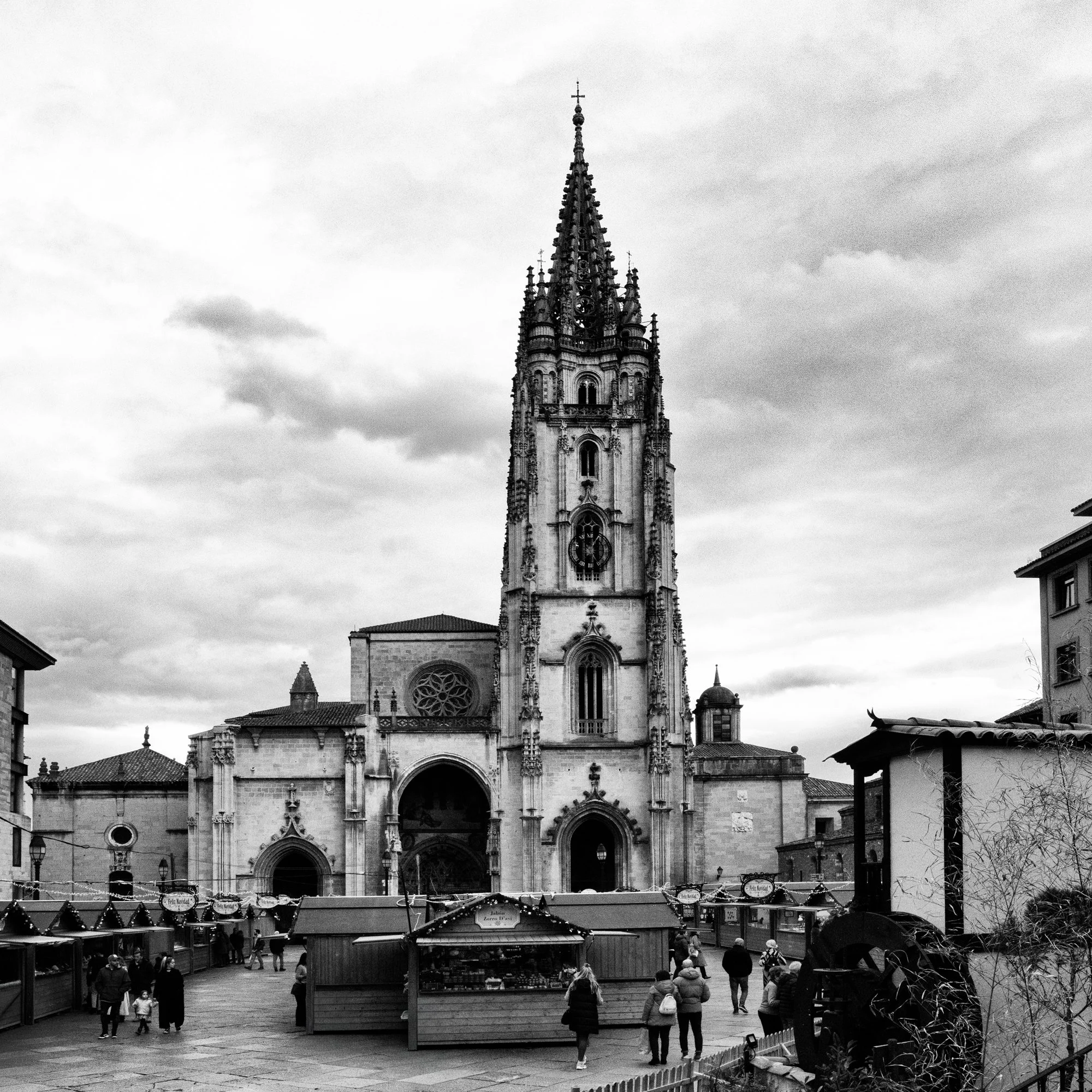
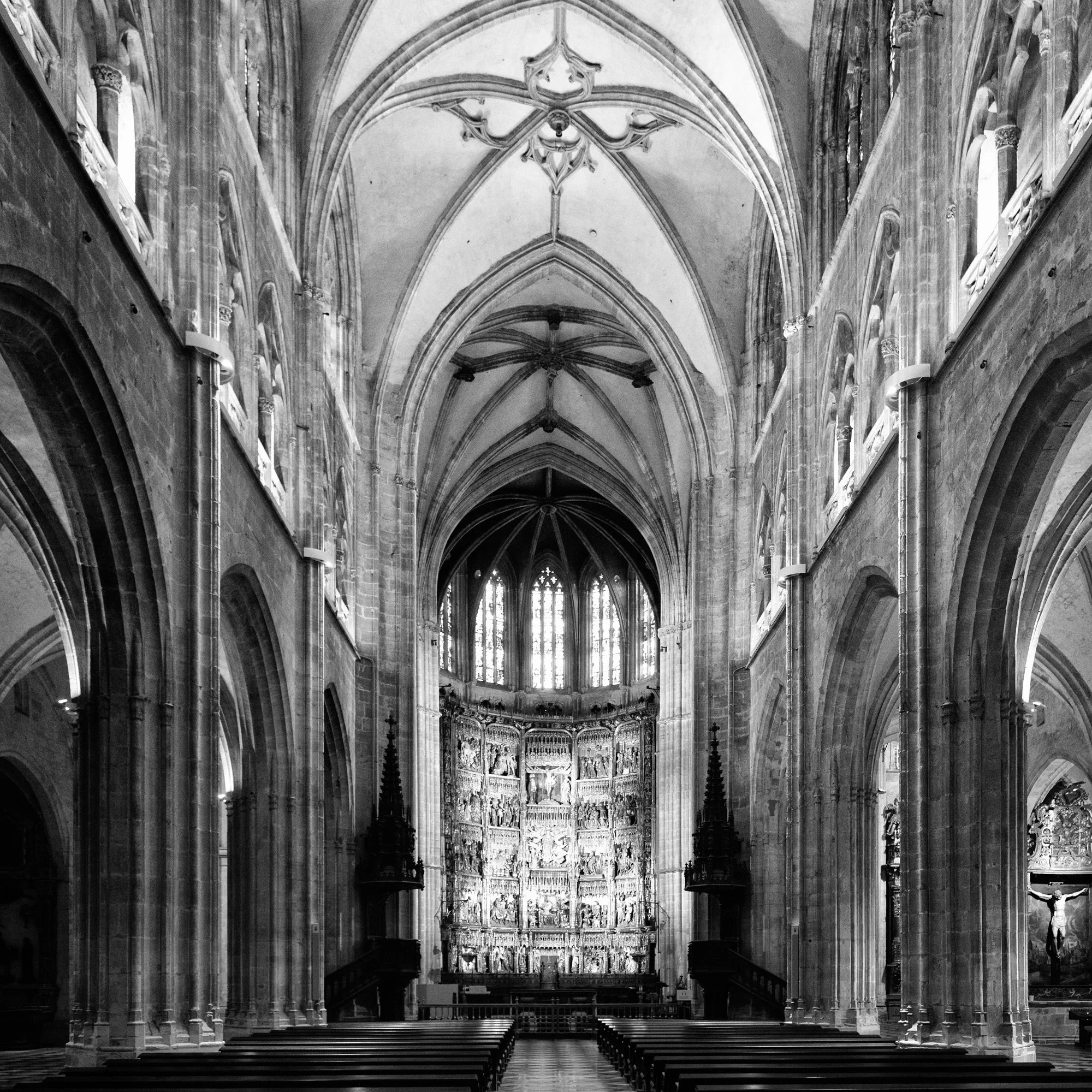
The Cathedral of Oviedo (Spain)

The Cathedral of Oviedo (Spain).

Rising above the narrow streets of Oviedo, the Catedral de San Salvador looks less like a fortress and more like a jewel box of stone. Its flamboyant Gothic spire, soaring high above the Asturian capital, is the kind of landmark medieval pilgrims once spotted from miles away, their hearts quickening at the sight.

The cathedral’s story begins much earlier than its Gothic face suggests. Beneath the arches and chapels lies the legacy of King Alfonso II, who in the 9th century made Oviedo the royal seat of Asturias and built the first church here. His sanctuary became the repository of priceless relics—the Holy Shroud, the Cross of the Angels, the Cross of Victory—that gave the cathedral a reputation rivaling even Santiago de Compostela. For medieval pilgrims, the saying was clear: “He who goes to Santiago without visiting San Salvador, visits the servant but misses the Lord.”

Walking inside today, you still feel the weight of that devotion. The Cámara Santa, a UNESCO World Heritage site, glows with golden reliquaries. The cloisters open onto quiet stone corridors where bishops and kings once plotted history. And high above, the stained glass paints the floor with shards of color as if time itself had slowed.

The Cathedral of Oviedo is not just a monument; it is a reminder that faith, art, and politics once intertwined so tightly that they left behind a treasure for centuries to marvel at.

Further Reading

  • Peter Linehan, History and the Historians of Medieval Spain (Oxford University Press, 1993)

  • James D’Emilio, The Royal Patronage of Oviedo Cathedral in the Early Middle Ages (Speculum, 1995)

The interior of the Cathedral of Oviedo (Spain).

The Iglesia de Santa María del Naranco and the Church of San Miguel de Lillo: Architectural Marvels of the Asturian Kingdom

The church of San Miguel de Lillo.

Perched on the lush slopes of Monte Naranco, overlooking the city of Oviedo, stand two extraordinary monuments of early medieval architecture: the Iglesia de Santa María del Naranco and the Church of San Miguel de Lillo. Constructed during the reign of King Ramiro I in the mid-9th century, these structures offer profound insights into the cultural and political landscape of the Asturian Kingdom, a bastion of Christian resistance during the Reconquista. 

Iglesia de Santa María del Naranco: Originally built in 848 AD as a royal palace for King Ramiro I, this building was later consecrated as a church. It reflects the Asturian Kingdom's response to the turmoil and cultural exchanges of the time. The structure's sophisticated design, featuring ribbed barrel vaults, grand arcades, and intricate relief sculptures, illustrates a period of relative stability and artistic flourishing. The architectural style combines elements of late Roman and Visigothic traditions with innovative Asturian features, highlighting a unique blend of influences during a time when the kingdom was consolidating its identity amidst external threats.

The church of San Miguel de Lillo: Situated nearby, this church also commissioned by King Ramiro I, served as a royal chapel. Despite being partially in ruins, San Miguel de Lillo retains its historical significance and showcases the architectural ingenuity of the era. The church's three-aisled basilica layout, adorned with horseshoe arches and intricate carvings, demonstrates the continuation and evolution of pre-Romanesque art forms. The detailed frescoes and sculptural work reveal a sophisticated understanding of religious iconography and artistic expression, reflecting the spiritual and cultural aspirations of the Asturian people.

Built during a period marked by both conflict and cultural synthesis, the Iglesia de Santa María del Naranco and the Church of San Miguel de Lillo stand as enduring symbols of the Asturian Kingdom's resilience and artistic achievements. These architectural marvels not only encapsulate the spirit of their time but also offer a timeless legacy of Spain's medieval heritage.

Iglesia de Santa María del Naranco.