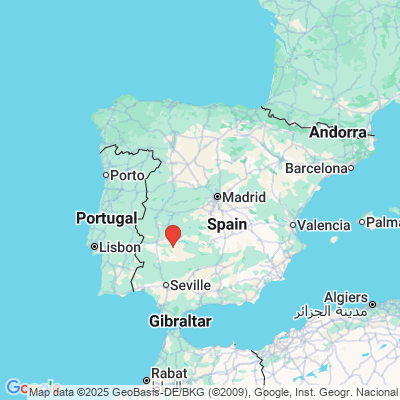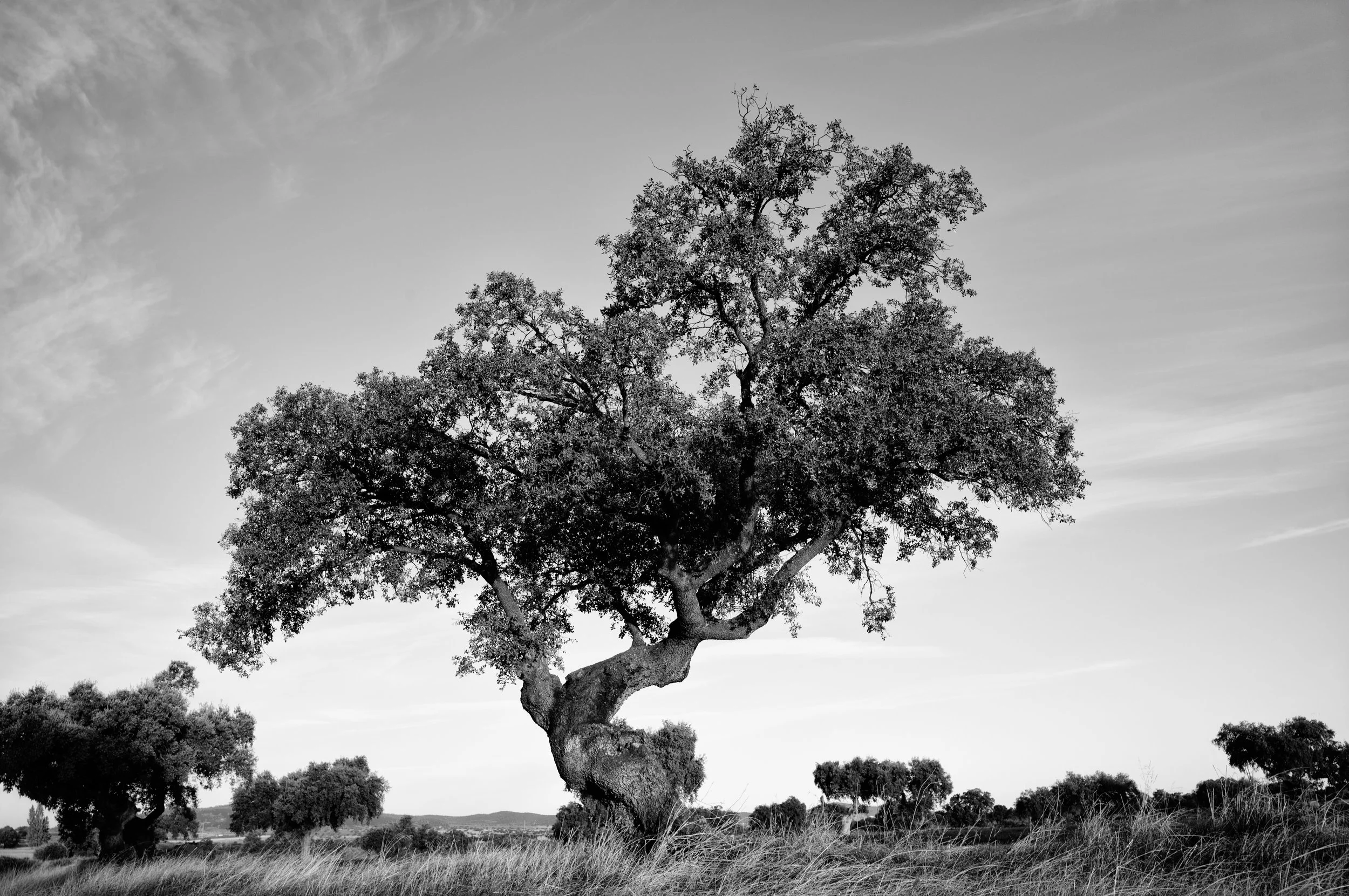
The encina (Quercus ilex subsp. ballota).
Across the sun-blasted plains of Extremadura stands a tree that seems older than memory itself: the Quercus ilex subsp. ballota, the encina. These holm oaks, with their twisted trunks and low, sheltering crowns, are more than trees — they are the quiet storytellers of the dehesa.
Each encina appears carved by time. Their bark is creased like the face of someone who has lived deeply, weathering centuries of drought, wind, and long summers. Under their branches Romans marched, medieval herdsmen rested, and generations of travellers found shade in the shimmering heat. Every curve in their silhouette suggests another chapter of the land’s unwritten history.
Yet the encina’s gift is not only its presence but its bounty. Its acorns — the bellotas — fall each autumn like small polished gems, feeding deer, birds, and most famously the Iberian pigs. These pigs roam freely beneath the canopy, fattening on nothing but bellotas and wild herbs. From this ancient relationship emerges one of Spain’s greatest treasures: jamón ibérico de bellota, the silky, aromatic ham revered around the world.
In a region of sharp light and deep silence, the encina remains evergreen — a symbol of endurance and quiet generosity. Stand beneath one at dusk and you feel it: the tree is not just part of the landscape; it is its memory and its heartbeat. As long as the encinas endure, so too will the spirit of Extremadura.