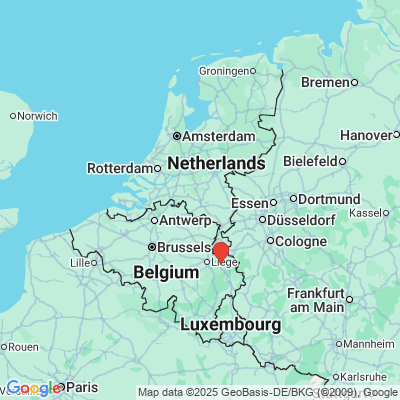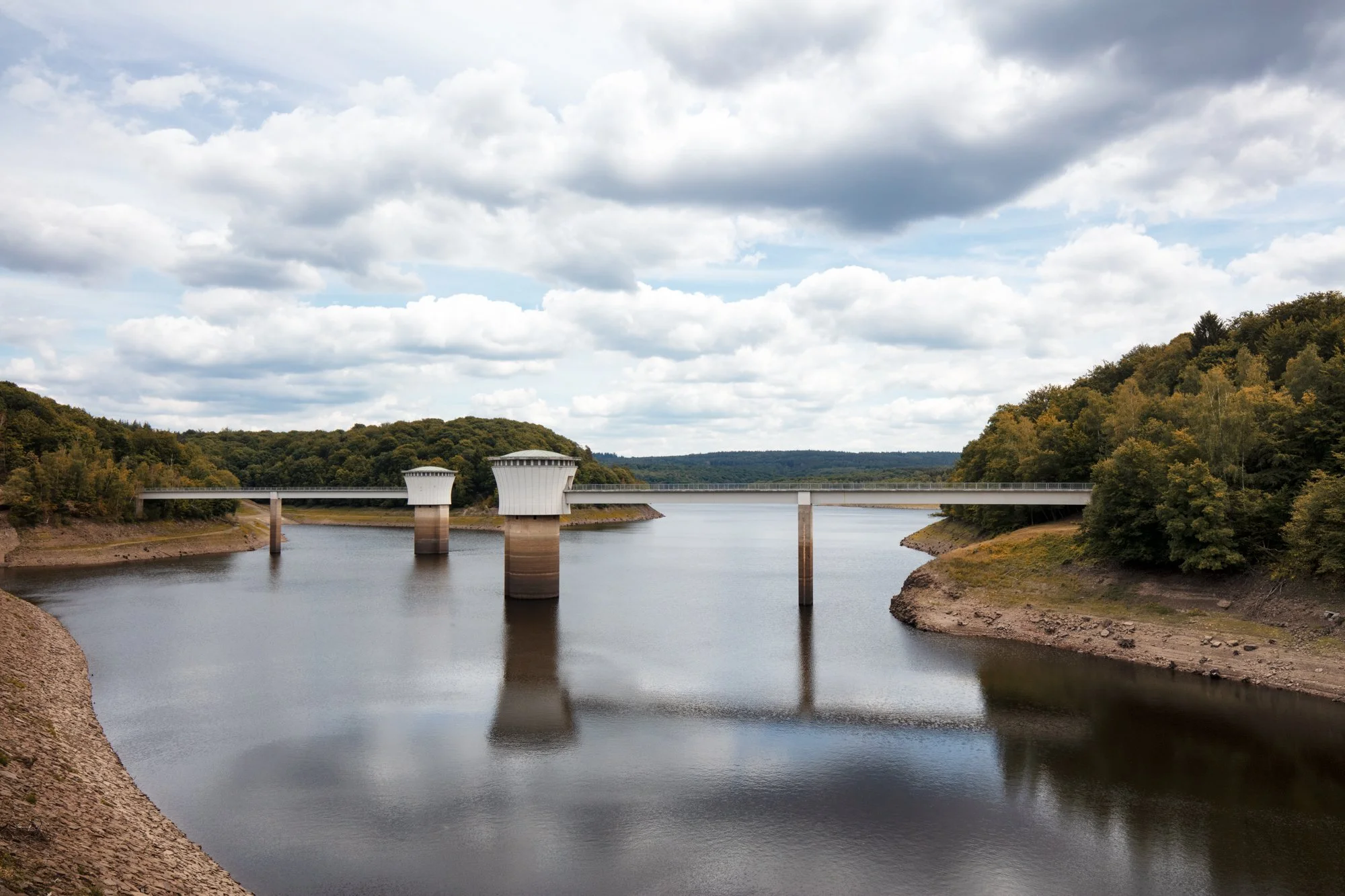
The two intake towers next to the Gileppe dam (Belgium).
In the hills above Verviers, the Gileppe River widens into a quiet, steel-blue sheet. Cutting across it is a slim footbridge that seems to float—and, anchoring the span, two white cylinders rise from the water like sentinels. These are the intake towers of the Gileppe Dam, the pieces of engineering you rarely notice in postcards but that keep the whole system breathing.
The story began in the 19th century, when Verviers’ booming wool industry needed a steady supply of clean, soft water. Belgium built one of Europe’s earliest large masonry dams here to regulate flow and store reserves. It worked—so well that, a century later, the reservoir was expanded and modernized. The intake towers you see were added during that upgrade. Each can “sip” water at different depths, mixing the right layers so what leaves the lake for homes and factories is clear, cool, and consistent year-round.
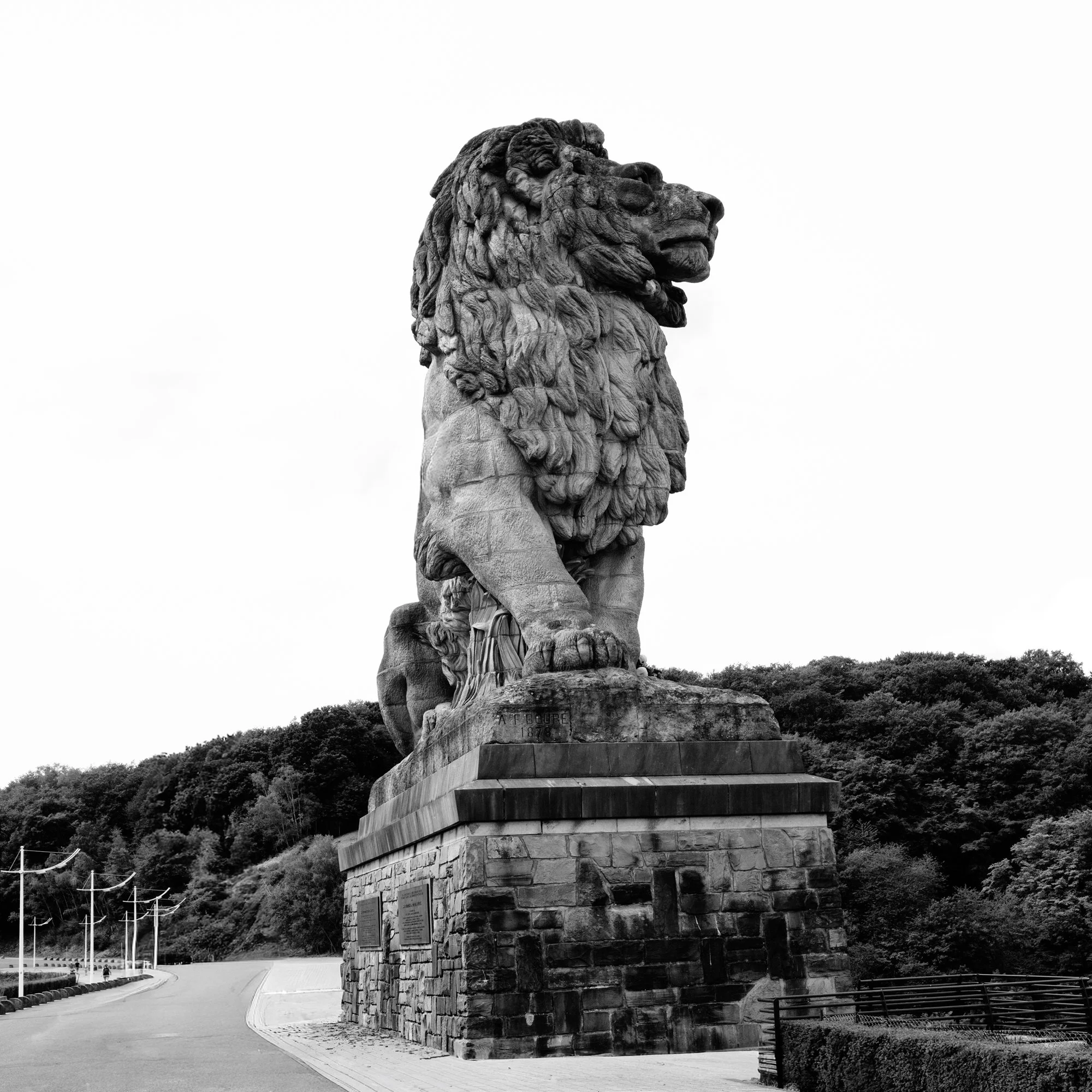
The Lion of Gileppe.
Walk the crest and the site reads like a timeline of industrial ambition and environmental pragmatism. The monumental Lion of Gileppe still keeps guard, a symbol of the dam’s first age; the elegant towers and footbridge mark the second. When the water is low, the pale bands on the concrete tell of dry summers; after rain, the lake climbs back to the tree line and the towers seem shorter, as if the landscape has taken a long breath.
Come for the views from the panoramic tower, the forest trails, and the wide skies reflected in the reservoir. Stay a moment by those two white sentinels. They’re the quiet heart of the lake—engineering disguised as calm.