art & architecture

Books, Madness, and Don Quixote

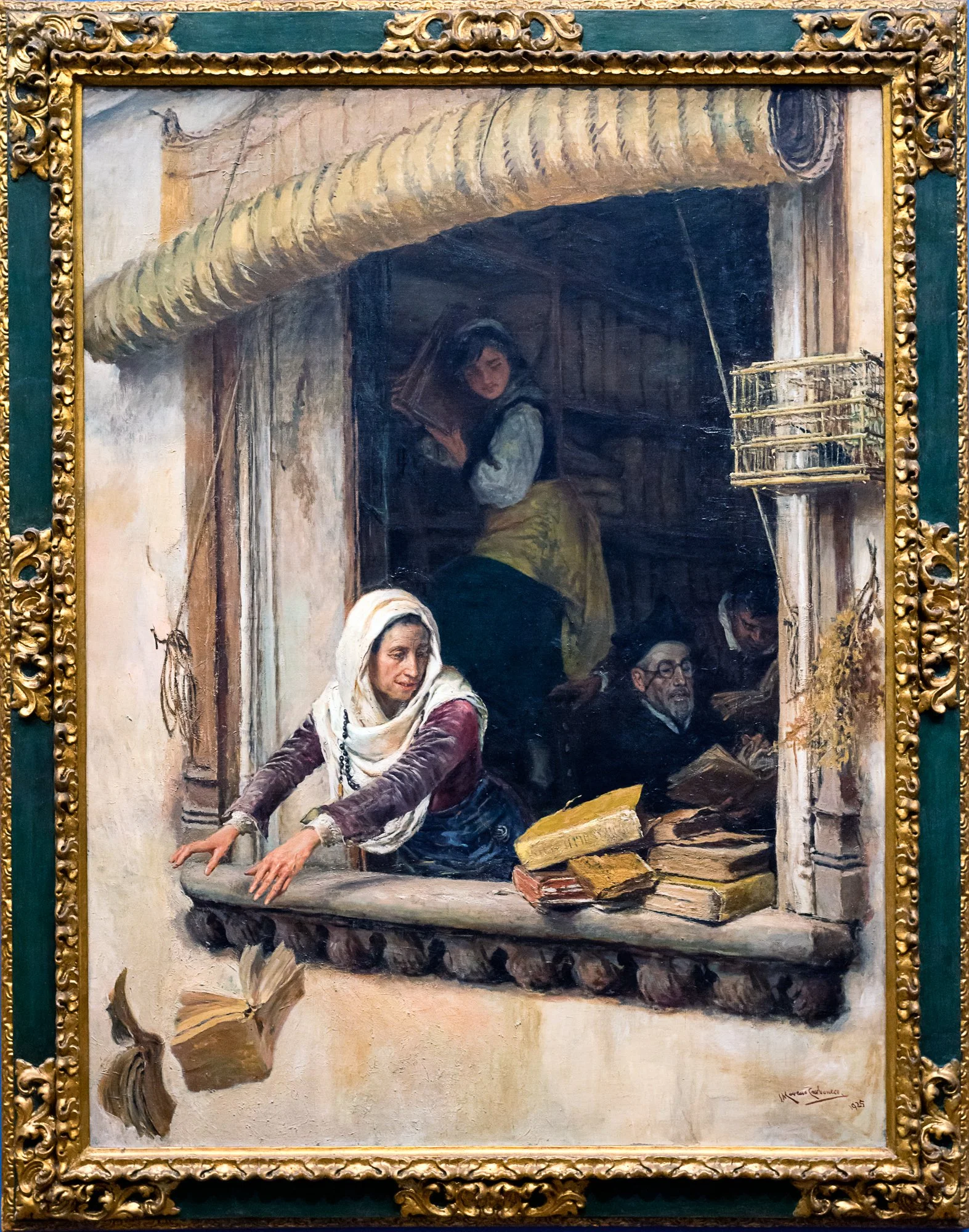
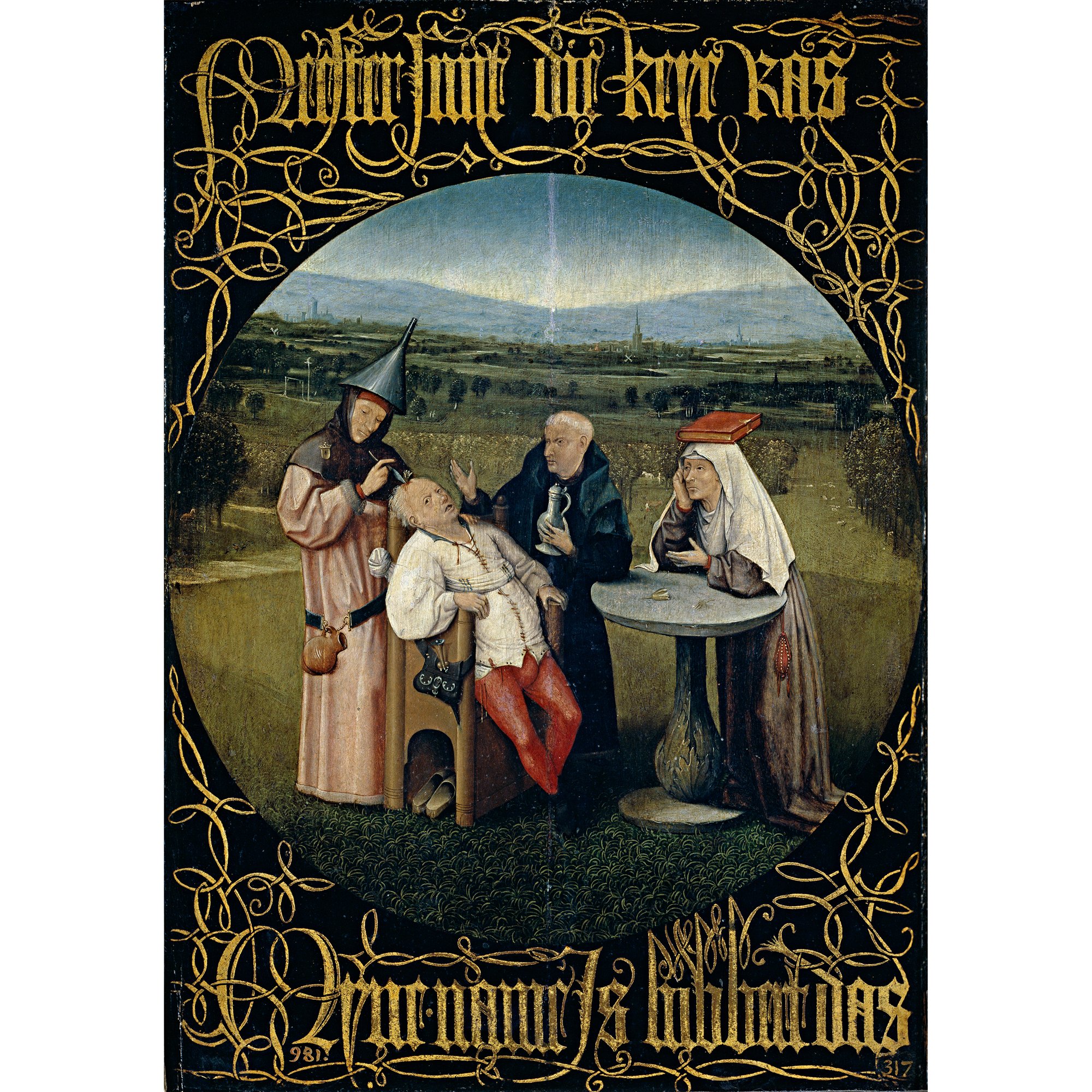
José Moreno Carbonero, El escrutinio (1925), Museo de Málaga – The priest and barber put Don Quixote’s library on trial.
In the Museo de Málaga hangs a painting inspired by one of the most memorable scenes in Spanish literature. The work, “El escrutinio” (“The Scrutiny”), was painted in 1925 by the Malagueño artist José Moreno Carbonero.

The scene comes from Don Quijote de la Mancha by Miguel de Cervantes.

The Painter
José Moreno Carbonero (1860–1942) was one of Spain’s leading historical painters. Born in Málaga, he trained in Madrid and Paris and became known for dramatic scenes from Spanish history. One of his most famous paintings shows the moment Christopher Columbus was received by the Catholic Monarchs after returning from the New World.

Besides historical subjects, he occasionally turned to Spanish literature for inspiration. “El escrutinio” is one such example.

The Scene

In the early chapters of Don Quixote, the aging nobleman Alonso Quijano loses himself in books about knights and chivalry. Convinced that these stories have driven him mad, his friends decide to examine his library.

The village priest and the barber inspect the books one by one—“the scrutiny.” Some are condemned and thrown aside to be burned, while a few are spared. The episode is humorous, but it also allowed Cervantes to poke fun at the popular literature of his time.

Moreno Carbonero captures this moment perfectly: figures gathered around a pile of books, debating their fate.

Seen today in the museum in Málaga, the painting is both a tribute to Cervantes and a reminder of the power of stories. After all, in Don Quixote it is books that inspire a man to reinvent the world—and sometimes even himself.

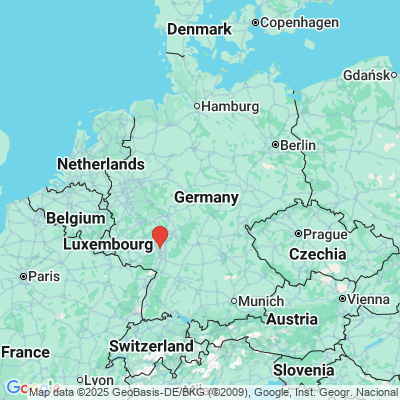
Trier's Dom and the Liebfrauenkirche

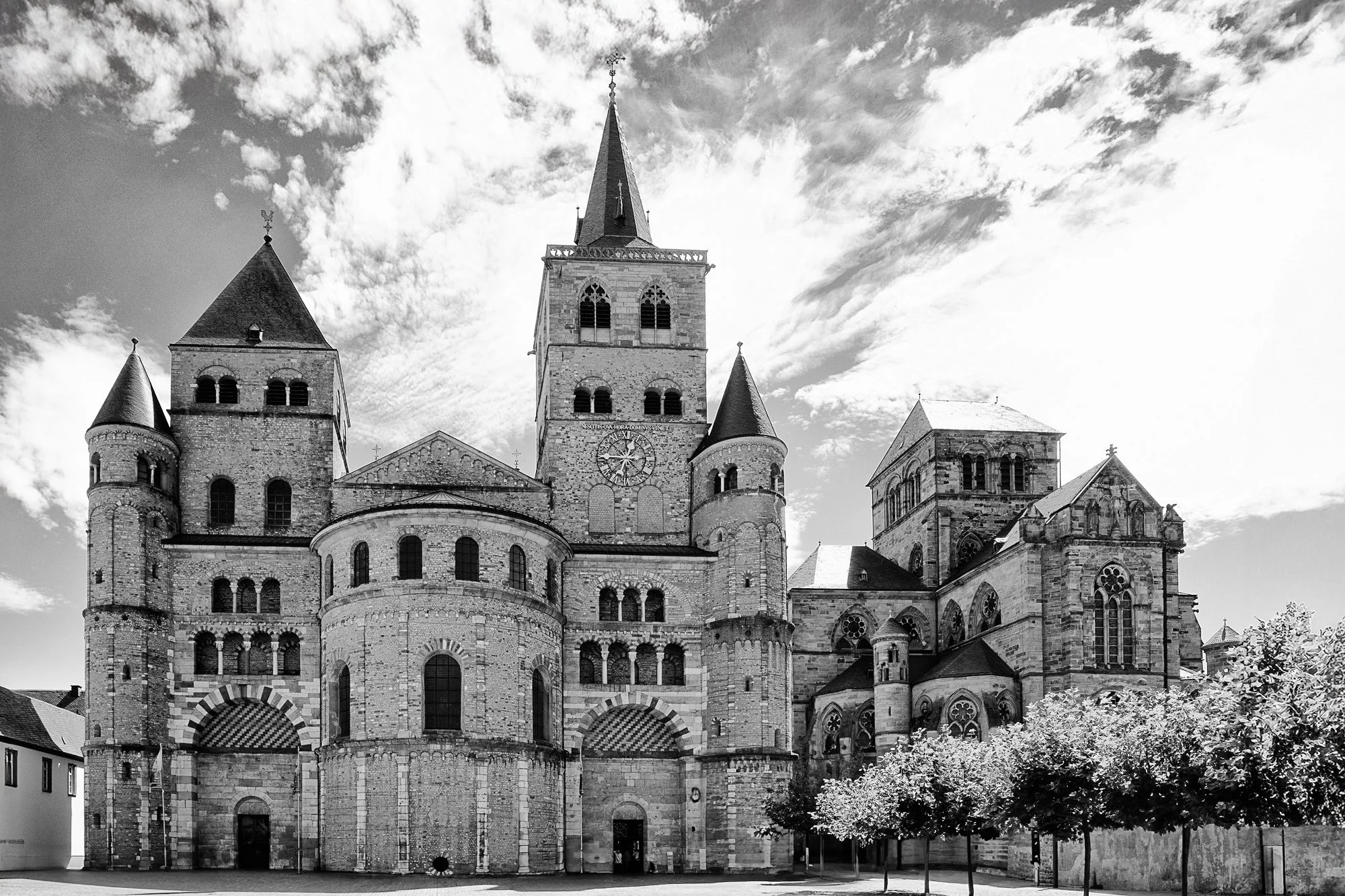
Trier’s Dom (left) and the Liebfrauenkirche (right).

Stand on the Domfreihof, squarely before the west front of Trier’s cathedral. The stones give off that old, cool breath. Bells roll somewhere above the roofs. In this one view—Dom St. Peter straight ahead, Liebfrauenkirche just to the right—the city’s whole timeline seems to unspool.

The Dom: Rome Repurposed, Empire Remembered

Beneath the Romanesque towers runs a core of 4th-century masonry: a Constantinian church complex raised after Christianity’s legalization. Trier—Augusta Treverorum, founded as a Roman city around 16 BCE—became an imperial residence in the early 300s; Constantine and his court were here c. 306–316. Around c. 326–330, palace ground and Roman brick were folded into a monumental double church. You’re looking at that antique skeleton wrapped in later skin.

The rebuilds came in waves. 10th–12th centuries: Ottonian and Romanesque campaigns thickened the westwork and towers, giving the façade its fortress calm. 13th century: Gothic openings at the east drew more light into the choir. Late 17th–18th centuries: Baroque furnishings softened the interior. 1944 air raids cracked vaults; post-1945 restorations pared the space back to clarity.

The cathedral also reads like a ledger of power. By 1356, the Archbishop of Trier stood among the empire’s seven prince-electors under the Golden Bull, choosing kings of the Romans. From chancery to mint, from market tolls to monasteries, the cathedral chapter worked within government as much as alongside it. And devotion ran on its own clock: pilgrim surges for the Heiliger Rock (Holy Tunic) mark dates across the centuries—1512, 1844, 1891, 1933, 1959, 1996, 2012—each season swelling the square you’re standing in.

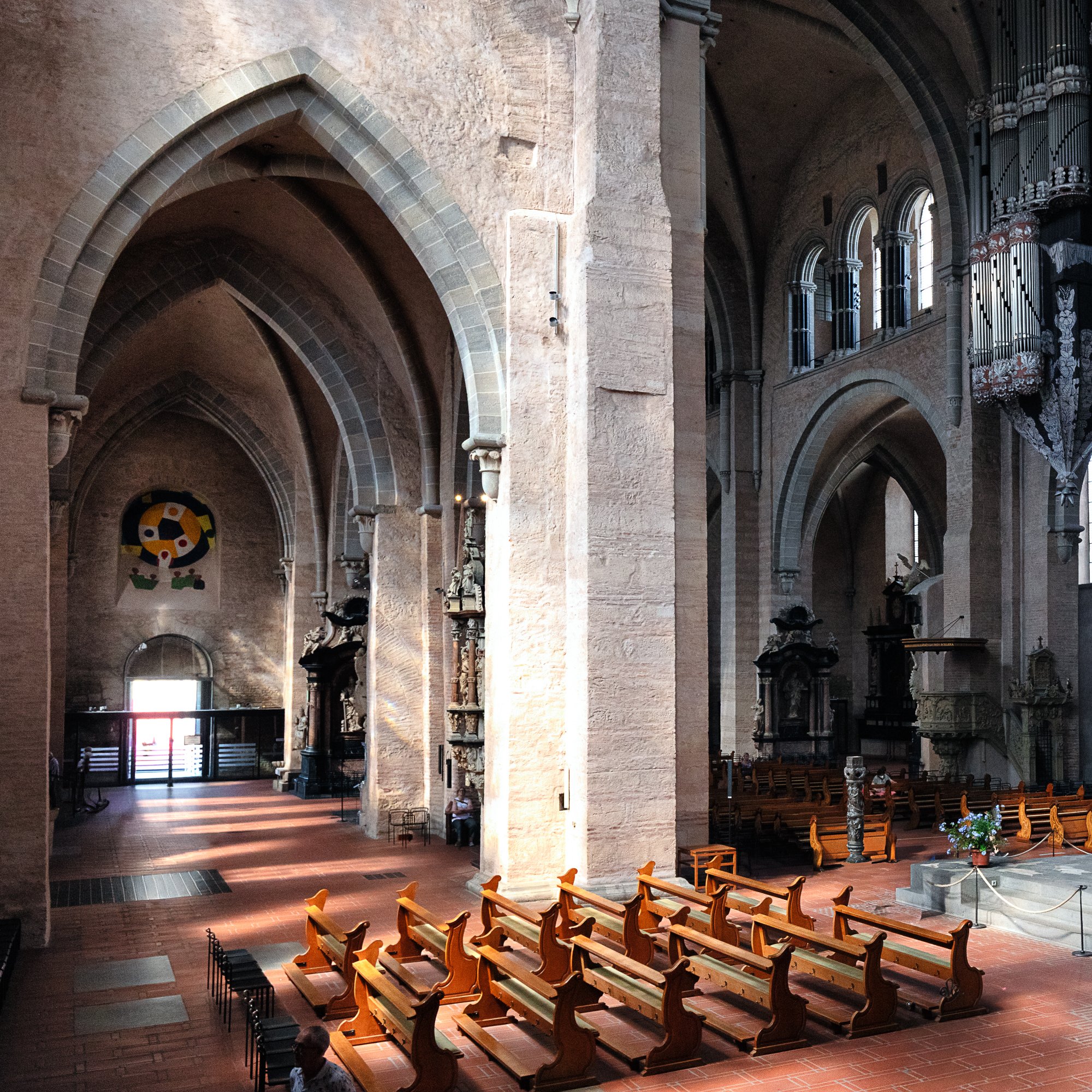
The interior of Trier’s Dom.

The Liebfrauenkirche: A Rose of Early Gothic

Glance right and the mood changes. Where the Dom plants its feet, Liebfrauen rises on tiptoe. Built c. 1227–1243 (with finishing work into the 1260s), it is among the earliest pure Gothic churches in Germany. Its plan—an interlaced cross inscribed in a circle—unfurls like a stone flower. Twelve main supports ring the center: apostles, months, tribes, the ordered cosmos in geometry. Tracery and pointed arches turn stone into lace; the portal frames shadow rather than mass. If the Dom is Rome baptized, Liebfrauen is France translated—Gothic ideas traveling the Moselle in the early 1200s and settling into local craft.

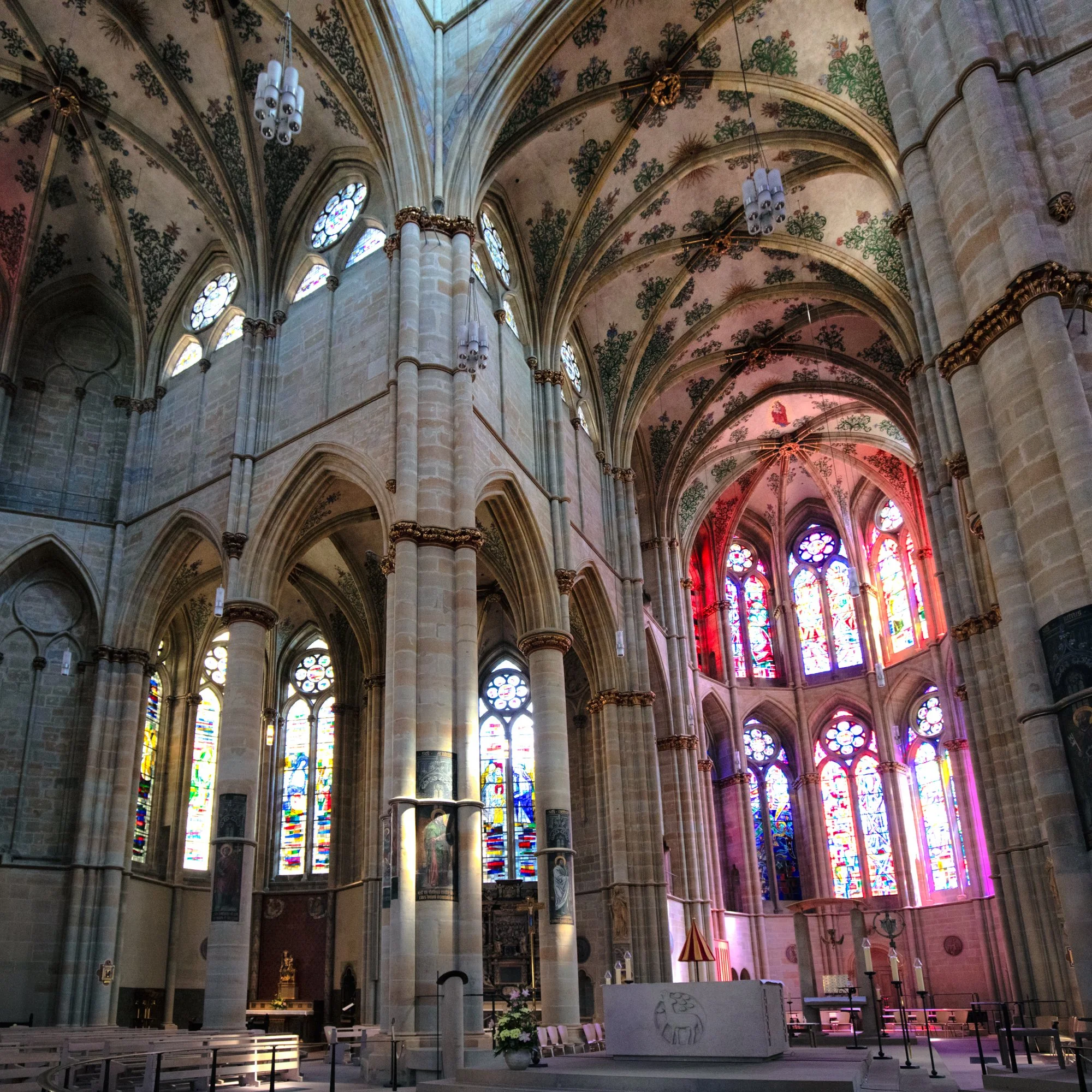
The interior of the Liebfrauenkirche.

One Square, Many Ages

From this spot you can pace the centuries with your eyes. The Dom’s antique core (c. 330) meets its medieval armor (1000s–1200s); Liebfrauen’s airy leap (1230s) stands almost shoulder-to-shoulder. Behind the façades lies a city that has practiced continuity: the Aula Palatina (Constantine’s throne hall, c. 310), the Imperial Baths (4th century), the Porta Nigra (c. 180–200). Power shifted—from emperors to bishops to electors to citizens—but the thread held.

War shook both churches; scaffolds grew like forests. When the dust of the 1940s settled, careful restorations returned them to the rhythm of daily use. The square filled again with processions and choirs; tourists folded into pews; a baptismal font caught candlelight as it had six hundred years earlier.

Reading the Façades from Left to Right

Let your gaze travel across the Dom’s west front: layered portals, blind arcades, the disciplined stacking of volumes—architecture meant to hold a crowd’s attention on a feast day. Slide to the right and the rhythm quickens. Liebfrauen’s tracery reads like script on vellum; its buttresses pull the eye upward; its plan—circle, cross, petals—seems to turn even while it stands still. Two voices, one conversation: memory and ascent, weight and light.

The Present Tense of Old Stones

In 1986, UNESCO folded these churches into the World Heritage listing “Roman Monuments, Cathedral of St. Peter and Church of Our Lady in Trier.” That inscription didn’t freeze them in amber; it simply named what you feel on the square. The Dom’s Roman bones and medieval muscle, Liebfrauen’s early Gothic inventiveness, the Roman city still breathing all around—each has taken its turn leading. They still do. Stand here long enough, and the bell that calls the hour will sound like a page turning.

The Four Troublesome Heads by Georges Méliès

While visiting the Museo Picasso Málaga, we unexpectedly encountered a small piece of film history: Un Homme de Tête (1898) by the French filmmaker and magician Georges Méliès.

The film lasts barely a minute. Méliès sits at a table, removes his own head, places it on the table, and then calmly grows a new one. Soon several identical heads are singing and moving next to each other like a strange little choir.

For audiences in 1898, this must have looked like pure magic. In reality Méliès used simple but ingenious techniques such as multiple exposures and stop-camera editing—methods that made the camera itself a magician’s tool.

Seeing this playful experiment in the Picasso Museum makes sense in an unexpected way. Artists of the early twentieth century were fascinated by new ways of showing reality. Just as Méliès multiplied his own head on screen, Pablo Picasso would later fragment faces and perspectives in his paintings.

Different media, but the same spirit: curiosity, experimentation, and the joy of discovering what images can do.

And all of it captured in a film that lasts barely a minute.

The Cathedral of Bourges: Gothic Architecture and its Messages Carved in Stone

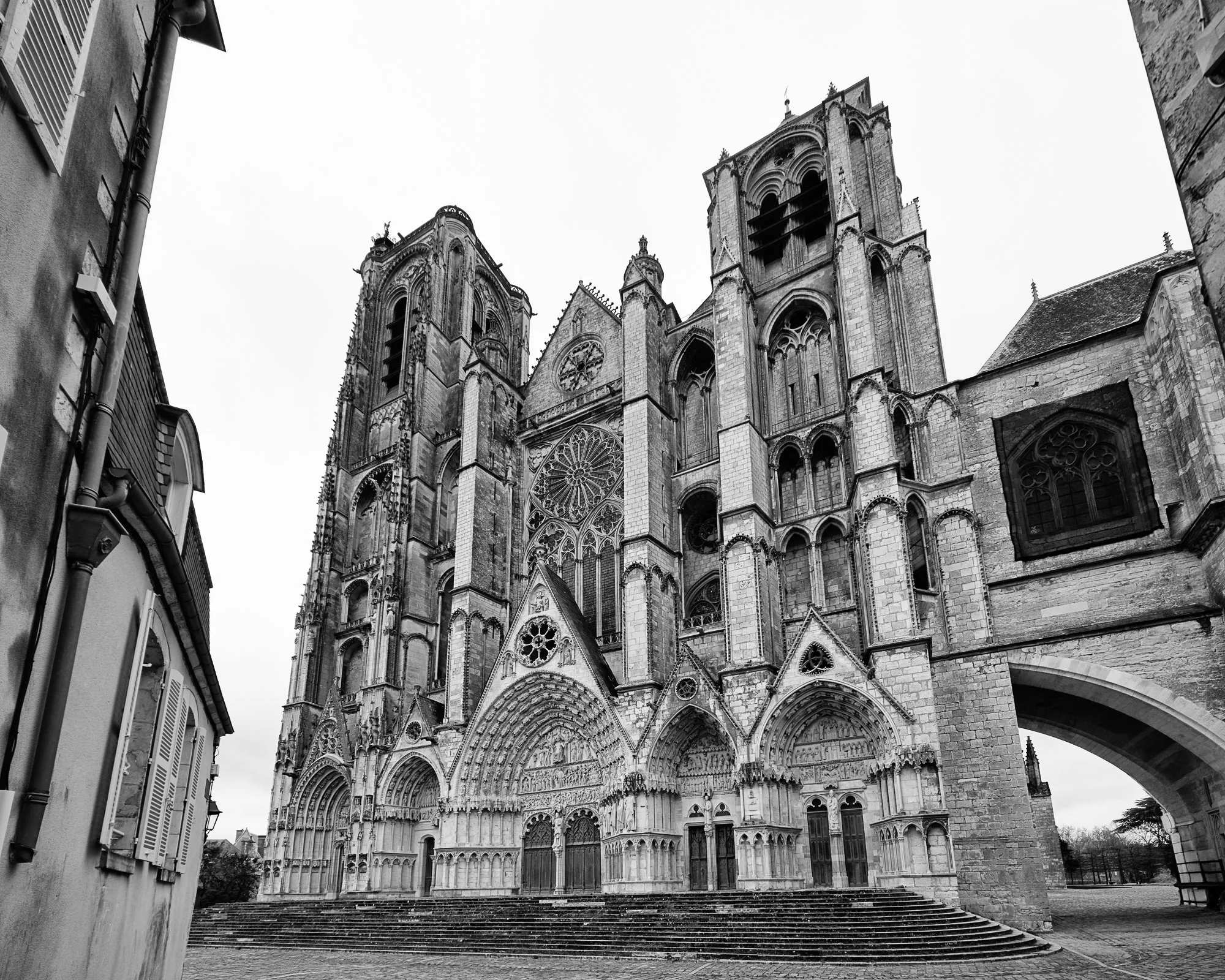
The façade of the Cathedral of Bourges rising above the narrow streets of the old town.

In the quiet center of France stands one of the most remarkable Gothic churches in Europe: Saint-Étienne Cathedral in Bourges.

At first sight it looks like many other medieval cathedrals—towers, flying buttresses, and stained glass rising above the rooftops of the old town. But Bourges reveals its uniqueness the moment you begin to explore it, both inside and outside.

The cathedral tells its story not only through space and light, but also through sculpture.

A Bold Vision of the Gothic Age

Construction of the cathedral began in 1195, under Archbishop Henri de Sully. The eastern end was built first, followed during the thirteenth century by the nave and façade. The church was finally consecrated in 1324.

What makes Bourges exceptional is its plan. Unlike most Gothic cathedrals, it has no transept. Instead of forming a cross shape, the building stretches forward in a continuous space composed of five parallel aisles running the full length of the church.

The central nave rises high above two layers of side aisles, creating a powerful sense of depth and perspective that draws the eye toward the choir.

Geometry in Stone

Medieval builders believed that geometry reflected the divine order of the world. At Bourges this idea becomes visible in the architecture itself.

The cathedral appears to follow a carefully structured system of proportions. The plan and the vertical structure are closely related, giving the building an extraordinary sense of unity. Even today, Bourges feels less like a collection of separate parts than like a single architectural idea carried consistently through the entire structure.

The Sculptures Above the Doors

Before you even enter the cathedral, however, one of its most striking features awaits you above the great portals of the west façade.

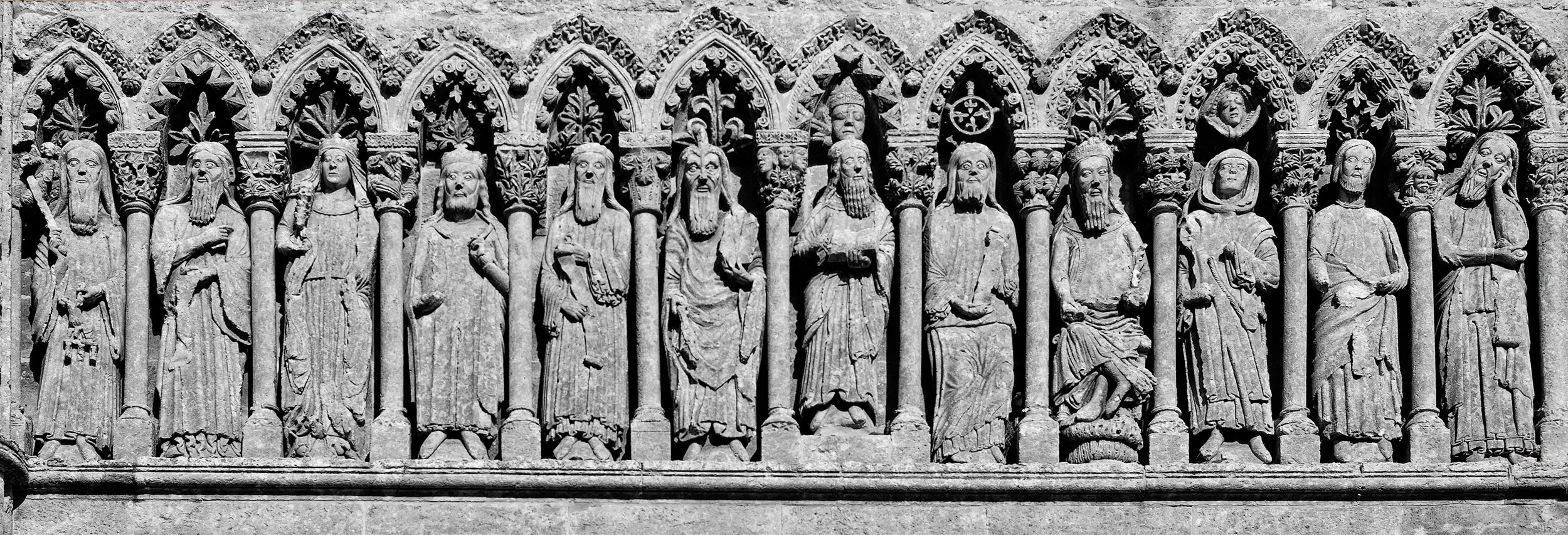
These sculpted scenes—known as tympana—form a vast stone narrative carved above the entrance doors. In the Middle Ages they functioned almost like a public book, telling biblical stories to a largely illiterate population.

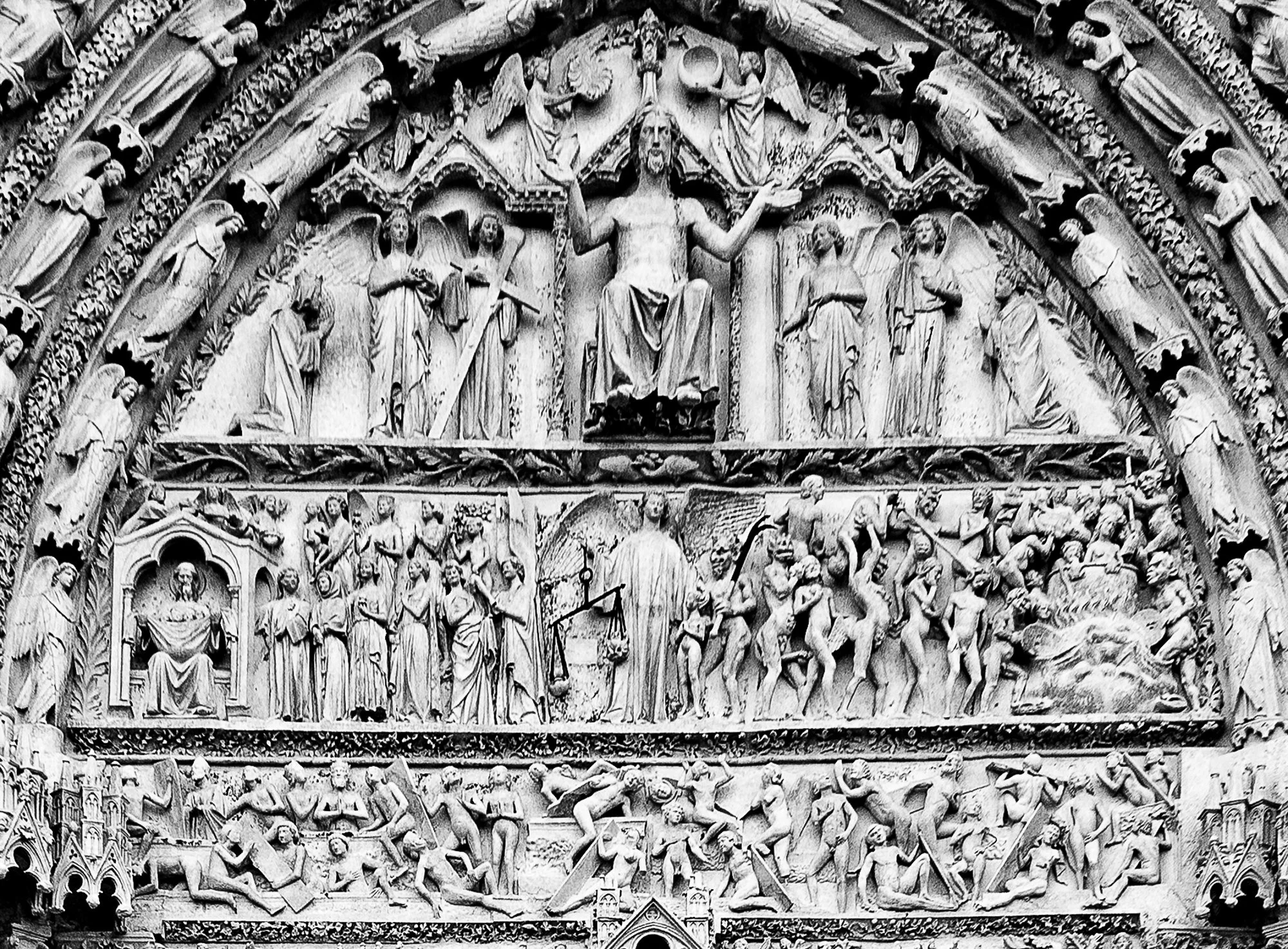
The Last Judgment carved above the central portal of Bourges Cathedral.

The central portal presents a dramatic vision of the Last Judgment. Christ sits in majesty at the center while angels, saints, and resurrected souls fill the scene. Below, the dead rise from their graves while demons drag the damned toward hell. The imagery is both vivid and deeply human: fear, hope, redemption, and justice all appear in the carved figures.

The portals on either side depict other episodes from Christian tradition, creating a sculptural introduction to the sacred space inside.

For medieval visitors arriving in Bourges, the message would have been unmistakable: this building was not just a church, but a gateway between the earthly world and the divine.

Beneath the Cathedral

Below the choir lies another fascinating space: the vast crypt. Because the cathedral was partly built over an old ditch near the Roman city walls, medieval builders constructed a massive substructure to support the new church.

Today the crypt holds sculptures, fragments of earlier decorations, and the tomb of Jean, Duke of Berry, the great patron famous for the illuminated manuscript Les Très Riches Heures.

A Quiet Masterpiece

Bourges Cathedral is now recognized as one of the great achievements of Gothic architecture and has been listed as a UNESCO World Heritage Site.

Yet compared with more famous cathedrals such as Chartres or Notre-Dame in Paris, Bourges often feels surprisingly calm.

Perhaps that makes it easier to notice what medieval builders understood so well: that architecture, sculpture, geometry, and light can all work together to tell a story.

At Bourges, that story is still written in stone.

A Contemporary Version of The Myriad Horsemen of the Apocalypse

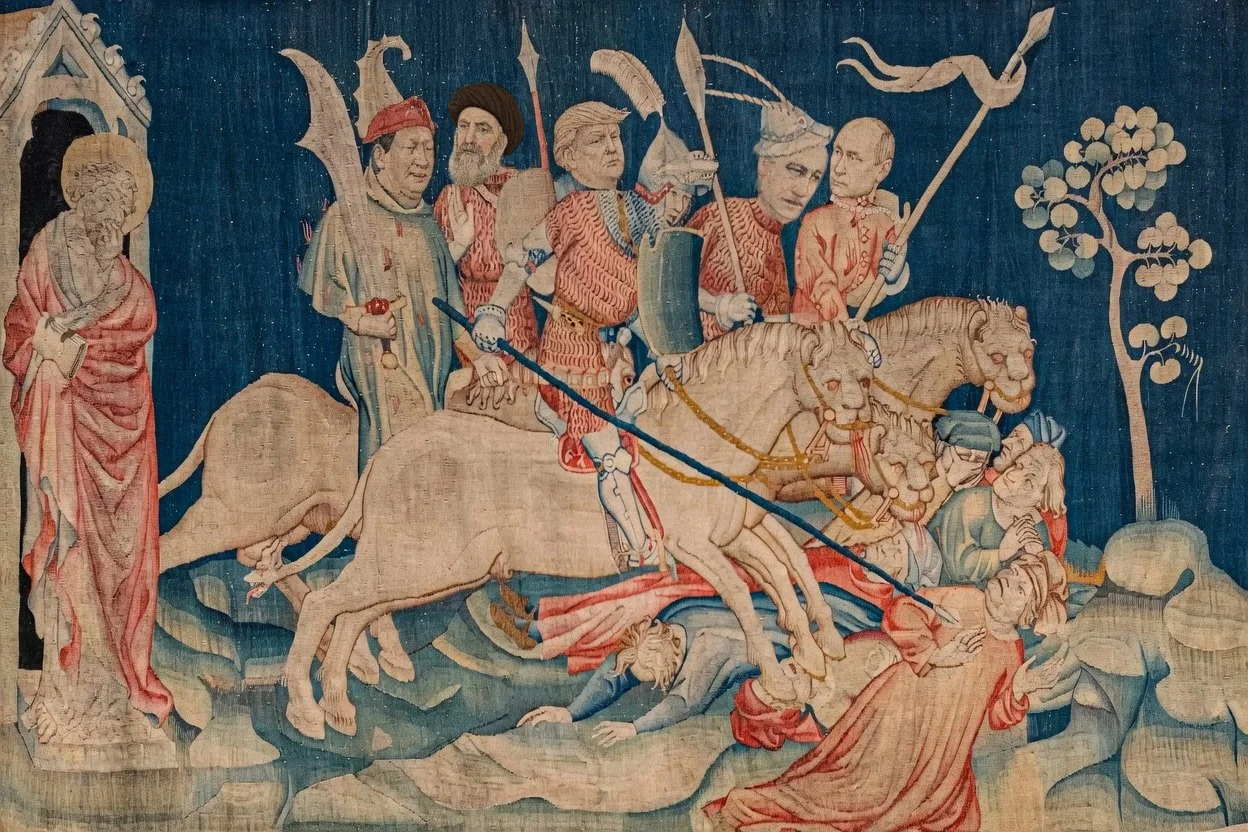
The Myriad Horsemen, this time with Xi Jinping, Ali Khamenei, Donald Trump, Benjamin Netanyahu, and Vladimir Putin.

A contemporary version of The Myriad Horsemen of the Apocalypse, this time with Xi Jinping, Ali Khamenei, Donald Trump, Benjamin Netanyahu, and Vladimir Putin.

At first glance, the image above looks like a fragment of a medieval tapestry: armored riders charging forward, people crushed beneath their horses. But look again. The riders are not medieval knights. Their faces resemble figures from today’s headlines — Xi Jinping, Ali Khamenei, Donald Trump, Benjamin Netanyahu, and Vladimir Putin.

This modern image reimagines one of the most striking scenes from the Apocalypse Tapestry in Angers, the panel often called The Myriad Horsemen. The original 14th-century tapestry illustrates the terrifying armies described in the Book of Revelation. (For the story behind the tapestry itself, see: The Apocalypse Tapestry, Château d’Angers, Angers (France).)

But medieval viewers probably saw more than a biblical vision. Europe was reeling from the Black Death and the destruction of the Hundred Years’ War. The riders even wear the armor of contemporary soldiers. To many people in 14th-century France, the apocalypse did not feel symbolic — it felt like the news of the day.

This modern reinterpretation simply continues that tradition.

Each age replaces the riders with the figures that embody its own anxieties. In the Middle Ages, they could evoke the armies ravaging France. Today, they may evoke a world unsettled by wars, rival powers, and a fragile international order.

The faces change. The uneasy sense of living in dangerous times does not.

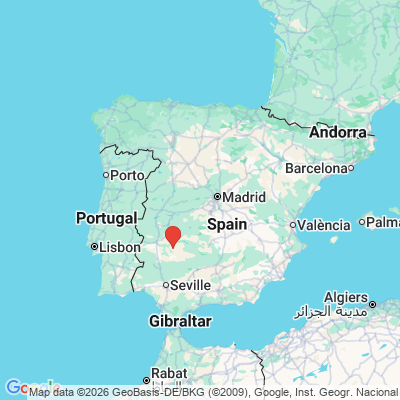
The Bronze Horse of Cancho Roano (Spain)

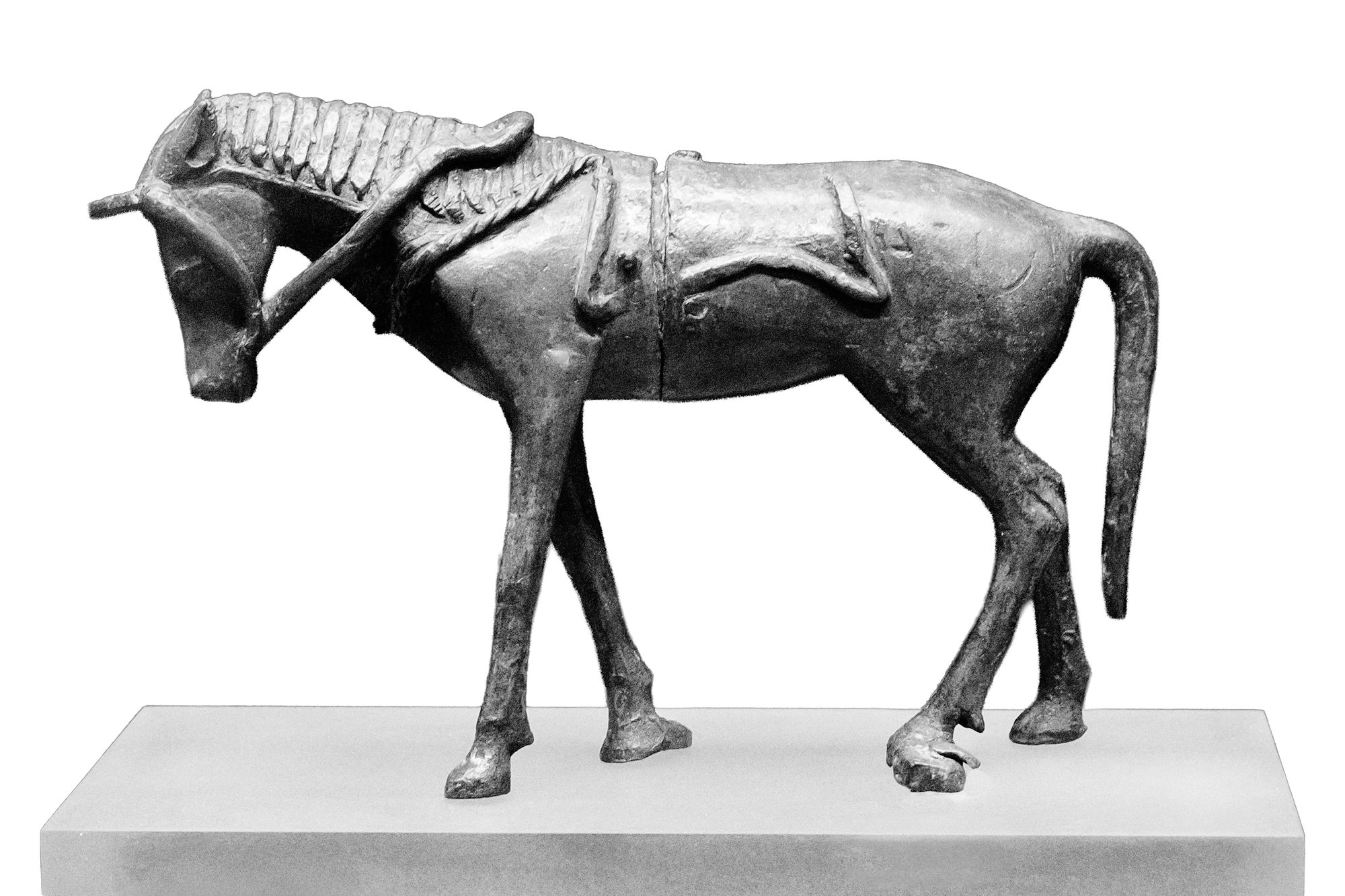
The Bronze Horse of Cancho Roano (6th–5th century BCE, Archaeological Museum of Badajoz).

In the Archaeological Museum of Badajoz, a small bronze horse quietly carries a big story. This horse sculpture from Cancho Roano, found near Zalamea de la Serena, dates to the 6th–5th century BCE, a period of profound transformation on the Iberian Peninsula.

Cast in bronze and depicted with clear elements of harness and tack, the sculpture immediately signals that this is not just an animal portrait. Horses in Iron Age Iberia were markers of power, mobility, and status, deeply embedded in both social and ritual life. Their presence in art and votive objects points to a symbolic role that went far beyond transport or warfare.

Cancho Roano itself is one of the most enigmatic archaeological sites in western Europe. Often described as a sanctuary-palace, it was constructed, modified, and ultimately destroyed in a carefully staged ritual process. Before its final abandonment, the complex was deliberately burned and sealed, preserving an extraordinary assemblage of objects beneath its floors—among them metalwork related to horses, chariots, and elite display.

The bronze horse fits seamlessly into this context. It suggests a world in which ritual, power, and belief were closely intertwined. Whether offered as a votive object, used in ceremonial display, or associated with elite identity, the sculpture reflects a society where the horse occupied a central symbolic position. Seen today, it is both an artwork and a fragment of a belief system that is only partly understood.

Further Reading

  • Sebastián Celestino Pérez, Cancho Roano: Un santuario orientalizante en el valle medio del Guadiana

  • Almagro-Gorbea & Torres Ortiz, La Edad del Hierro en la Península Ibérica

  • Barry Cunliffe, Iron Age Communities in Britain and Beyond

  • María Cruz Fernández Castro, Protohistoria de la Península Ibérica

  • Museo Arqueológico Provincial de Badajoz – exhibition catalogues and research publications

A Flemish Passion in Castile

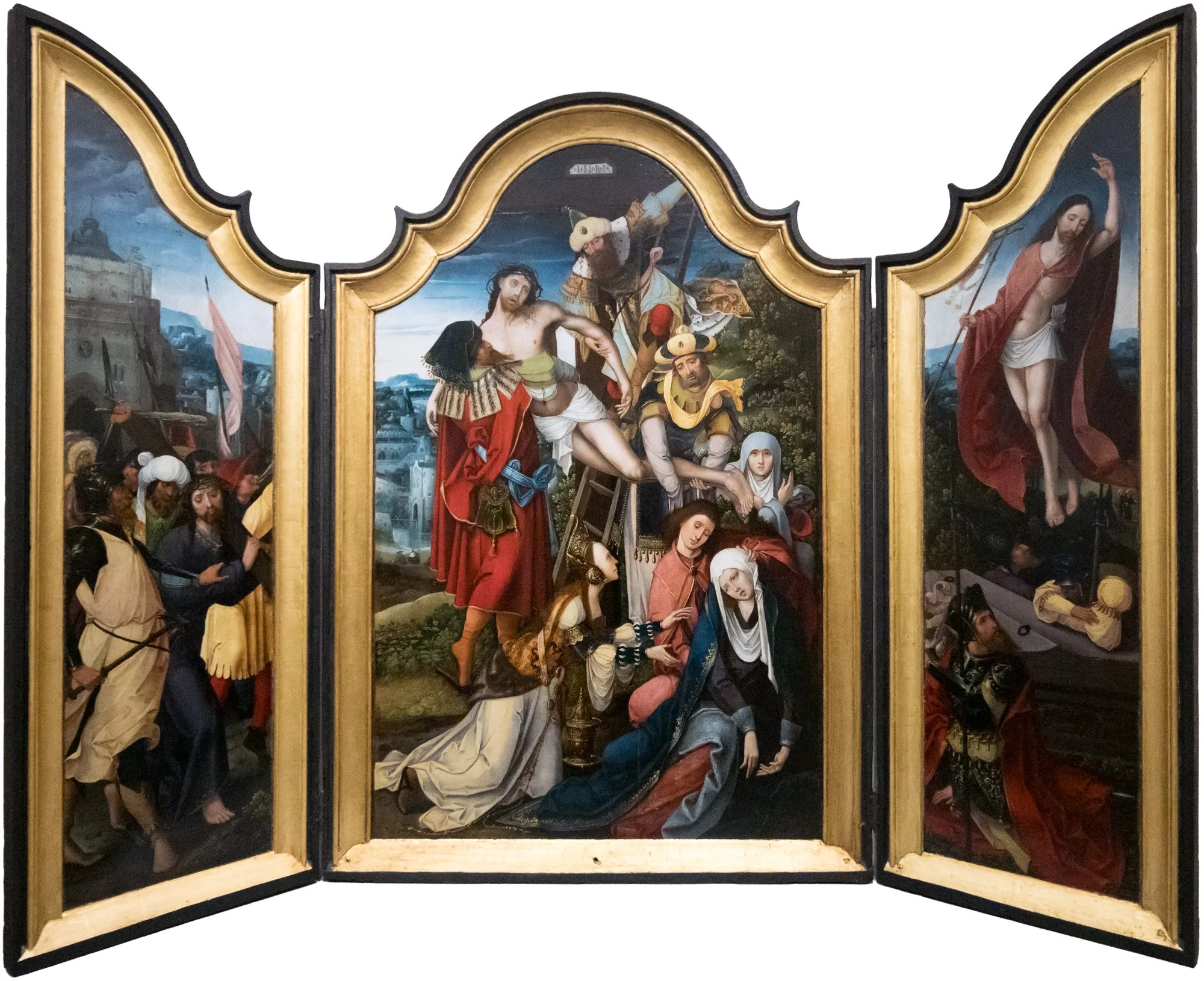
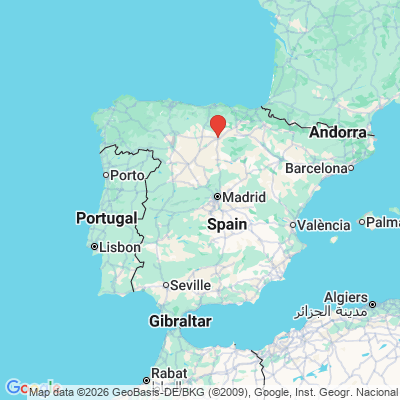
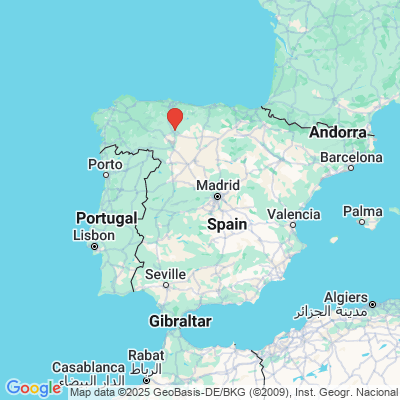
The Passion Triptych in the Royal Abbey of Las Huelgas, Burgos

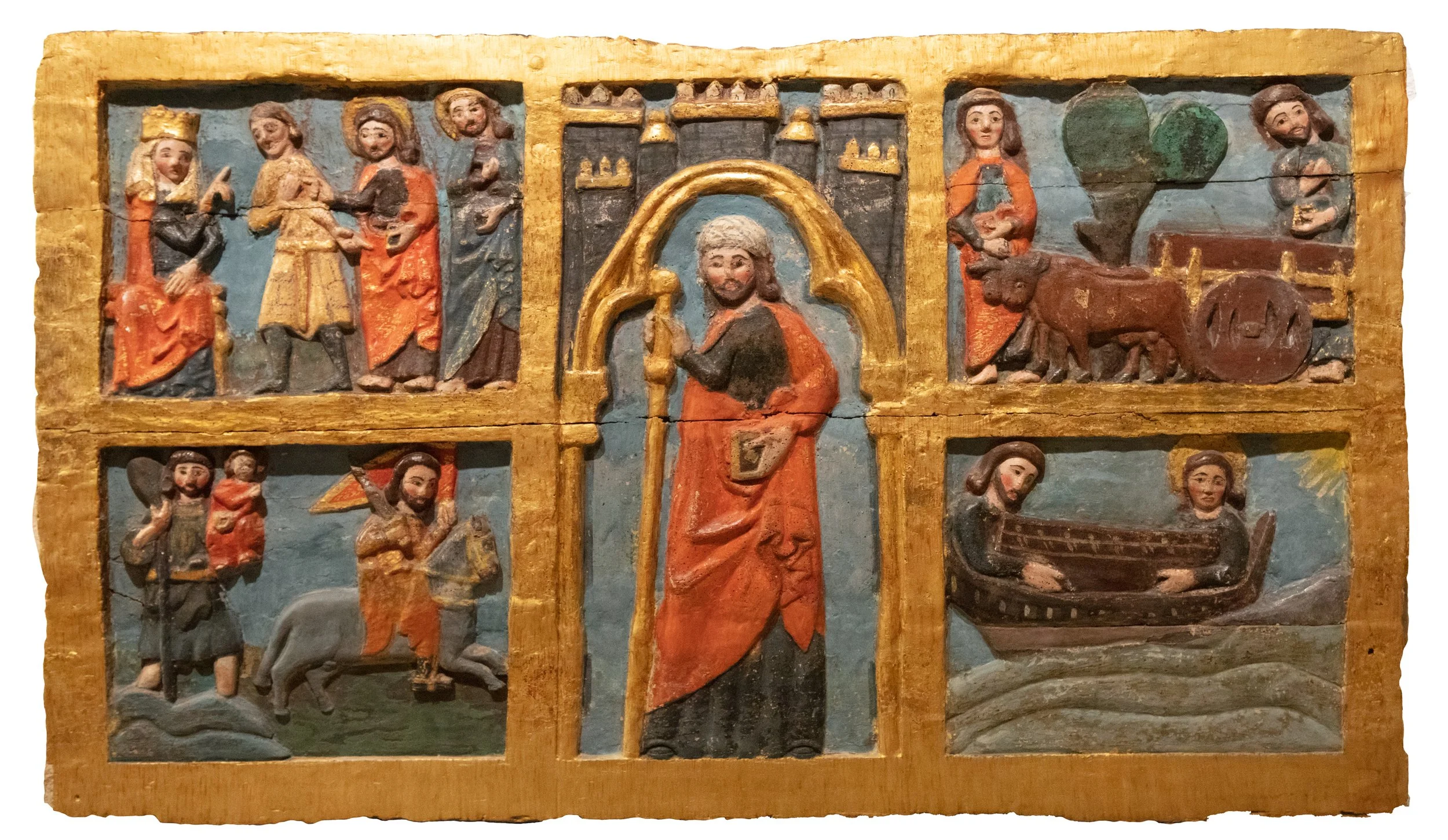
Passion Triptych, attributed to Jan de Beer, early 16th century, Monasterio de las Huelgas Reales (Burgos, Spain).

Displayed within the austere yet regal setting of the Monasterio de las Huelgas Reales in Burgos, the Tríptico de la Pasión quietly tells a far larger European story than its scale might suggest. Dated to the first quarter of the sixteenth century and attributed to Jan de Beer, the triptych is not only a devotional image of Christ’s suffering, death, and resurrection. It is also a tangible trace of the intense artistic, commercial, and dynastic ties between Flanders and Castile.

The Triptych Itself

The composition unfolds across three panels in a familiar but carefully calibrated sequence. On the left, Christ carries the cross, surrounded by a dense crowd that presses the drama into the viewer’s space. The central panel shows the Descent from the Cross: Christ’s lifeless body is lowered with solemn care, while Mary collapses in grief, her posture echoing that of her son. On the right, the Resurrection introduces a note of transcendence—Christ rises, serene and victorious, as the guards remain earthbound, asleep or bewildered.

Stylistically, the triptych belongs to the world of early-sixteenth-century Antwerp painting. The figures are elegant, sometimes slightly elongated, their gestures expressive without becoming theatrical. Draperies fall in elaborate, decorative folds; colours are rich but controlled. This balance between emotional intensity and visual refinement is characteristic of Jan de Beer and his circle, poised between late medieval devotion and the emerging tastes of the Renaissance.

Made to Travel

Works like this were never meant to stay close to home. Around 1500, Antwerp—the great commercial hub of northern Europe—had become a centre for the production of painted panels destined for export. Workshops supplied both bespoke commissions and high-quality “stock” images, especially Passion scenes and Marian subjects, which appealed to a broad international clientele. Castile, and Burgos in particular, was one of the prime destinations.

The reason was not purely aesthetic. Burgos was deeply embedded in the wool trade linking Castile to the Low Countries, and its merchants, clerics, and royal foundations had direct access to Flemish markets. Paintings travelled alongside textiles, books, and luxury goods, carried by the same commercial networks that enriched both regions.

Dynastic Ties and Royal Taste

Trade alone, however, does not explain why Flemish art found such fertile ground in royal and monastic settings. Dynastic politics played an equally decisive role. The marriage of Joanna of Castile (Juana la Loca) to Philip the Handsome, heir to the Burgundian-Habsburg realms, symbolised a profound alignment between Castile and the Burgundian Netherlands. Through this union, courtly tastes, devotional preferences, and artistic models circulated with unprecedented intensity.

Royal foundations such as Las Huelgas—closely linked to the Castilian crown and used as a dynastic mausoleum—were natural recipients of this cultural exchange. Flemish paintings, admired for their technical mastery and emotional depth, suited both the spiritual ideals of monastic life and the representational ambitions of a monarchy that now looked north as well as south.

A Quiet Witness to European Exchange

Seen today, the Tríptico de la Pasión does not shout its international pedigree. It invites close, quiet looking rather than spectacle. Yet it stands as a witness to a moment when Europe was knitted together by marriage alliances, merchant fleets, and shared religious culture. In the stillness of Las Huelgas, a Flemish Passion continues to speak—of devotion, of trade, and of a royal world that once stretched seamlessly from Antwerp to Castile.

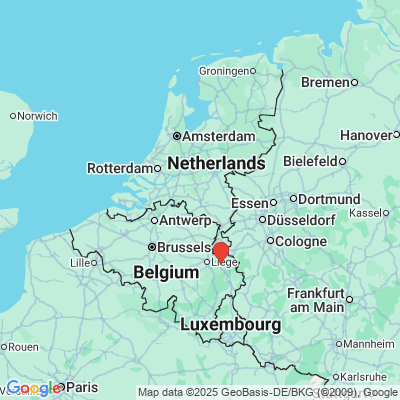
The Gileppe Dam (Belgium)

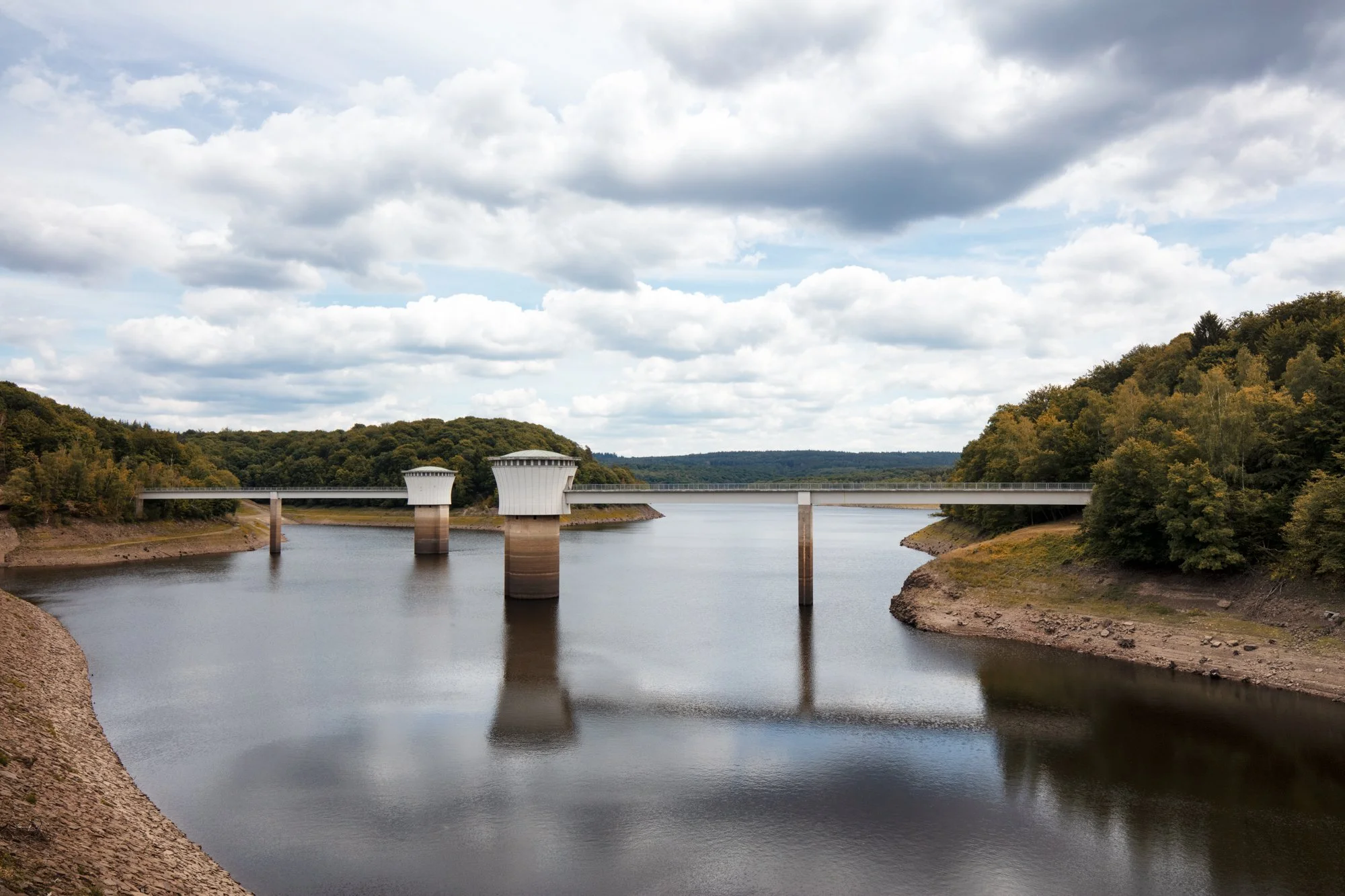
The two intake towers next to the Gileppe dam (Belgium).

In the hills above Verviers, the Gileppe River widens into a quiet, steel-blue sheet. Cutting across it is a slim footbridge that seems to float—and, anchoring the span, two white cylinders rise from the water like sentinels. These are the intake towers of the Gileppe Dam, the pieces of engineering you rarely notice in postcards but that keep the whole system breathing.

The story began in the 19th century, when Verviers’ booming wool industry needed a steady supply of clean, soft water. Belgium built one of Europe’s earliest large masonry dams here to regulate flow and store reserves. It worked—so well that, a century later, the reservoir was expanded and modernized. The intake towers you see were added during that upgrade. Each can “sip” water at different depths, mixing the right layers so what leaves the lake for homes and factories is clear, cool, and consistent year-round.

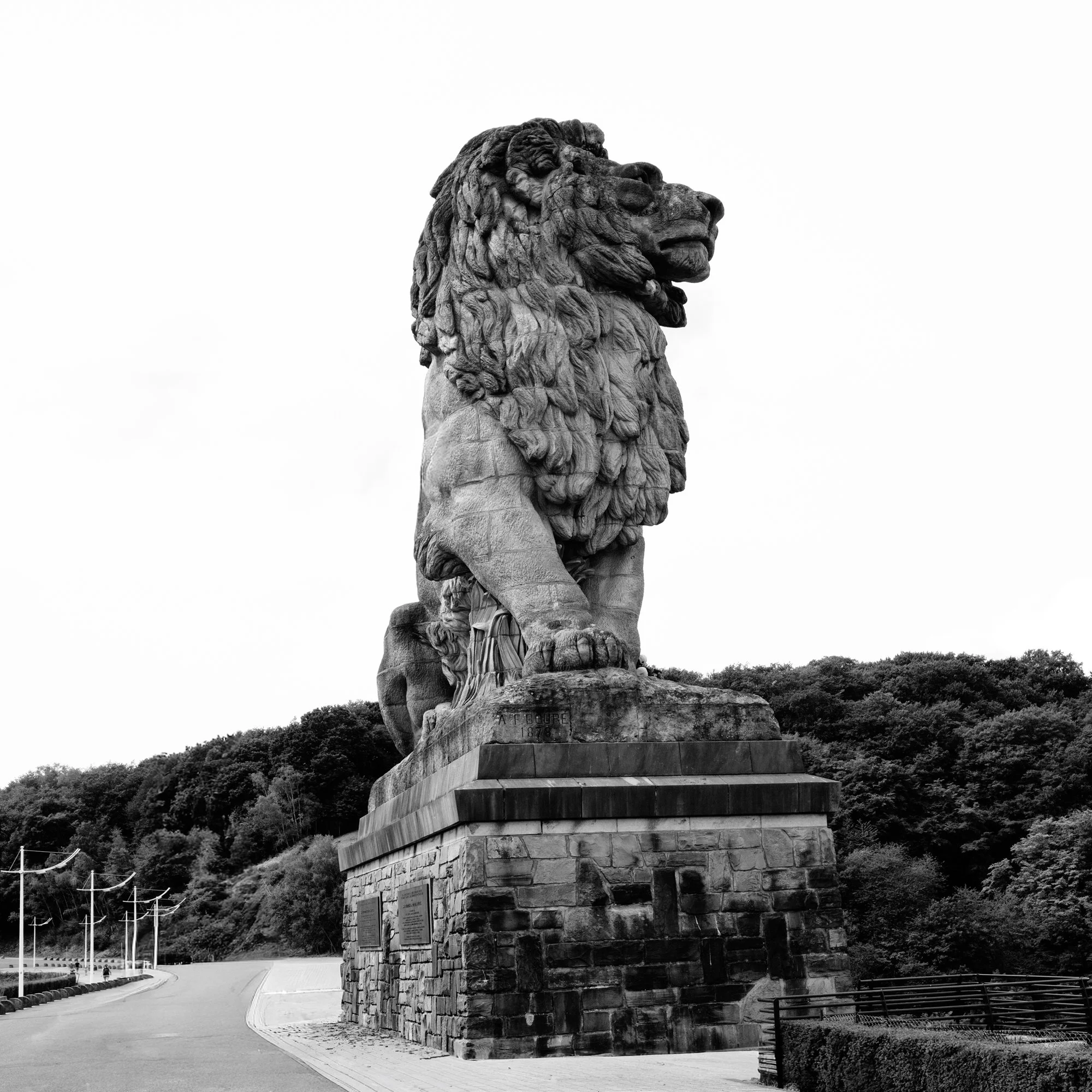
The Lion of Gileppe.

Walk the crest and the site reads like a timeline of industrial ambition and environmental pragmatism. The monumental Lion of Gileppe still keeps guard, a symbol of the dam’s first age; the elegant towers and footbridge mark the second. When the water is low, the pale bands on the concrete tell of dry summers; after rain, the lake climbs back to the tree line and the towers seem shorter, as if the landscape has taken a long breath.

Come for the views from the panoramic tower, the forest trails, and the wide skies reflected in the reservoir. Stay a moment by those two white sentinels. They’re the quiet heart of the lake—engineering disguised as calm.