
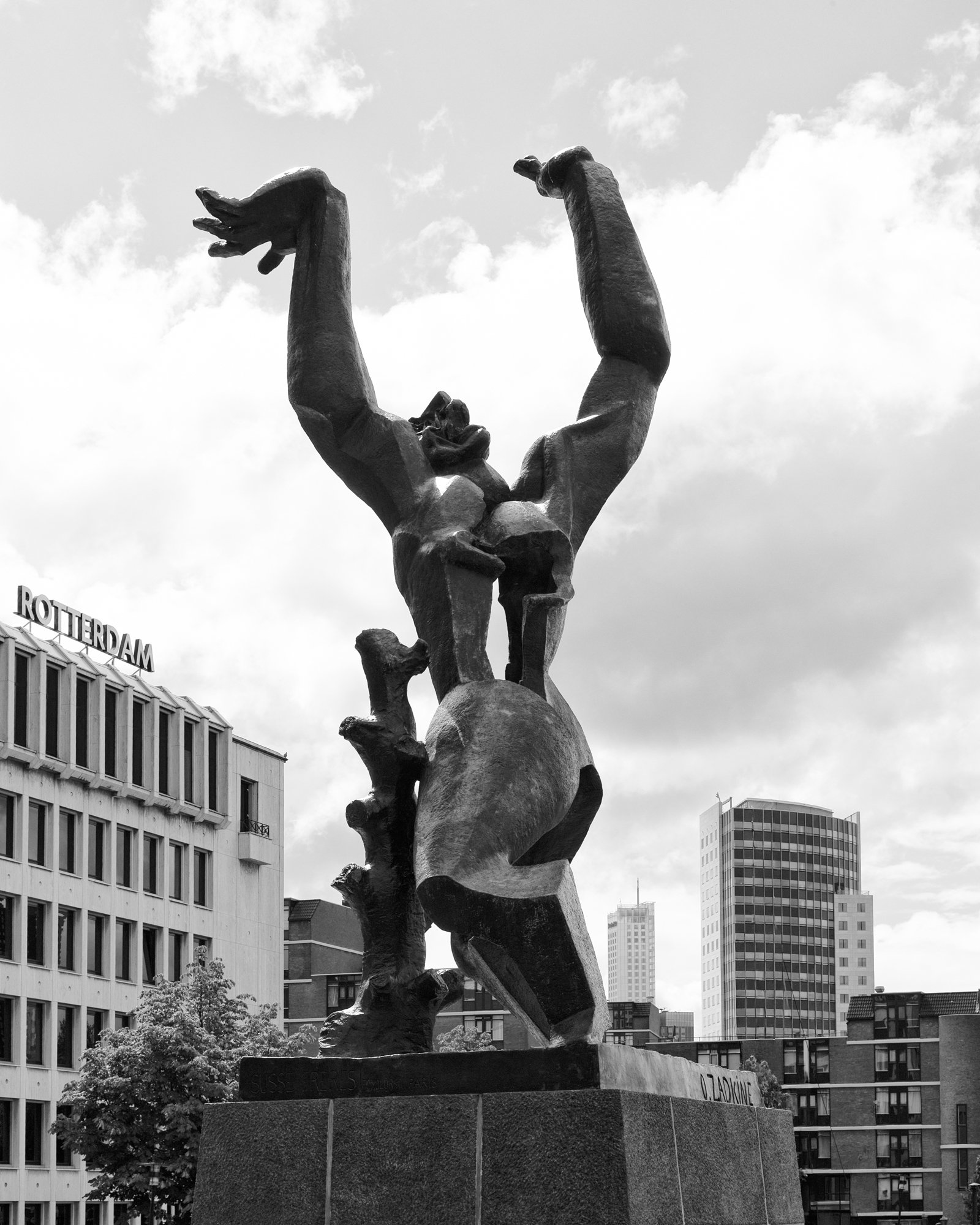
Ossip Zadkine’s “The Destroyed City” (1953): the figure cries to the sky, its heart torn away, mourning the loss that once defined Rotterdam.
When the bombs fell on Rotterdam on May 14, 1940, the medieval heart of the city vanished in a single afternoon. The aerial photograph taken shortly after the war shows the shocking emptiness — blocks of rubble replaced by a grid of bare streets, with only fragments of buildings standing like teeth in a broken jaw.
A few years later, Ossip Zadkine gave this loss a body and a voice. His bronze sculpture De Verwoeste Stad (The Destroyed City, 1953) stands near the city’s current center, close to where that lost heart once beat. The figure’s body torn open and twisted, with its arms reaching out to the sky — crying out in anguish, its chest ripped apart, its heart gone. Zadkine, a Russian-born sculptor who lived in Paris, said he was inspired after passing through Rotterdam and feeling the pain of a “city without a heart.”
The monument does not celebrate triumph; it embodies grief. Yet within its contorted form lives a strange vitality — the cry that turns upward, transforming pain into defiance. Around it, a new city has risen: modern, vertical, and full of life. The statue remains as its conscience, reminding Rotterdam not only of what was destroyed, but of the courage to rebuild.
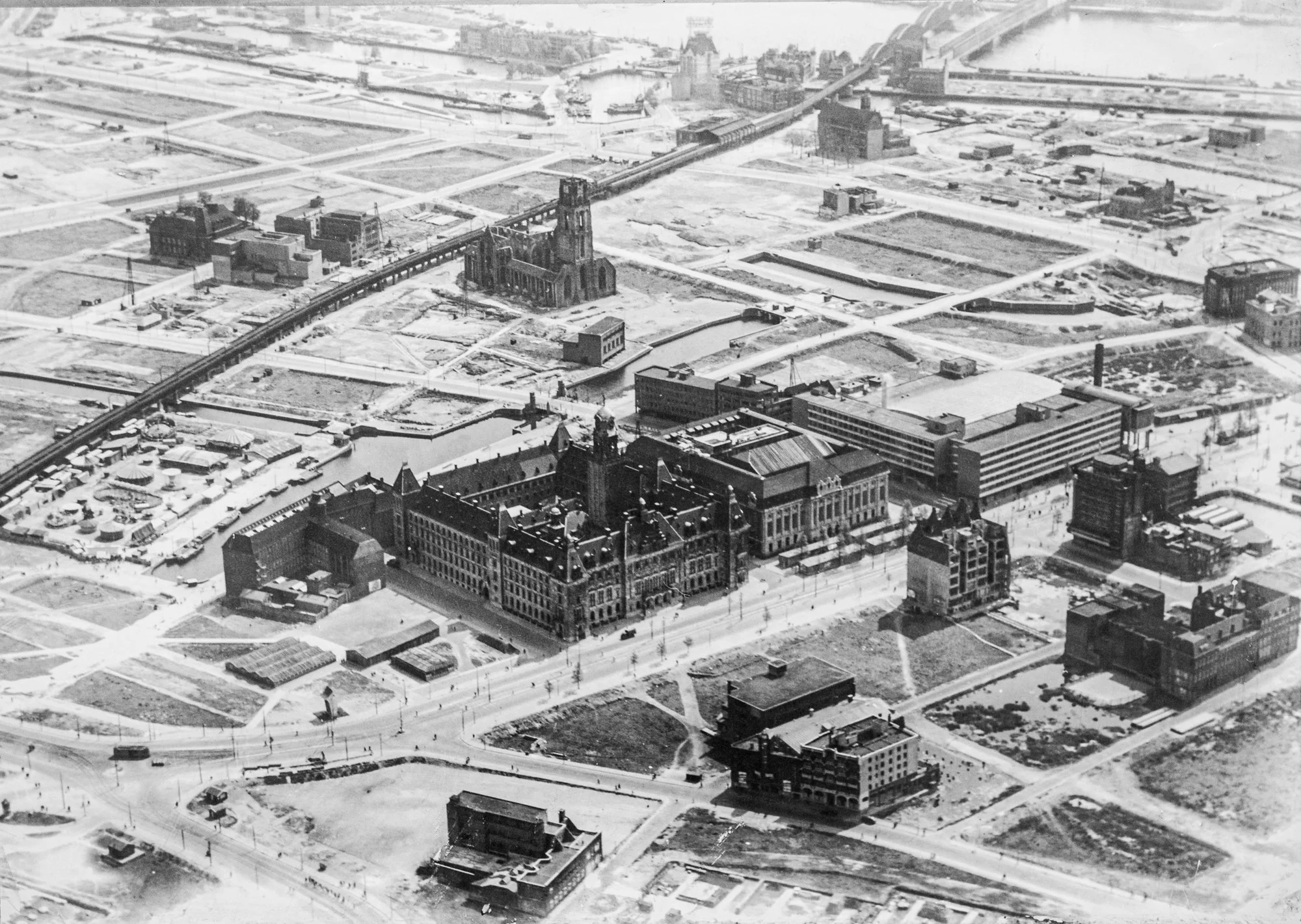
An aerial photo of the city center taken shortly after World War II (1 June 1946, KLM Aerocarto).