santiago de compostela

The Journey of the Bells of Santiago de Compostela

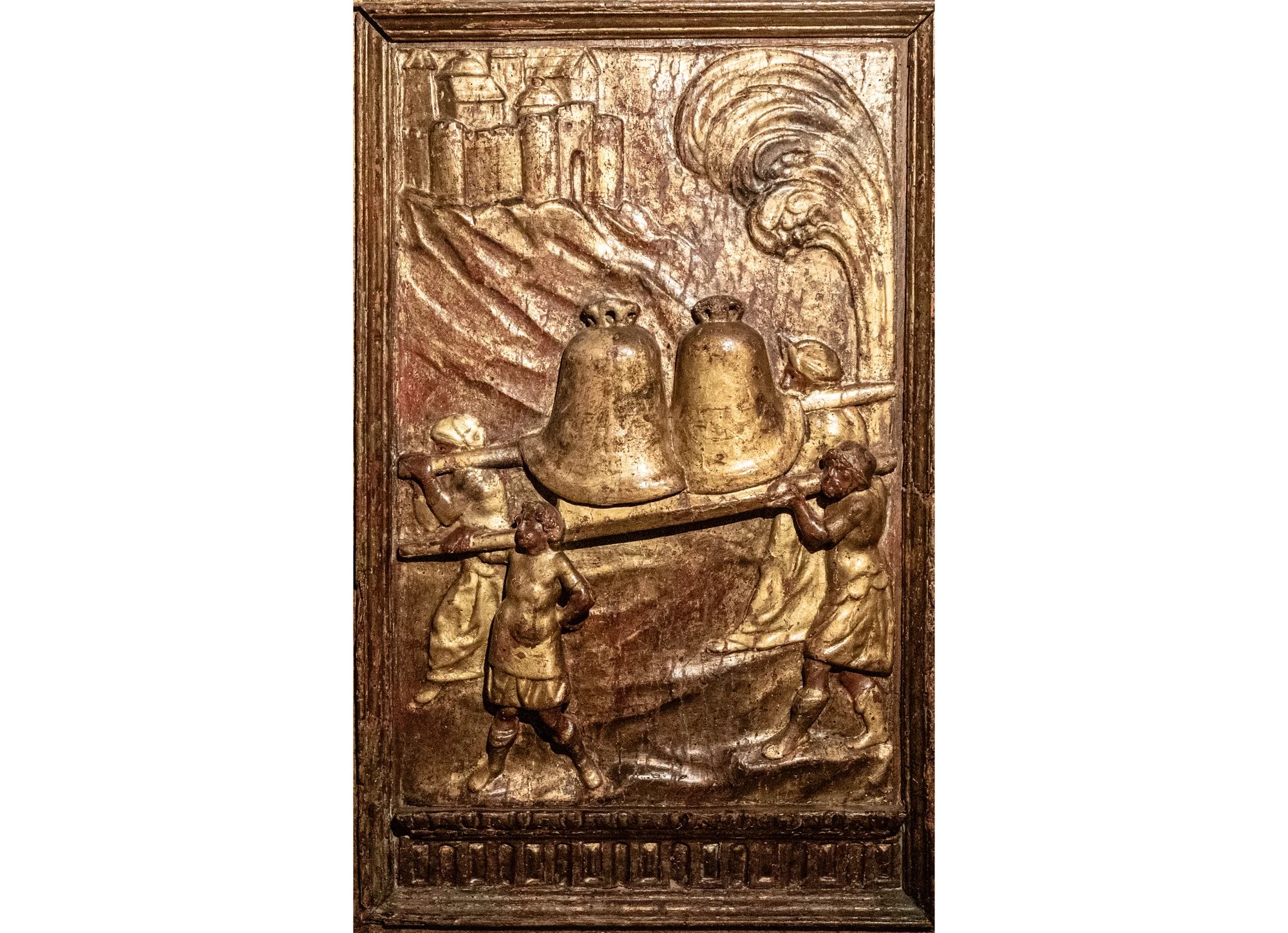
Panel depicting the legendary transport of Santiago’s cathedral bells to Córdoba after the sack of 997, and their later return in 1236. Museum of the Cathedral of Santiago de Compostela.

If you walk into the cathedral of Santiago de Compostela today, you’ll hear the peal of bells rolling out over the old Galician city. But legend says those same bells once rang in Córdoba, nearly a thousand kilometers to the south, carried there on the shoulders of Christian captives. It is a story that mixes history, humiliation, and perhaps a dash of medieval imagination.

The year was 997. At that time, much of Spain was under Muslim rule. The most powerful figure of the day was Almanzor (al-Mansur), the vizier of Córdoba. He led dozens of campaigns deep into Christian lands, and in 997 he set his sights on Santiago de Compostela, the shrine of Saint James, already a major destination for pilgrims.

According to the chronicles, Almanzor’s army swept through Galicia, defeated local resistance, and sacked the city. Yet, remarkably, the shrine of the Apostle was left untouched—possibly out of reverence, possibly to avoid inflaming Christian devotion further. The rest of the city, though, was destroyed. And then comes the detail that every Spaniard seems to know: the great bells of the cathedral were taken down and carried all the way to Córdoba by Christian prisoners.

For over two centuries, the bells are said to have hung in the great mosque of Córdoba, turned upside down and used as lamps. Then, in 1236, when King Ferdinand III of Castile conquered Córdoba, the tables were turned. Muslim captives were forced to carry the bells back to Santiago, where they rang once again for the Apostle.

It’s a great story—almost too great. And here’s where the historian’s caution comes in. The earliest references to the bells being taken come from chronicles written long after the events, in the 12th and 13th centuries. They were compiled in León and Castile, at a time when Christian rulers wanted to stress both the humiliation inflicted by Muslim rulers and the glorious reversal brought by the Reconquista. Was it true? Possibly. Did Almanzor take trophies from Santiago? Certainly—he was famed for parading spoils through Córdoba. But whether the cathedral bells really made the long march twice is harder to prove. Archaeology has yet to confirm the tale, and the silence of contemporary Muslim sources makes us wonder.

Still, the story endures because it captures so much: the clash of faiths, the rise and fall of empires, and the way symbols can weigh as heavily as iron. To carry a bell is to carry the voice of a city, the call of a people. And whether or not every detail happened exactly as told, the legend of Santiago’s bells continues to echo, reminding us how memory and myth shape the past.

Further Reading

  • Roger Collins, The Arab Conquest of Spain, 710–797 (Blackwell, 1989) – for context on the early Muslim presence in Iberia.

  • Richard Fletcher, Moorish Spain (University of California Press, 1992) – a clear narrative of Al-Andalus, including Almanzor’s campaigns.

  • Bernard F. Reilly, The Kingdom of León-Castilla under King Alfonso VI, 1065–1109 (Princeton University Press, 1988) – helpful background on the Christian kingdoms where the story of the bells was later shaped.

  • Ramón Menéndez Pidal, La España del Cid (Espasa-Calpe, 1929) – a Spanish classic that discusses the building of historical myths.

The Goodyear Altarpiece – An English Gift to Santiago de Compostela


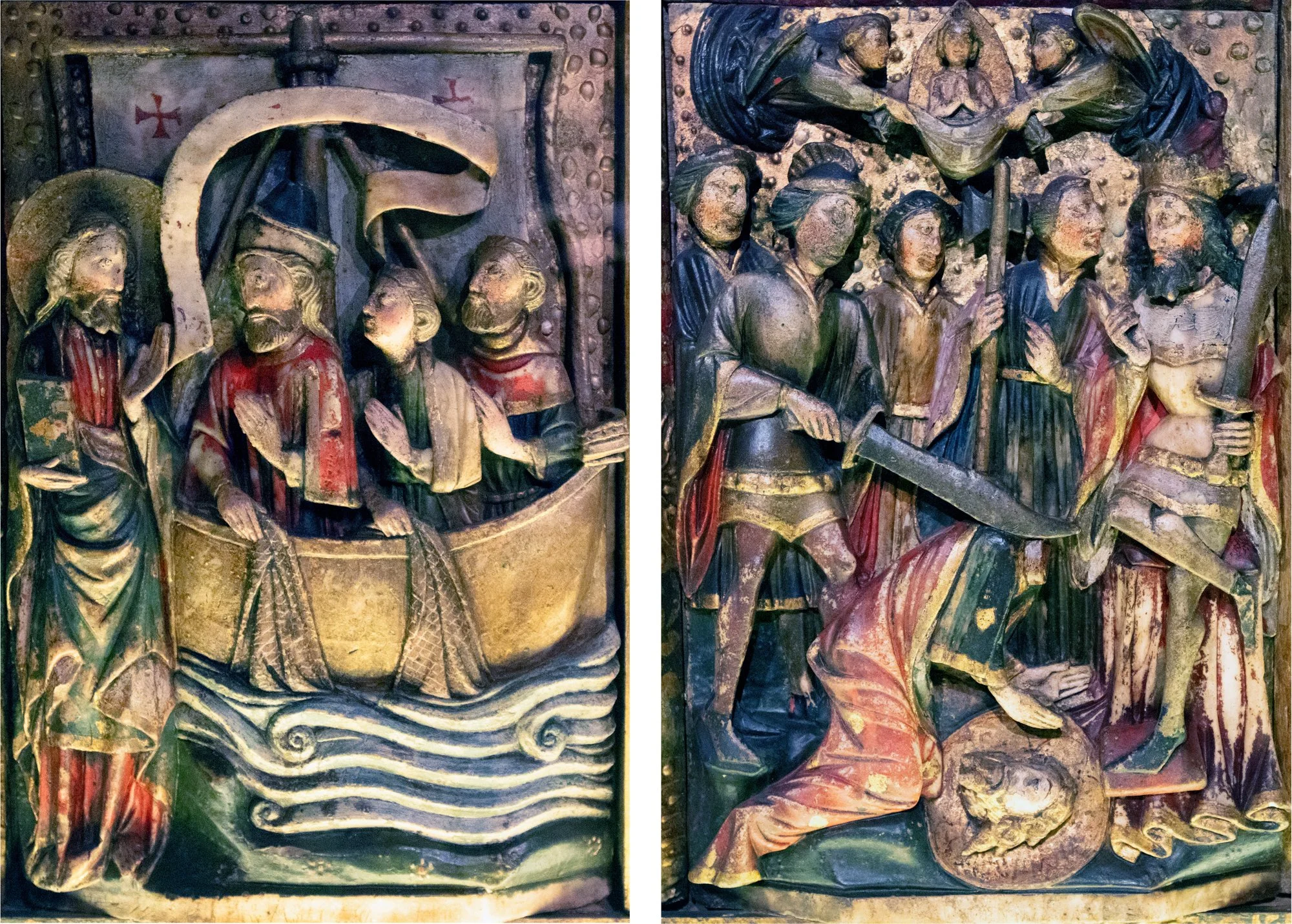
Two panels from the Goodyear Altarpiece (c. 1456, Nottingham workshops; now in the museum of the Santiago de Compostela Cathedral).
Left: The Calling of Saint James and John, shown in their fishing boat on the Sea of Galilee as Christ summons them to follow him. Right: The Martyrdom of Saint James, depicted kneeling before his executioner, while disciples plead for his body before King Herod. Both alabaster reliefs retain their original polychromy in vivid reds, blues, and golds.

On May 25, 1456, the records of Santiago de Compostela Cathedral note the appearance of an English pilgrim-priest: John Goodyear, rector of Chale on the Isle of Wight. At the high altar he offered a retable of wood, its alabaster figures painted in gold and blue, narrating the life of Saint James. The gift came not only as a personal act of devotion but as part of a much wider story: the surge of European pilgrimage in the fifteenth century, when Compostela was drawing tens of thousands of pilgrims from across the continent.

Goodyear’s offering was both precious and practical. Alabaster altarpieces from the Nottingham workshops were highly sought after across Europe. Lighter and easier to carve than marble, they could be shipped from English ports to Galicia or Portugal, where pilgrim traffic was at its height. For churches with modest means, or for private chapels, they provided affordable yet richly decorated devotional art.

The priest, however, knew the risks of such treasures disappearing. He made his donation conditional: the altarpiece could not be sold, pawned, or removed to another shrine, and it must always remain “within the body of the church.” The cathedral canons accepted these terms, and the work entered the treasury, later passing to the relics chapel and eventually to the museum.

Almost six centuries on, the Goodyear Altarpiece still survives. Its five panels—depicting the calling, mission, preaching, martyrdom, and translation of Saint James—embody both the artistry of medieval England and the deep ties that pilgrimage created across Christendom.

Archangel St. Michael: Defender and Judge

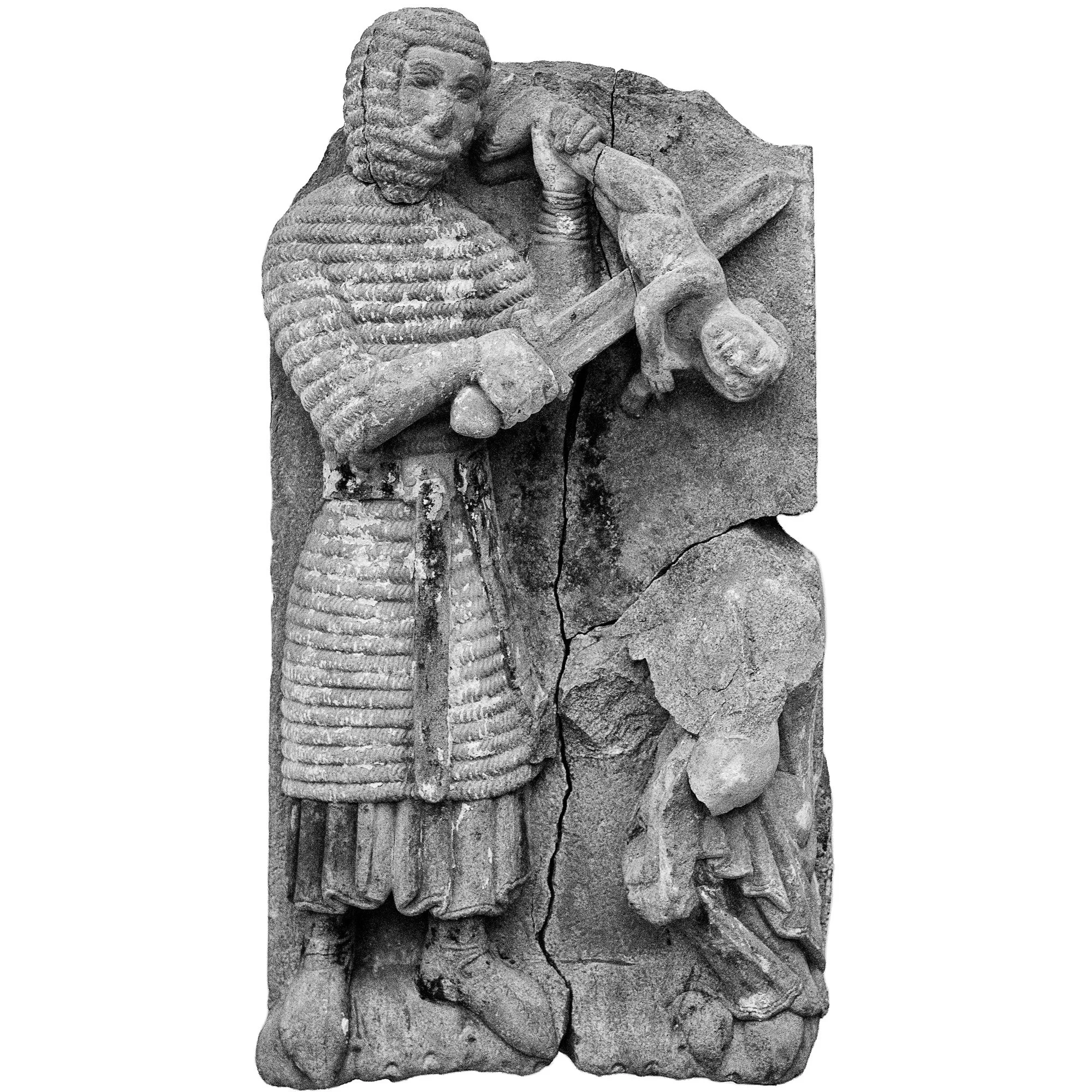
Archangel St. Michael (~ 1425), Museum of the Cathedral of Santiago de Compostela (Spain).

Archangel St. Michael, one of the most venerated figures in Roman Catholic theology, is celebrated for his dual roles as a mighty warrior against evil and as a just arbiter on Judgment Day. In his iconic depiction, Michael is often shown in the midst of a fierce battle with a dragon, symbolizing his eternal struggle against the forces of darkness. Armed and majestic, he defeats the dragon, embodying the triumph of good over evil.

Equally significant is Michael's role in the divine judgment of souls. On Judgment Day, he is portrayed weighing the souls of the deceased, determining their fate with fairness and integrity. This powerful image underscores his importance not only as a protector but also as a guardian of divine justice, ensuring that righteousness prevails in the eternal balance. Through these vital roles, St. Michael stands as a beacon of hope and justice, revered by many across the world.