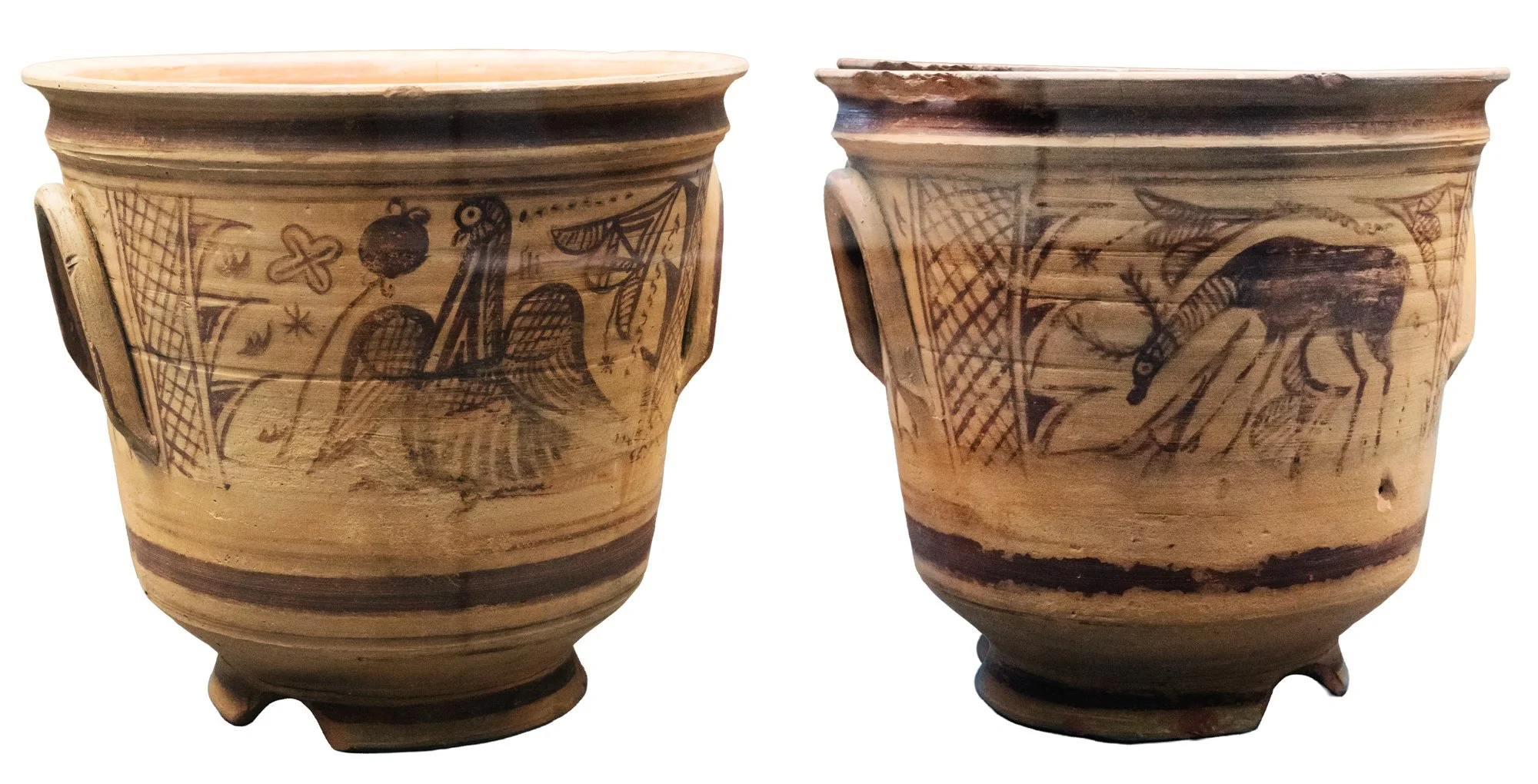
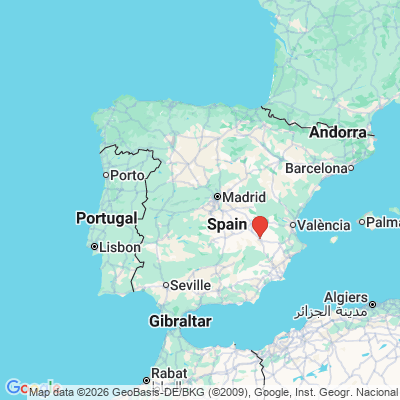
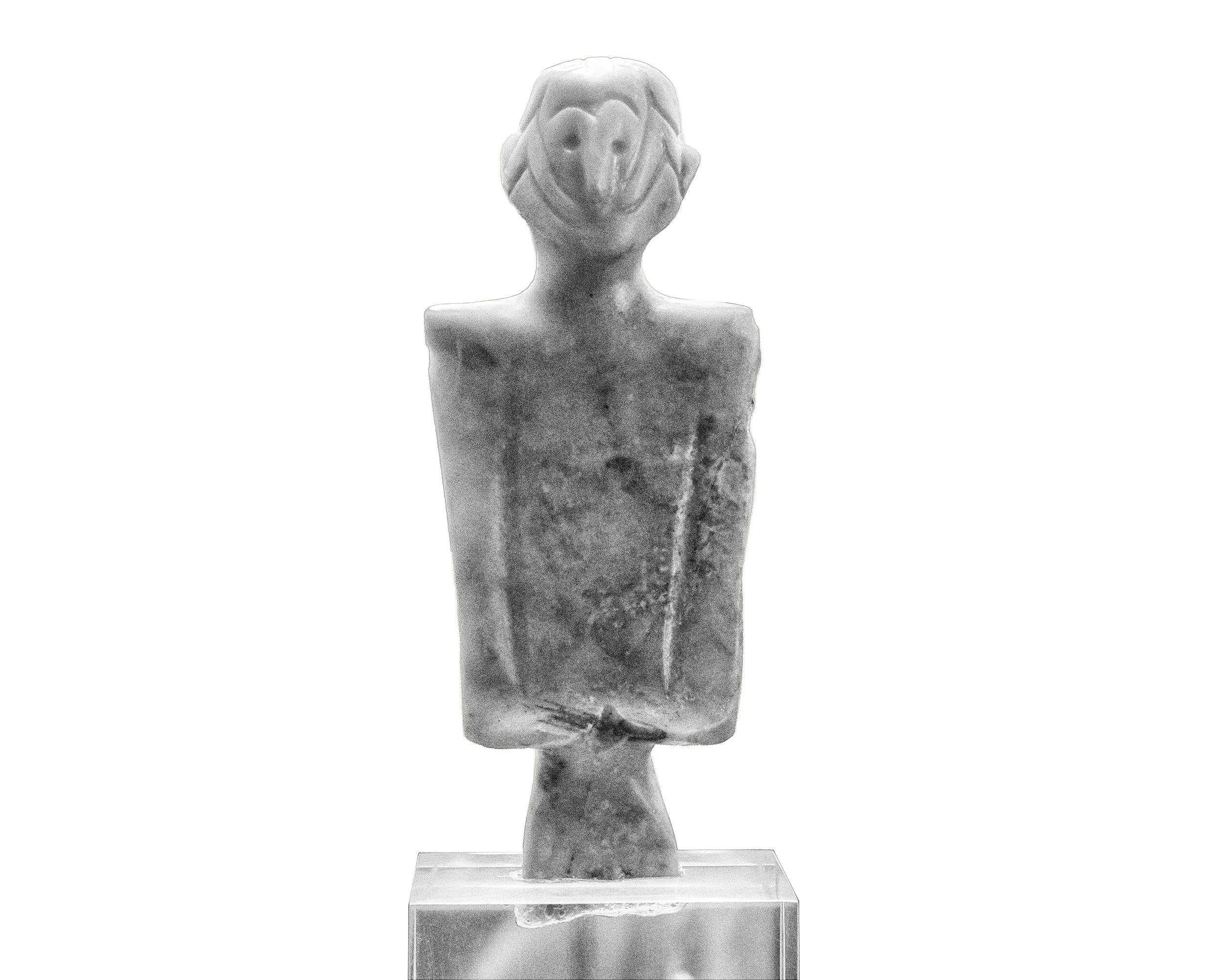
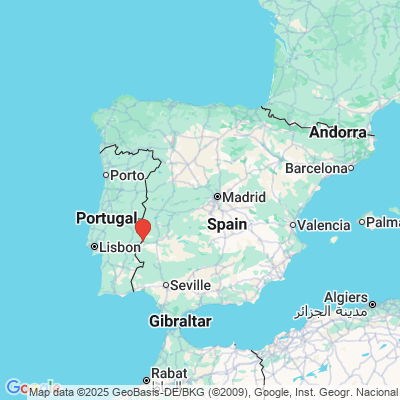
archeological finds

An Egyptian Jar in Spain

The surprising journey of an Egyptian canopic jar to southern Spain
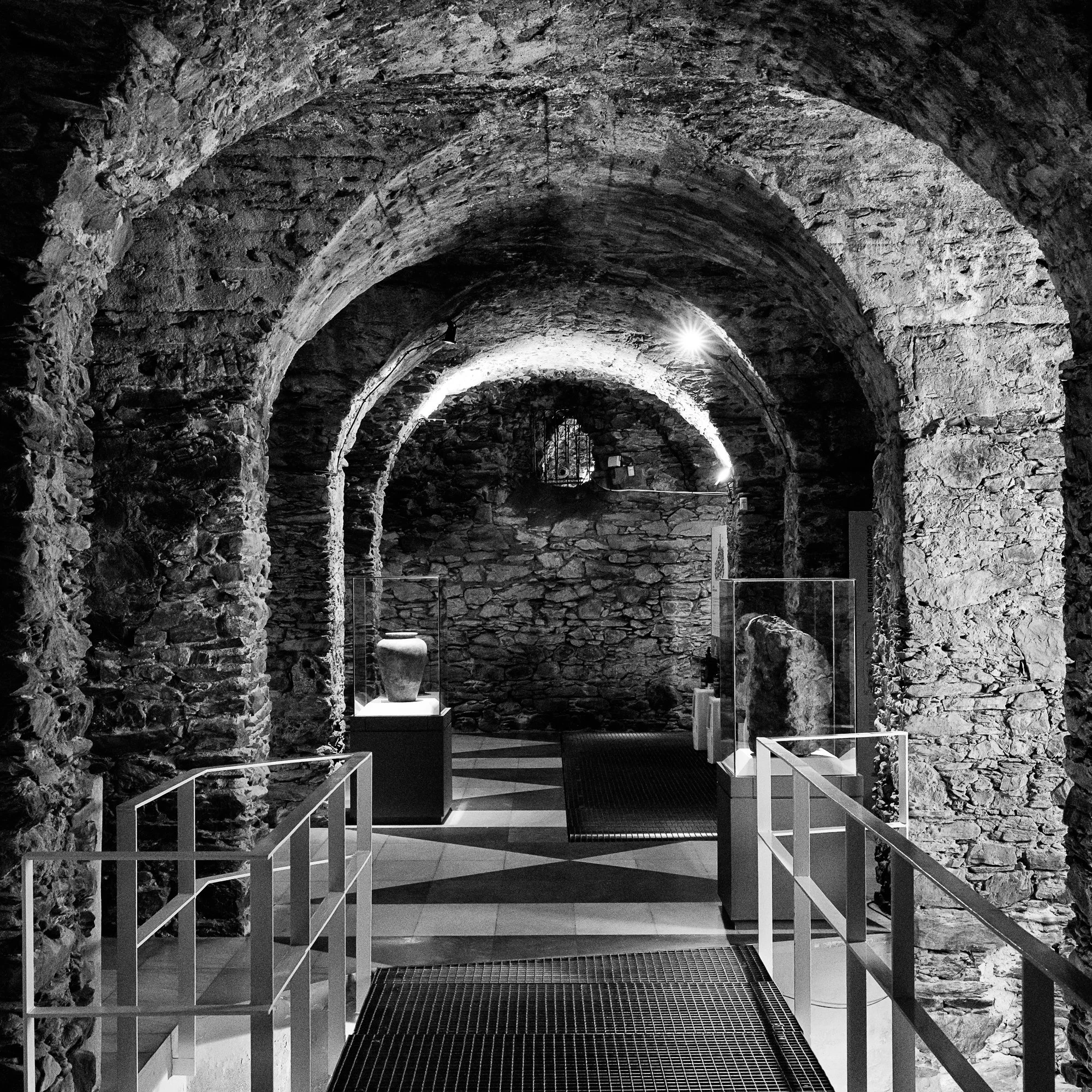
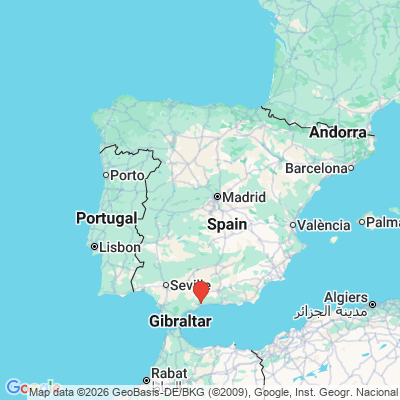
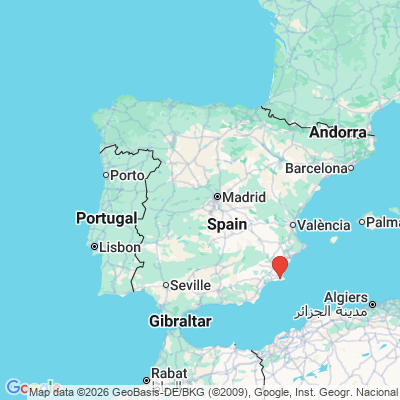
In the old quarter of Almuñécar, beneath the slopes of the hill of San Miguel, lies the fascinating underground complex known as the Cueva de los Siete Palacios. Today the vaulted chambers house an archaeological museum.

The cave itself is already unusual. Archaeologists believe it formed part of the substructures of a Roman temple dedicated to Minerva. Over time these spaces became storage rooms, shelters, and eventually a museum displaying objects that tell the long history of the town — from Phoenician beginnings to Roman times.

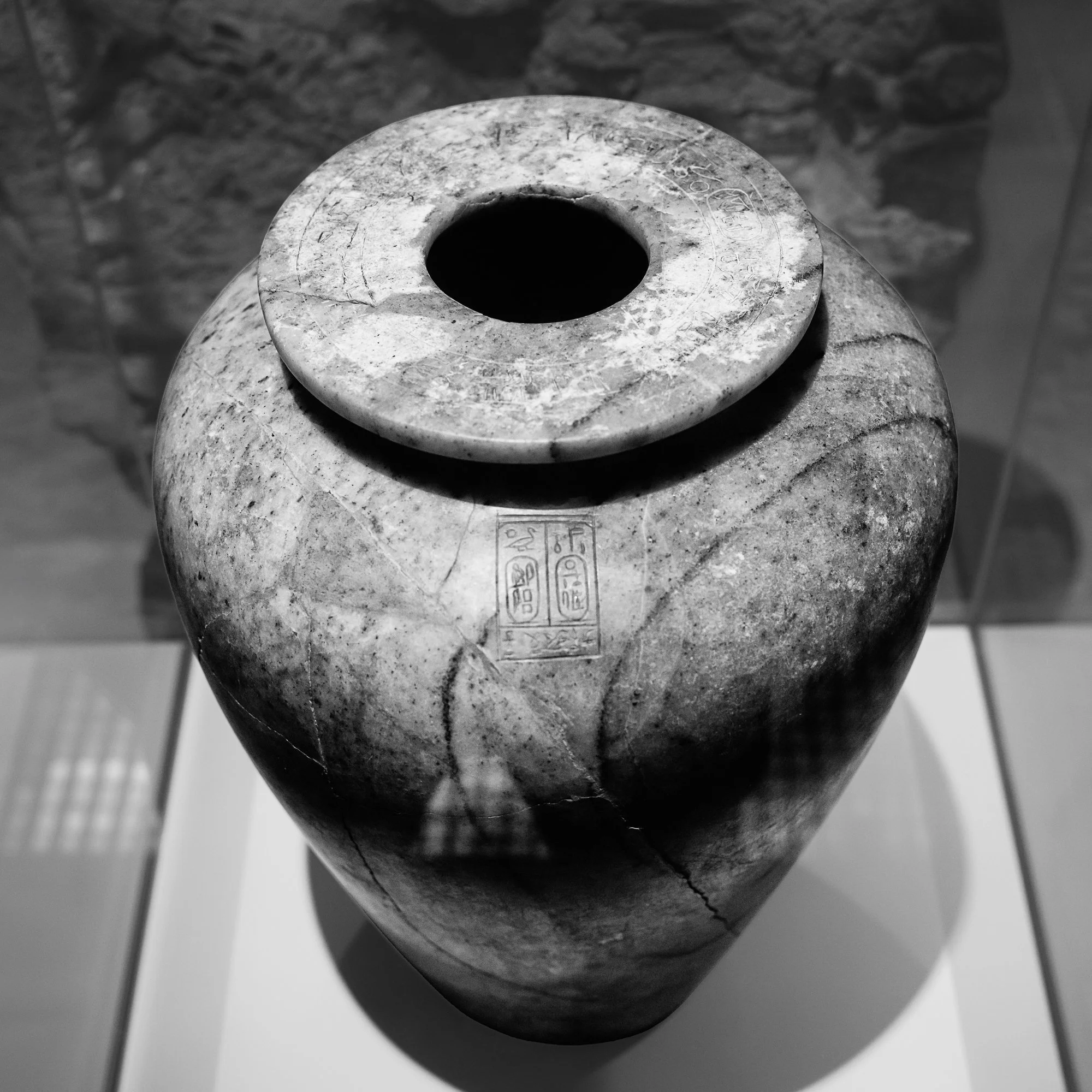
Among the most surprising objects on display is a stone canopic jar from ancient Egypt, inscribed with the name of the Hyksos king Apophis.

From the Nile to the Western Mediterranean

In ancient Egypt, canopic jars were used during the process of mummification. The internal organs of the deceased were removed, embalmed, and placed in these vessels so they could accompany the dead into the afterlife. Such jars formed part of the elaborate funerary traditions of Egyptian elite burials.

The jar displayed in Almuñécar dates to the 16th century BC, the time when Apophis ruled Egypt during the Hyksos period. Its hieroglyphic inscription mentions the king and a royal sister, confirming that the vessel once belonged to the world of Egyptian royal or elite culture.

But the real mystery is not its Egyptian origin. It is how it ended up in southern Spain.

A Phoenician Story

To understand this, we must look at the people who founded the earliest settlement here.

Long before the Romans built temples on the hill of San Miguel, the coast of southern Spain was dotted with colonies established by the Phoenicians. These seafarers connected the eastern and western Mediterranean through an impressive network of trade routes.

Their ships carried metals, wine, olive oil, luxury goods — and occasionally ancient objects that already had long histories of their own.

Egyptian artifacts were particularly prized. They were exotic, beautifully crafted, and associated with one of the most prestigious civilizations of the ancient world. Phoenician merchants often transported such objects across the Mediterranean, where they could be reused as prestigious items, ritual objects, or heirlooms.

The jar from the time of Apophis likely travelled west along these routes centuries after it was made. Eventually it reached the Phoenician town that once stood here, known in antiquity as Sexi.

Seen in this context, the jar becomes more than an Egyptian funerary object. It becomes evidence of something larger: the vast maritime world that linked distant societies long before the Roman Empire.

Today, deep inside the vaulted chambers of the Cueva de los Siete Palacios, this small stone vessel quietly reminds visitors that the Mediterranean world has been connected for thousands of years.

Further Reading

  • Francesco M. Galassi et al., The Canopic Jar Project: Interdisciplinary Analysis of Ancient Mummified Viscera.

  • Diego Ratti, Atletenu: Avaris and the Hyksos.

  • Josep Padró, Egyptian-Type Documents from the Mediterranean Littoral of the Iberian Peninsula before the Roman Conquest.

  • Manfred Bietak, Avaris: The Capital of the Hyksos.
When Farming Reached Iberia - the Neolithic transition

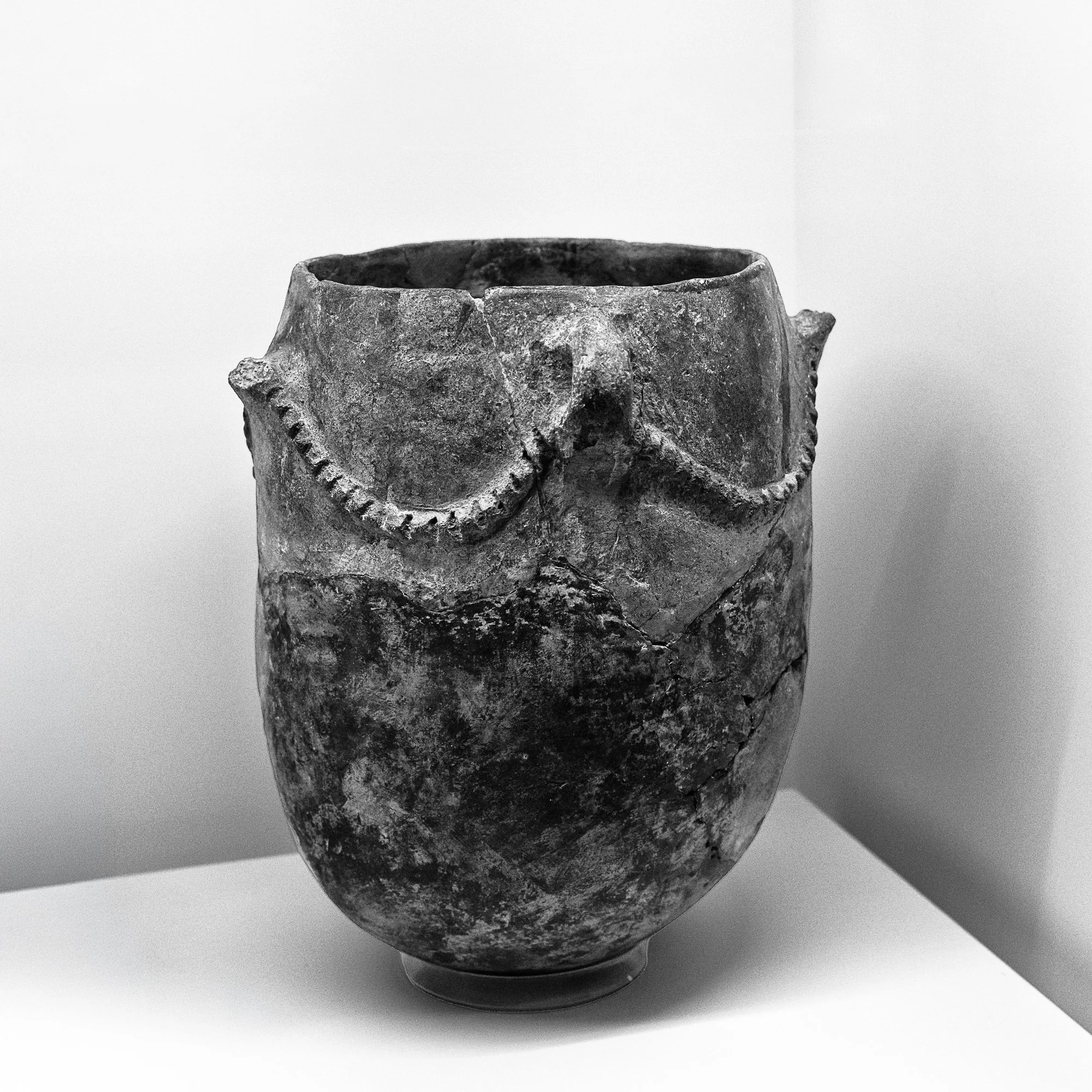
Neolithic decorated clay vessel (c. 5500–3500 BC) from the Cueva del Higuerón near Rincón de la Victoria (Málaga), now displayed in the Museo de Málaga. Hand-made and decorated with impressed patterns, pots like this belong to the earliest farming communities of the Iberian Peninsula.

Around 7,500–5,500 years ago, life on the Iberian Peninsula began to change in a profound way. For thousands of years people had lived as hunter-gatherers, moving through landscapes rich in animals, plants and marine resources. But during the sixth millennium BC, new communities appeared along the Mediterranean coast bringing something revolutionary: farming and herding.

Archaeologists call this moment the Neolithic transition.

The Arrival of the First Farmers

The first Neolithic communities of Iberia cultivated crops such as wheat and barley and kept sheep and goats. They used polished stone tools, flint sickles for harvesting, and—perhaps most visibly—ceramic vessels. These early farming groups did not appear everywhere at once. The earliest sites are often found along the Mediterranean coast, especially in caves and rock shelters. From these coastal footholds, farming gradually spread inland.

Archaeologists believe these communities likely arrived by sea from other parts of the western Mediterranean, possibly from the Italian or Ligurian coasts. Another possibility, still debated, is that some groups reached southern Iberia from North Africa across the Strait of Gibraltar. Wherever they came from, their arrival created one of the most important cultural encounters in European prehistory: the meeting between incoming farmers and local hunter-gatherers.

A Landscape of Caves and Coasts

Southern Iberia—especially the coast of Málaga and Granada—is rich in caves that preserve traces of this transition. These caves were often occupied repeatedly for thousands of years.

At sites along the Andalusian coast, archaeological layers show the gradual shift from Mesolithic hunter-gatherers to Early Neolithic farmers, including pottery fragments, stone tools, shell ornaments, and remains of domesticated animals.

Even after farming arrived, people continued to exploit the sea. Shellfish, fish, and other marine resources remained important in daily life along the Mediterranean coast.

In other words, the Neolithic did not replace earlier traditions overnight—it blended with them.

A Pot from the Beginning of Farming

A quiet witness to this transformation can be seen today in the Museo de Málaga. The clay vessel shown here was found in the Cueva del Higuerón, a cave near Rincón de la Victoria, just east of Málaga. It dates to the Neolithic period between about 7,500 and 5,500 years ago. At first glance it may look simple: a hand-made clay pot with decorative impressions along its rim. But this object tells an important story. Pottery like this is one of the clearest signs that a community had entered the Neolithic world. Clay vessels allowed people to store grain, cook food, and transport liquids, making them closely connected to farming life.

Unlike modern ceramics, Neolithic pots were made without a potter’s wheel. The clay was shaped by hand, decorated with simple impressions or incised patterns, and fired in basic kilns or open hearths. Each pot was therefore unique. The decorative band around the rim of this vessel—made by pressing tools or cords into the wet clay—was not strictly necessary. It was a human touch: a moment where utility became design.

A Quiet Revolution

When we look at objects like this pot, we are seeing the material traces of one of the biggest revolutions in human history.

The introduction of farming meant:

  • more permanent settlements

  • new technologies such as pottery

  • domesticated animals and crops

  • new social structures and ways of organizing land.

Within a few centuries, these early farmers transformed landscapes across the Iberian Peninsula.

Yet the people who made this vessel were still close to older traditions. They lived in caves near the sea, gathered shellfish, hunted animals, and moved through familiar territories that had been used by hunter-gatherers long before them.

This clay pot, now resting in a museum display case, therefore stands at the meeting point of two worlds: the last hunter-gatherers and the first farmers of Iberia.

Cancho Roano: A Sacred Complex in Iron Age Spain

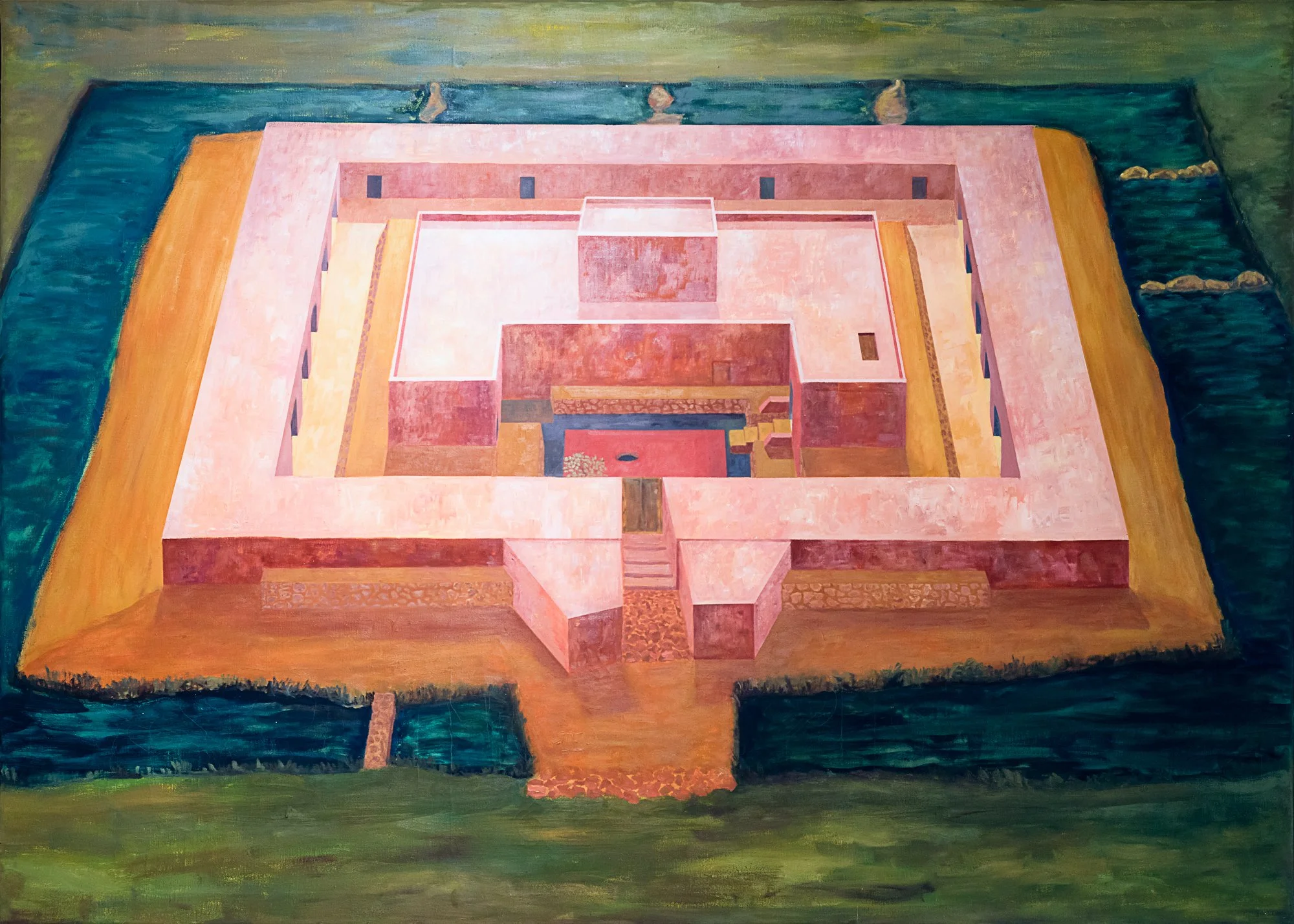
An artist impression of Cancho Roano.

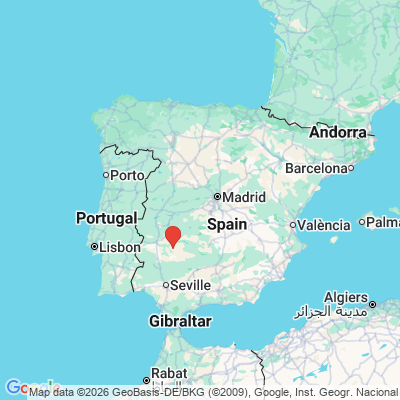
In the quiet countryside of Extremadura, far from Spain’s main tourist routes, lies one of the most intriguing archaeological sites of the Iberian Peninsula: Cancho Roano.

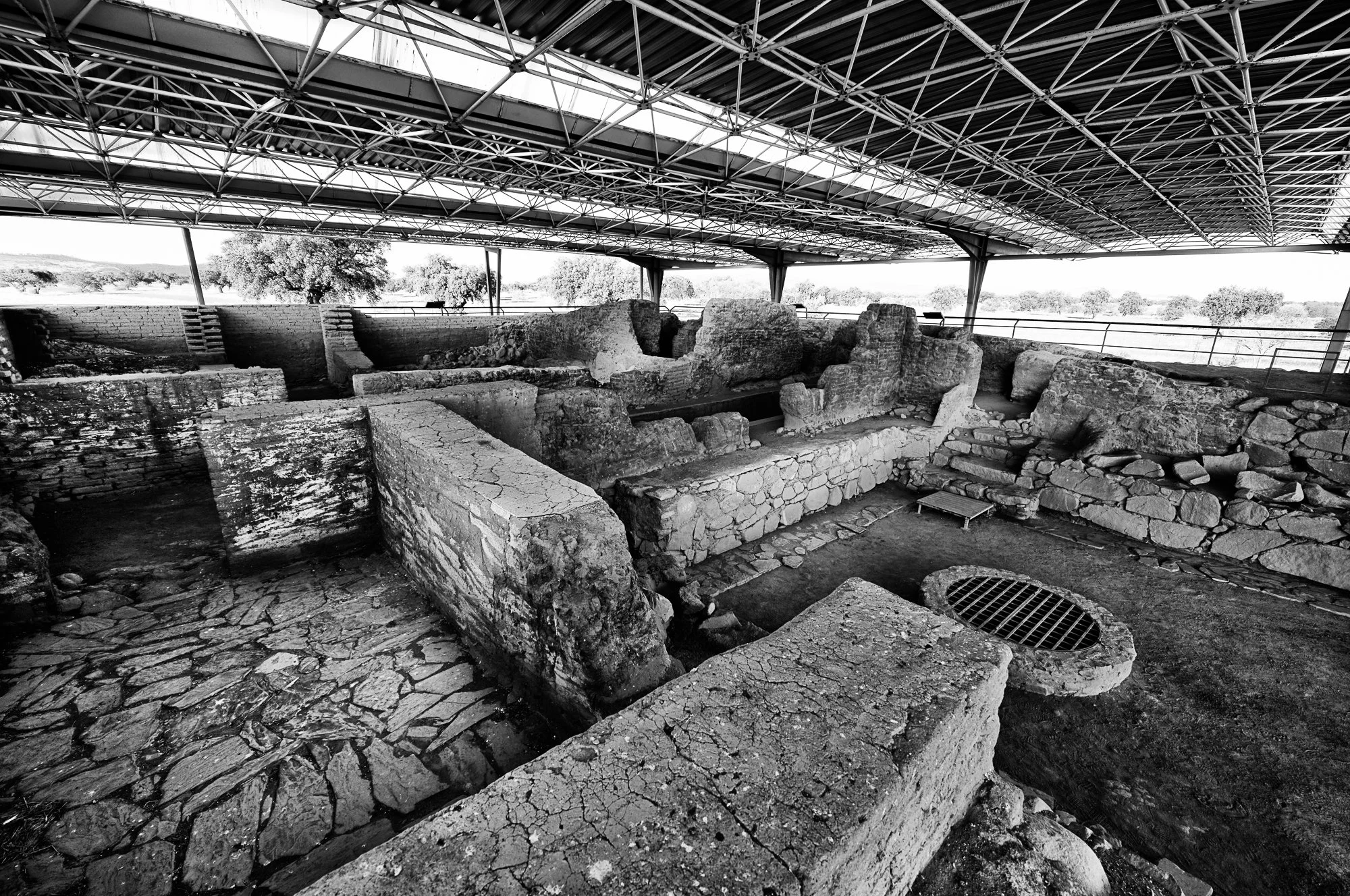
At first glance the place looks modest—low walls, foundations, and a protective structure over the excavation. Yet beneath this calm landscape lies the story of a sophisticated Iron Age society that was deeply connected to the wider Mediterranean world.

Cancho Roano is not just an archaeological site. It is one of the most fascinating puzzles of prehistoric Spain.

An Accidental Discovery

The site came to light almost by accident.

For a long time a low mound near the town of Zalamea de la Serena was believed to be nothing more than the remains of an old agricultural structure. In the 1970s, when the landowner tried to level the mound for farming, workers encountered thick walls of adobe and stone, together with ancient objects.

Archaeologists quickly realized that the mound concealed something extraordinary. Excavations began in 1978 and soon revealed a large and carefully planned building hidden inside the hill.

A Monument from the Iron Age

The complex dates roughly between the 6th and 4th centuries BCE, during the Iron Age, centuries before the Romans arrived in Spain.

At that time the Iberian Peninsula was home to many different cultures. Communities in the southwest were linked through trade to Phoenician merchants from the eastern Mediterranean and later to Greek traders. Through these contacts luxury goods, new technologies, and religious ideas spread far inland.

Cancho Roano seems to belong to this world of exchange and cultural mixing.

The archeological site of Cancho Roana.

Palace, Sanctuary, or Both?

The building itself is surprisingly sophisticated.

Constructed on a stone platform and surrounded by a wide moat, the complex is organized around a central courtyard. Rows of small rooms line the sides of the building. Archaeologists found storage spaces, working areas, and rooms that appear to have had ritual functions.

The objects discovered there are remarkable: bronze vessels, imported Greek pottery, ivory pieces, jewelry, and tools related to textile production.

Because of this mixture of finds, archaeologists still debate the exact function of the site. Some see it as a sanctuary, a sacred place where rituals and offerings were made. Others interpret it as the residence of a local elite, a rural center of power that controlled agricultural production and trade.

Many scholars today think it may have been both: a palace-sanctuary, where political authority and religious practice were closely linked.

A Mediterranean World in Western Spain

One of the most fascinating aspects of Cancho Roano is how strongly it reflects connections with the wider Mediterranean.

The architecture shows similarities with sacred buildings found in places such as Etruria in Italy or Phoenician sites around the Mediterranean. Imported ceramics and luxury goods confirm that the community living here was not isolated. Instead, it was part of a network of exchange stretching across the ancient world.

Even in this rural corner of Extremadura, people were connected to distant cultures and ideas.

A Deliberate End

The story of Cancho Roano ends in a mysterious way.

Around the late 5th century BCE the building was deliberately destroyed. Before abandoning the site, its occupants carefully burned parts of the complex and then sealed the structure beneath layers of earth.

This does not appear to have been the result of war or accident. Instead, archaeologists believe it was a ritual closure—a symbolic act marking the end of the sanctuary’s life.

Why this happened remains unknown.

Why Cancho Roano Matters

Cancho Roano is unique in western Europe. Few places offer such a clear glimpse into the complex societies that existed in Iberia before the Roman conquest.

The site shows that these communities built monumental architecture, accumulated wealth, and maintained connections with the Mediterranean world. It reveals a society where religion, politics, and trade were closely intertwined.

Standing among the quiet ruins today, it is easy to forget how vibrant this place once was. Yet Cancho Roano reminds us that long before Rome arrived, southwestern Spain was already part of a dynamic and interconnected ancient world.

Further Reading

Sebastián Celestino Pérez & Javier Jiménez Ávila — El Palacio-Santuario de Cancho Roano
José María Blázquez Martínez — El Santuario de Cancho Roano
Javier Jiménez Ávila — Cancho Roano y la Protohistoria de Extremadura
Manuel Bendala Galán — Protohistoria de la Península Ibérica

A Necklace from 5000 Years Ago

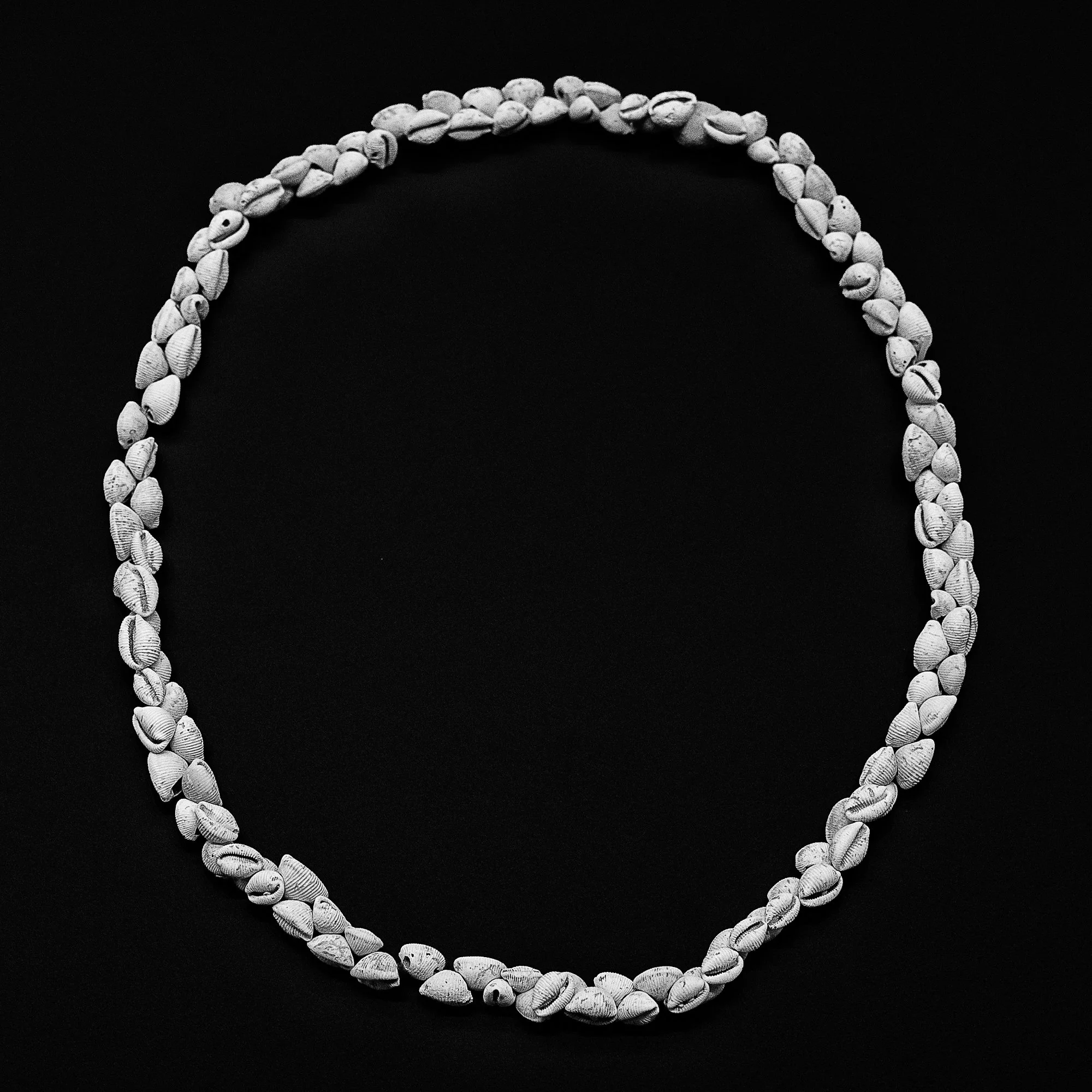
Shell necklace from the Early Copper Age (c. 3000 BC), made from pierced seashells and discovered in the dolmen of Cuesta de los Almendrillos near Alozaina (Málaga). Now displayed in the Museo de Málaga.

In a quiet display case in the Museo de Málaga lies something unexpectedly familiar: a necklace made entirely of small seashells. At first glance it looks almost modern — the kind of necklace you might see today in a seaside market.

Yet this one is about 5,000 years old.

The necklace was found in the dolmen of Cuesta de los Almendrillos, near Alozaina, and dates to the Early Copper Age. Each shell was carefully pierced and strung together into a long loop. Some are smooth, some still show their fine natural ridges, but together they form something unmistakable: jewelry.

And that is the first surprise.

When we look at this necklace, we are not looking at something strange from a distant prehistoric world. We are looking at something that would not feel out of place today. Walk through a coastal market anywhere around the Mediterranean and you will find shell necklaces that look remarkably similar.

Five thousand years have passed — yet the idea is exactly the same.

A Necklace Worn in Life

Objects like this often come from megalithic tombs, collective burial monuments built by early farming communities across Iberia. The dolmen at Cuesta de los Almendrillos was one such place. People were buried there together with objects that mattered to them: tools, pottery, and sometimes personal ornaments.

But a necklace like this was almost certainly not made for the tomb. It was worn in life.

Someone once gathered these shells, pierced them one by one, and threaded them onto a cord. Someone wore this around their neck — perhaps daily, perhaps on special occasions. Shells also hint at connections: they come from the sea, and inland communities often valued them precisely because they traveled from elsewhere.

The Familiarity of the Past

Standing in front of the display in the Museo de Málaga, the realization slowly settles in.

Humans still collect beautiful things from the sea.
We still pierce them.
We still string them together.
We still wear them.

Materials change — gold, silver, glass, plastic — but the impulse is identical. Jewelry is one of the most persistent human habits, appearing in cultures across the world and deep in the archaeological record.

This simple necklace reminds us that the people of the Copper Age were not so different from us.

Five thousand years ago, somewhere in southern Iberia, someone held a handful of shells and had the same simple thought many people have had since:

These would make a beautiful necklace.

Streets that made a city: the Decumanus Maximus and Cardo Salvius of Roman Cartagena

When we think of Roman cities, we tend to think in monuments. But Rome was built first on streets.

In ancient Carthago Nova — today’s Cartagena — two main axes shaped the city: the Decumanus Maximus, running east to west, and the Cardo Salvius, running north to south. Together, they organised movement, power and daily life. Before entering a theatre or a forum, you were already inside Rome simply by walking these roads.

The Decumanus Maxima: an urban spine

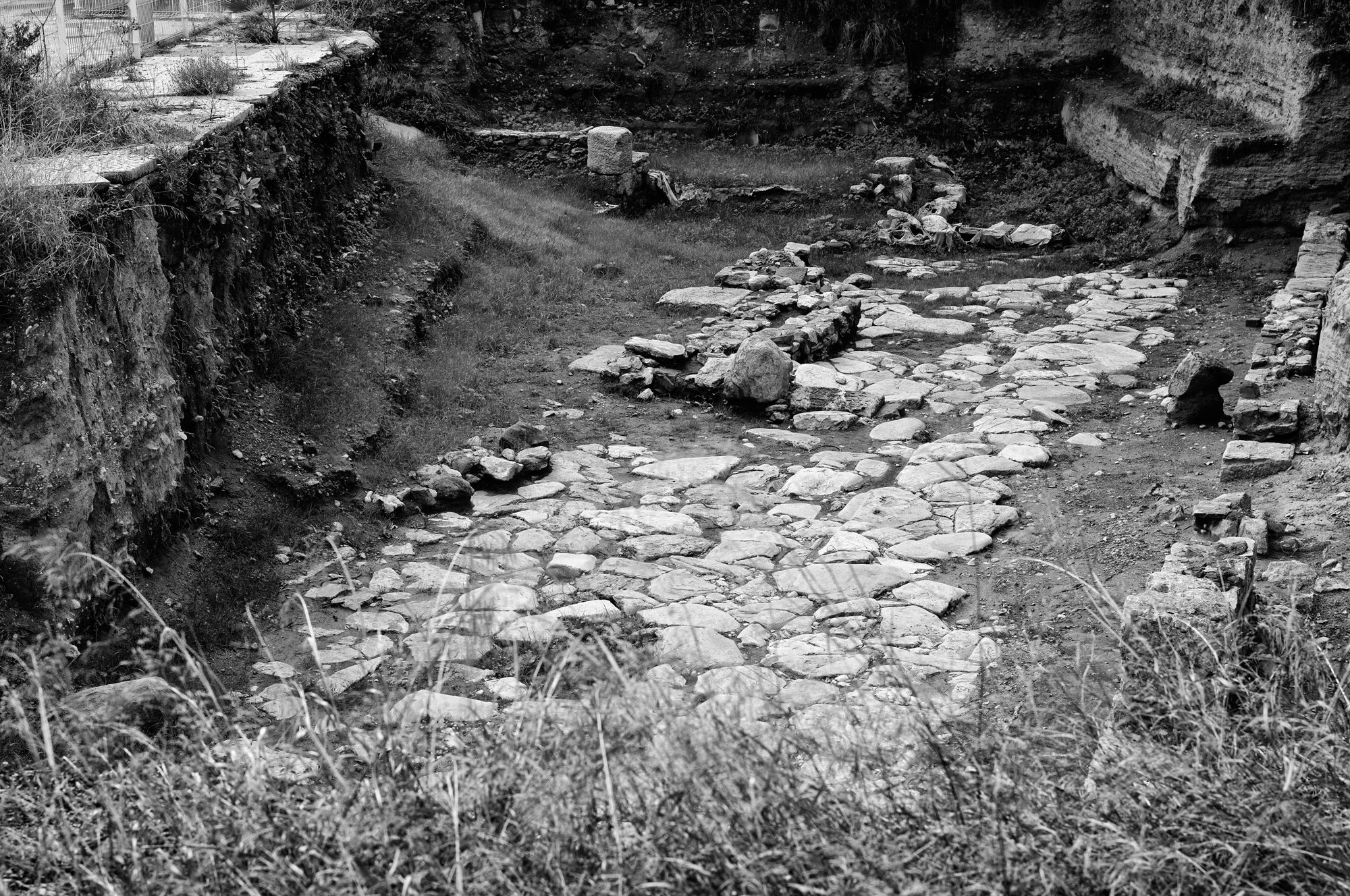
The Decumanus Maximus in Cartagena.

The Decumanus Maximus was Cartagena’s main east–west artery. Adapted to a hilly landscape and a busy harbour, it was not a ceremonial boulevard but a working street. Shops opened onto it, carts passed through it, conversations and transactions filled it. This was Rome as routine rather than spectacle.

The Cardo Salvius: life at street level

The Cardo Salvius in Cartagena.

Crossing the decumanus was the Cardo Salvius, the city’s principal north–south street. Its name hints at importance and local pride. Lined with houses, workshops and public buildings, it connected residential areas with the civic and economic heart of the city. This was a street designed for presence, not speed.

Roman Cartagena (Carthago Nova) you can still walk today

What makes Cartagena special is that these streets are still visible. Near Parque de El Lago, sections of both the decumanus and the Cardo Salvius lie exposed at their original level. Wheel ruts, paving stones and drainage lines remain clearly readable. Here, Rome is not imagined — it is encountered underfoot.

Where streets became a city

The intersection of decumanus and cardo was the core of Roman Cartagena. From this logic flowed the forum, the theatre and other monuments. Streets came first; buildings followed.

Rome did not rule only through emperors and armies. It ruled through infrastructure, repetition and familiarity. In Cartagena, that logic is still written in stone.

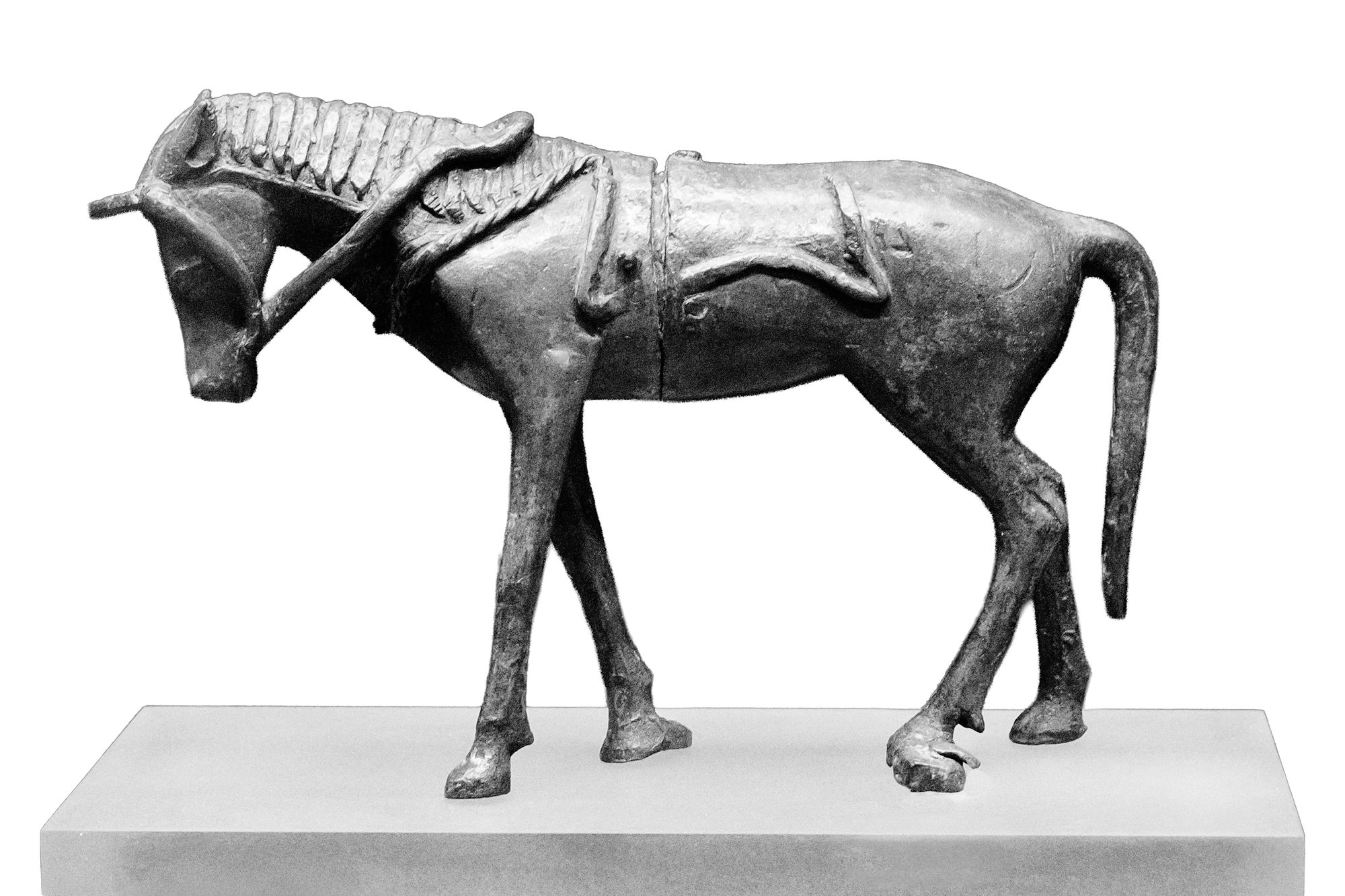
The Bronze Horse of Cancho Roano (Spain)

The Bronze Horse of Cancho Roano (6th–5th century BCE, Archaeological Museum of Badajoz).

In the Archaeological Museum of Badajoz, a small bronze horse quietly carries a big story. This horse sculpture from Cancho Roano, found near Zalamea de la Serena, dates to the 6th–5th century BCE, a period of profound transformation on the Iberian Peninsula.

Cast in bronze and depicted with clear elements of harness and tack, the sculpture immediately signals that this is not just an animal portrait. Horses in Iron Age Iberia were markers of power, mobility, and status, deeply embedded in both social and ritual life. Their presence in art and votive objects points to a symbolic role that went far beyond transport or warfare.

Cancho Roano itself is one of the most enigmatic archaeological sites in western Europe. Often described as a sanctuary-palace, it was constructed, modified, and ultimately destroyed in a carefully staged ritual process. Before its final abandonment, the complex was deliberately burned and sealed, preserving an extraordinary assemblage of objects beneath its floors—among them metalwork related to horses, chariots, and elite display.

The bronze horse fits seamlessly into this context. It suggests a world in which ritual, power, and belief were closely intertwined. Whether offered as a votive object, used in ceremonial display, or associated with elite identity, the sculpture reflects a society where the horse occupied a central symbolic position. Seen today, it is both an artwork and a fragment of a belief system that is only partly understood.

Further Reading

  • Sebastián Celestino Pérez, Cancho Roano: Un santuario orientalizante en el valle medio del Guadiana

  • Almagro-Gorbea & Torres Ortiz, La Edad del Hierro en la Península Ibérica

  • Barry Cunliffe, Iron Age Communities in Britain and Beyond

  • María Cruz Fernández Castro, Protohistoria de la Península Ibérica

  • Museo Arqueológico Provincial de Badajoz – exhibition catalogues and research publications