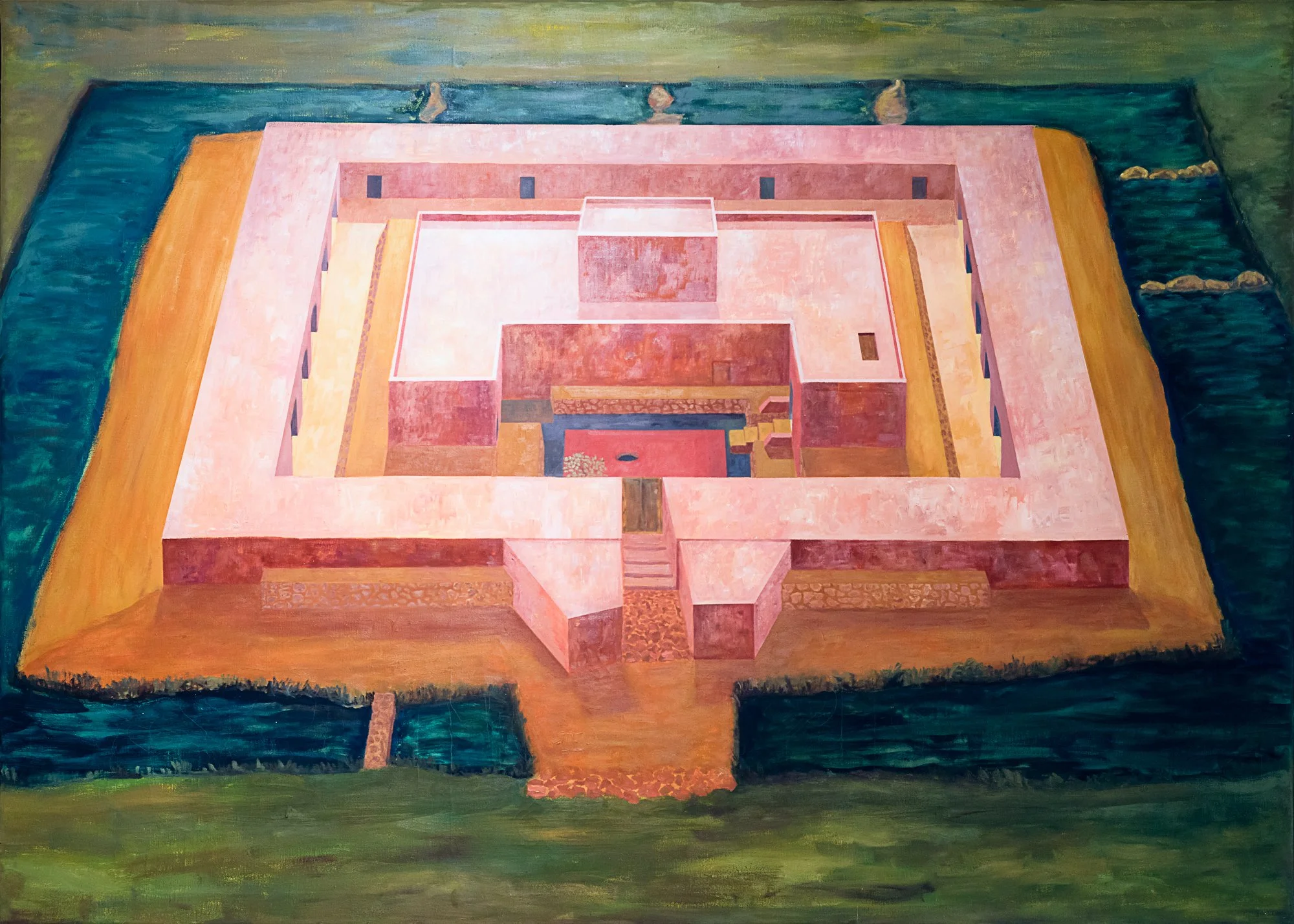
An artist impression of Cancho Roano.
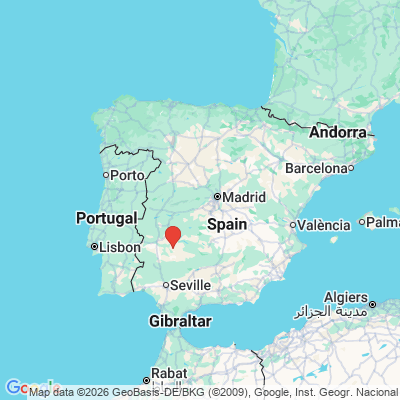
In the quiet countryside of Extremadura, far from Spain’s main tourist routes, lies one of the most intriguing archaeological sites of the Iberian Peninsula: Cancho Roano.
At first glance the place looks modest—low walls, foundations, and a protective structure over the excavation. Yet beneath this calm landscape lies the story of a sophisticated Iron Age society that was deeply connected to the wider Mediterranean world.
Cancho Roano is not just an archaeological site. It is one of the most fascinating puzzles of prehistoric Spain.
An Accidental Discovery
The site came to light almost by accident.
For a long time a low mound near the town of Zalamea de la Serena was believed to be nothing more than the remains of an old agricultural structure. In the 1970s, when the landowner tried to level the mound for farming, workers encountered thick walls of adobe and stone, together with ancient objects.
Archaeologists quickly realized that the mound concealed something extraordinary. Excavations began in 1978 and soon revealed a large and carefully planned building hidden inside the hill.
A Monument from the Iron Age
The complex dates roughly between the 6th and 4th centuries BCE, during the Iron Age, centuries before the Romans arrived in Spain.
At that time the Iberian Peninsula was home to many different cultures. Communities in the southwest were linked through trade to Phoenician merchants from the eastern Mediterranean and later to Greek traders. Through these contacts luxury goods, new technologies, and religious ideas spread far inland.
Cancho Roano seems to belong to this world of exchange and cultural mixing.
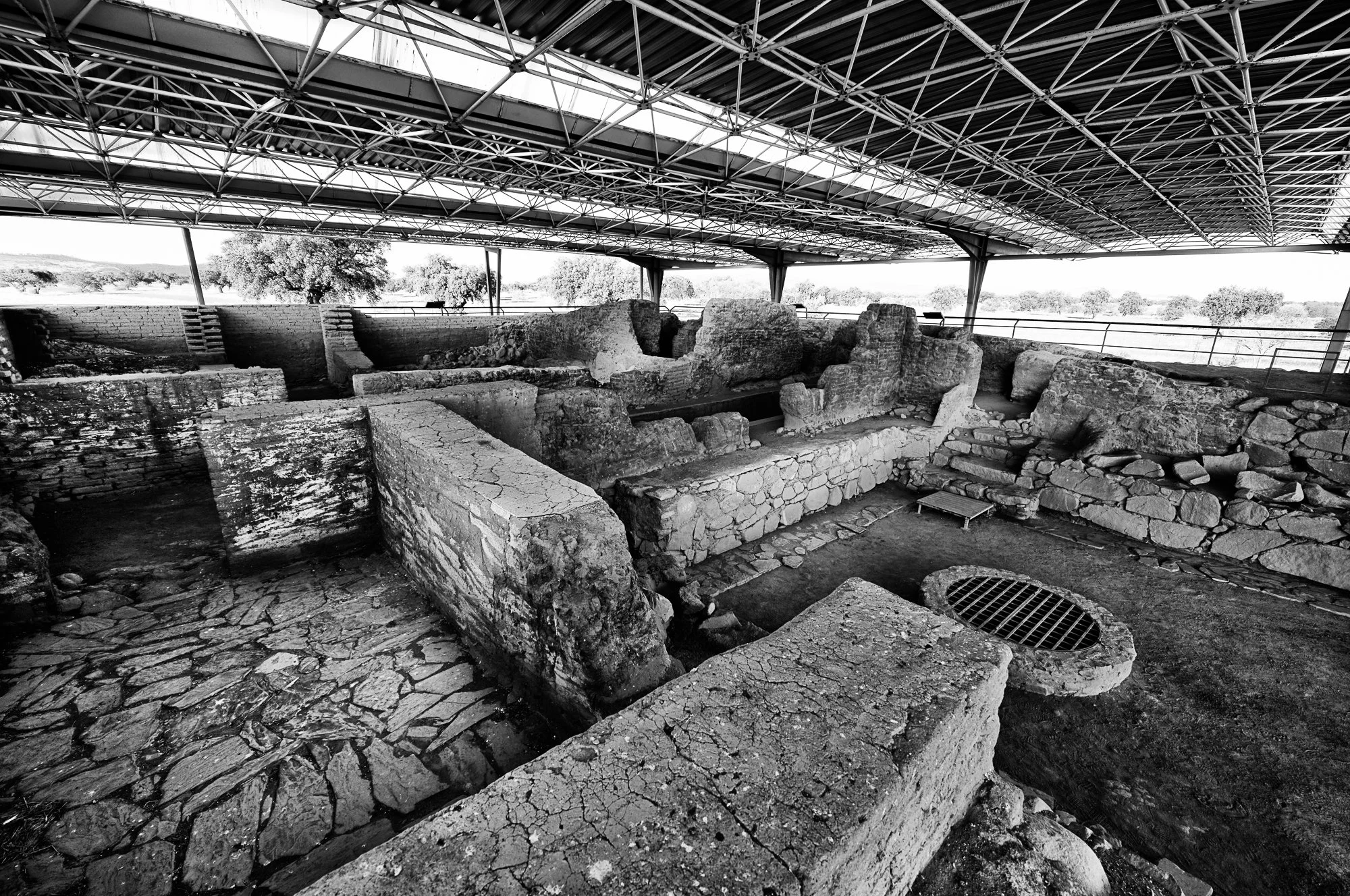
The archeological site of Cancho Roana.
Palace, Sanctuary, or Both?
The building itself is surprisingly sophisticated.
Constructed on a stone platform and surrounded by a wide moat, the complex is organized around a central courtyard. Rows of small rooms line the sides of the building. Archaeologists found storage spaces, working areas, and rooms that appear to have had ritual functions.
The objects discovered there are remarkable: bronze vessels, imported Greek pottery, ivory pieces, jewelry, and tools related to textile production.
Because of this mixture of finds, archaeologists still debate the exact function of the site. Some see it as a sanctuary, a sacred place where rituals and offerings were made. Others interpret it as the residence of a local elite, a rural center of power that controlled agricultural production and trade.
Many scholars today think it may have been both: a palace-sanctuary, where political authority and religious practice were closely linked.
A Mediterranean World in Western Spain
One of the most fascinating aspects of Cancho Roano is how strongly it reflects connections with the wider Mediterranean.
The architecture shows similarities with sacred buildings found in places such as Etruria in Italy or Phoenician sites around the Mediterranean. Imported ceramics and luxury goods confirm that the community living here was not isolated. Instead, it was part of a network of exchange stretching across the ancient world.
Even in this rural corner of Extremadura, people were connected to distant cultures and ideas.
A Deliberate End
The story of Cancho Roano ends in a mysterious way.
Around the late 5th century BCE the building was deliberately destroyed. Before abandoning the site, its occupants carefully burned parts of the complex and then sealed the structure beneath layers of earth.
This does not appear to have been the result of war or accident. Instead, archaeologists believe it was a ritual closure—a symbolic act marking the end of the sanctuary’s life.
Why this happened remains unknown.
Why Cancho Roano Matters
Cancho Roano is unique in western Europe. Few places offer such a clear glimpse into the complex societies that existed in Iberia before the Roman conquest.
The site shows that these communities built monumental architecture, accumulated wealth, and maintained connections with the Mediterranean world. It reveals a society where religion, politics, and trade were closely intertwined.
Standing among the quiet ruins today, it is easy to forget how vibrant this place once was. Yet Cancho Roano reminds us that long before Rome arrived, southwestern Spain was already part of a dynamic and interconnected ancient world.
Further Reading
Sebastián Celestino Pérez & Javier Jiménez Ávila — El Palacio-Santuario de Cancho Roano
José María Blázquez Martínez — El Santuario de Cancho Roano
Javier Jiménez Ávila — Cancho Roano y la Protohistoria de Extremadura
Manuel Bendala Galán — Protohistoria de la Península Ibérica