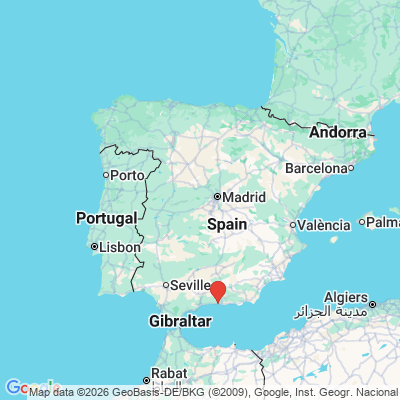
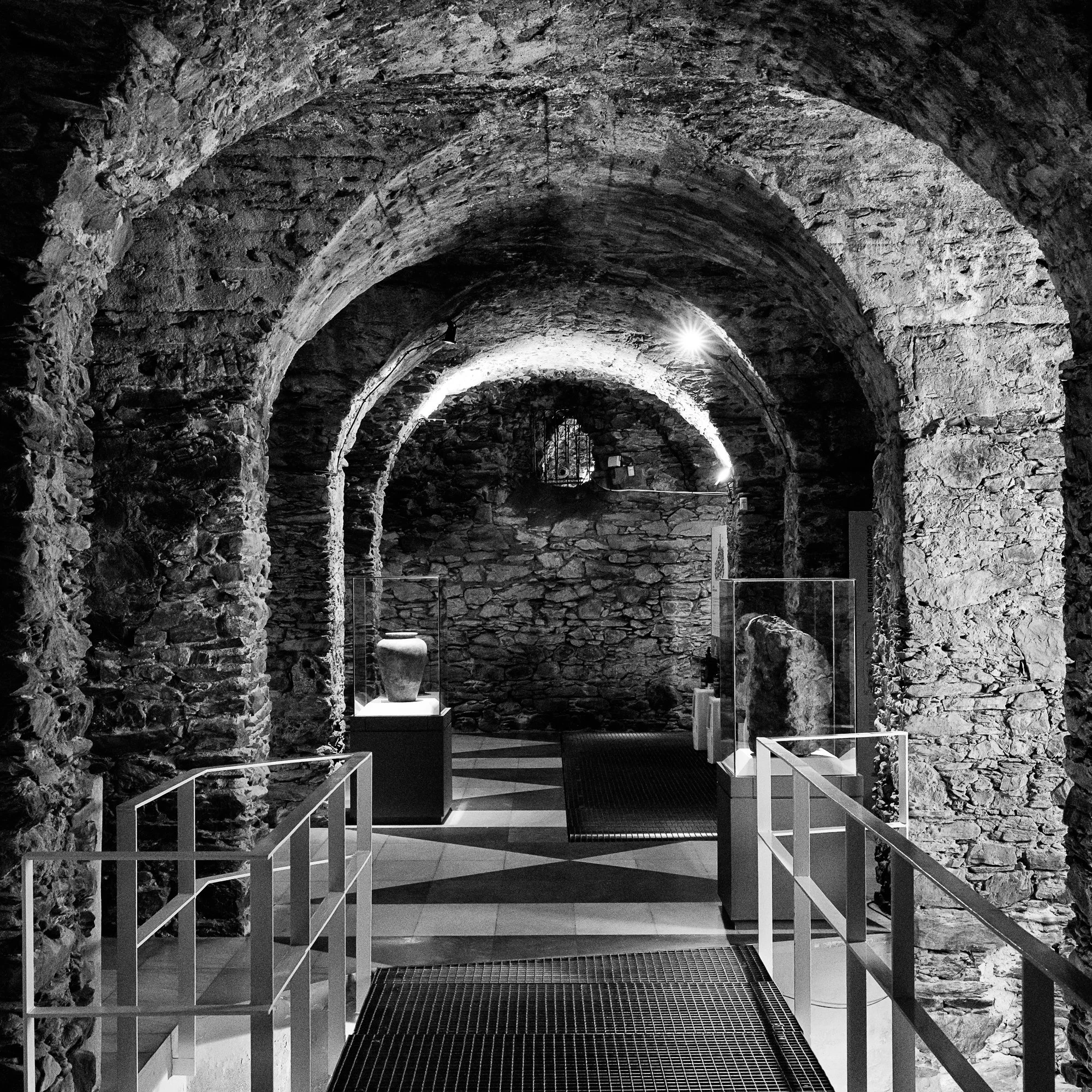
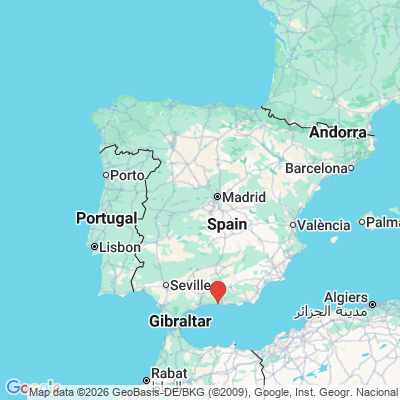
In the old quarter of Almuñécar, beneath the slopes of the hill of San Miguel, lies the fascinating underground complex known as the Cueva de los Siete Palacios. Today the vaulted chambers house an archaeological museum.
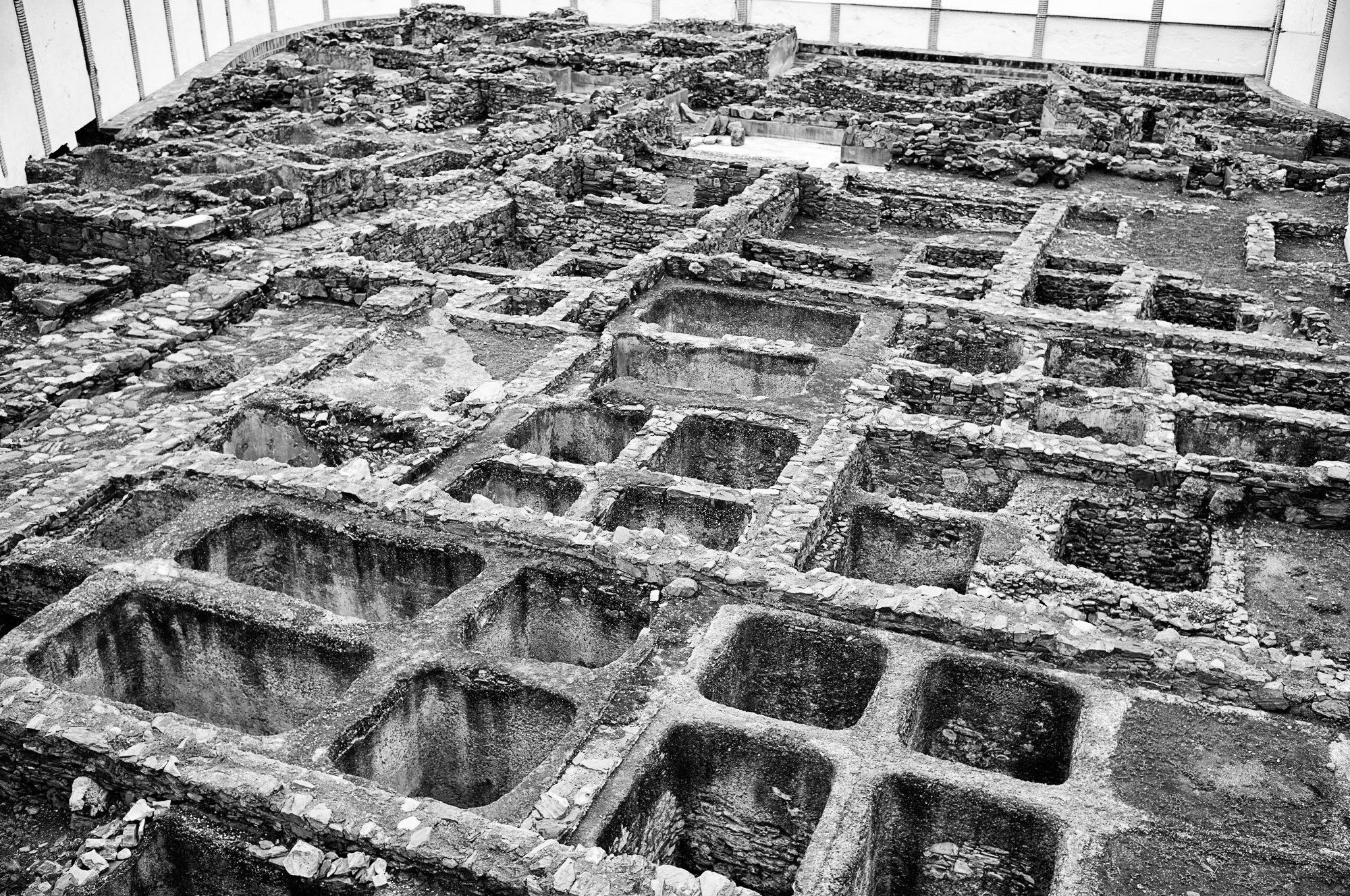
The cave itself is already unusual. Archaeologists believe it formed part of the substructures of a Roman temple dedicated to Minerva. Over time these spaces became storage rooms, shelters, and eventually a museum displaying objects that tell the long history of the town — from Phoenician beginnings to Roman times.
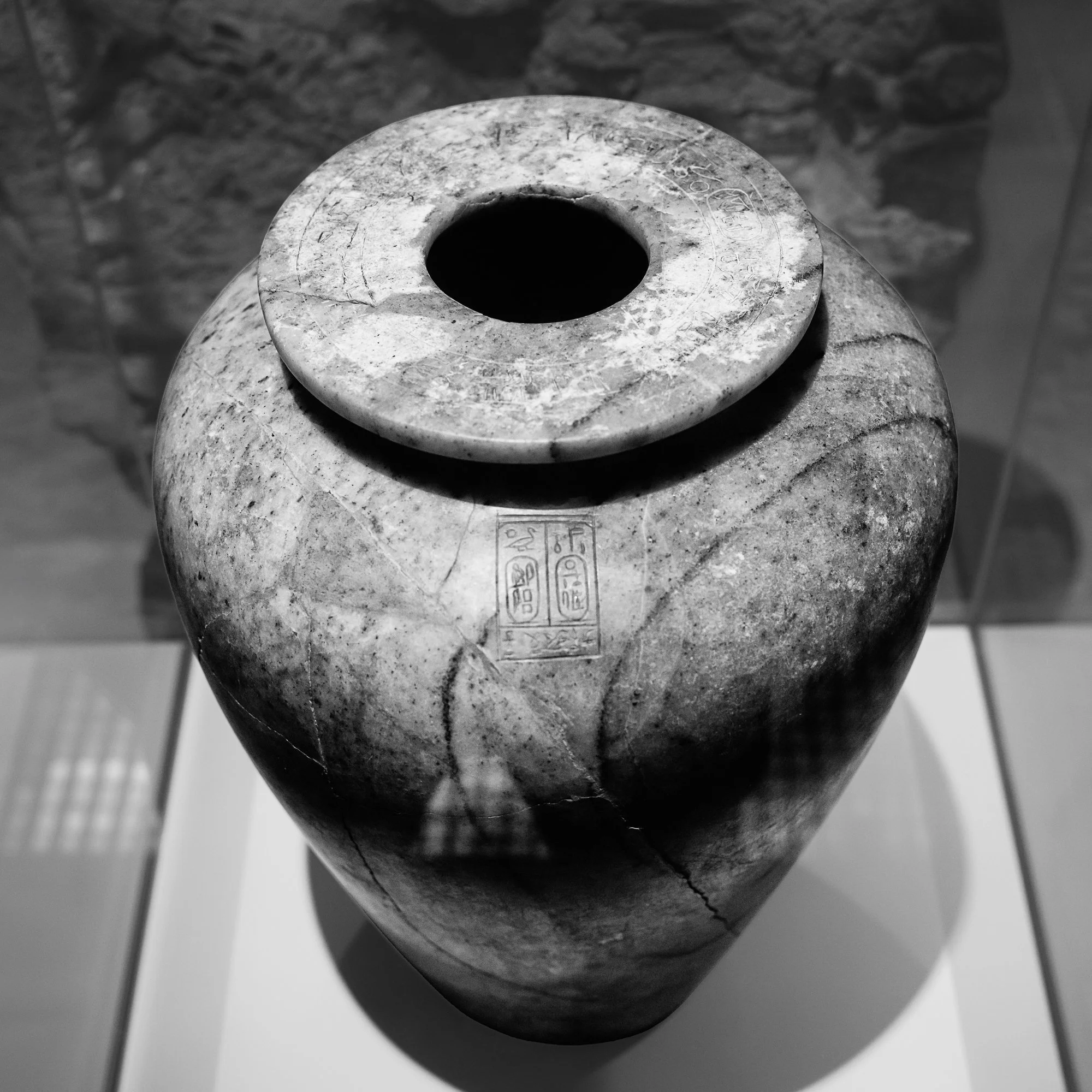
Among the most surprising objects on display is a stone canopic jar from ancient Egypt, inscribed with the name of the Hyksos king Apophis.
From the Nile to the Western Mediterranean
In ancient Egypt, canopic jars were used during the process of mummification. The internal organs of the deceased were removed, embalmed, and placed in these vessels so they could accompany the dead into the afterlife. Such jars formed part of the elaborate funerary traditions of Egyptian elite burials.
The jar displayed in Almuñécar dates to the 16th century BC, the time when Apophis ruled Egypt during the Hyksos period. Its hieroglyphic inscription mentions the king and a royal sister, confirming that the vessel once belonged to the world of Egyptian royal or elite culture.
But the real mystery is not its Egyptian origin. It is how it ended up in southern Spain.
A Phoenician Story
To understand this, we must look at the people who founded the earliest settlement here.
Long before the Romans built temples on the hill of San Miguel, the coast of southern Spain was dotted with colonies established by the Phoenicians. These seafarers connected the eastern and western Mediterranean through an impressive network of trade routes.
Their ships carried metals, wine, olive oil, luxury goods — and occasionally ancient objects that already had long histories of their own.
Egyptian artifacts were particularly prized. They were exotic, beautifully crafted, and associated with one of the most prestigious civilizations of the ancient world. Phoenician merchants often transported such objects across the Mediterranean, where they could be reused as prestigious items, ritual objects, or heirlooms.
The jar from the time of Apophis likely travelled west along these routes centuries after it was made. Eventually it reached the Phoenician town that once stood here, known in antiquity as Sexi.
Seen in this context, the jar becomes more than an Egyptian funerary object. It becomes evidence of something larger: the vast maritime world that linked distant societies long before the Roman Empire.
Today, deep inside the vaulted chambers of the Cueva de los Siete Palacios, this small stone vessel quietly reminds visitors that the Mediterranean world has been connected for thousands of years.
Further Reading
Francesco M. Galassi et al., The Canopic Jar Project: Interdisciplinary Analysis of Ancient Mummified Viscera.
Diego Ratti, Atletenu: Avaris and the Hyksos.
Josep Padró, Egyptian-Type Documents from the Mediterranean Littoral of the Iberian Peninsula before the Roman Conquest.
Manfred Bietak, Avaris: The Capital of the Hyksos.