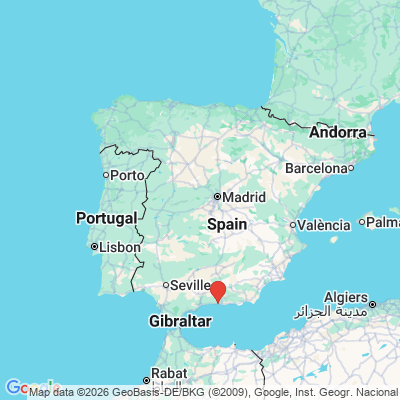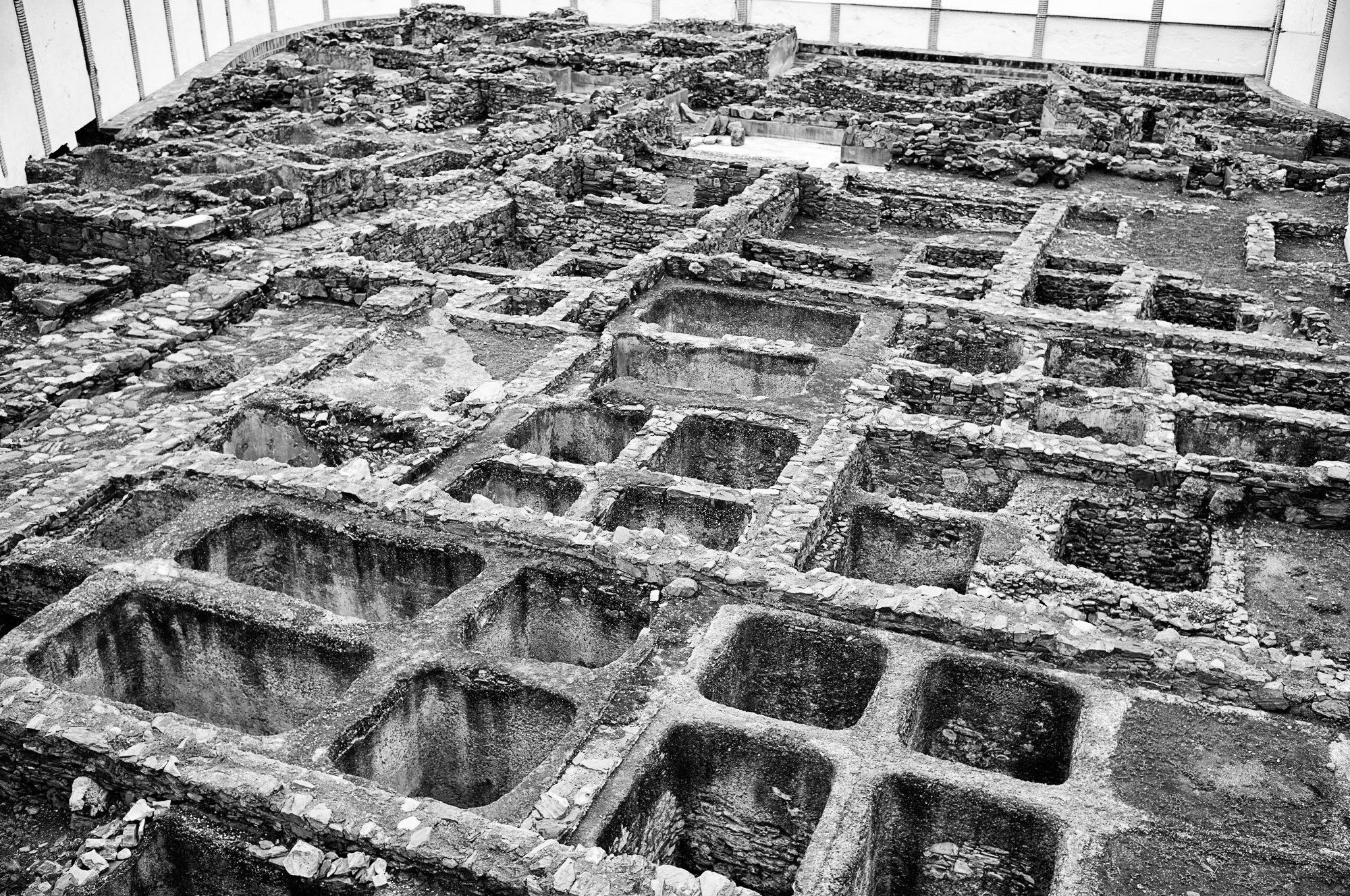
The Factoría de Salazones El Majuelo in Almuñécar (Spain).
Looking at the ruins of the Factoría de Salazones El Majuelo in Almuñécar, you see rows of rectangular stone basins. Two thousand years ago these vats produced one of the most famous ingredients of the Roman kitchen: garum.
Garum was a fermented fish sauce made from fish and salt, left to mature under the Mediterranean sun. It was used throughout the Roman world. In modern terms it worked much like Worcestershire sauce, Maggi seasoning, or fish sauce—a powerful flavor booster of which only a few drops could transform a dish.
The southern coast of Hispania, especially around Almuñécar—known in Roman times as Sexi Firmum Iulium—became one of the main production centers. Fish were fermented in large vats like these, the sauce was sealed in amphorae, and then exported across the Mediterranean.
From this Andalusian coast, garum travelled to markets throughout the Roman Empire, seasoning meals from Rome to North Africa.
The quiet basins of El Majuelo therefore tell a surprisingly global story: a local product from southern Spain that flavored the cuisine of an entire empire.