
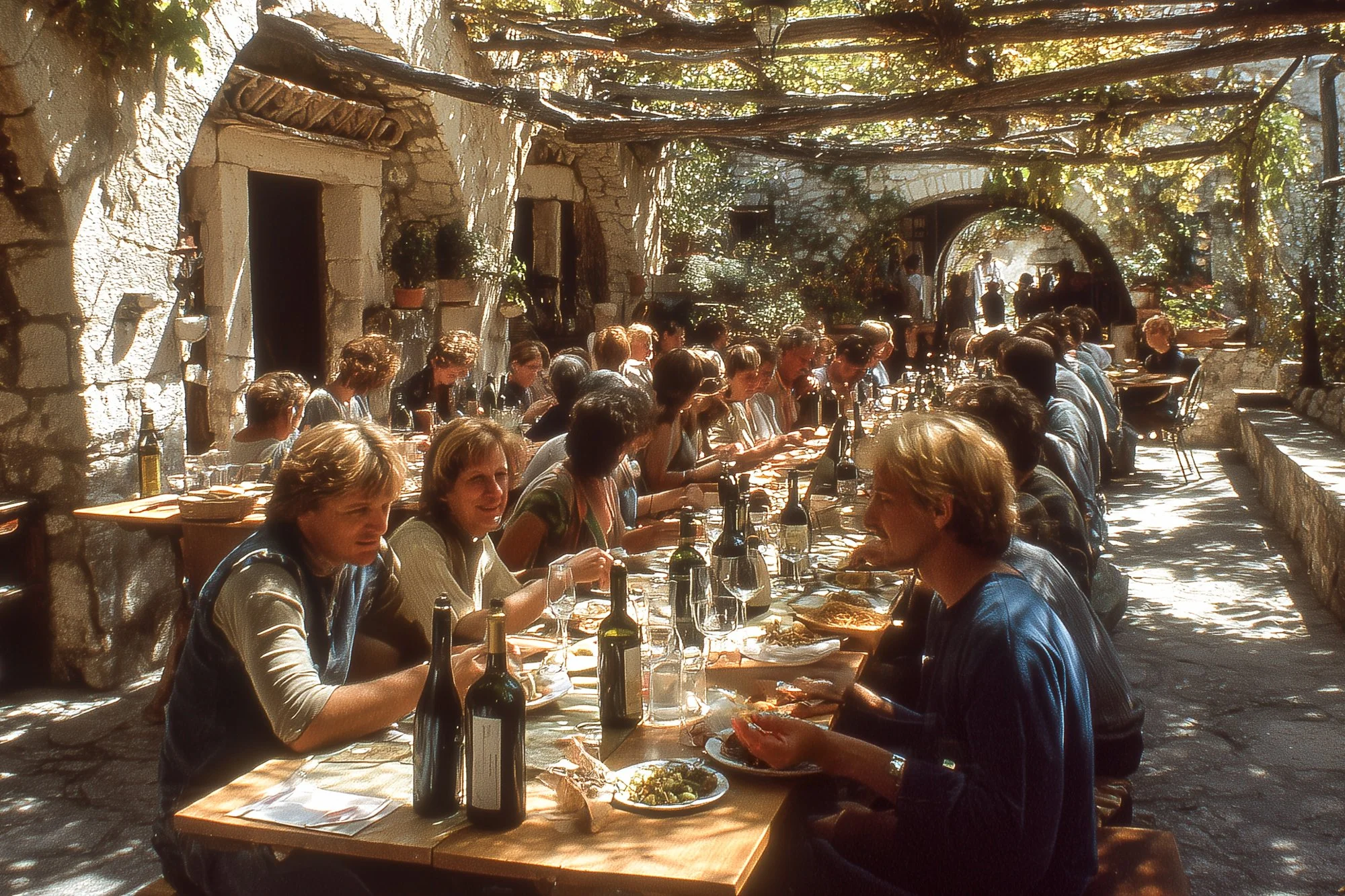
Image created with AI
In much of Europe, borders are younger than the people who live near them. Maps have been redrawn again and again, but daily life often stayed put. Families remained, fields were still worked, churches still rang their bells — even as flags, languages, and laws changed overhead. To live in Europe has often meant learning how to live with fault lines.
This is not a story of sharp divisions, but of layered belonging.
When the Map Moves, but Life Continues
For many Europeans, identity did not follow the border. States came and went; villages endured. People woke up one morning to find themselves citizens of a new country without ever moving house. The result was not confusion, but adaptation.
In such places, loyalty became selective. The state was something you dealt with; the region was something you were. Customs, dialects, and local rituals mattered more than national slogans. Culture grew quieter, more internal — carried in habits rather than declarations.
Memory as something lived, not displayed
In regions shaped by shifting borders or repeated conflict, memory is rarely loud. It does not always appear in museums or monuments. It lives in pauses, in what is hinted at rather than explained, in family stories that stop just short of certain years.
This kind of memory is not about nostalgia. It is practical. It teaches people what to avoid, what to protect, and when to remain silent. Where history has been painful or divisive, culture learns restraint. Meaning is shared among those who already know.
Regional Identity as Shelter
Regional identity in Europe is often misunderstood as resistance to the nation-state. In reality, it is frequently a form of shelter. When larger structures proved unstable or unreliable, regions offered continuity. Language, food, festivals, and rhythms of life provided a sense of permanence that politics could not.
That is why regional identity can be both deeply rooted and flexible. It does not need to shout, because it does not need to convince. It survives precisely because it adapts.
Borders that Connect as Much as They Divide
Europe’s borders are not only lines of separation; they are also zones of exchange. Border regions learned early how to navigate difference — switching languages, codes, and expectations with ease. What looks like ambiguity from the outside is often sophistication from within.
In these spaces, identity is layered rather than singular. People are fluent in more than one way of being. Context matters. Who you are depends on where you stand, who you are speaking to, and what history sits between you.
Why this Still Shapes Europe Today
Modern Europe often speaks the language of unity, mobility, and openness. Yet beneath that surface lies a continent shaped by lived experience of fracture. The persistence of regional identity is not a failure of integration; it is evidence of memory.
It explains why certain debates feel existential in one region and abstract in another. Why some communities guard their traditions quietly, while others display them proudly. Why misunderstandings arise not from hostility, but from different relationships to history.
Reading Europe’s Fault Lines
To travel through Europe with attention is to notice these fault lines — not as scars, but as seams. Places where history pulled apart and was stitched back together. Where culture learned to survive without certainty.
Europe’s diversity does not come from difference alone. It comes from the long practice of living together without shared guarantees.