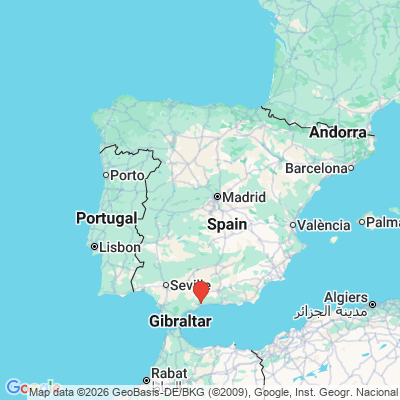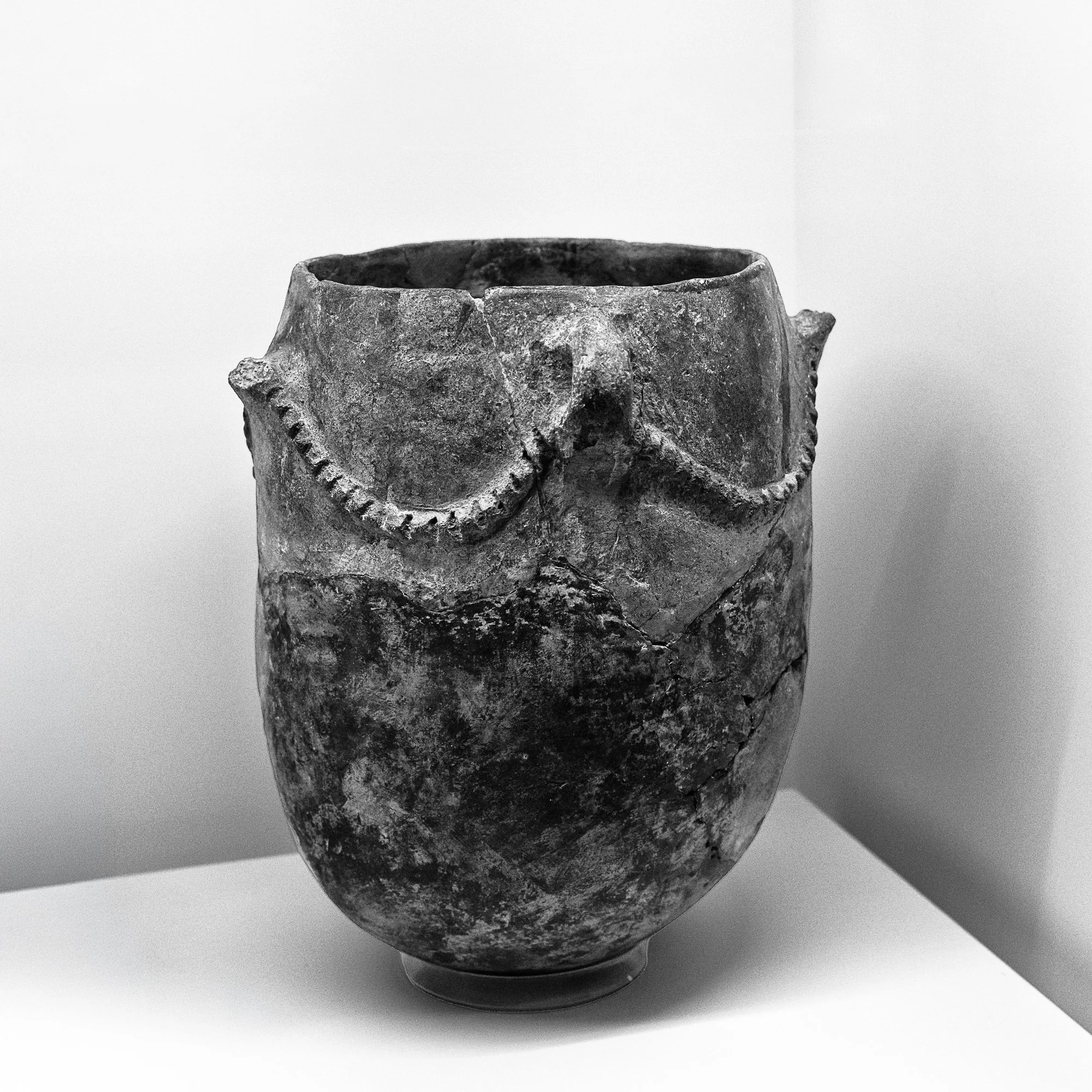
Neolithic decorated clay vessel (c. 5500–3500 BC) from the Cueva del Higuerón near Rincón de la Victoria (Málaga), now displayed in the Museo de Málaga. Hand-made and decorated with impressed patterns, pots like this belong to the earliest farming communities of the Iberian Peninsula.
Around 7,500–5,500 years ago, life on the Iberian Peninsula began to change in a profound way. For thousands of years people had lived as hunter-gatherers, moving through landscapes rich in animals, plants and marine resources. But during the sixth millennium BC, new communities appeared along the Mediterranean coast bringing something revolutionary: farming and herding.
Archaeologists call this moment the Neolithic transition.
The Arrival of the First Farmers
The first Neolithic communities of Iberia cultivated crops such as wheat and barley and kept sheep and goats. They used polished stone tools, flint sickles for harvesting, and—perhaps most visibly—ceramic vessels. These early farming groups did not appear everywhere at once. The earliest sites are often found along the Mediterranean coast, especially in caves and rock shelters. From these coastal footholds, farming gradually spread inland.
Archaeologists believe these communities likely arrived by sea from other parts of the western Mediterranean, possibly from the Italian or Ligurian coasts. Another possibility, still debated, is that some groups reached southern Iberia from North Africa across the Strait of Gibraltar. Wherever they came from, their arrival created one of the most important cultural encounters in European prehistory: the meeting between incoming farmers and local hunter-gatherers.
A Landscape of Caves and Coasts
Southern Iberia—especially the coast of Málaga and Granada—is rich in caves that preserve traces of this transition. These caves were often occupied repeatedly for thousands of years.
At sites along the Andalusian coast, archaeological layers show the gradual shift from Mesolithic hunter-gatherers to Early Neolithic farmers, including pottery fragments, stone tools, shell ornaments, and remains of domesticated animals.
Even after farming arrived, people continued to exploit the sea. Shellfish, fish, and other marine resources remained important in daily life along the Mediterranean coast.
In other words, the Neolithic did not replace earlier traditions overnight—it blended with them.
A Pot from the Beginning of Farming
A quiet witness to this transformation can be seen today in the Museo de Málaga. The clay vessel shown here was found in the Cueva del Higuerón, a cave near Rincón de la Victoria, just east of Málaga. It dates to the Neolithic period between about 7,500 and 5,500 years ago. At first glance it may look simple: a hand-made clay pot with decorative impressions along its rim. But this object tells an important story. Pottery like this is one of the clearest signs that a community had entered the Neolithic world. Clay vessels allowed people to store grain, cook food, and transport liquids, making them closely connected to farming life.
Unlike modern ceramics, Neolithic pots were made without a potter’s wheel. The clay was shaped by hand, decorated with simple impressions or incised patterns, and fired in basic kilns or open hearths. Each pot was therefore unique. The decorative band around the rim of this vessel—made by pressing tools or cords into the wet clay—was not strictly necessary. It was a human touch: a moment where utility became design.
A Quiet Revolution
When we look at objects like this pot, we are seeing the material traces of one of the biggest revolutions in human history.
The introduction of farming meant:
more permanent settlements
new technologies such as pottery
domesticated animals and crops
new social structures and ways of organizing land.
Within a few centuries, these early farmers transformed landscapes across the Iberian Peninsula.
Yet the people who made this vessel were still close to older traditions. They lived in caves near the sea, gathered shellfish, hunted animals, and moved through familiar territories that had been used by hunter-gatherers long before them.
This clay pot, now resting in a museum display case, therefore stands at the meeting point of two worlds: the last hunter-gatherers and the first farmers of Iberia.