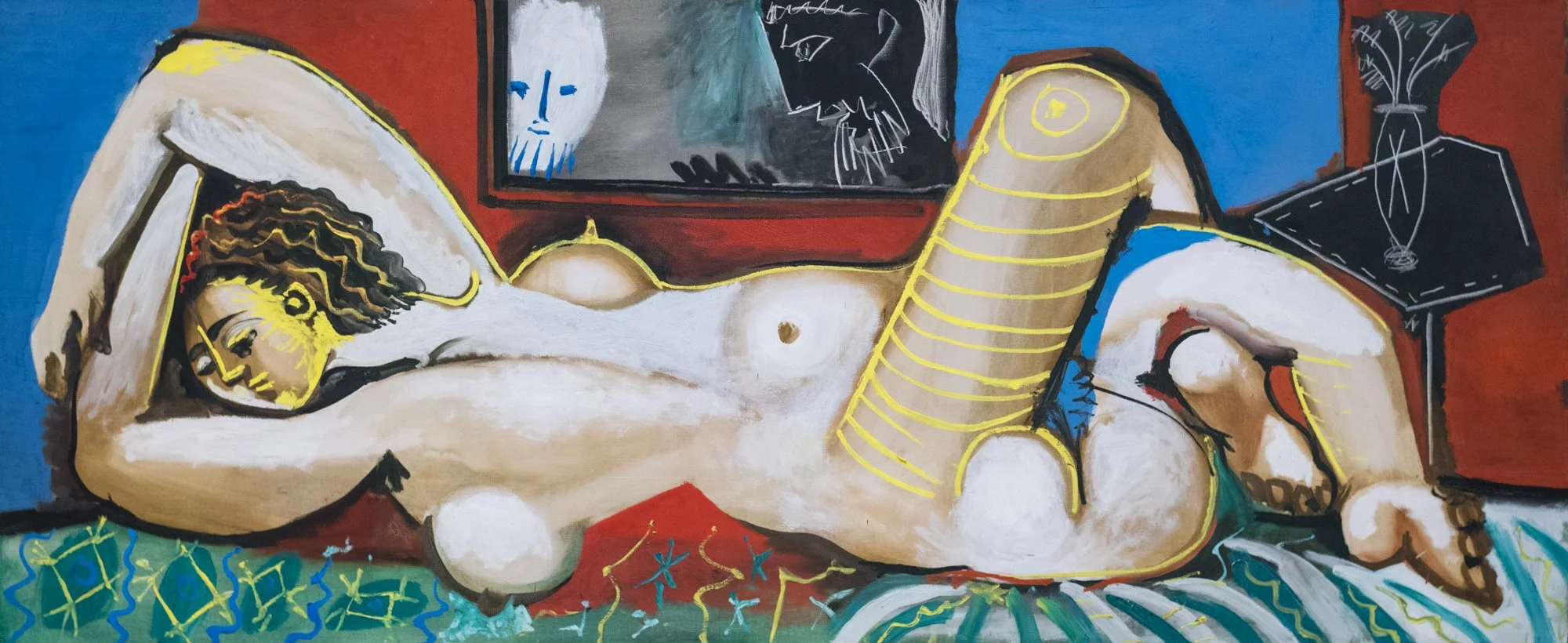
Picasso’s Susanna and the Elders — where a biblical tale becomes a raw drama of age, beauty and desire. (Picasso Museum Málaga, Spain)
Hidden in the Bible, tucked away in the Book of Daniel, lies one of the most painted stories in Western art: Susanna and the Elders. For centuries it offered artists the perfect excuse to paint a naked woman — wrapped in a moral lesson.
Susanna is a young, beautiful and virtuous wife. Two elderly judges spy on her while she bathes in her garden. When she rejects their advances, they accuse her of adultery. She is sentenced to death — until the young Daniel exposes their lie by questioning them separately. Susanna is saved. Justice prevails.
Tintoretto painted her. Rubens painted her. Rembrandt painted her. And then, centuries later, Pablo Picasso tore the whole scene apart and put it back together in his own image.
In the late 1950s and early 1960s, Picasso — already in his eighties — returned obsessively to the theme. But his Susanna is no delicate victim. She is raw, erotic, confrontational. And the elders? They are grotesque, caricatured, almost monstrous. Their desire is clumsy, urgent and deeply uncomfortable to watch.
Picasso strips the story of its polite morality. What remains is something far more unsettling: the naked mechanics of power, age, lust and looking.
For Picasso, Susanna becomes a theatre of desire. A stage where youth confronts age, where beauty meets decay, where watching becomes an act of domination. Many art historians believe the staring elders are, in part, self-portraits: the ageing Picasso confronting his own obsession with the female body.
This was the period when Picasso reworked the great masters — Velázquez, Manet, Delacroix, Rembrandt — not to honour them, but to wrestle with them. To argue with them. To expose what lay beneath their elegance.
His Susanna and the Elders series is not comfortable viewing. It is erotic, disturbing, sometimes funny, sometimes cruel. It is old age refusing to behave politely.
And that is exactly why it still grips us.
Because beneath the biblical robes and museum frames, Picasso reminds us that this ancient story is not about virtue at all — but about desire, fear, power and the dangerous act of looking.