art

Blue Babies: A Quiet Protest That Refused to Disappear

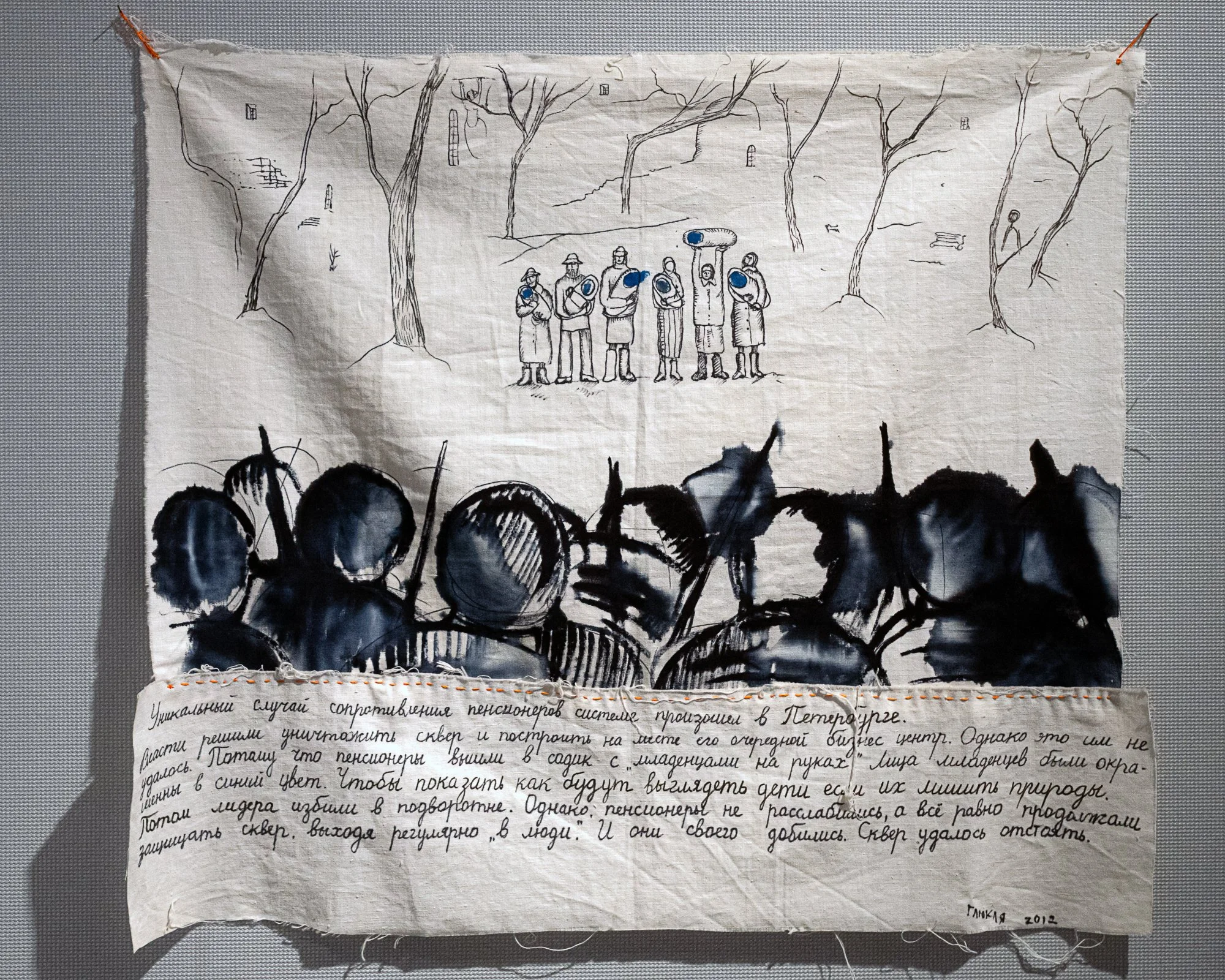
Blue babies (protesting pensioners) by the Russian artist Gluklya, seen at the Museum van Bommel van Dam in Venlo.

I came across this work in the Museum van Bommel van Dam. It is Blue babies (protesting pensioners) by the Russian artist Gluklya.

At first, it looks like a simple painted piece of cloth showing a group of elderly people. But look a little closer, and the scene becomes stranger: the pensioners are holding soft bundles with small, blue faces—like fragile, improvised “babies.”

In this work, Gluklya turns a real event into something quiet but unsettling. The figures represent pensioners who protested against the closure of a small park in their neighbourhood. It was not a dramatic uprising, just a local action—but it mattered. The park was saved.

The image adds another layer to that story. The blue-faced “babies” suggest vulnerability—cold, neglect, something that needs care. By placing them in the arms of elderly people, the work gently shifts perspective. Those often seen as belonging to the past are here shown as carriers of something that still needs protection.

What begins as a small protest opens into a larger reflection. These figures are not only defending a park; they are claiming their place in society. In many cities, older people are everywhere, yet often overlooked. Here, they insist on being seen.

Once you know this, the cloth reads differently. What first feels fragile becomes deliberate. And the quiet presence of these protesters turns into a form of resistance that is hard to ignore.
A Living Room Turned Museum: The Story of Maarten and Reina van Bommel–van Dam

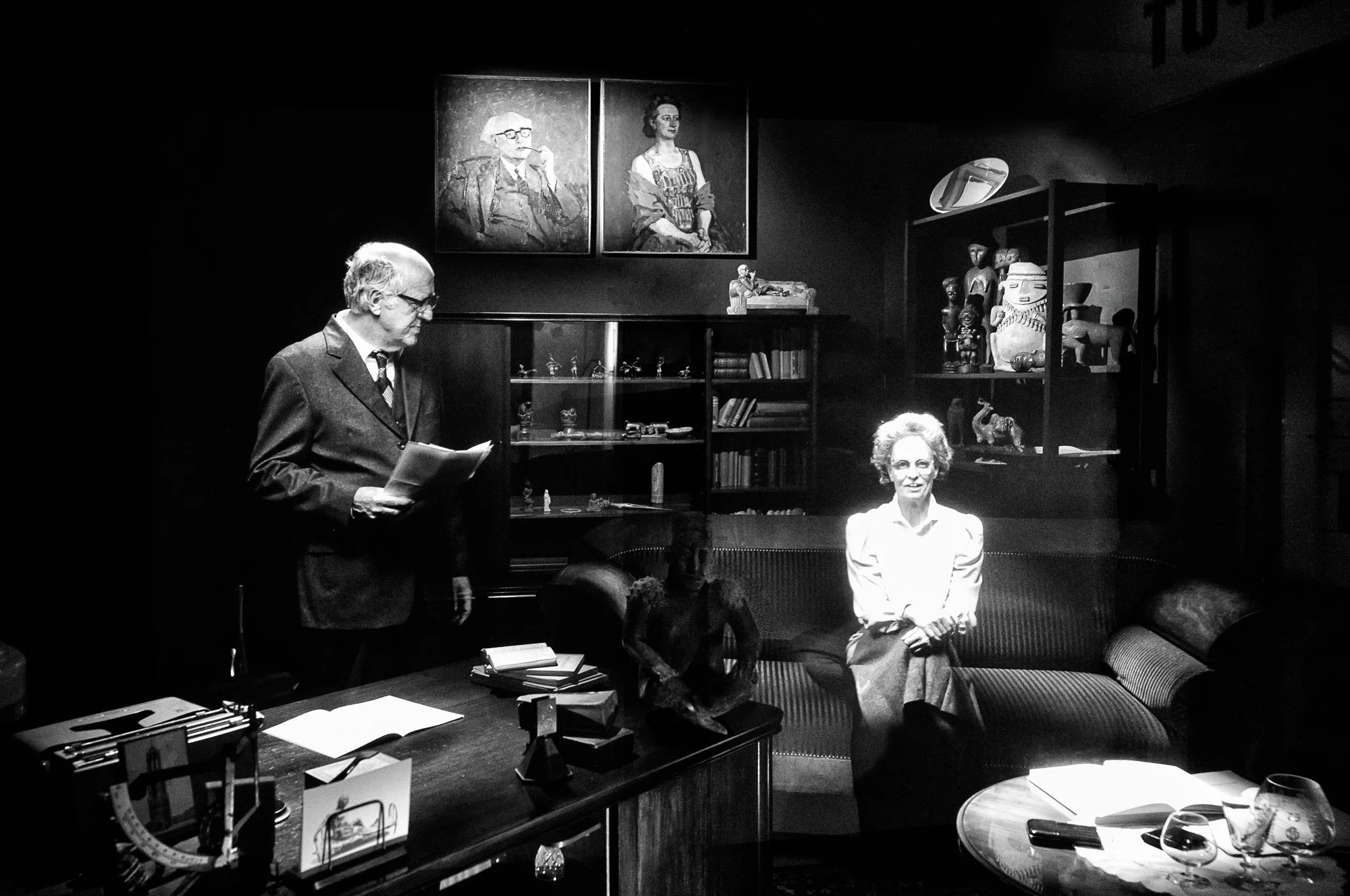
The “Stijlkamer” at Museum van Bommel van Dam — a reconstructed living room where holograms of Maarten and Reina van Bommel–van Dam bring their shared life, collecting passion, and personal story vividly back to life.

Step into Museum van Bommel van Dam and you sense immediately that this is not a typical museum. The collection feels personal—less like a carefully constructed overview of art history, and more like a life lived with art.

That is exactly what it is.

Collecting What Moved Them

Maarten van Bommel (1906–1991), a banker, and Reina van Dam (1910–2008) collected art not by theory, but by instinct. They chose works that spoke to them—drawn by colour, material, or simply a feeling.

Over time, their home filled with paintings, sculptures, and objects. The result was not a neat, chronological collection, but something more interesting: a personal landscape of modern art, shaped by taste rather than rules.

A Gift That Became a Museum

By the late 1960s, their collection had outgrown their house. Instead of selling it, they made a remarkable decision. In 1969, they offered the entire collection to the city of Venlo.

The condition was simple: it had to remain together and accessible to the public.

Venlo accepted, and in 1971 the museum opened—built around a private collection, but carrying the spirit of the people who created it.

A Museum with a Personal Memory

One space captures this especially well: the “Stijlkamer,” a room that echoes the atmosphere of their own home. It reminds visitors that these works were once part of everyday life, not just objects on display.

That is what sets this museum apart. It is not only about art—it is about how art was lived with.

More Than a Collection

The Museum van Bommel van Dam remains rooted in that original idea. It continues to grow, but it still carries the imprint of its founders.

What began as a private passion became a public place—without losing its character.

Progress vs Regress: Listening to Those Who Lived Through It

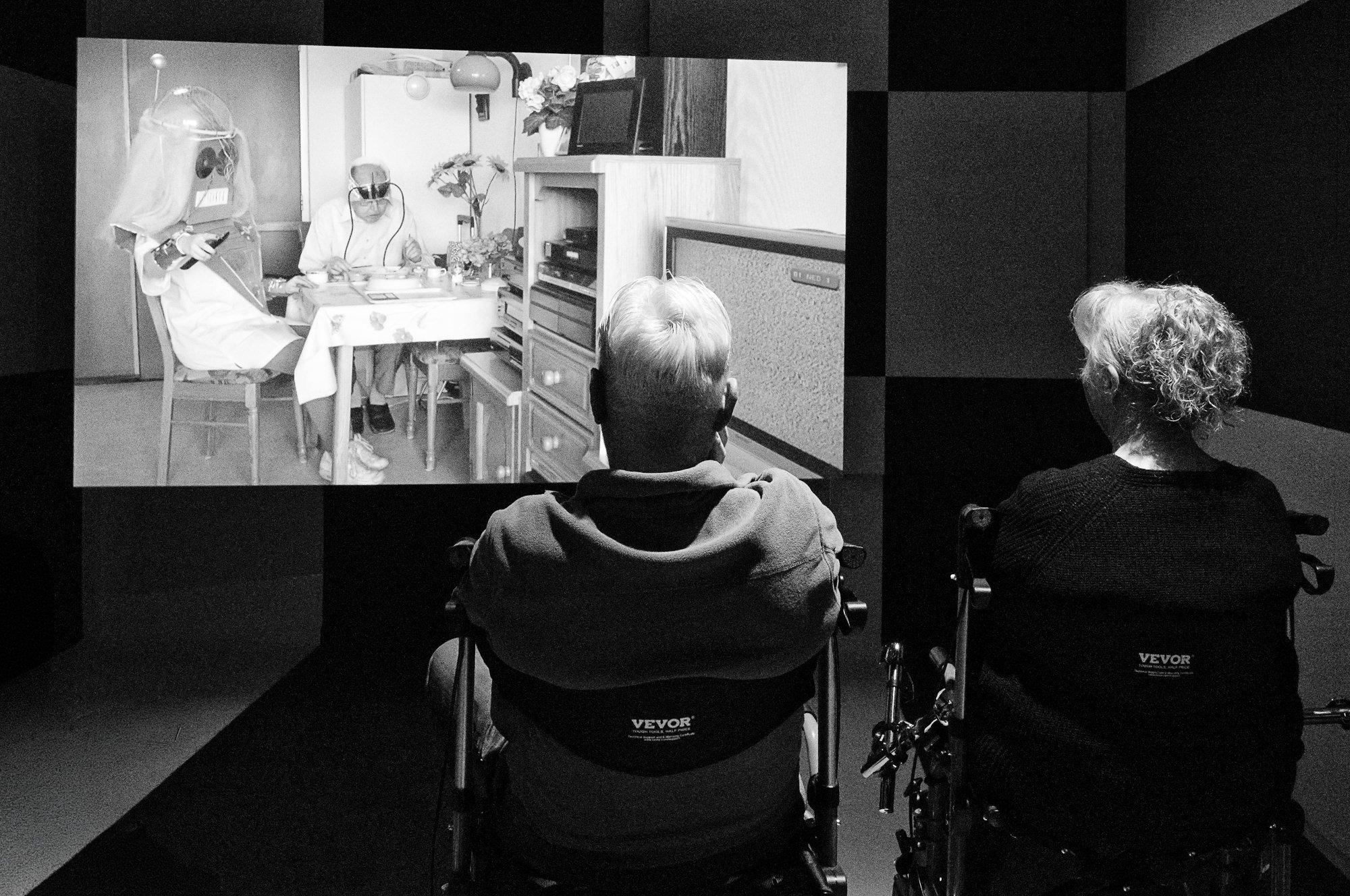
Visitors watching Progress vs Regress (2016) by the Dutch artist Melanie Bonajo.

I saw this film at the Museum van Bommel van Dam in Venlo (The Netherlands). It is Progress vs Regress (2016) by the Dutch artist Melanie Bonajo.

The film begins with a simple idea: instead of asking what progress means in theory, ask the people who have actually lived through it.

Bonajo gives the floor to people in their eighties and nineties. They speak about changes that shaped their lives—women’s suffrage, the contraceptive pill, television, the car. Things we now take for granted once redefined what freedom meant. Some of these changes clearly expanded their world.

But the tone shifts when the conversation moves to the present. The internet, smartphones, constant connectivity—these are not simply improvements. They make communication easier, but can also create distance. The world feels faster, more efficient, but not always more human.

What makes the film compelling is its calm honesty. There is no grand argument, no dramatic conclusion. Just people reflecting on what has been gained—and what may have been lost.

In the second half, younger and older generations speak side by side. The contrast is subtle but telling. What one group experiences as natural, the other experiences as disorienting. Not because they resist change, but because they remember a different rhythm of life.

The film leaves you with an uncomfortable but important question: if progress keeps moving forward, who decides what counts as improvement?

And perhaps even more quietly: who gets left behind when we do not ask that question?