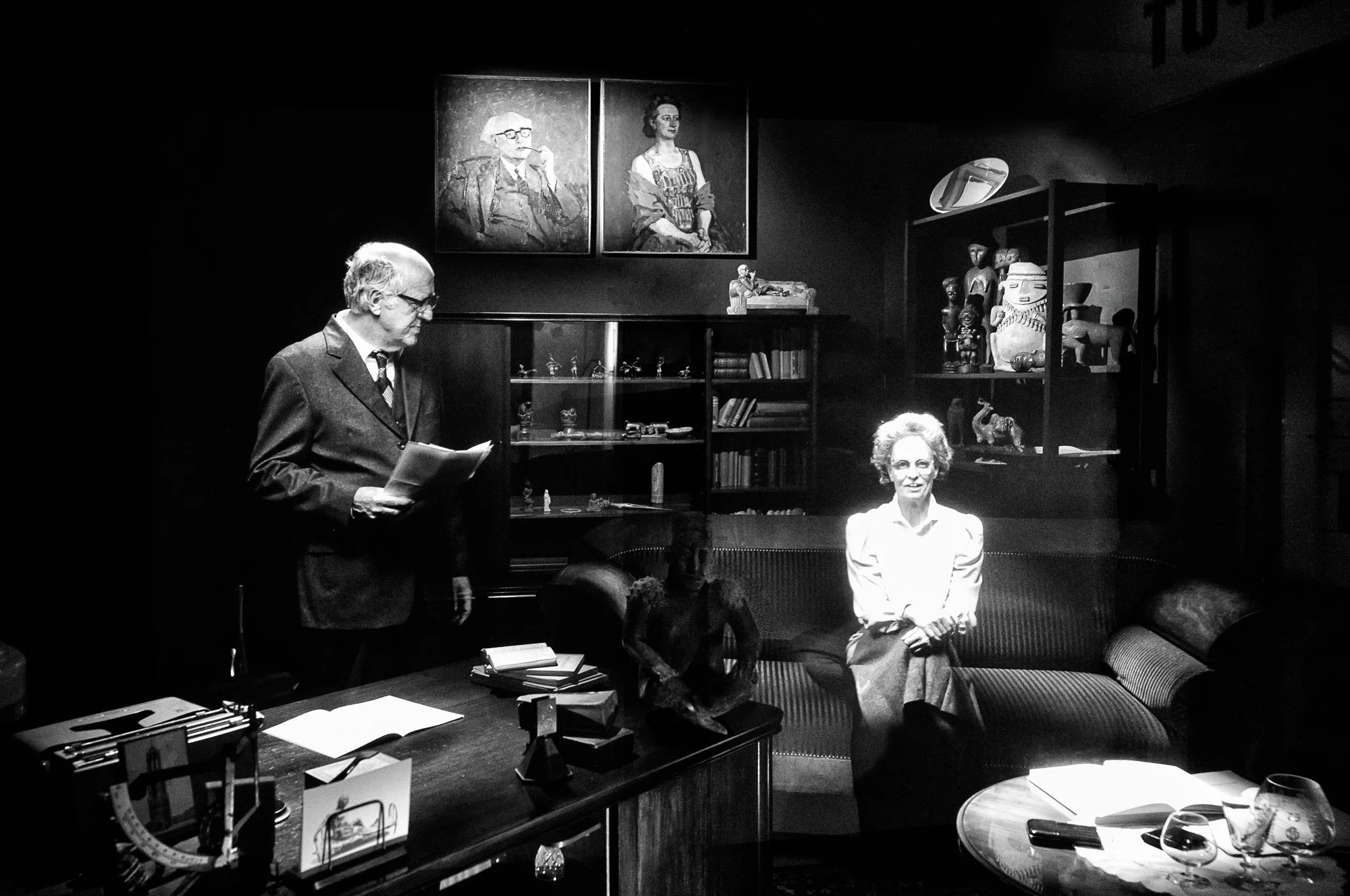
The “Stijlkamer” at Museum van Bommel van Dam — a reconstructed living room where holograms of Maarten and Reina van Bommel–van Dam bring their shared life, collecting passion, and personal story vividly back to life.
Step into Museum van Bommel van Dam and you sense immediately that this is not a typical museum. The collection feels personal—less like a carefully constructed overview of art history, and more like a life lived with art.
That is exactly what it is.
Collecting What Moved Them
Maarten van Bommel (1906–1991), a banker, and Reina van Dam (1910–2008) collected art not by theory, but by instinct. They chose works that spoke to them—drawn by colour, material, or simply a feeling.
Over time, their home filled with paintings, sculptures, and objects. The result was not a neat, chronological collection, but something more interesting: a personal landscape of modern art, shaped by taste rather than rules.
A Gift That Became a Museum
By the late 1960s, their collection had outgrown their house. Instead of selling it, they made a remarkable decision. In 1969, they offered the entire collection to the city of Venlo.
The condition was simple: it had to remain together and accessible to the public.
Venlo accepted, and in 1971 the museum opened—built around a private collection, but carrying the spirit of the people who created it.
A Museum with a Personal Memory
One space captures this especially well: the “Stijlkamer,” a room that echoes the atmosphere of their own home. It reminds visitors that these works were once part of everyday life, not just objects on display.
That is what sets this museum apart. It is not only about art—it is about how art was lived with.
More Than a Collection
The Museum van Bommel van Dam remains rooted in that original idea. It continues to grow, but it still carries the imprint of its founders.
What began as a private passion became a public place—without losing its character.