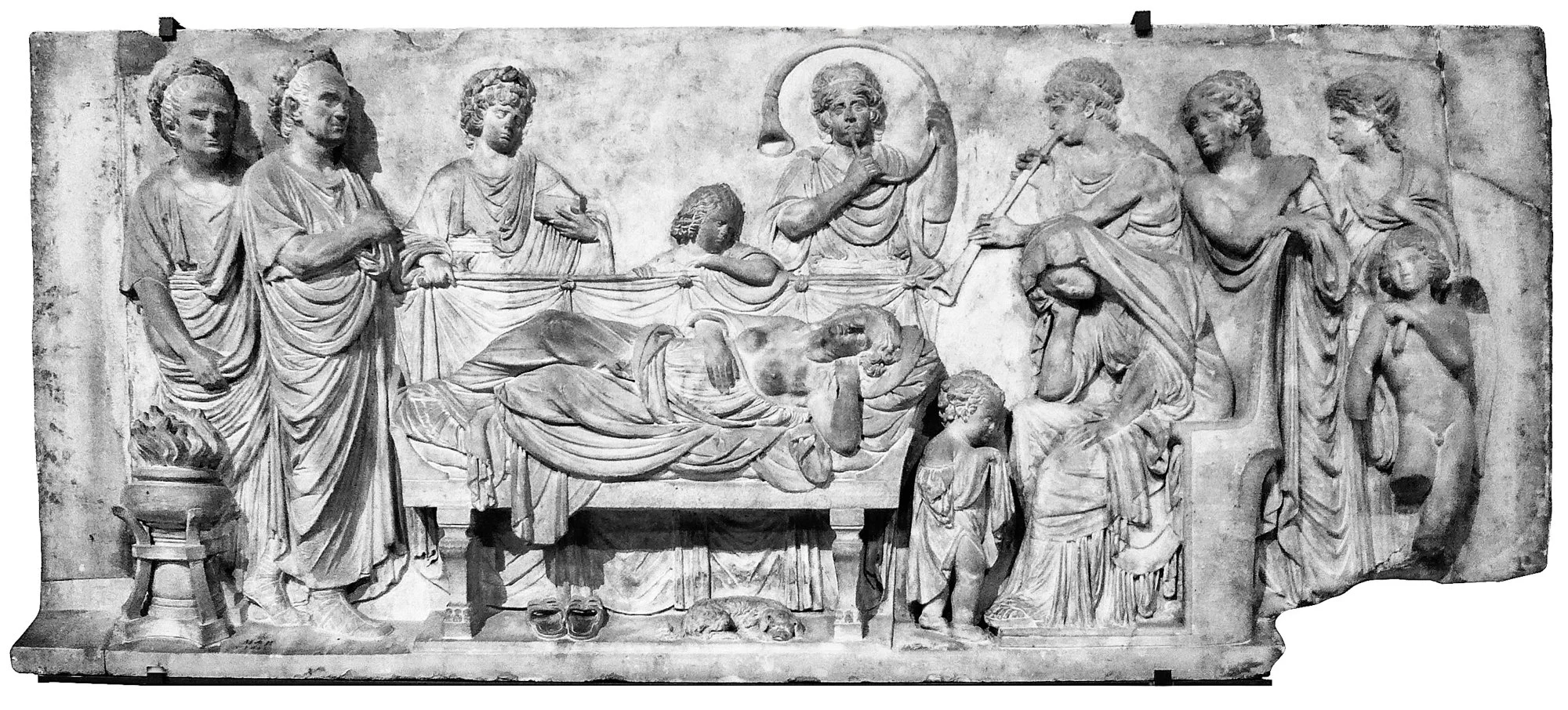
Funerary Ceremony, called the Conclamatio — marble relief made in northern Italy around 1500–1515, a Renaissance imitation of an ancient Roman scene showing the ritual calling of the deceased’s name at a funeral. The work is now held in the Louvre Museum, Paris.
The Scene
This marble relief, created in northern Italy around 1500–1515, is a Renaissance imitation of an ancient Roman work. Now housed in the Louvre, it depicts the conclamatio — the moment in a Roman funeral when family and attendants called aloud the name of the deceased.
At the center lies the body on a klinē, surrounded by mourners and musicians. Two figures raise wind instruments, amplifying the chorus of grief. Beneath the couch rest a pair of sandals and a small dog — tokens of loyalty and life left behind. To the left, a ritual flame burns; above, a draped cloth marks the threshold between the living and the dead.
The Meaning
The conclamatio confirmed death and released the deceased from the world of the living. It was both ritual and recognition — the collective voice of family ensuring that memory began where life had ended. Though carved a millennium and a half after the Roman original, this Renaissance piece captures the essence of the ancient rite: solemnity, movement, and human emotion rendered in stone.
The sculptor’s aim was not to copy but to evoke — to translate the lost sound of ritual into enduring silence. By showing grief as action, not sentiment, the relief bridges two worlds: the classical past and the reflective spirituality of the early sixteenth century.
Reflection
The “Conclamatio” relief reminds us that mourning was once a public act — a communal acknowledgment that someone had lived, and had left. Even as a Renaissance reimagining of antiquity, it preserves the universal impulse to give voice to loss. Across centuries, the echo of that final call still seems to resonate from the marble itself.
Further Reading
Marie Erasmo, Reading Death in Ancient Rome
Katherine Carroll, Living Through the Dead
William H. Heller, Roman Funerary Ritual and Social Memory