Roman Power, Provincial Spain, and the Afterlife of Domitian
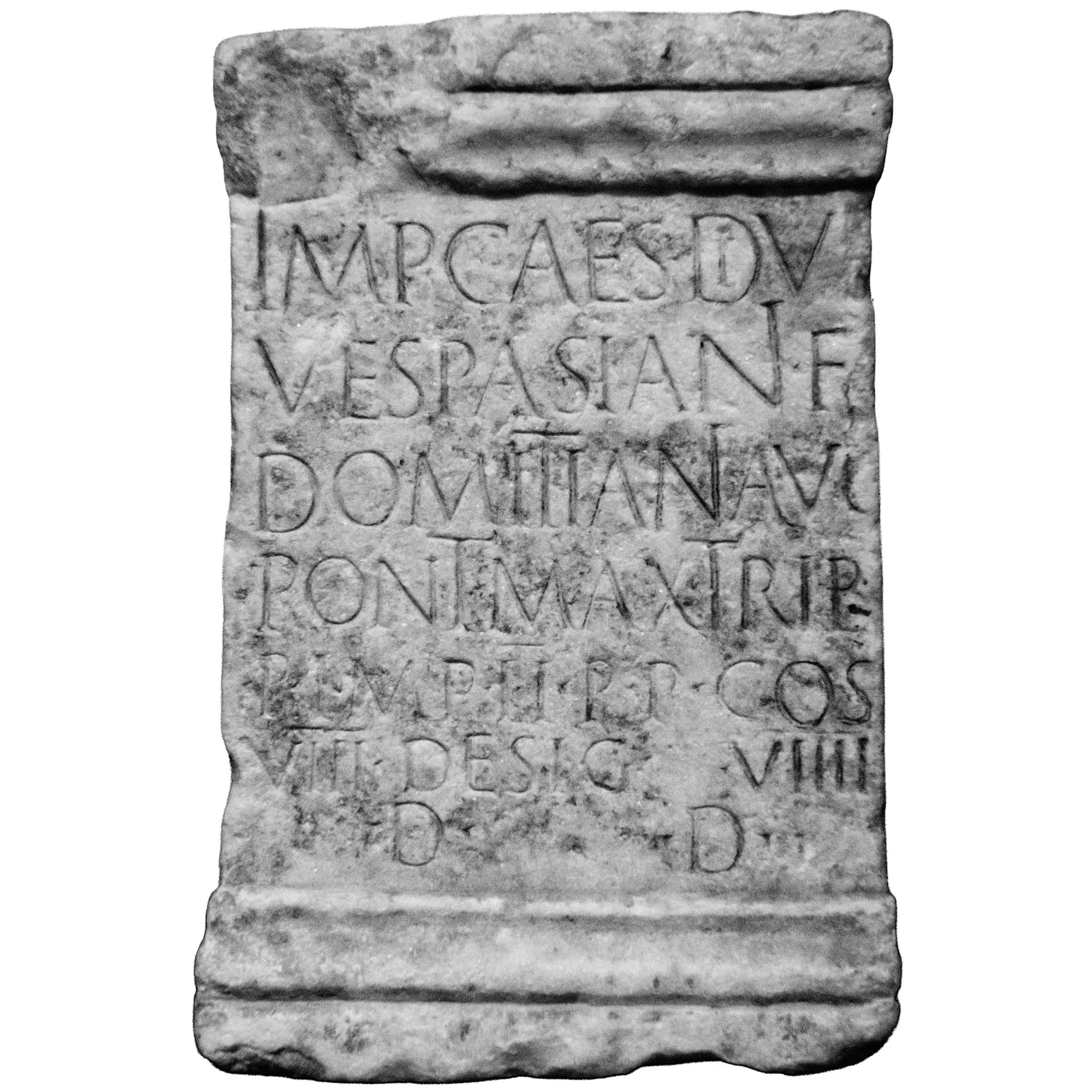
Roman honorific inscription dedicated to Emperor Domitian (ca. 85 CE), originally from the nearby municipium of Irueña and now preserved in the cathedral museum of Ciudad Rodrigo.
Imp(eratoris) Caes(aris) divi / Vespasiani f(ilii) / Domitiani Aug(usti) / pont(ificis) max(imi) trib(unicia) / p(otestate) imp(eratoris) II p(atris) p(atriae) co(n)s(ulis) / VIII desig(nati) VIIII / d(ecreto) d(ecurionum)
(To Emperor Caesar Domitian Augustus, son of the deified Vespasian, Supreme Pontiff, invested with tribunician power, acclaimed Imperator for the second time, Father of the Fatherland, consul for the eighth time, designated for the ninth, by decree of the town council.)
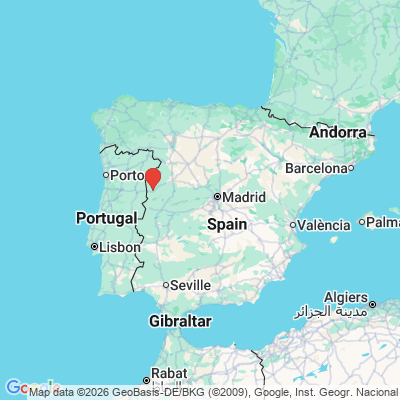
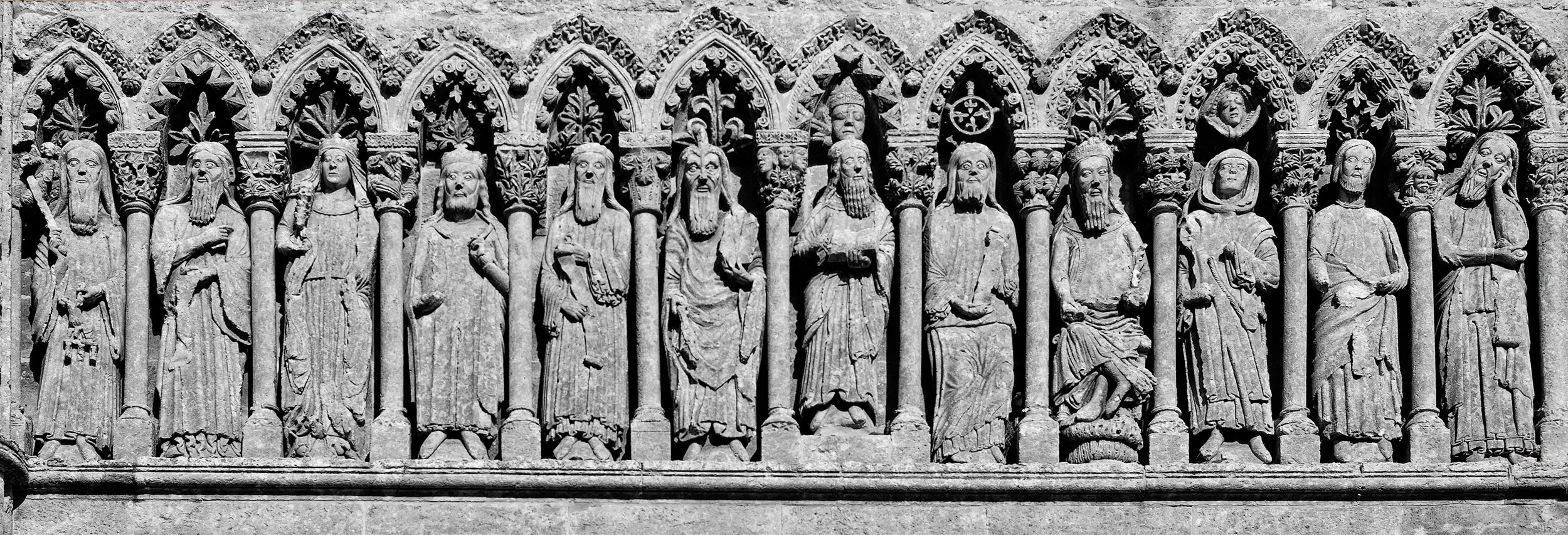
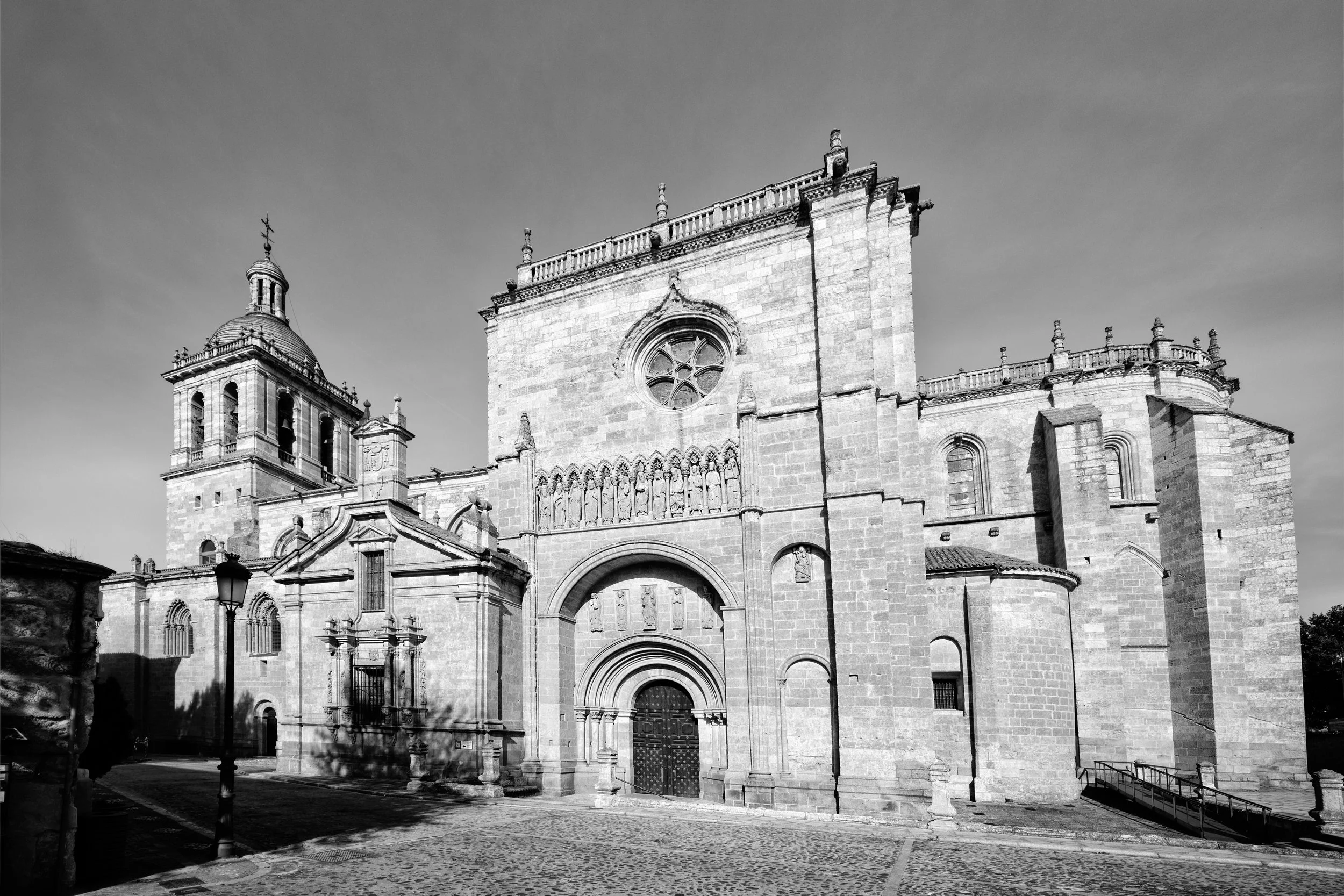
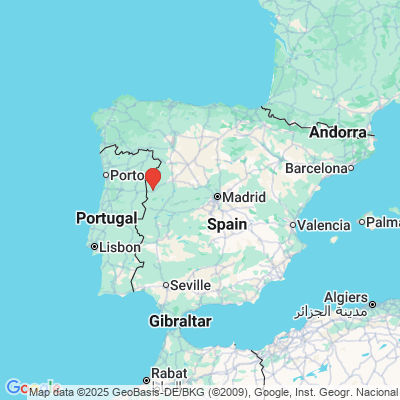
In a small museum room beside the cathedral of Ciudad Rodrigo, far from the marble forums of Rome, stands a modest but revealing Roman inscription. Carved in marble in the late first century CE, the stone is dedicated not to a local notable, but to the emperor himself: Domitian.
The text is formal, restrained, and unmistakably official. It names Domitian as Imperator Caesar, son of the deified Vespasian, holder of tribunician power, Pontifex Maximus, and consul-designate for the seventh time. Such titulature allows historians to date the stone with unusual precision, to the mid-80s CE. This was not a funerary monument, but an honorific inscription—part of the language of loyalty that bound Rome’s far-flung provinces to the imperial centre.
Rome in the Western Hinterland
In Roman times, Ciudad Rodrigo itself was not yet the fortified city we see today. The stone most likely originated in the nearby Roman municipium of Irueña (Urunensium), a regional centre connected to the road networks linking Lusitania (the southwest of Portugal) and the Meseta (the heart of Spain). Revealingly, even here—on what might feel like the margins of the Roman world—the emperor was present, invoked in stone as guarantor of order, authority, and continuity.
Such inscriptions were acts of public performance. To dedicate a monument to the emperor was to declare loyalty, to inscribe Rome’s hierarchy into local space. Power travelled not only through legions and administrators, but through formulaic Latin carved in durable stone.
Domitian and Memory
Domitian’s reign (81–96 CE) was marked by strong central authority, administrative efficiency, and increasing autocracy. Ancient sources, largely written by senatorial elites hostile to him, portray him as a tyrant. After his assassination, he was subjected to a damnatio memoriae: his name erased from inscriptions, his statues destroyed or reworked.
That makes this stone all the more remarkable. Unlike many Domitianic monuments, it survived intact—probably because it was reused as building material in the Middle Ages and later incorporated into ecclesiastical holdings. Ironically, spoliation preserved what official memory sought to erase.
A Long Afterlife in Stone
Today, displayed quietly in the cathedral museum, the inscription bridges worlds: Roman imperial ideology, late antique transformation, medieval reuse, and modern historical curiosity. It reminds us that imperial Rome was not only built in capitals and monuments, but also in provincial gestures of allegiance—some of which, against all odds, still speak to us.
Further Reading
Corpus Inscriptionum Latinarum, vol. II (Hispania), no. 862
Brian W. Jones, The Emperor Domitian
Javier Andreu Pintado, Municipia y civitates en la Hispania romana
Géza Alföldy, Roman Social History
Hispania Epigraphica Online (HEpOL)