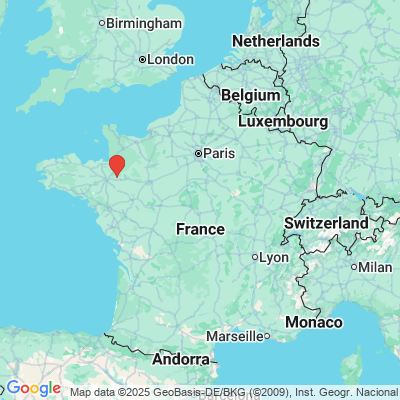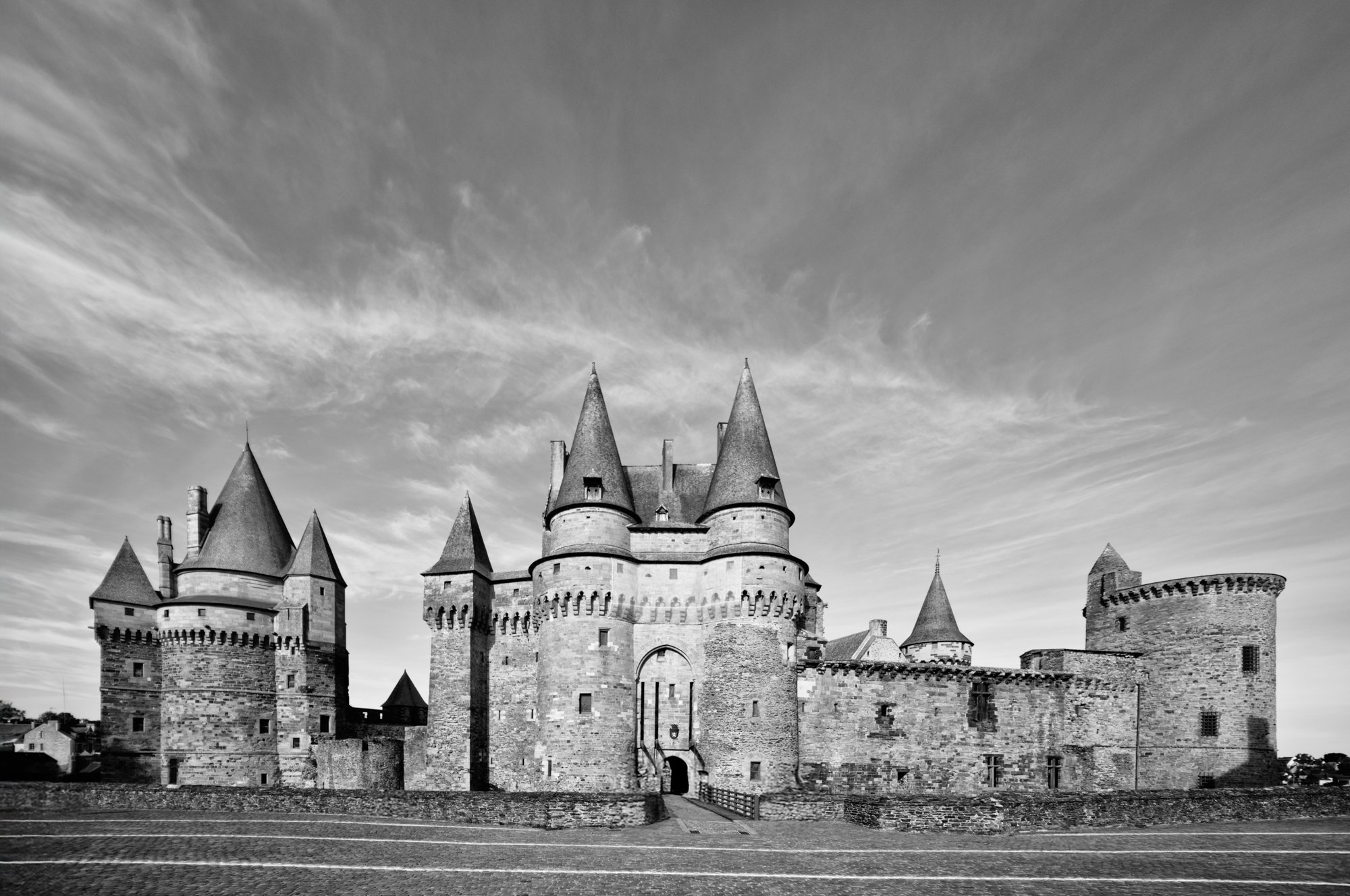
Rising above the Vilaine River in western France, Château de Vitré looks every inch the classic medieval fortress: high slate roofs, round towers with sharp conical caps, and massive granite walls that have witnessed nearly a thousand years of history. Its first stone castle was built around 1060, when the lords of Vitré needed a stronghold on the eastern frontier of the independent Duchy of Brittany.
During the 13th century, as conflicts between Brittany and the French crown intensified, the fortress was enlarged with the great gatehouse and round towers we see today. It became a keystone of the duchy’s defense. In the 14th century’s Breton War of Succession (1341–1364) the castle endured sieges and shifting alliances, holding fast as rival claimants and French armies struggled for control of Brittany.
By the 15th century, under the powerful Laval family, Vitré turned from a pure military post into a noble residence and a diplomatic stage. The Lavals—some of the richest nobles in Europe—hosted glittering feasts and negotiated marriages and alliances inside its walls. Local legend still speaks of a “Lady of Vitré” who wanders the ramparts on foggy nights, mourning battles and loves long past.
In later centuries the castle adapted to new realities. After Brittany was formally united with France in 1532, it served as an administrative center and, during the French Revolution (1789–1799), even as a prison. When romantic interest in the Middle Ages surged in the 19th century, Vitré’s fortress was carefully restored and opened to visitors.
Today its towers and halls house a museum that presents medieval arms, Renaissance furnishings, and the story of Brittany’s long struggle to keep its identity. Standing on the battlements, with the town’s tiled roofs below and the river curling beyond, you can feel how this granite sentinel once guarded a frontier—and how it now preserves the memories of nearly a millennium of French and Breton history.