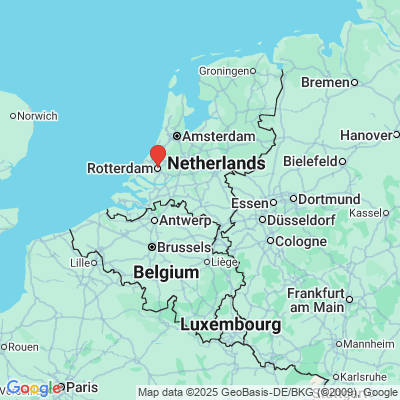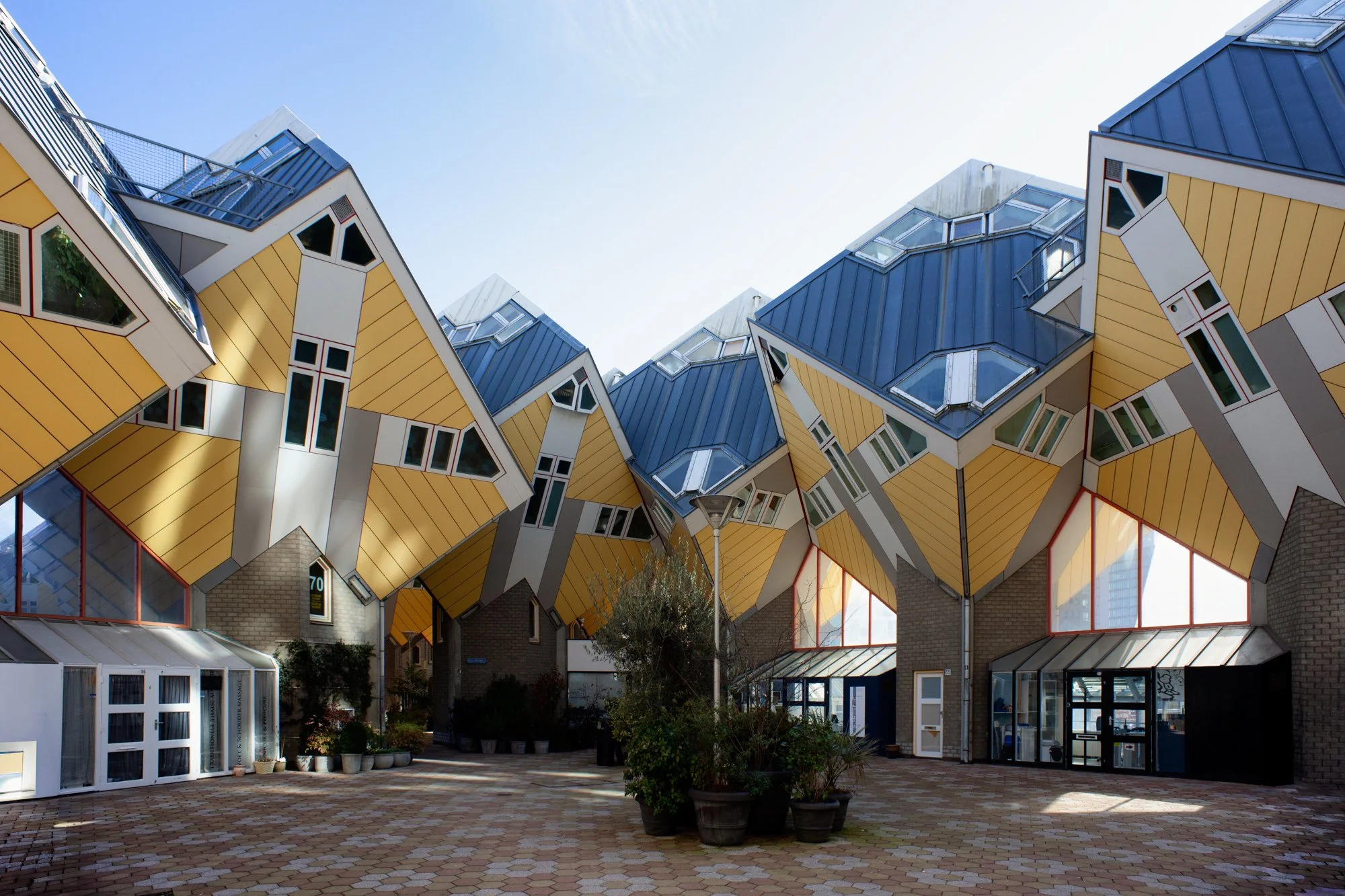
The Cube Houses of Rotterdam (The Netherlands).
In the heart of Rotterdam, tilted above the busy streets near Blaak station, stand a row of yellow cubes that look as if they’ve tumbled from the sky and frozen mid-fall. These are the Cube Houses (in Dutch: Kubuswoningen), designed in the late 1970s by architect Piet Blom, who imagined each house as a tree — together forming an abstract forest of modern living.
Each cube rests on a hexagonal pillar and leans at a 45-degree angle. Inside, every wall becomes a surprise: windows are tilted, floors meet at odd corners, and space itself feels like an adventure in geometry.
Blom’s design was part of Rotterdam’s bold post-war identity — a city that rebuilt itself not by copying the past but by inventing the future. Today, one of the houses serves as a museum, and visitors step inside to experience what it’s like to live within a dream.
The Cube Houses aren’t just architecture; they’re a statement — proof that in Rotterdam, imagination can be built in concrete, glass, and bright yellow panels.