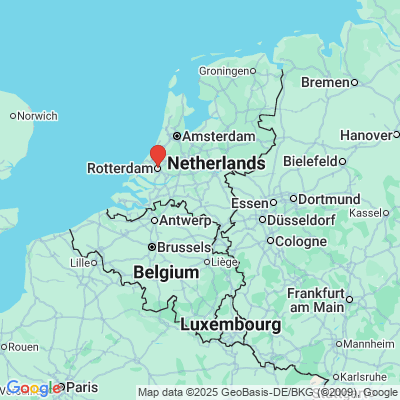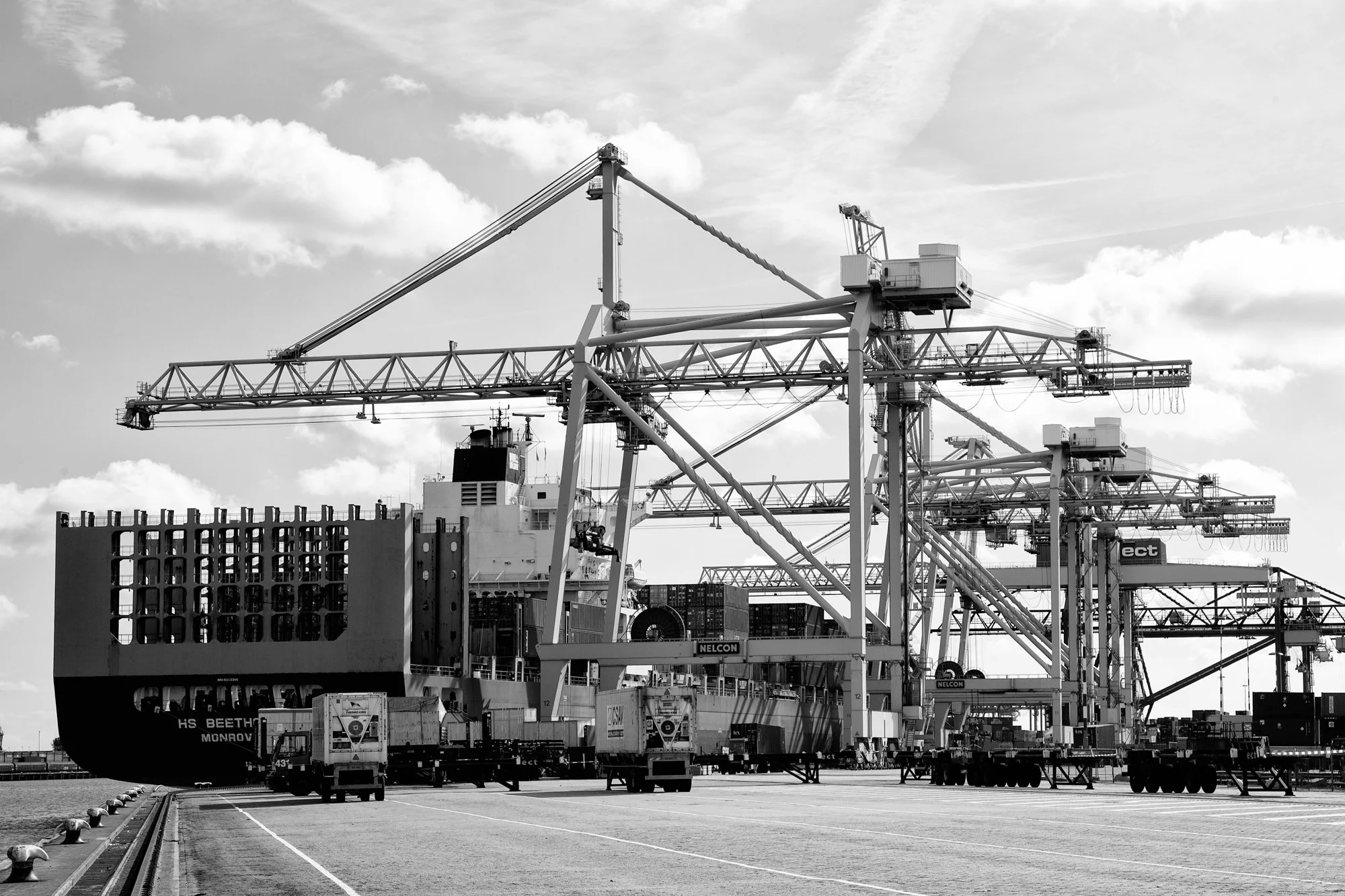
Rotterdam, the ECT container terminal.
In Rotterdam, language is rarely decorative. It’s a working tool—sharp, efficient, and stripped of unnecessary polish. The city’s direct way of speaking is often noted by visitors, sometimes mistaken for bluntness. But this tone was forged at the docks, not in drawing rooms.
Rotterdam is Europe’s largest port, a place built on movement and timing. Ships must be unloaded and reloaded as fast as possible, often within hours. The crews, dockworkers, and crane operators come from dozens of countries, speaking as many languages. There’s little time for nuance or ceremony. Orders must be clear, warnings unmistakable, responses immediate. In this world, words are like ropes and winches—tools that make things happen.
That linguistic economy has seeped into the city’s character. Even beyond the port, Rotterdammers tend to speak plainly, preferring action over ornament. It’s not rudeness but pragmatism—communication shaped by urgency and teamwork among people who might only meet once.
Contrast this with rural or agricultural communities, where language is part of long-term relationships. There, speech is softer, tuned to coexistence over generations. In Rotterdam, by contrast, speech is transactional and situational—designed for efficiency, not diplomacy.
Linguists and sociologists studying port cities have observed similar patterns elsewhere: directness as a form of linguistic adaptation to high-intensity, multicultural environments. When trust must be built in minutes, clarity becomes the highest form of respect.
Further reading
Johnstone, Barbara. Linguistic Individuality and Regional Speech Patterns.
Coupland, Nikolas. Style: Language Variation and Identity.
Labov, William. Sociolinguistic Patterns.
Hymes, Dell. Foundations in Sociolinguistics: An Ethnographic Approach.