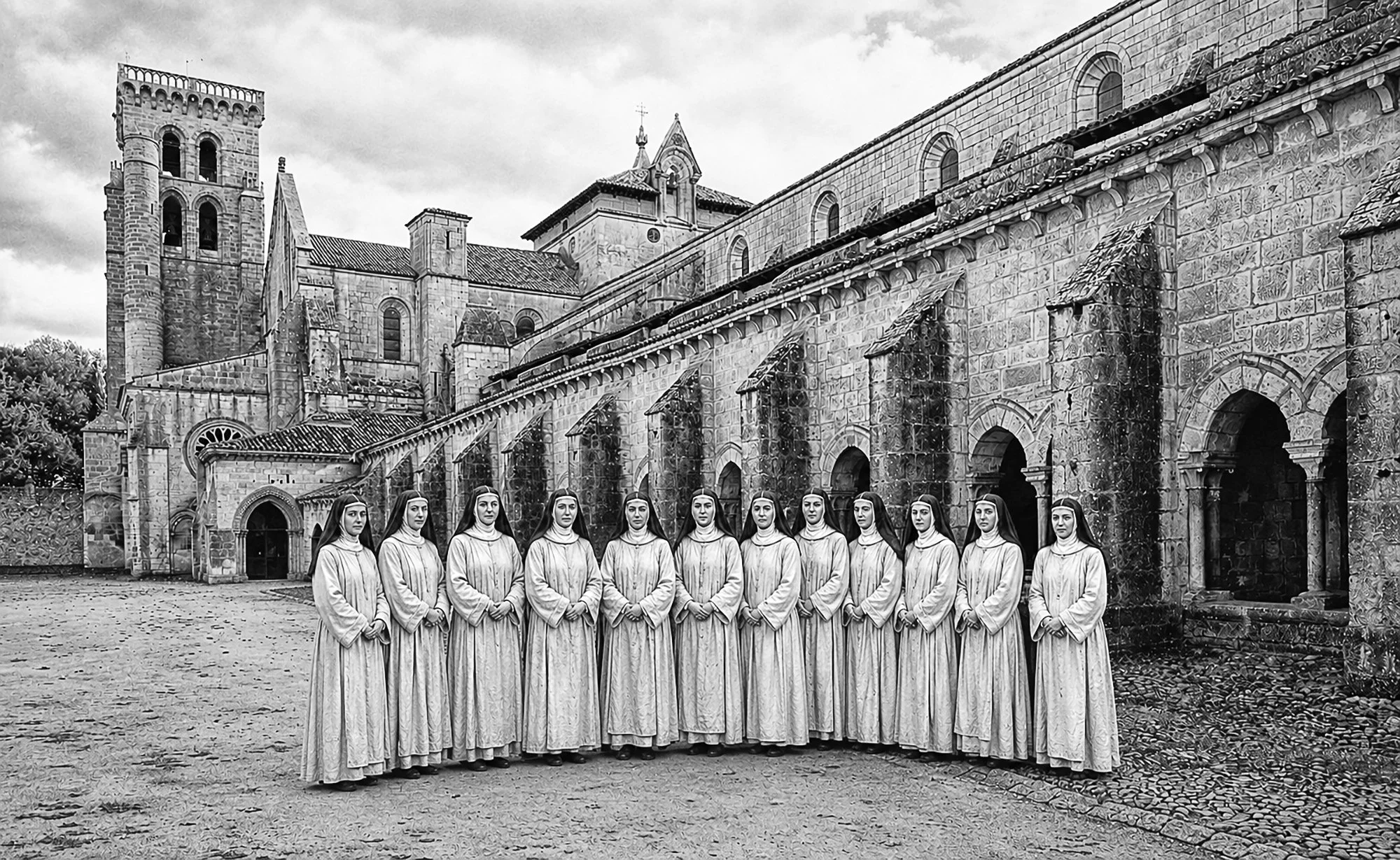
Just imagine — Nuns at the Monasterio de Santa María la Real de Las Huelgas in Burgos (Spain). — Nuns added with AI.
Just outside Burgos stands Monasterio de Santa María la Real de Las Huelgas, one of the most extraordinary monasteries in medieval Europe. At first glance it looks like a place of silence: stone cloisters, royal tombs, dim chapels and the slow echo of footsteps beneath ancient vaults.
But for centuries, powerful women ruled from behind these walls.
Not symbolically. Not quietly. They governed land, appointed priests, collected taxes, oversaw villages and exercised authority that in many places belonged only to bishops and noblemen.
And they did so in the heart of medieval Castile.
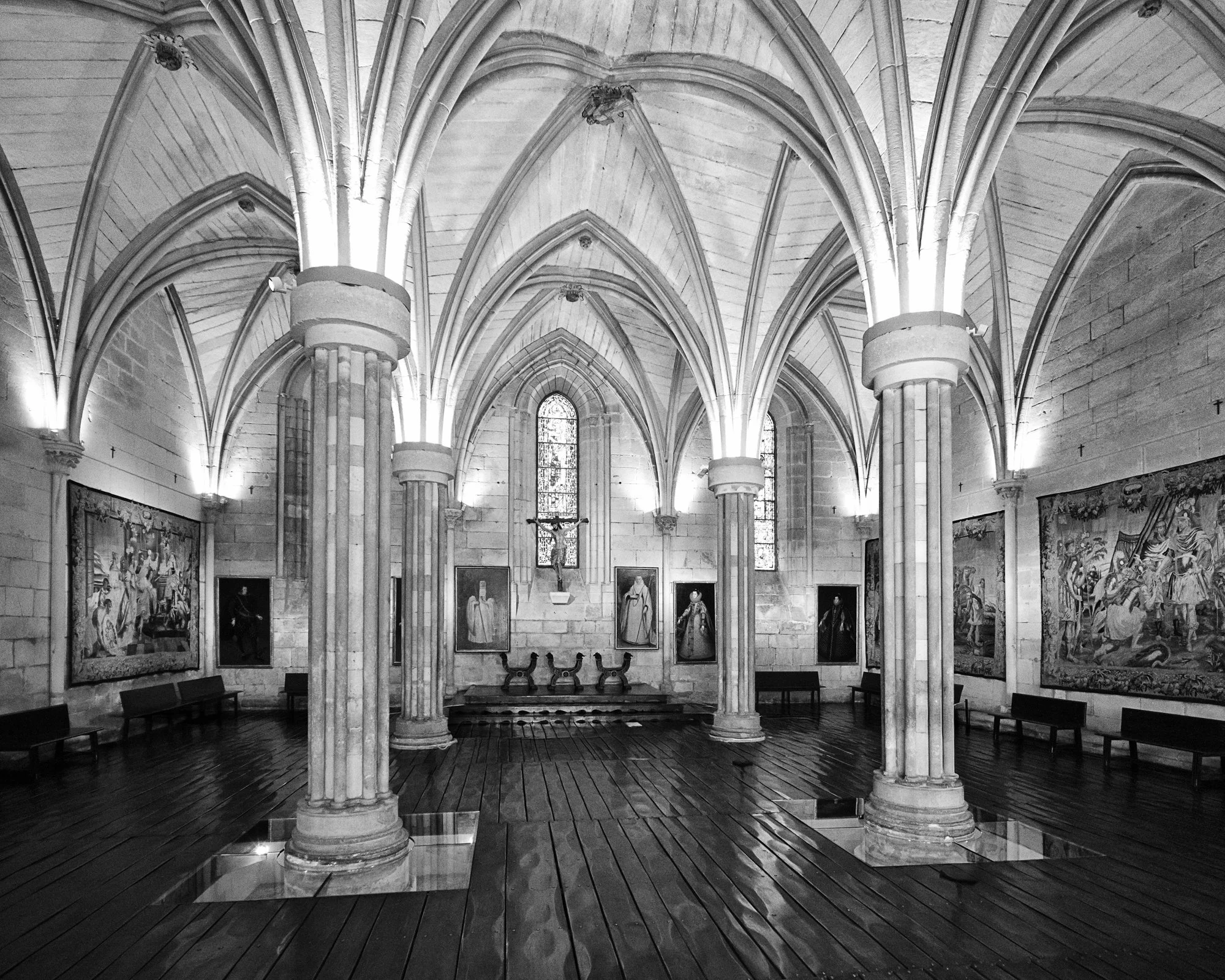
The Chapter House of Monasterio de Santa María la Real de Las Huelgas, where generations of abbesses governed one of medieval Europe’s most powerful female monasteries (Burgos, Spain).
A Royal Monastery
Las Huelgas was founded in 1187 by Alfonso VIII van Castilië and his English queen, Eleonora van Engeland, daughter of Henry II of England and Eleanor of Aquitaine.
This was never meant to be an ordinary convent.
The monastery became a spiritual centre of the Castilian monarchy, a royal burial place and a stage for ceremonies linked to the crown itself. Kings visited. Nobles sent daughters there. Royal banners hung above tombs. Some Castilian princes were even knighted within its walls.
But over time something unusual happened.
The abbesses of Las Huelgas gained powers rarely granted to women in medieval Europe.
Papal documents confirmed their authority over priests, churches and surrounding territories. Villages answered to the monastery. Local clergy could fall under the abbess’s jurisdiction. Legal disputes from the Middle Ages reveal bishops complaining about how much independence Las Huelgas possessed.
The documents are surprisingly direct. They do not describe the abbesses as symbolic figures. They describe administrators, rulers and authorities.
In effect, the abbess governed a small ecclesiastical state.
The Sound of Hooves in the Morning Mist
To understand Las Huelgas, it helps to imagine arrival.
A rider approaches through the cold Castilian morning. Beyond the walls rise towers and church roofs. Bells sound across the fields. Servants move through courtyards carrying baskets and candles. Royal officials arrive with sealed documents. Priests wait for decisions. Noble families negotiate dowries and privileges.
And at the centre of it all stands the abbess in the white habit of the Cistercian order.
Inside the chapter house, documents are read aloud. Wax seals are pressed into parchment. Disputes over land and taxation are settled. Messengers come and go from Burgos and the royal court.
This was not the world most people imagine when they think of medieval nuns.
Las Huelgas was deeply religious, but it was also political, aristocratic and wealthy. Many abbesses came from powerful noble families and were highly educated by the standards of their age. Some were closely connected to the royal dynasty itself.
Their authority was not hidden behind the scenes. It was recognized openly by kings and popes.
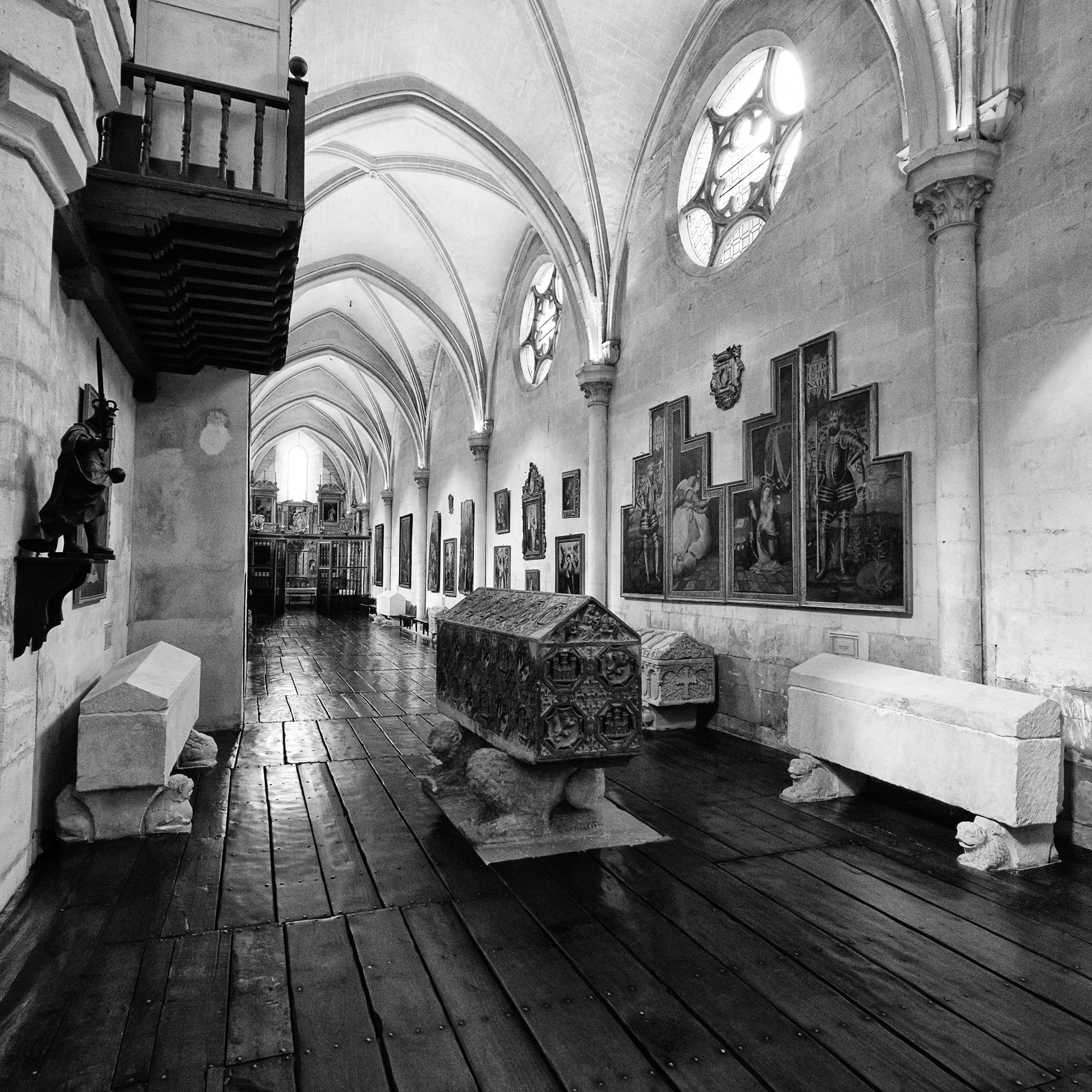
The Gospel-side aisle of Monasterio de Santa María la Real de Las Huelgas, traditionally known as the Chapel of Saint Catherine (Burgos, Spain).
Silk, Stone and Royal Graves
One of the most haunting parts of Las Huelgas lies beneath the floors of the monastery church.
Generations of Castilian royalty were buried there, many in remarkably preserved clothing. Because several tombs remained largely undisturbed for centuries, historians discovered some of the finest surviving medieval textiles in Europe.
Silks from Islamic workshops. Embroidered fabrics. Heraldic patterns. Rich colours that once surrounded the royal court of Castile.
These objects reveal another side of Las Huelgas: this monastery stood at the crossroads of worlds.
Christian Castile fought wars against Muslim states in Iberia, yet luxury fabrics from Islamic Spain found their way into royal burials at Las Huelgas. English royal blood flowed into the Castilian dynasty through Queen Eleanor. Pilgrims, merchants and clerics passed through nearby Burgos on routes linked to the Camino de Santiago.
The monastery absorbed all of it.
Even today, walking through Las Huelgas feels less like entering a convent than stepping into the shadow of a forgotten court.
The Long Decline of an Unusual Power
Over time, the independence of Las Huelgas began to trouble church authorities.
From the late Middle Ages onward, bishops and reformers increasingly challenged the abbesses’ powers. Rome grew less comfortable with women exercising quasi-episcopal authority. Gradually, privileges were reduced or absorbed into more conventional church structures.
The world that had allowed such extraordinary female authority slowly disappeared.
Yet Las Huelgas remains one of the most fascinating reminders that medieval Europe was more complex than modern stereotypes suggest.
Behind monastery walls in Castile, women once governed land, negotiated with kings and exercised powers that much of Europe believed belonged only to men.
And remarkably, they left enough documents behind for us to still hear their voices in the silence of the cloisters.