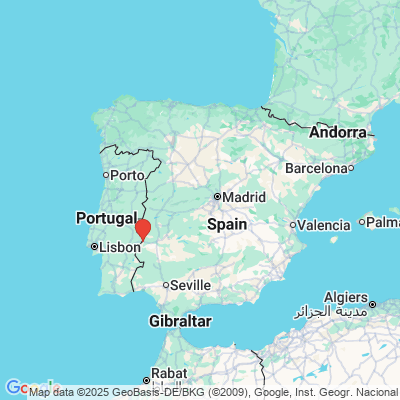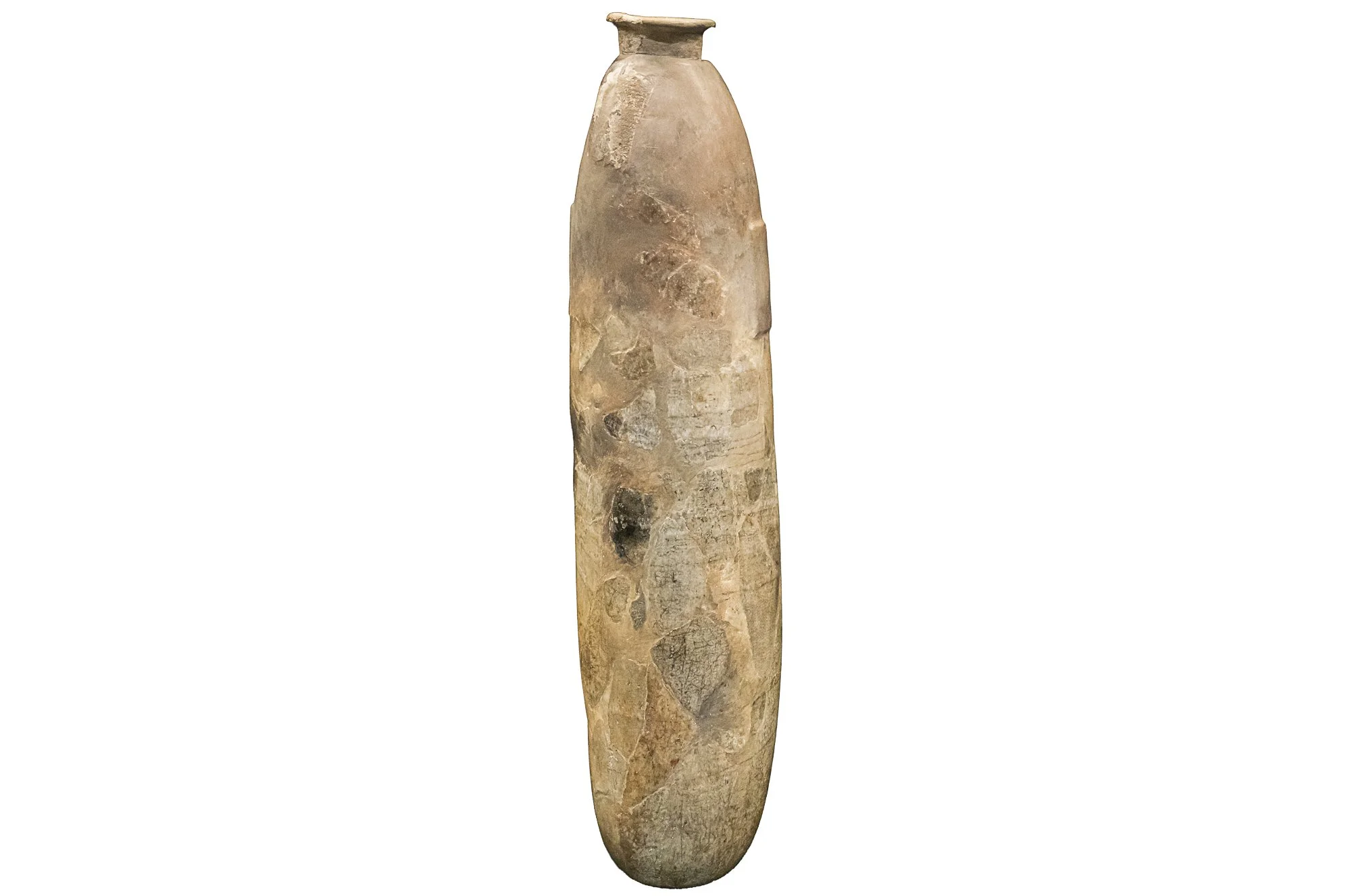
Alabaster vessel from Cancho Roano (7th–6th century BC), once a luxury object that travelled from the eastern Mediterranean to Iberia; today on display in the Archaeological Museum of Badajoz.
At first glance, it seems simple: a tall, pale vessel, softly translucent. But this alabaster vase from Cancho Roano carries a story that stretches from ancient Egypt to the far west of Iberia.
From Egypt to Iberia
In Egypt, alabaster vessels were luxury objects, used by elites to store precious oils and perfumes. They often moved as gifts within high-status networks rather than through ordinary trade. When such vessels appear in Iberia in the 7th century BC, they arrive with that same prestige. As José Luis López Castro shows, they are best understood as symbols of status, not everyday goods .
The vase from Cancho Roano is therefore more than an import. It is an object with a past — one that has travelled, been exchanged, and gained meaning along the way.
A Second Life
In Iberia, these vessels often took on a new role. Instead of holding perfume, they were used in funerary contexts, sometimes as containers for cremated remains. Their value now lay not just in their origin, but in what they signified: connection, prestige, and memory.
At a site like Cancho Roano — a place where ritual and elite power came together — such objects were part of a carefully shaped world .
More than an object
What you see in the Archaeological Museum of Badajoz is not just a vessel. It is a trace of a wider network linking Egypt, Phoenician settlers, and Iberian elites — a world in which even a single object could carry the weight of status and identity.