One of the Oldest Living Traditions of the Meuse Valley
A photo essay from Eijsden, Limburg, The Netherlands
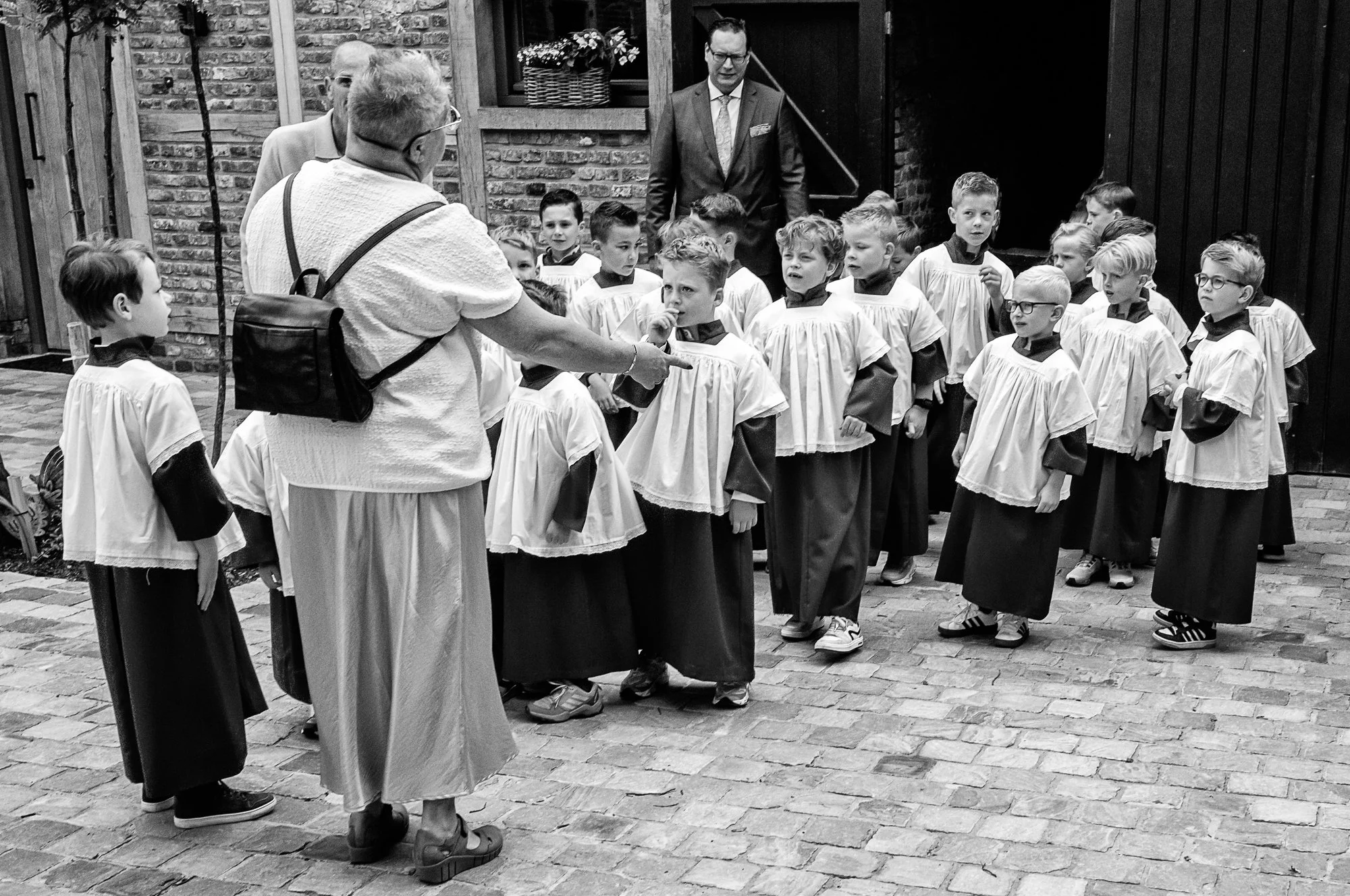
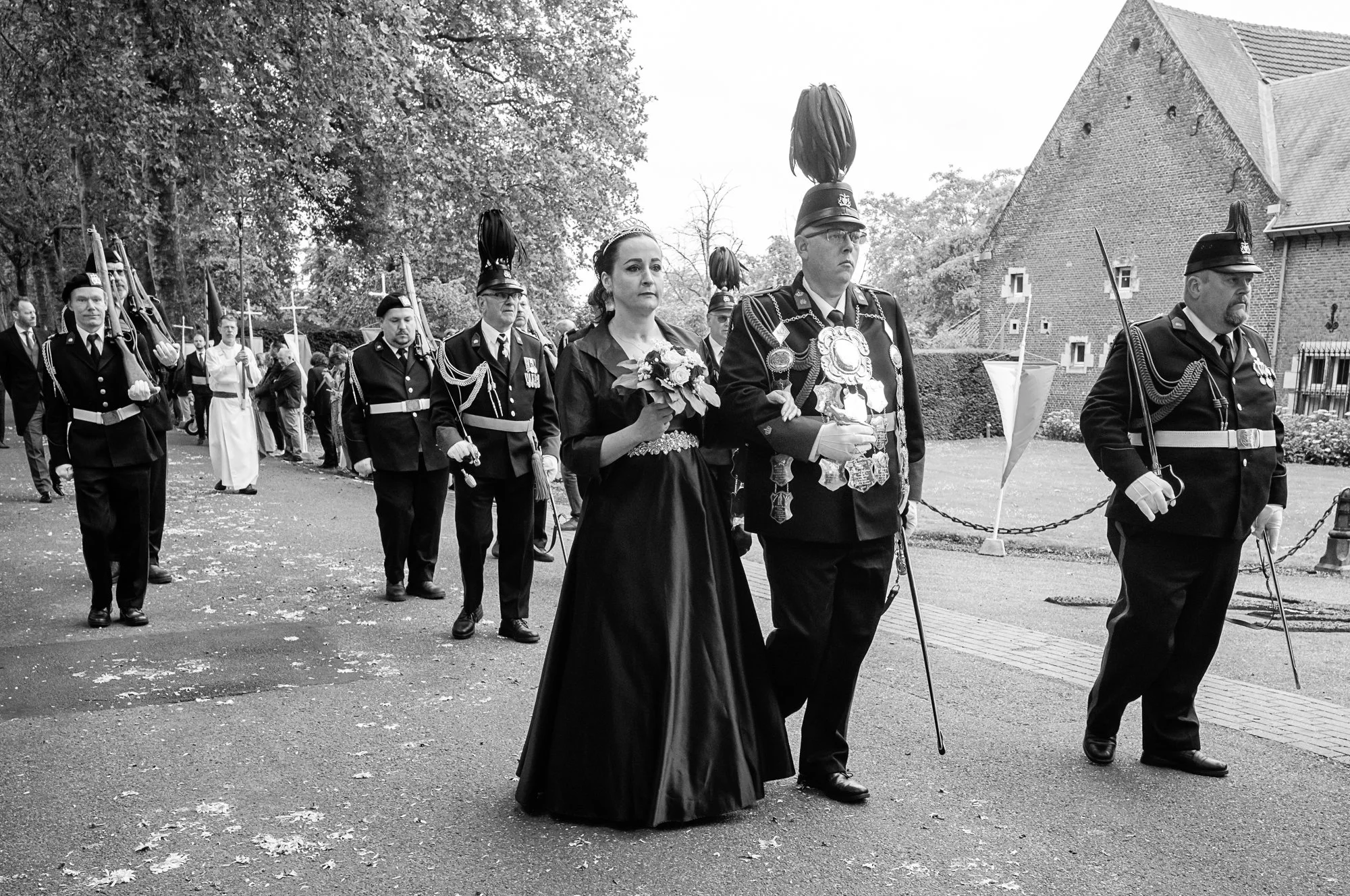
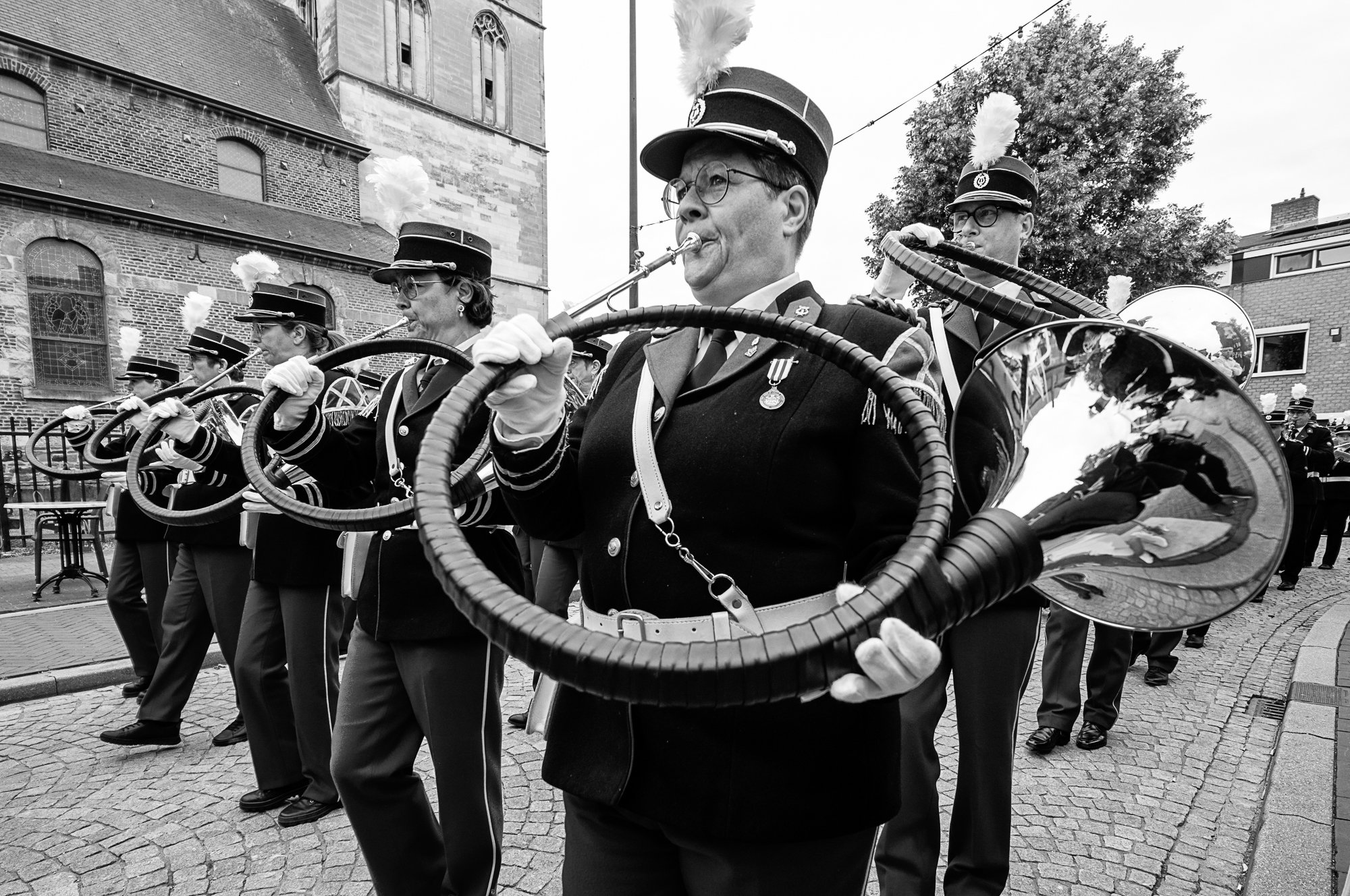
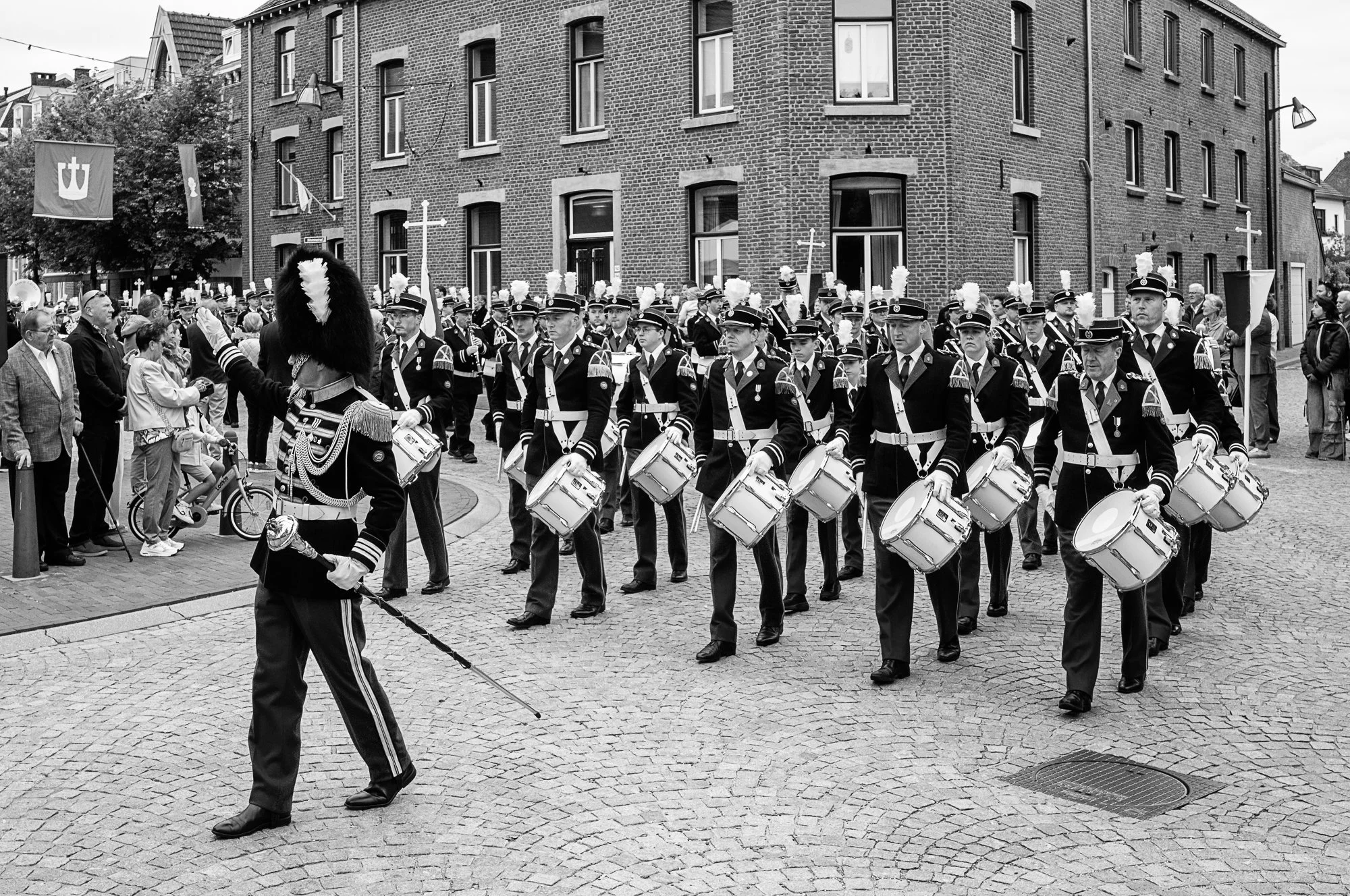
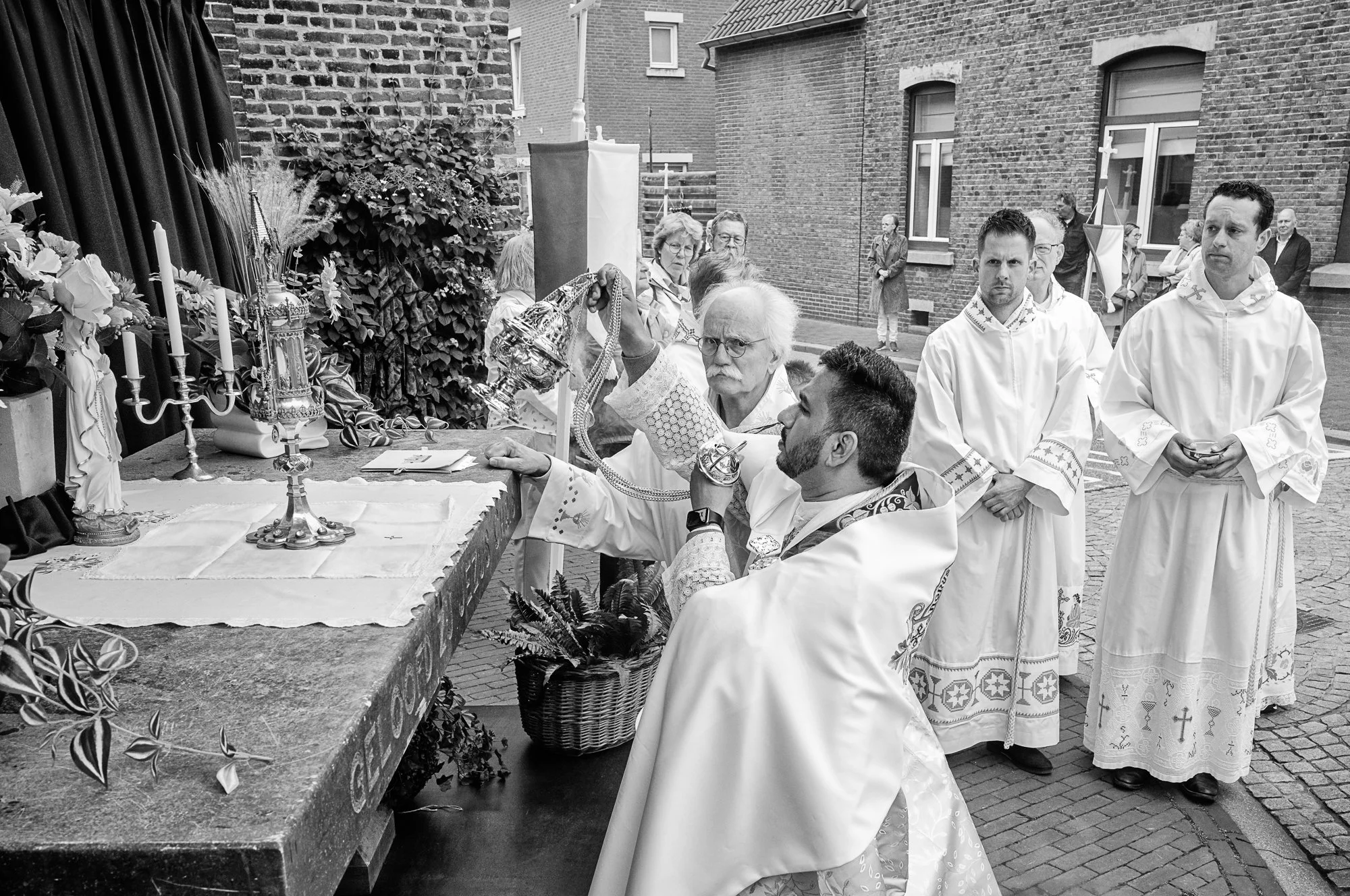
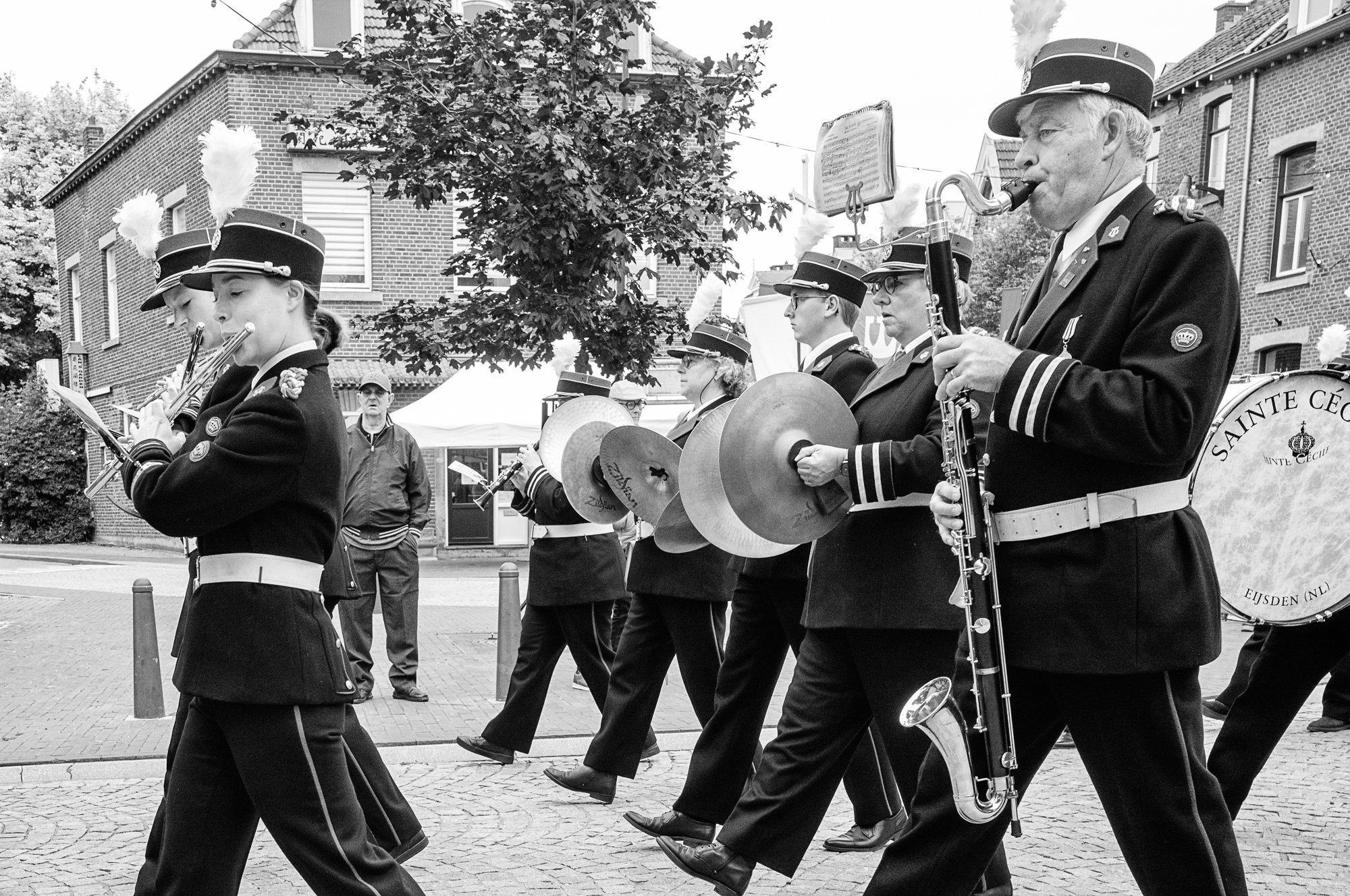
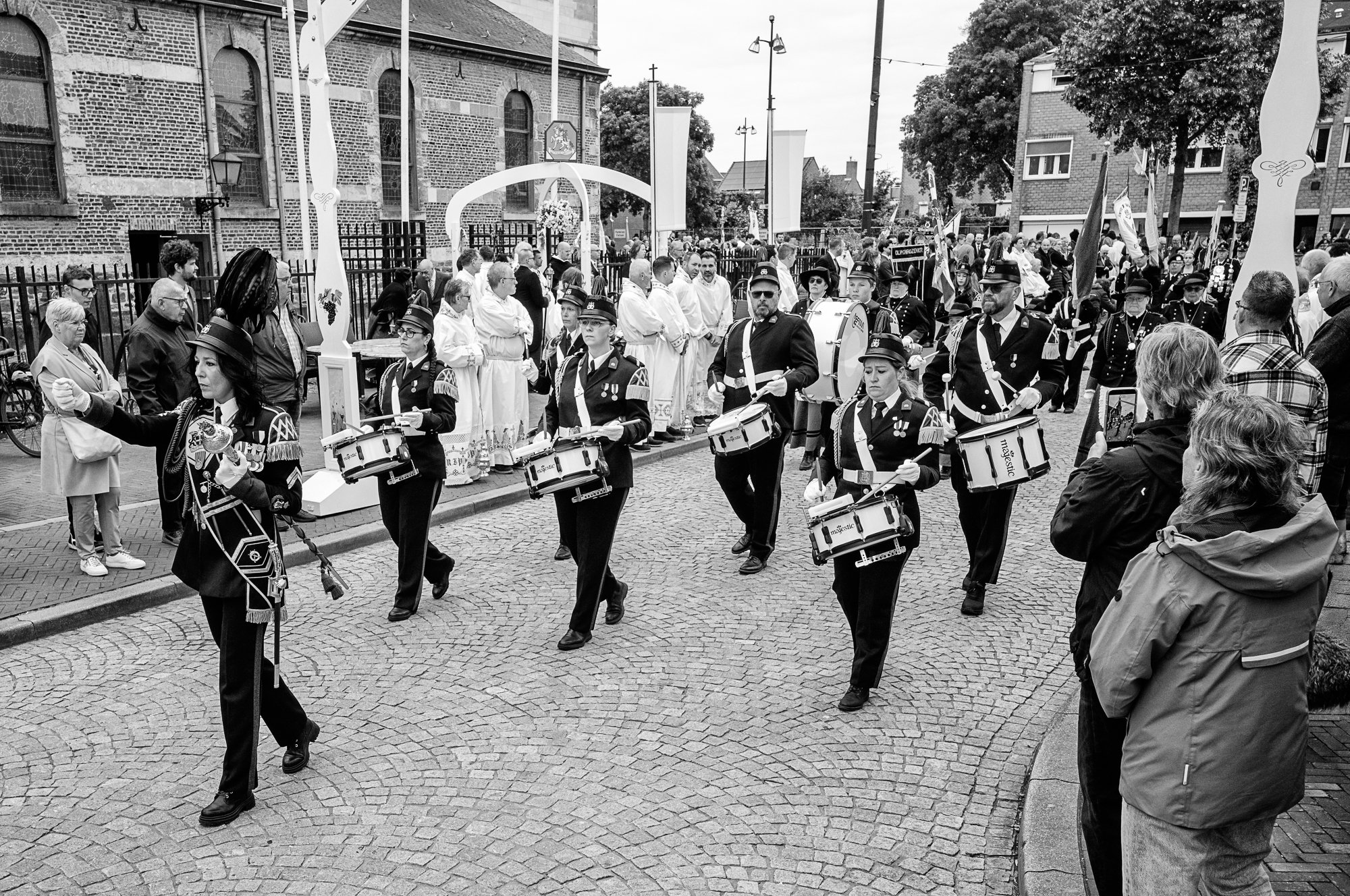
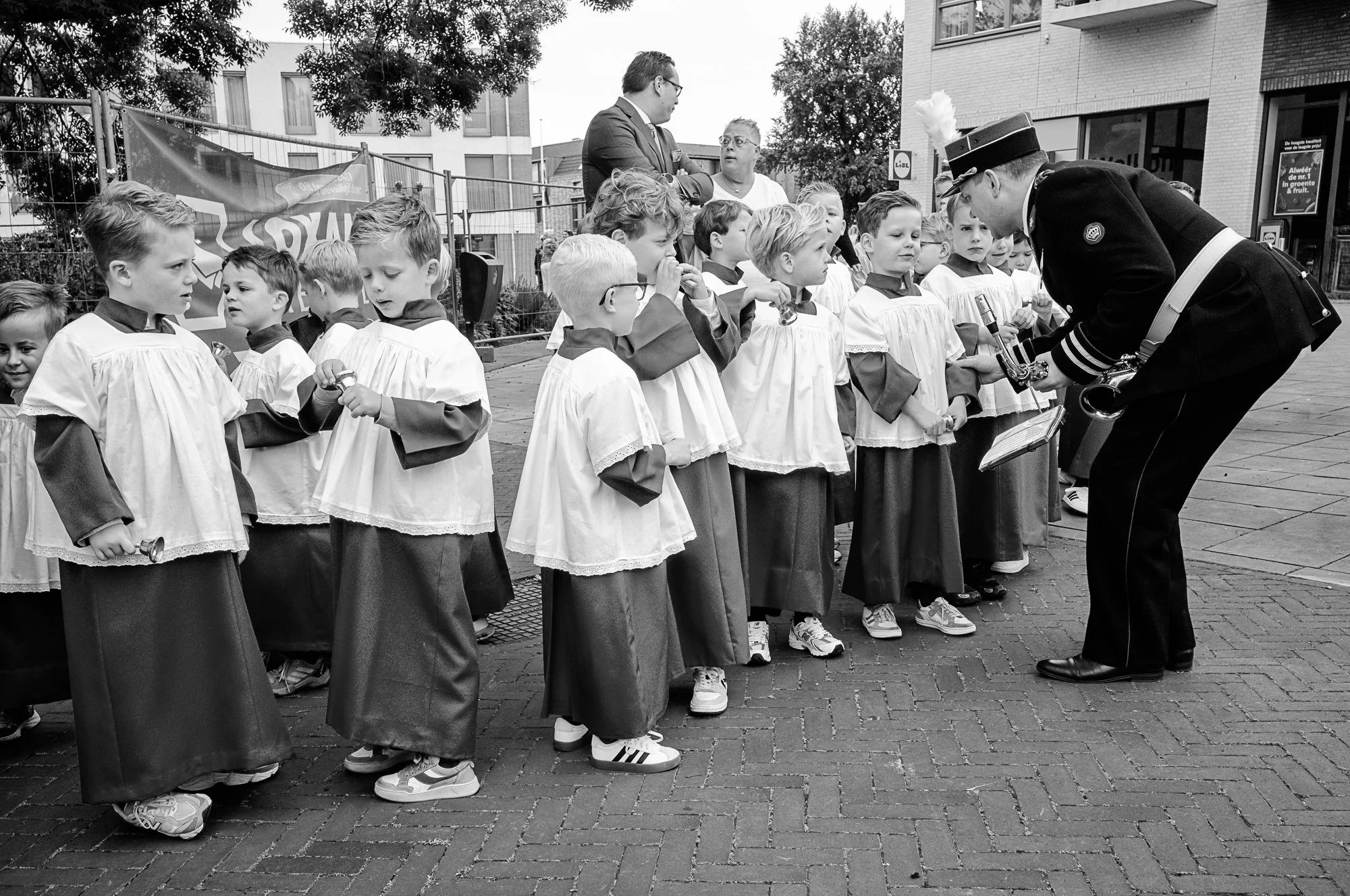
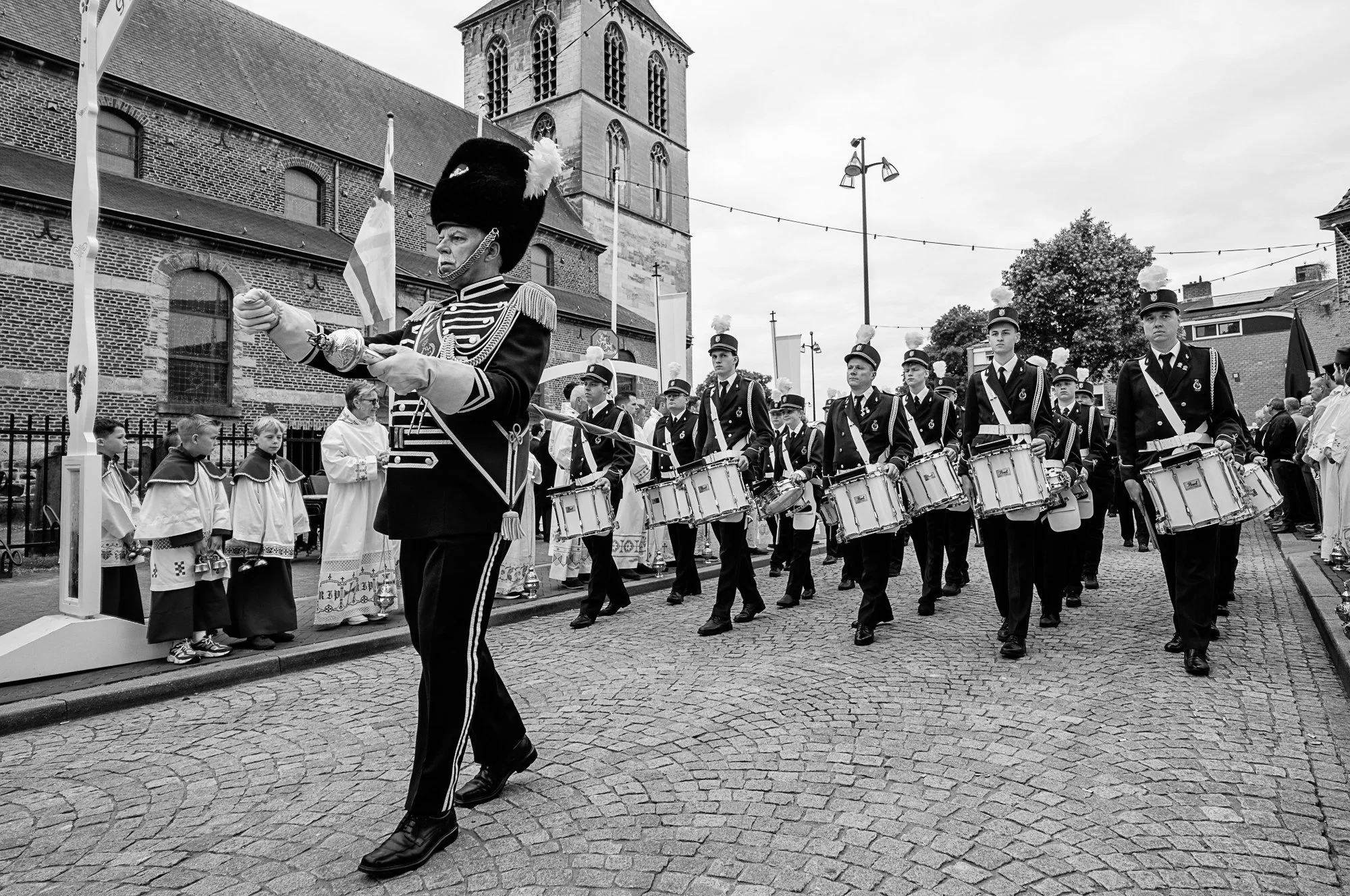
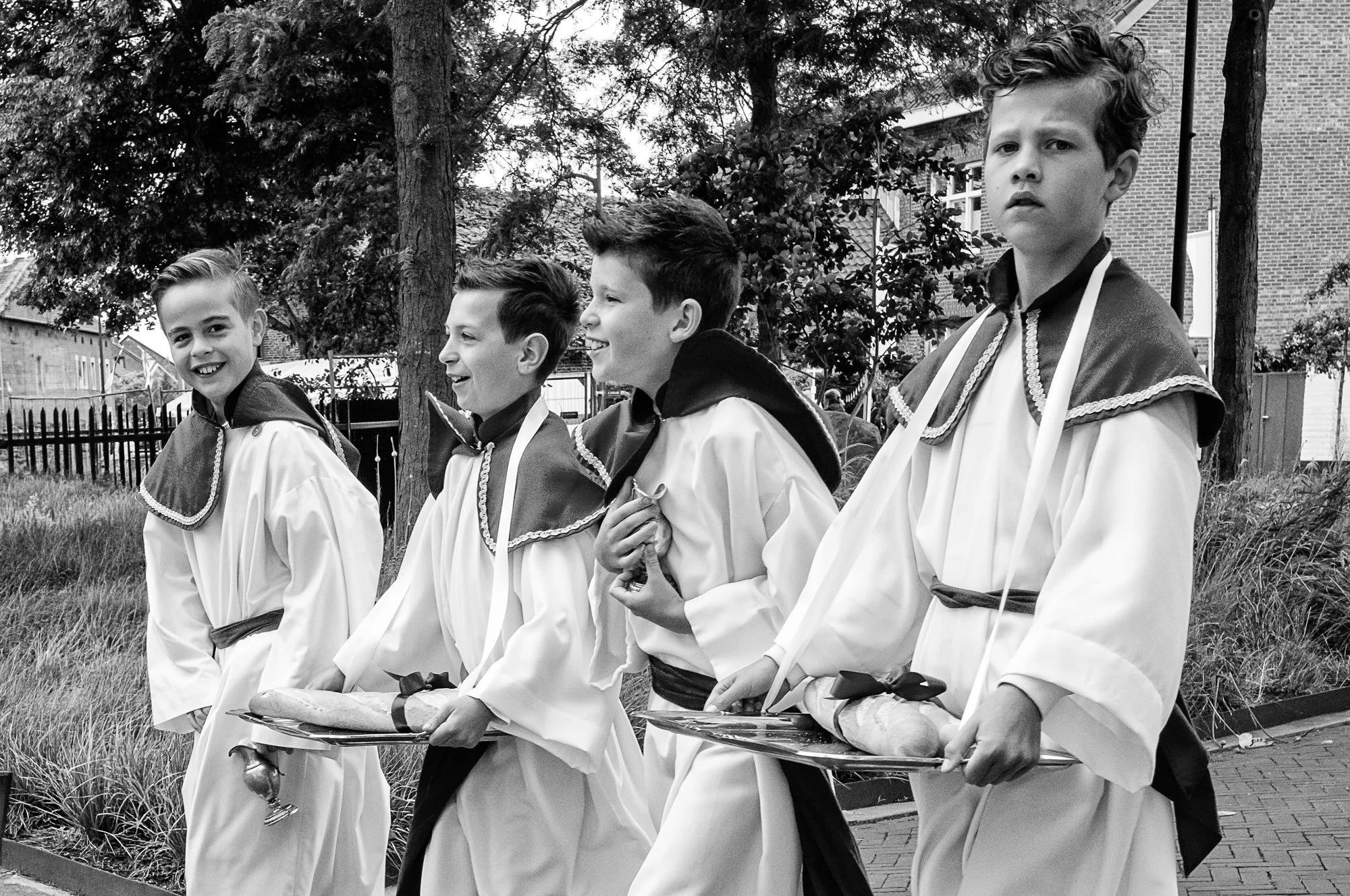
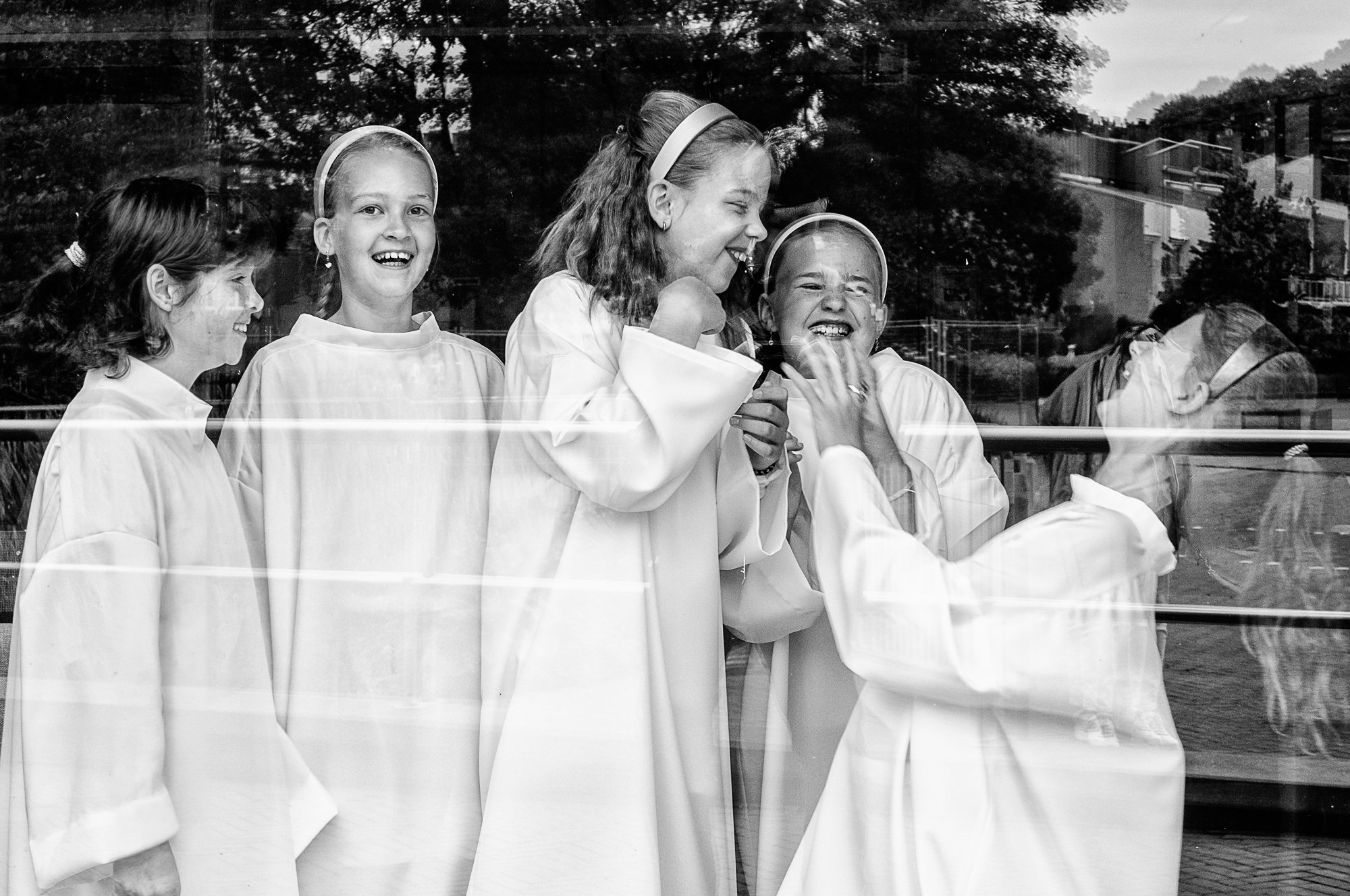
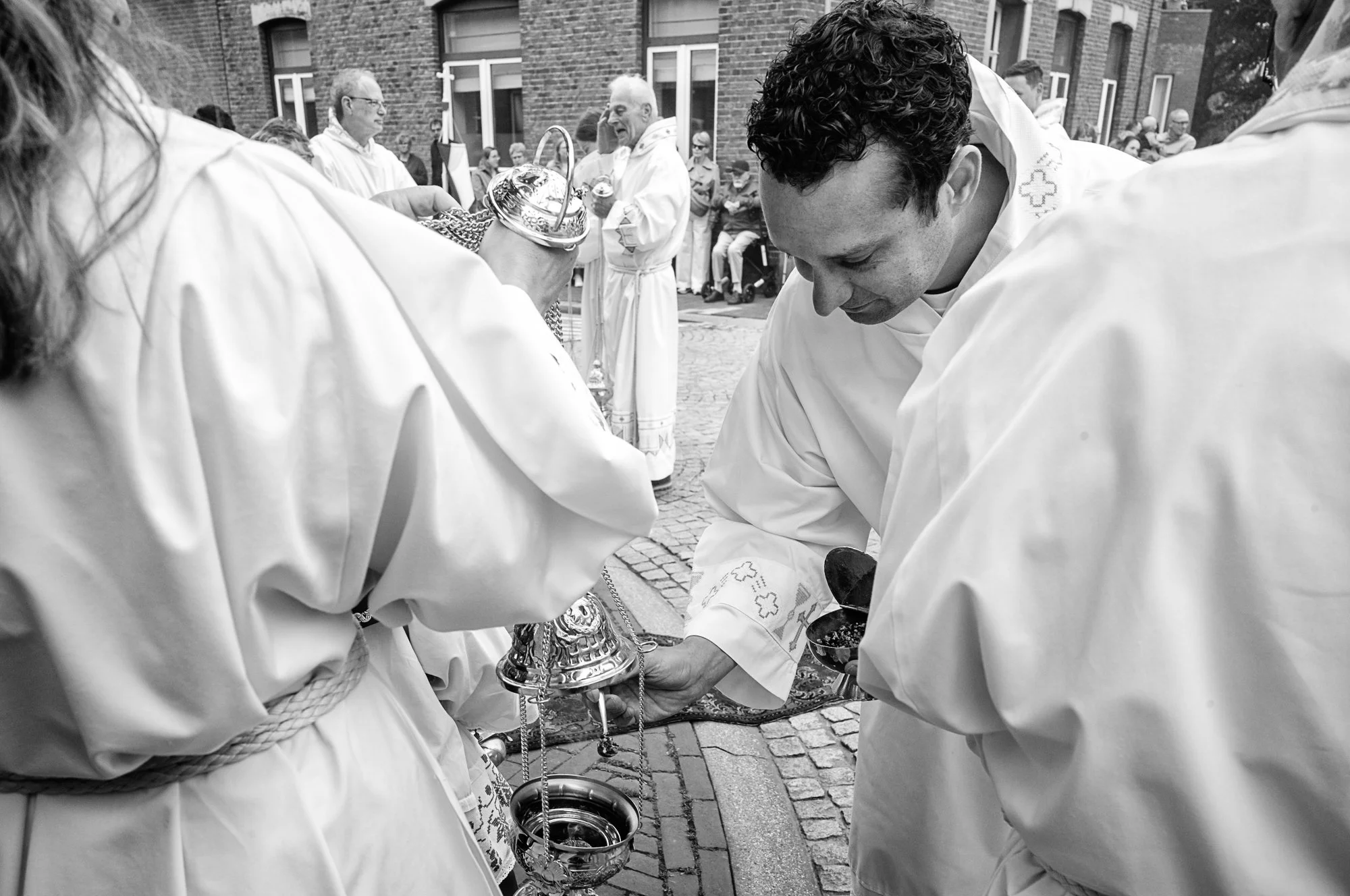
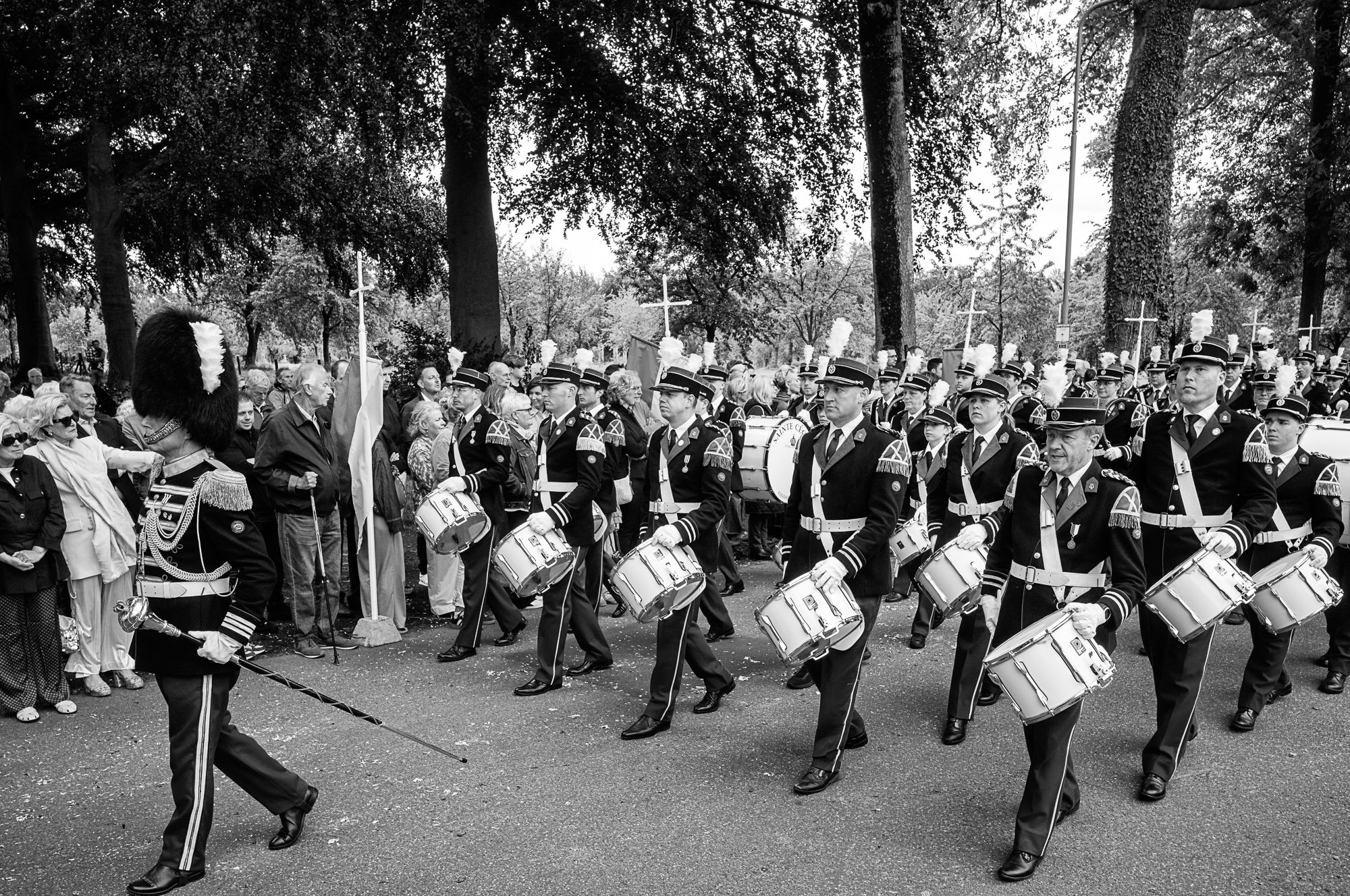
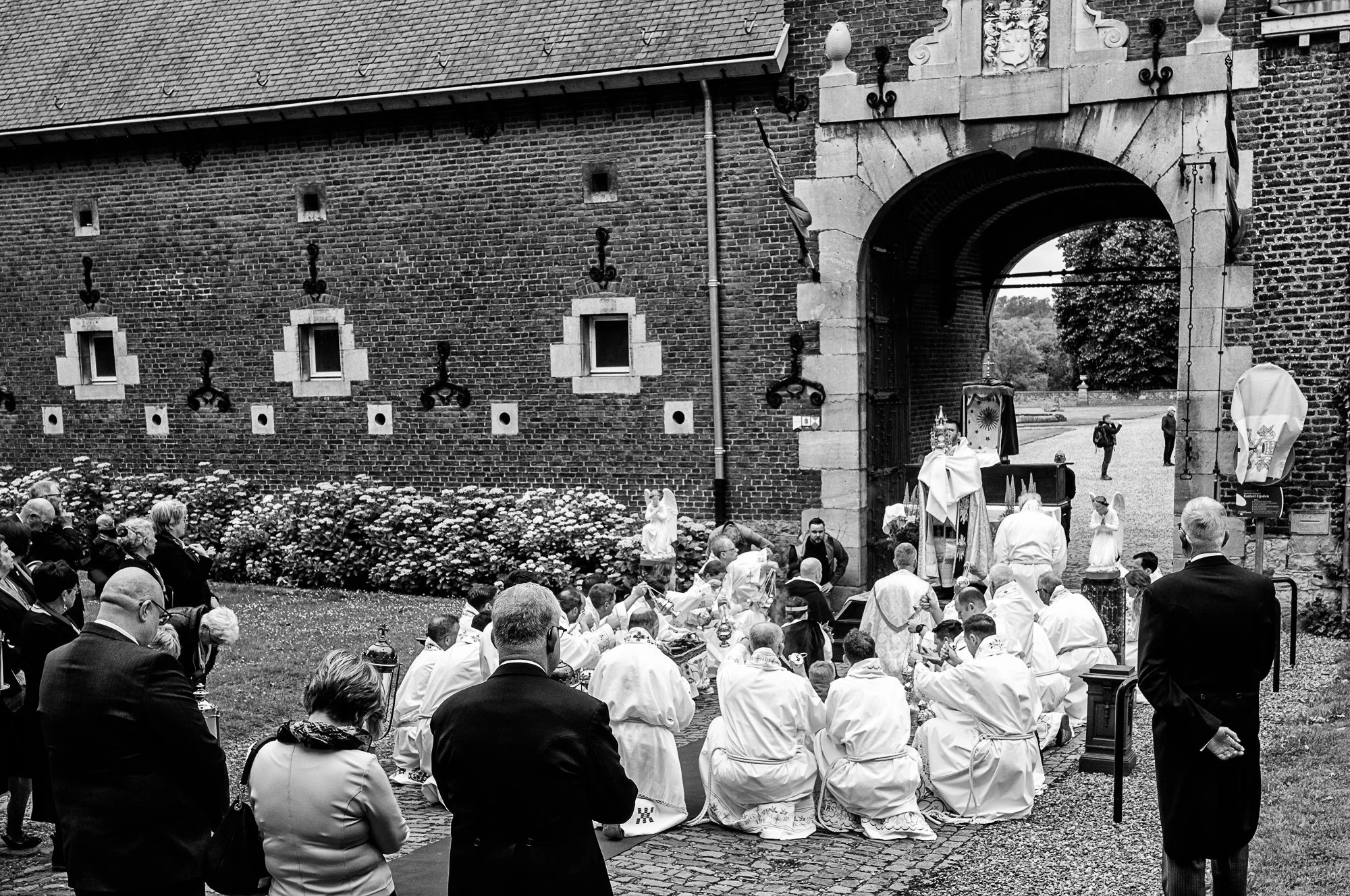
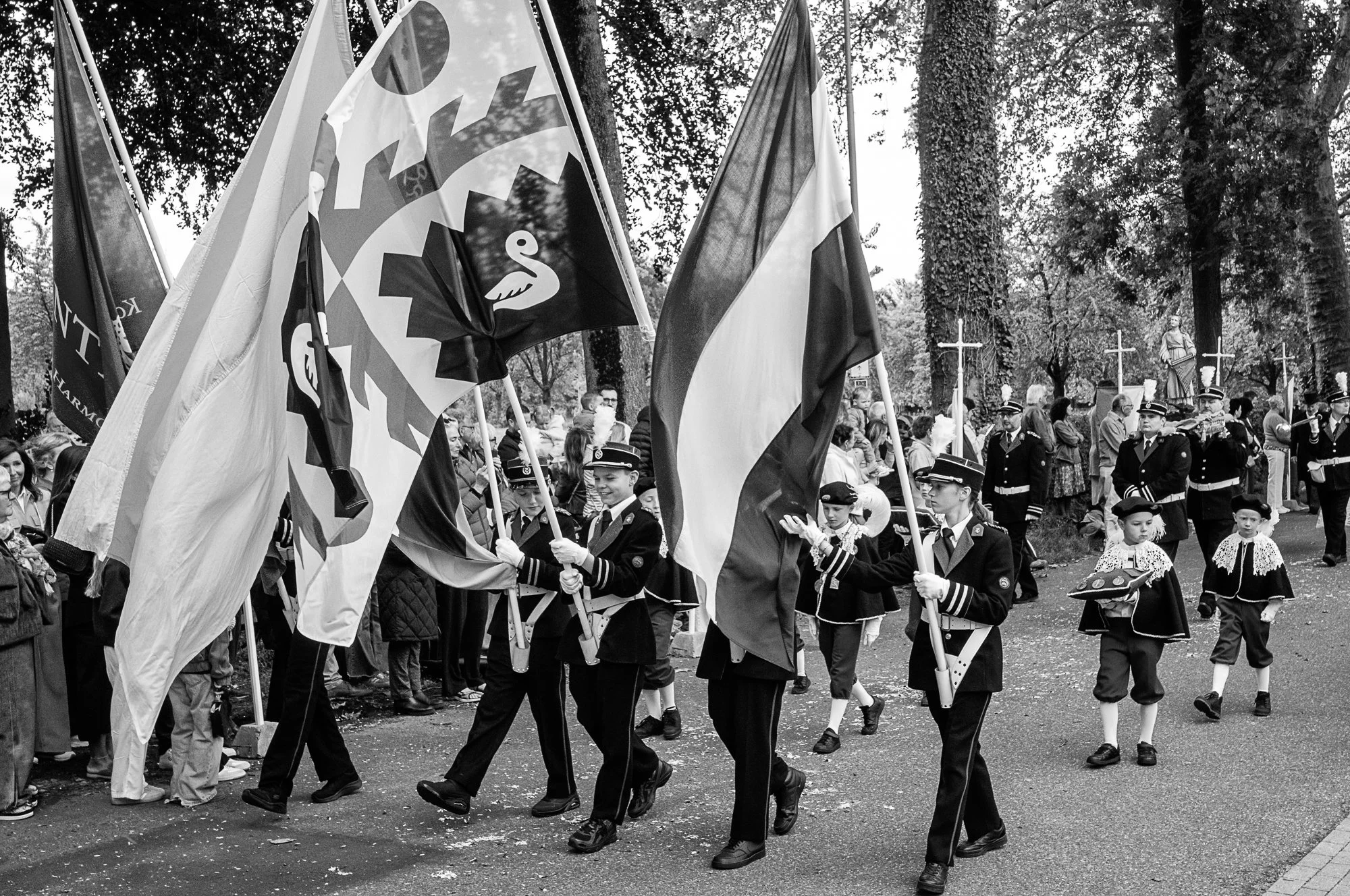
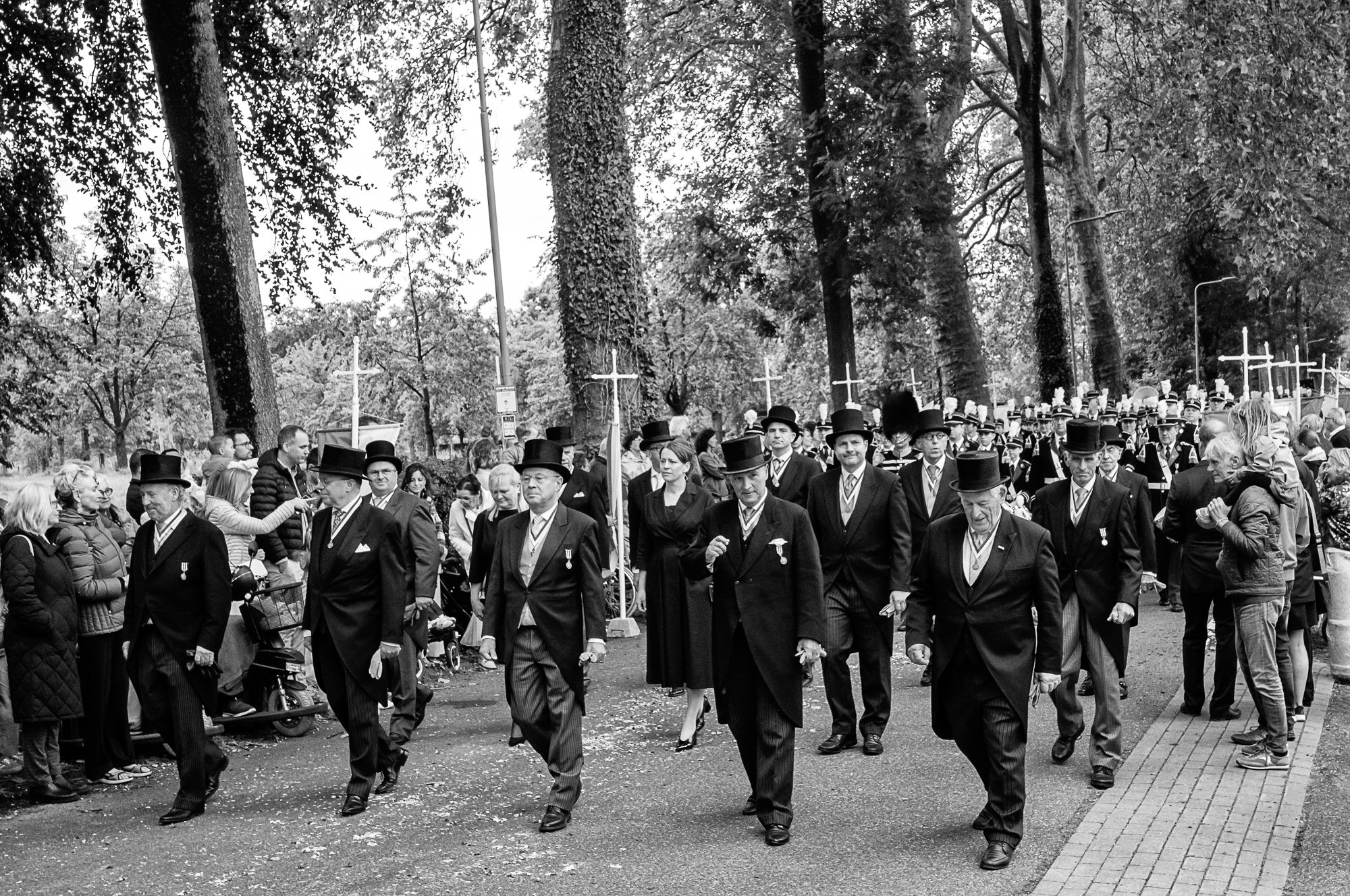
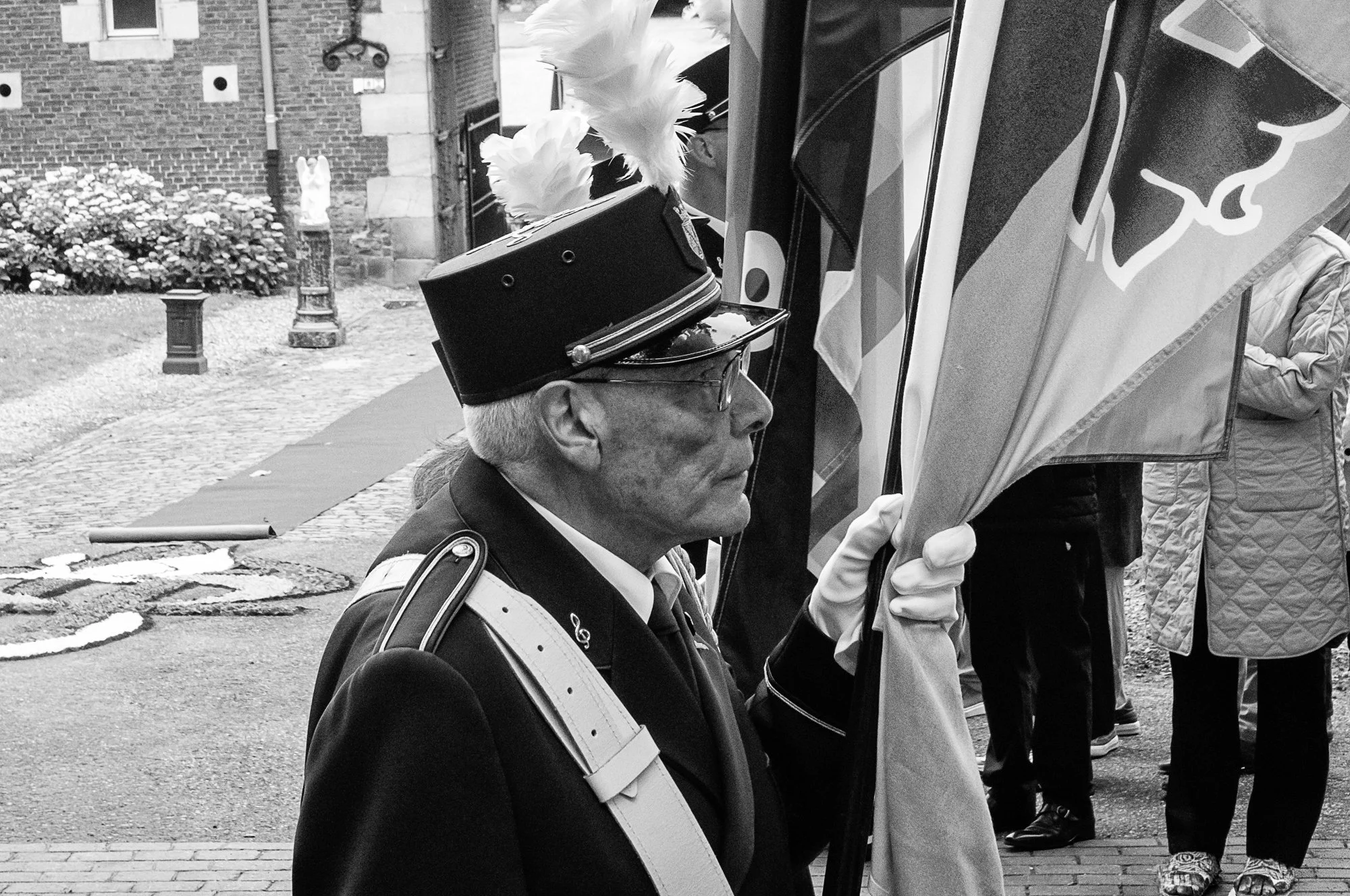
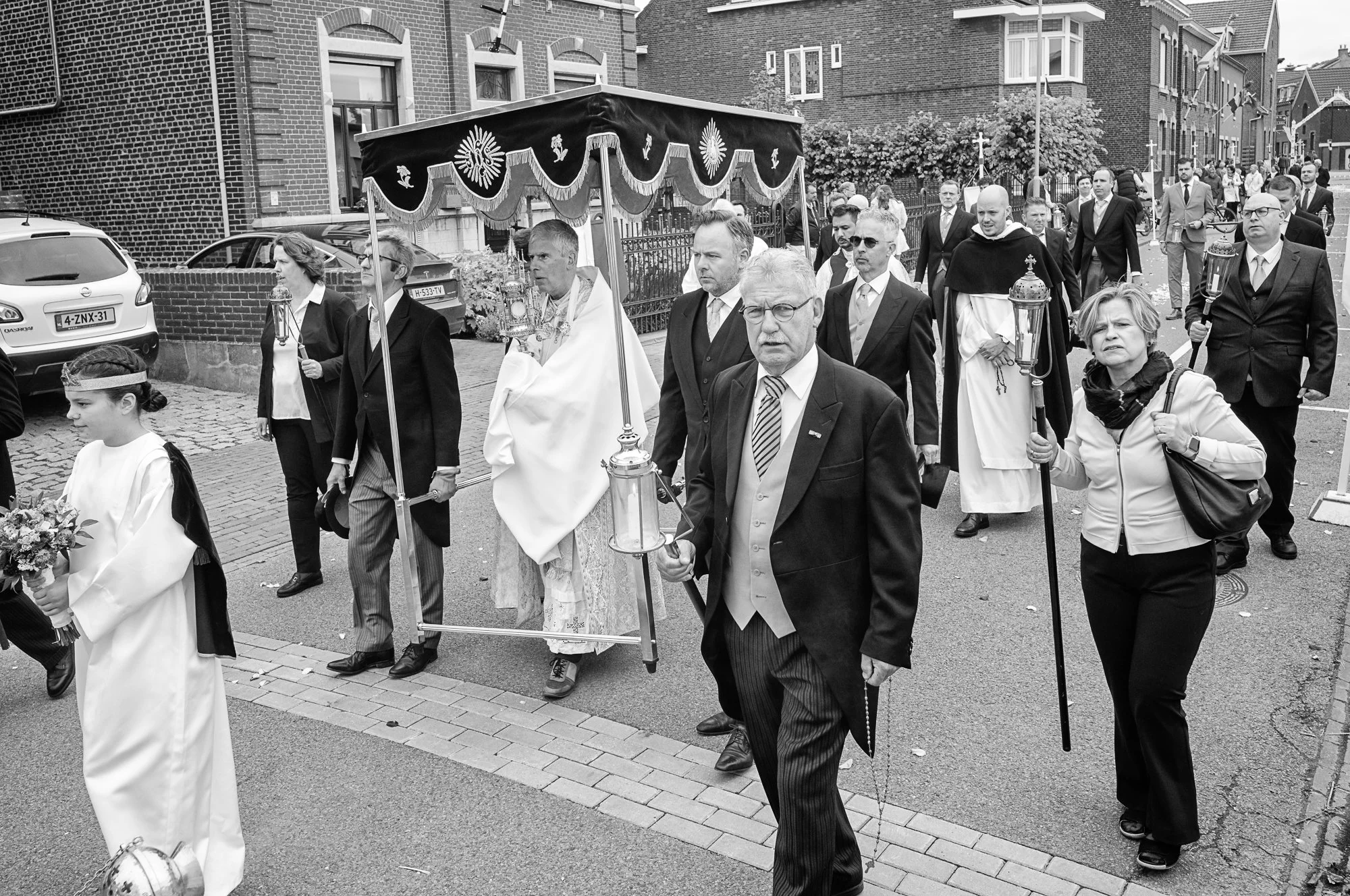
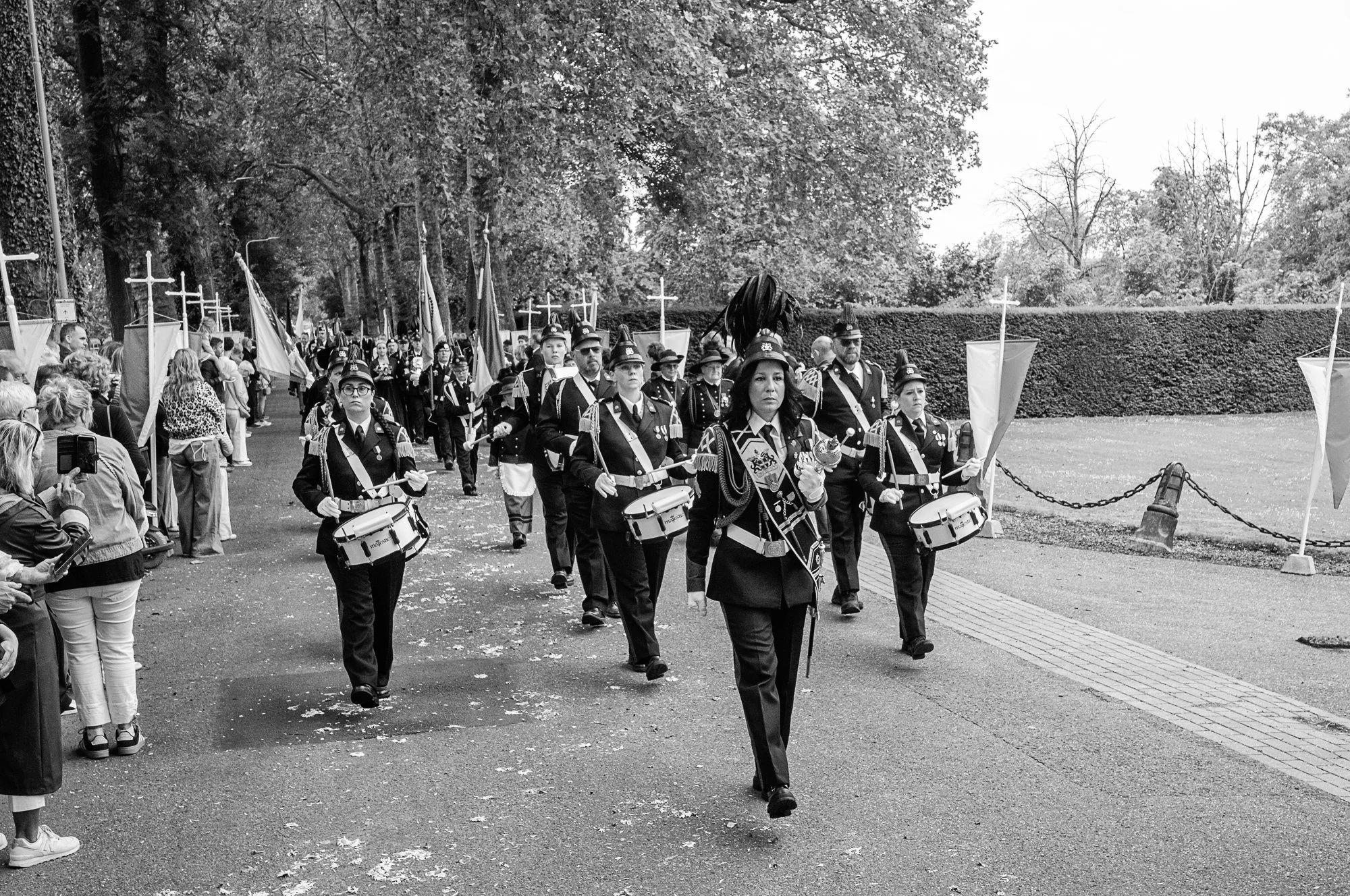
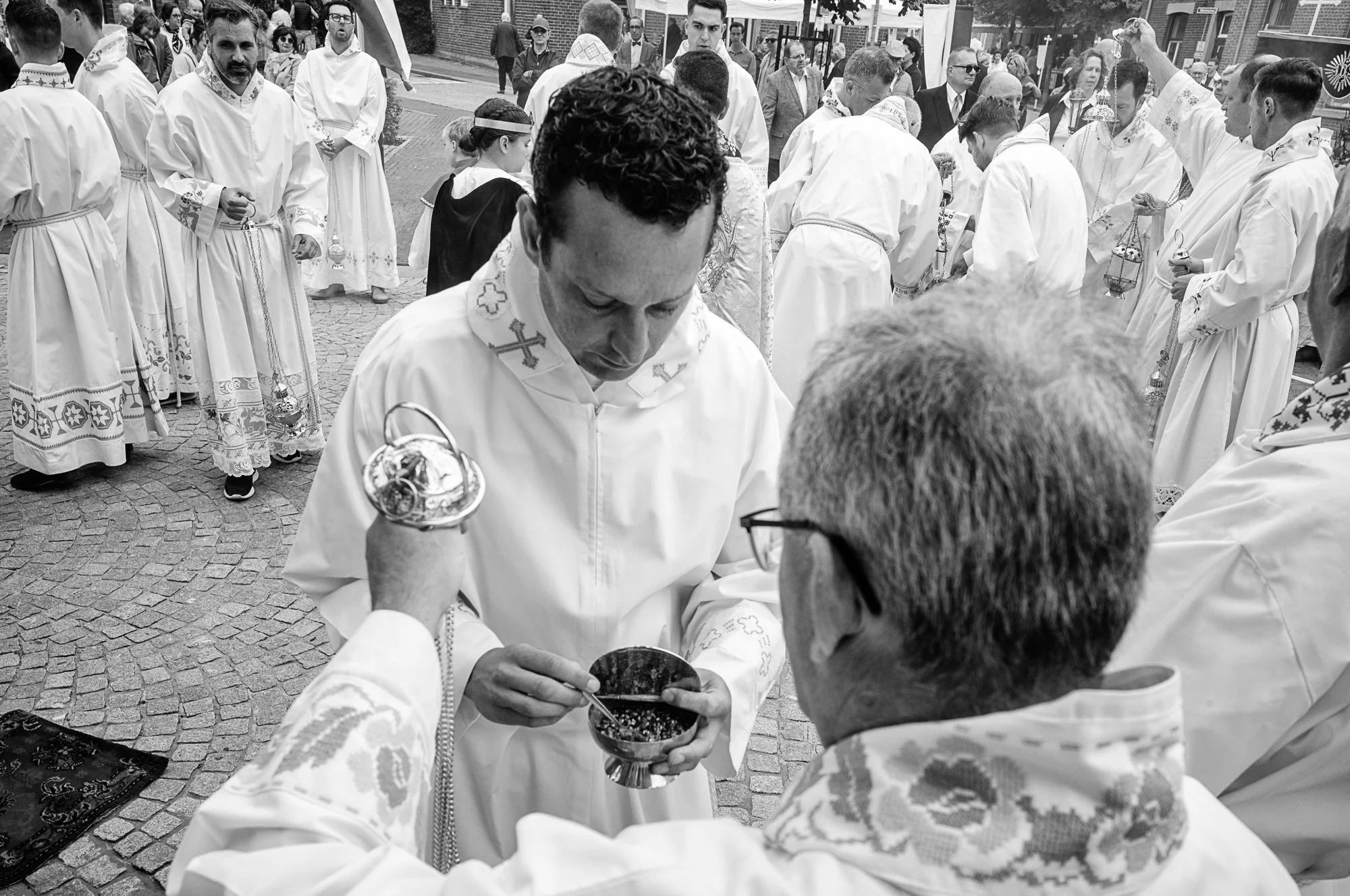
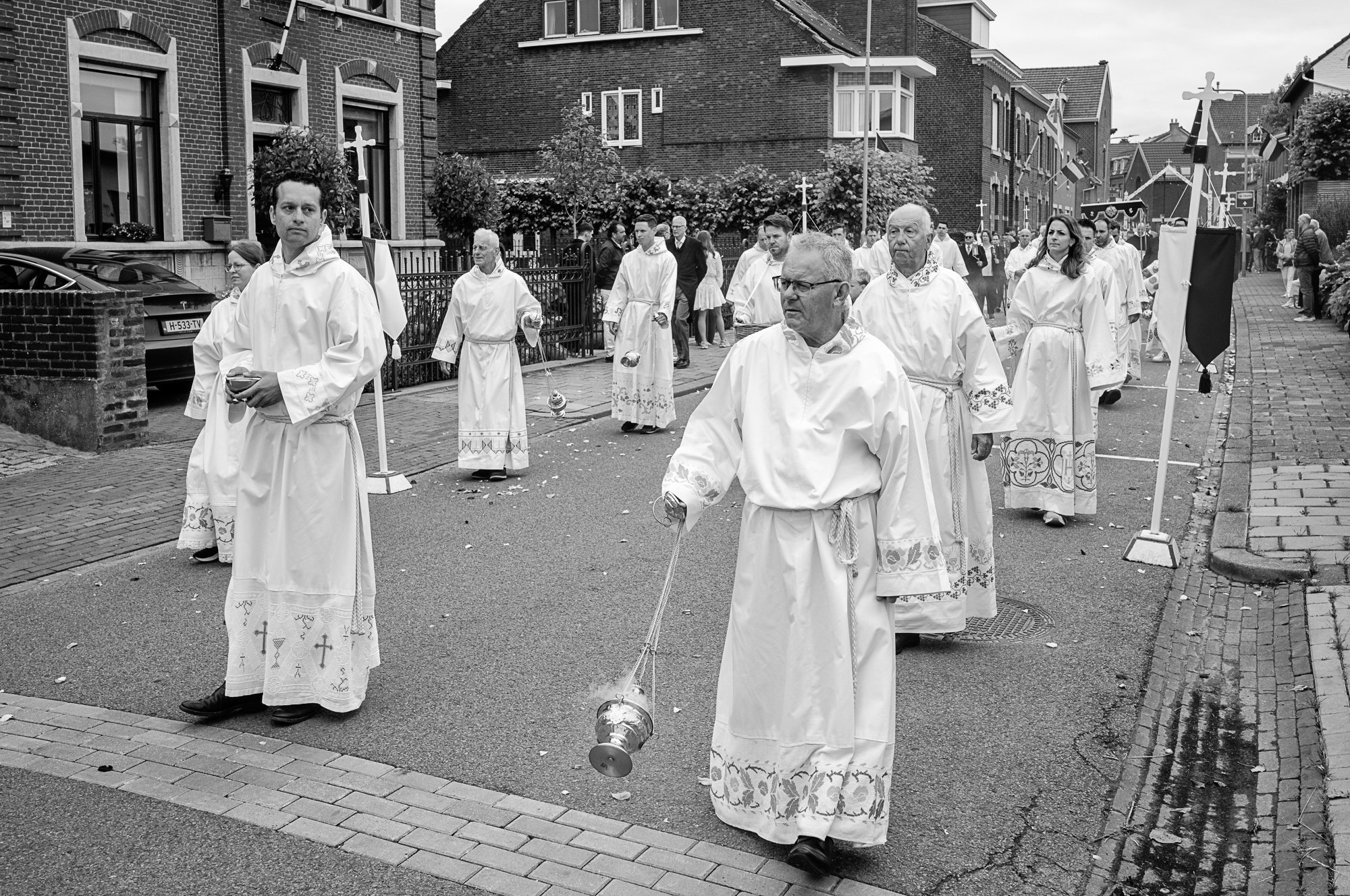
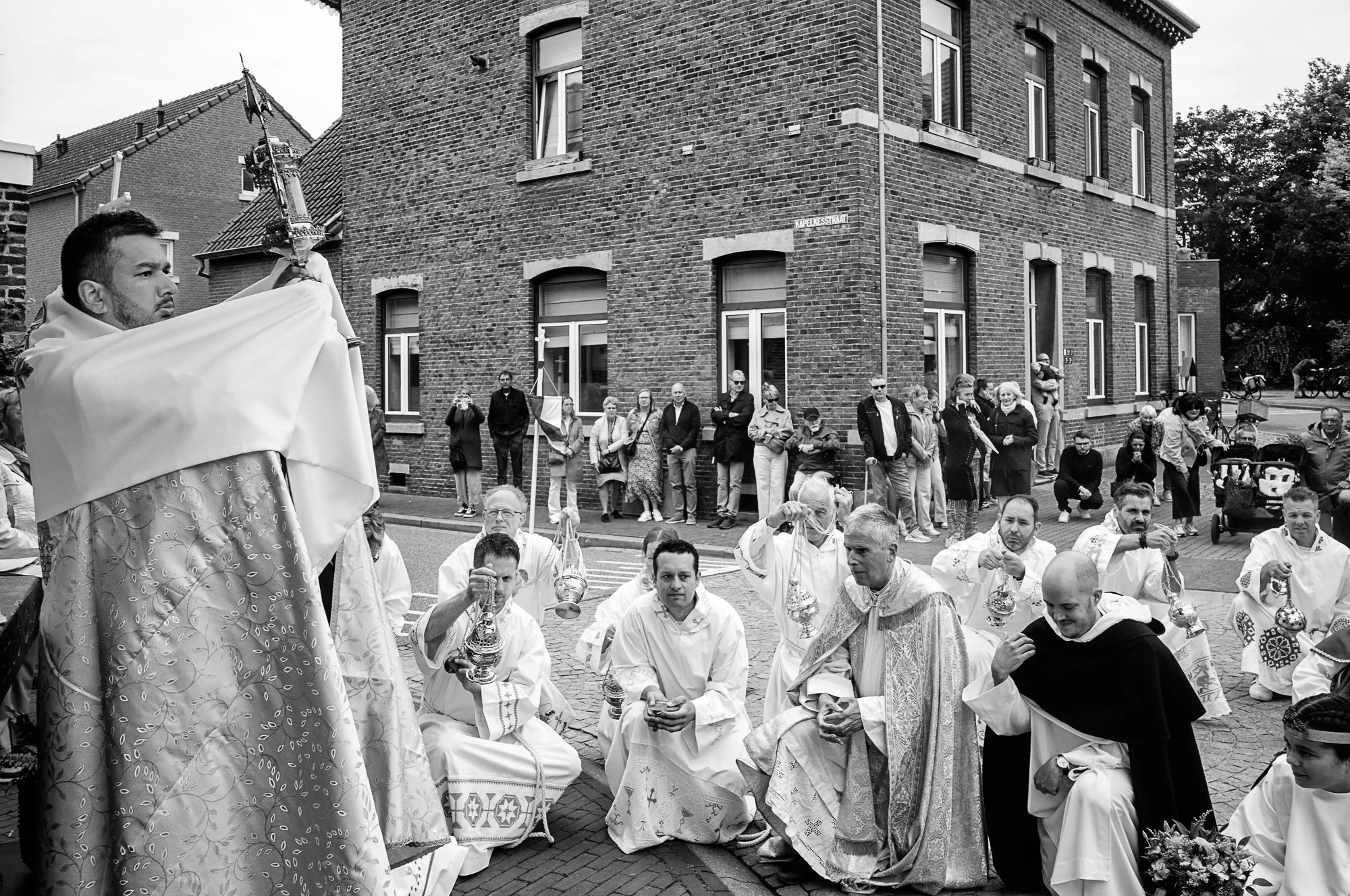
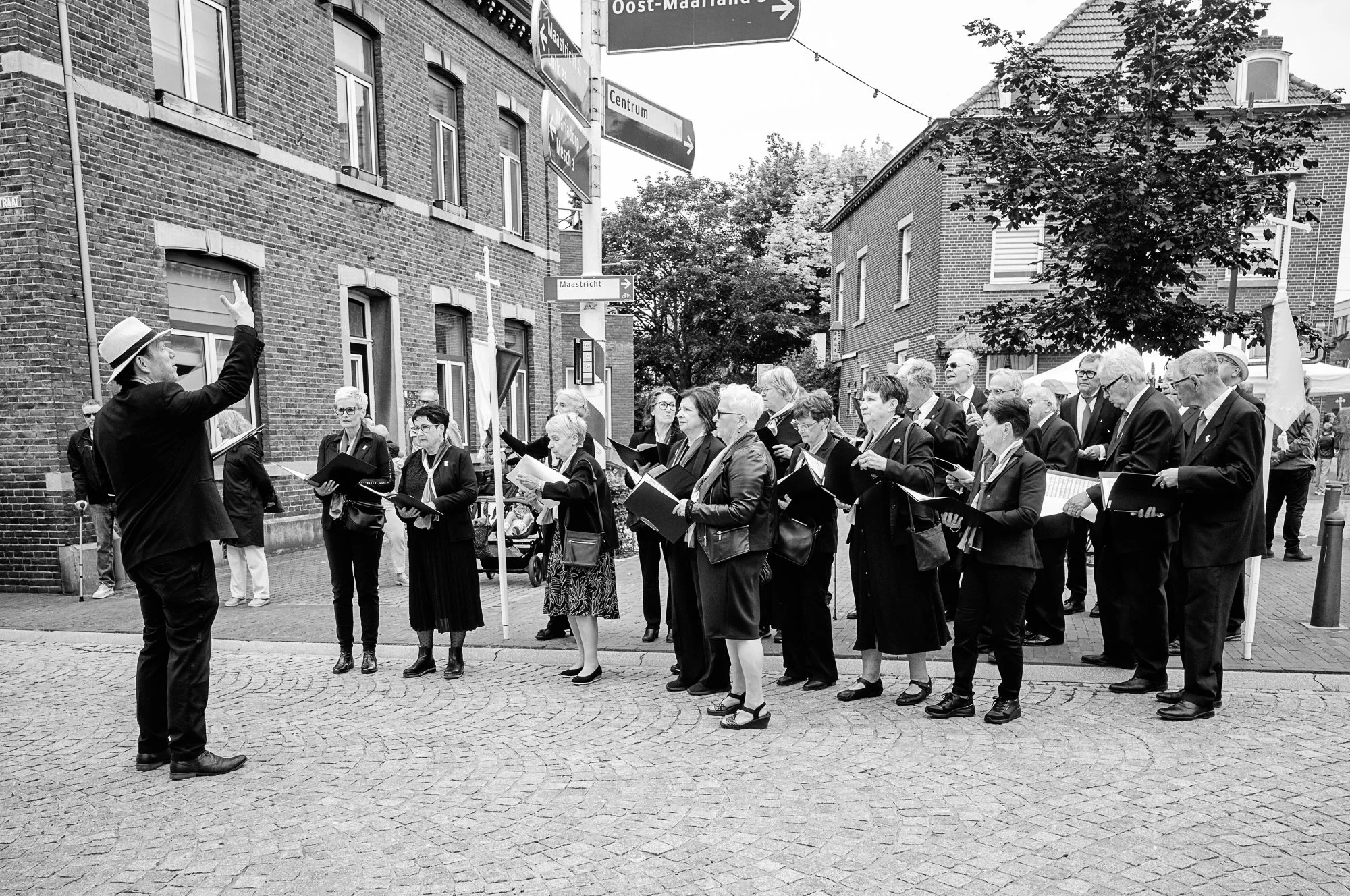
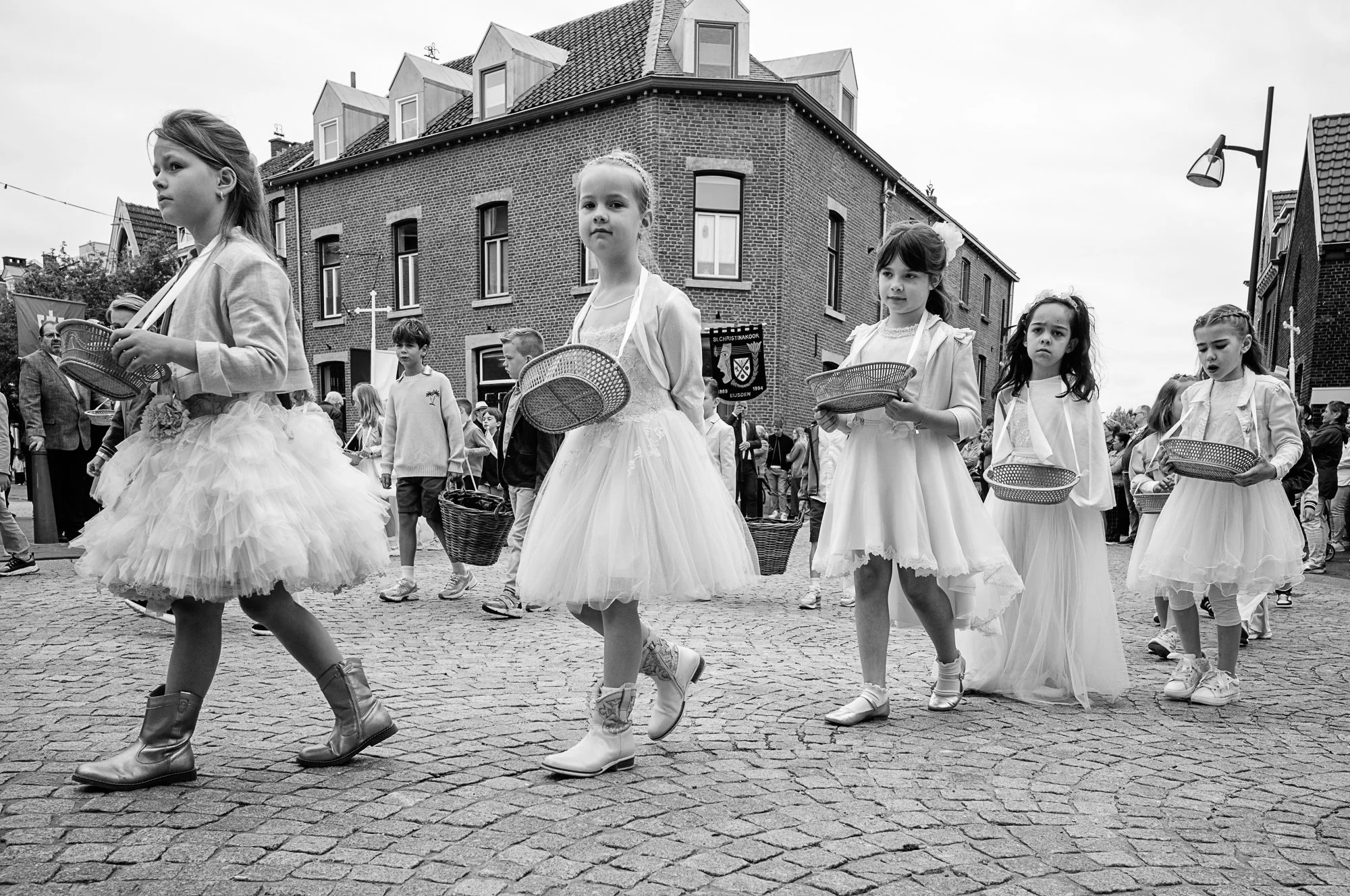
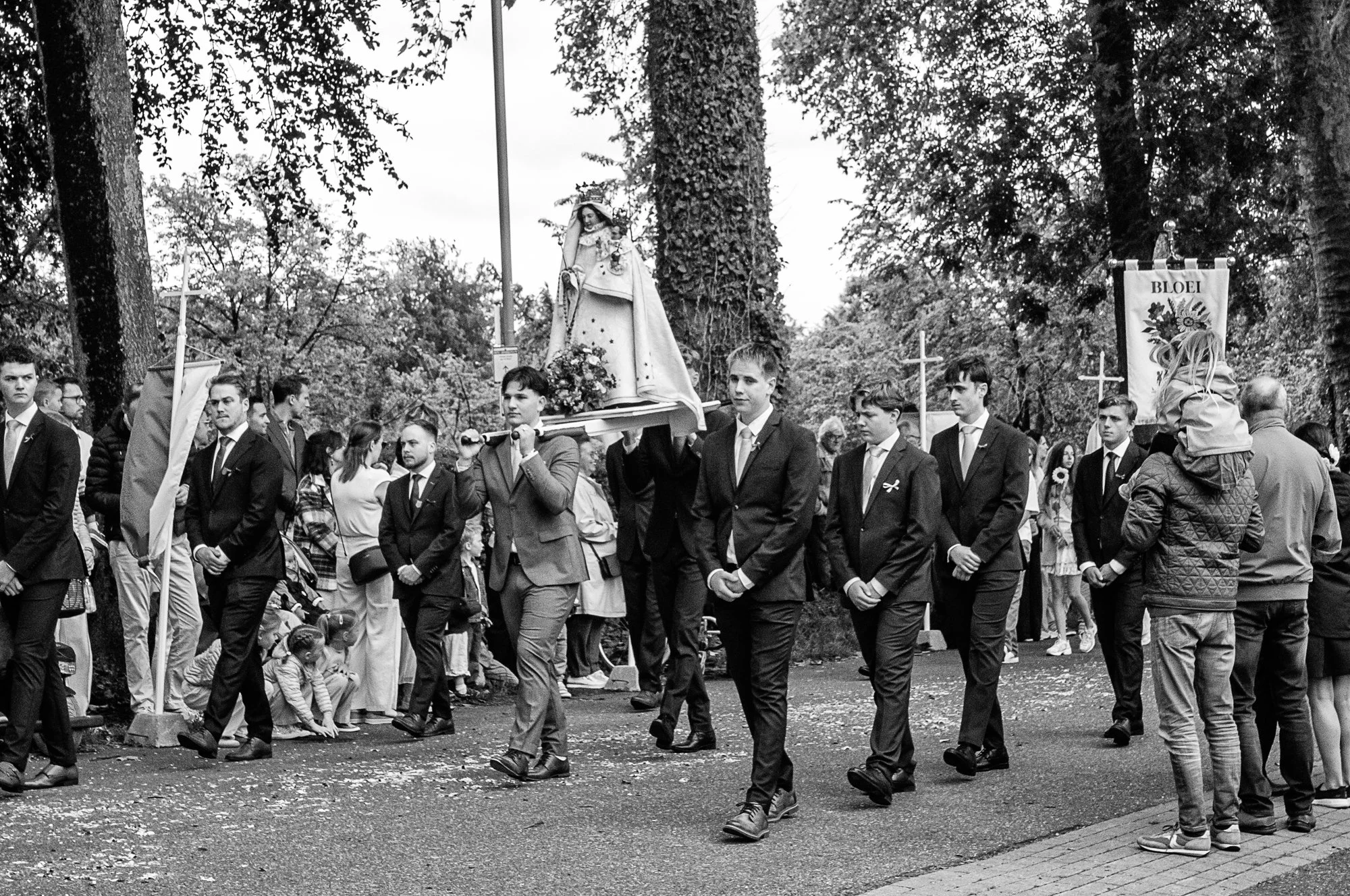
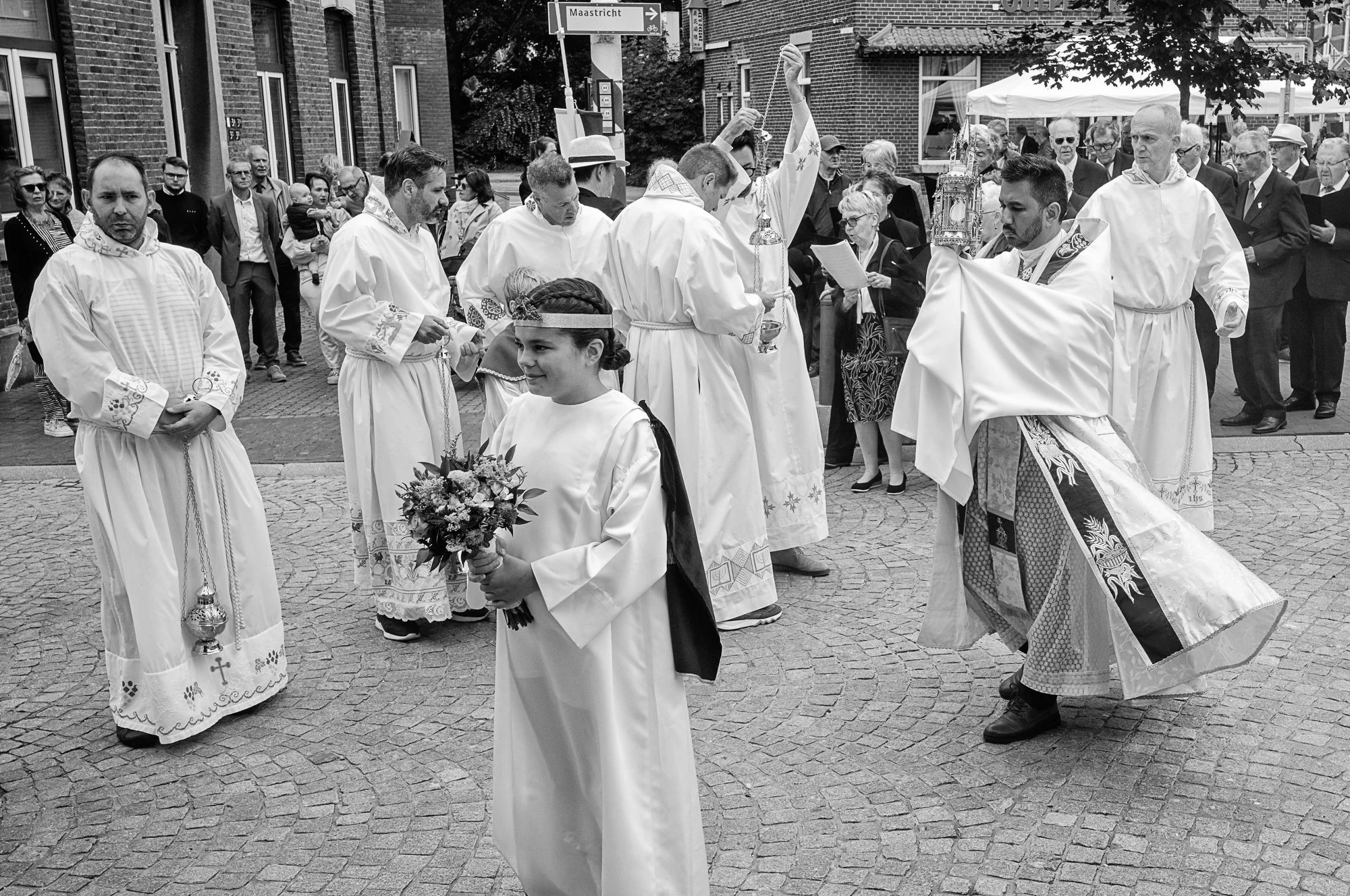
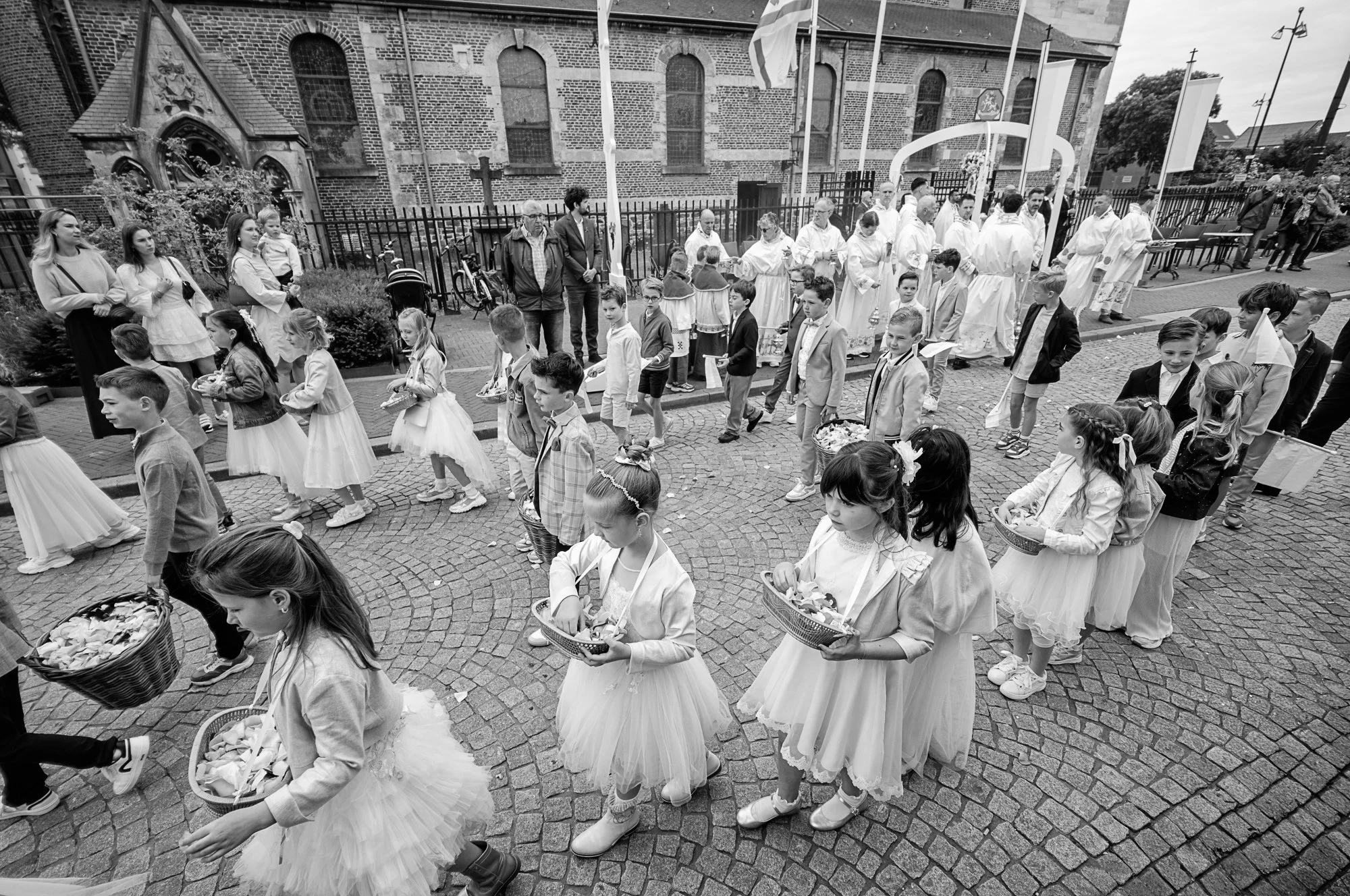
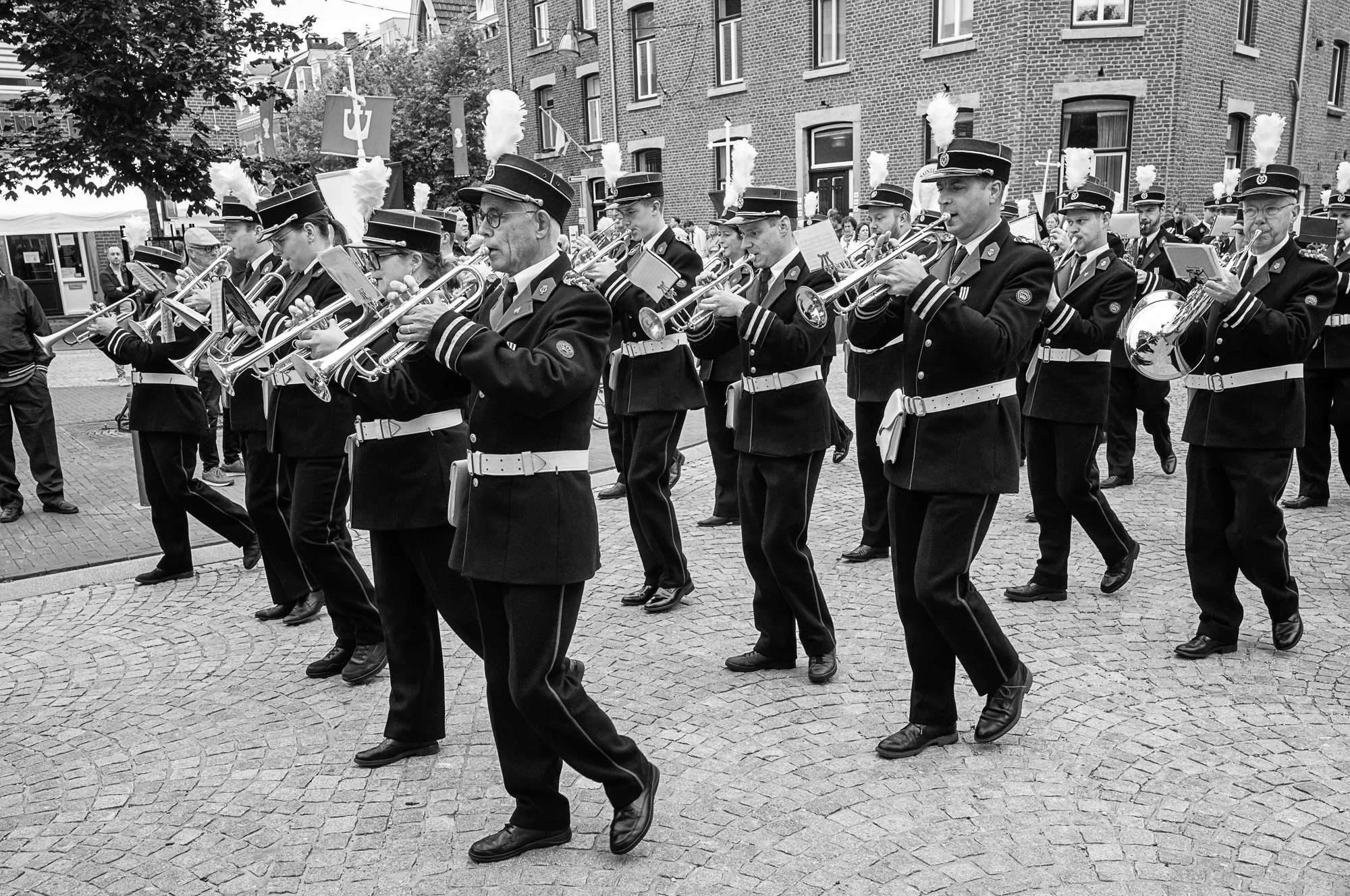
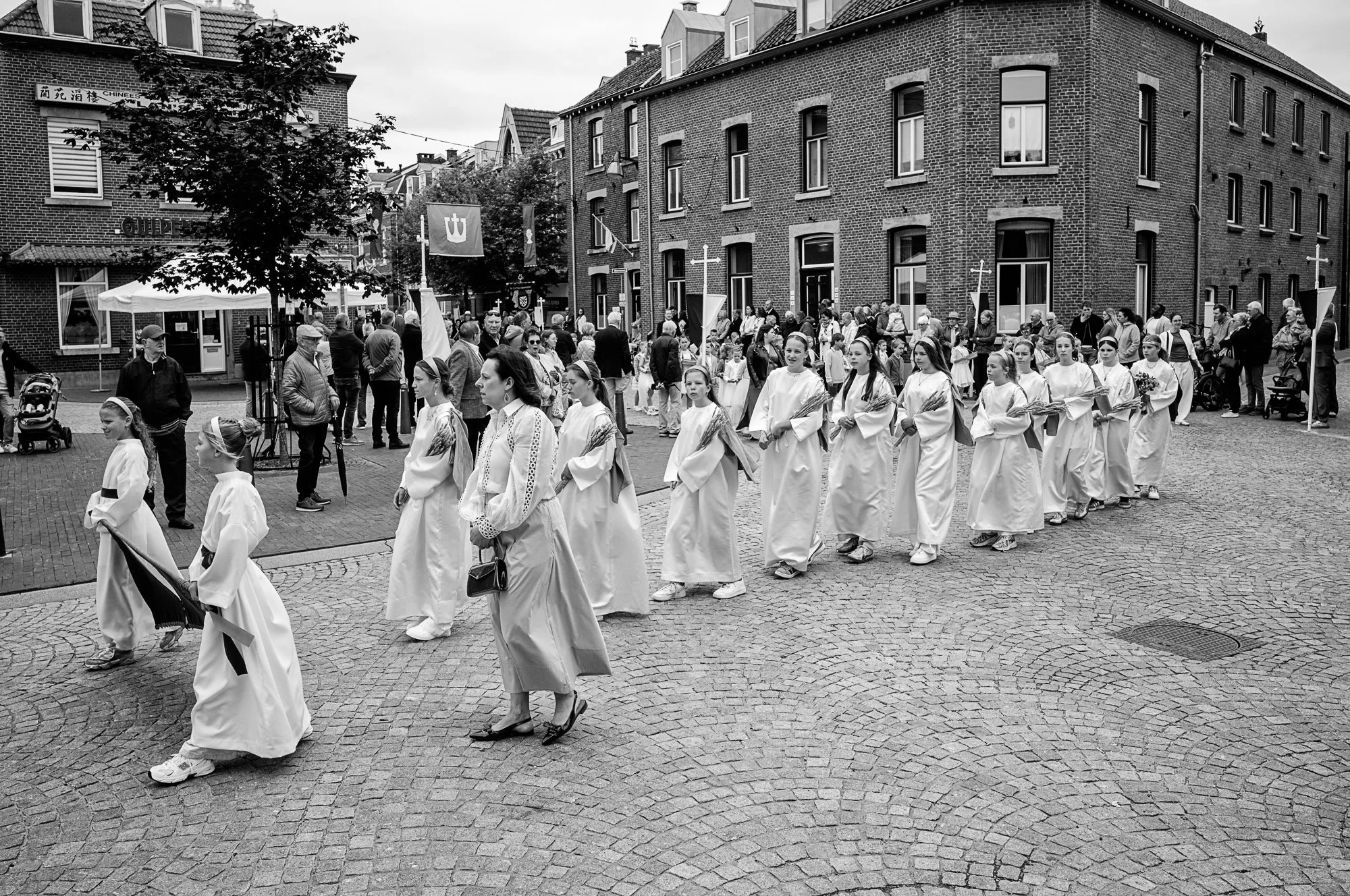
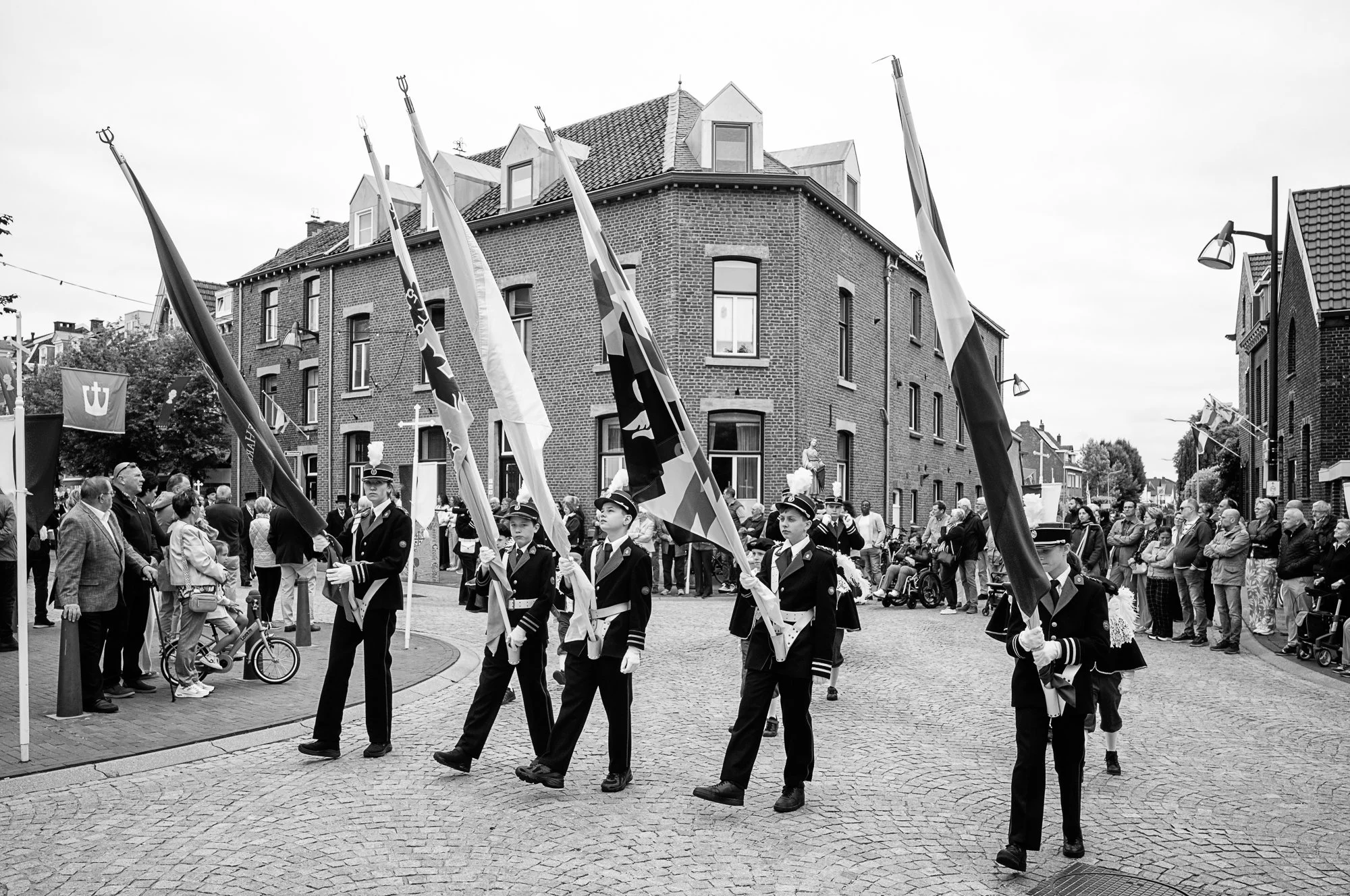
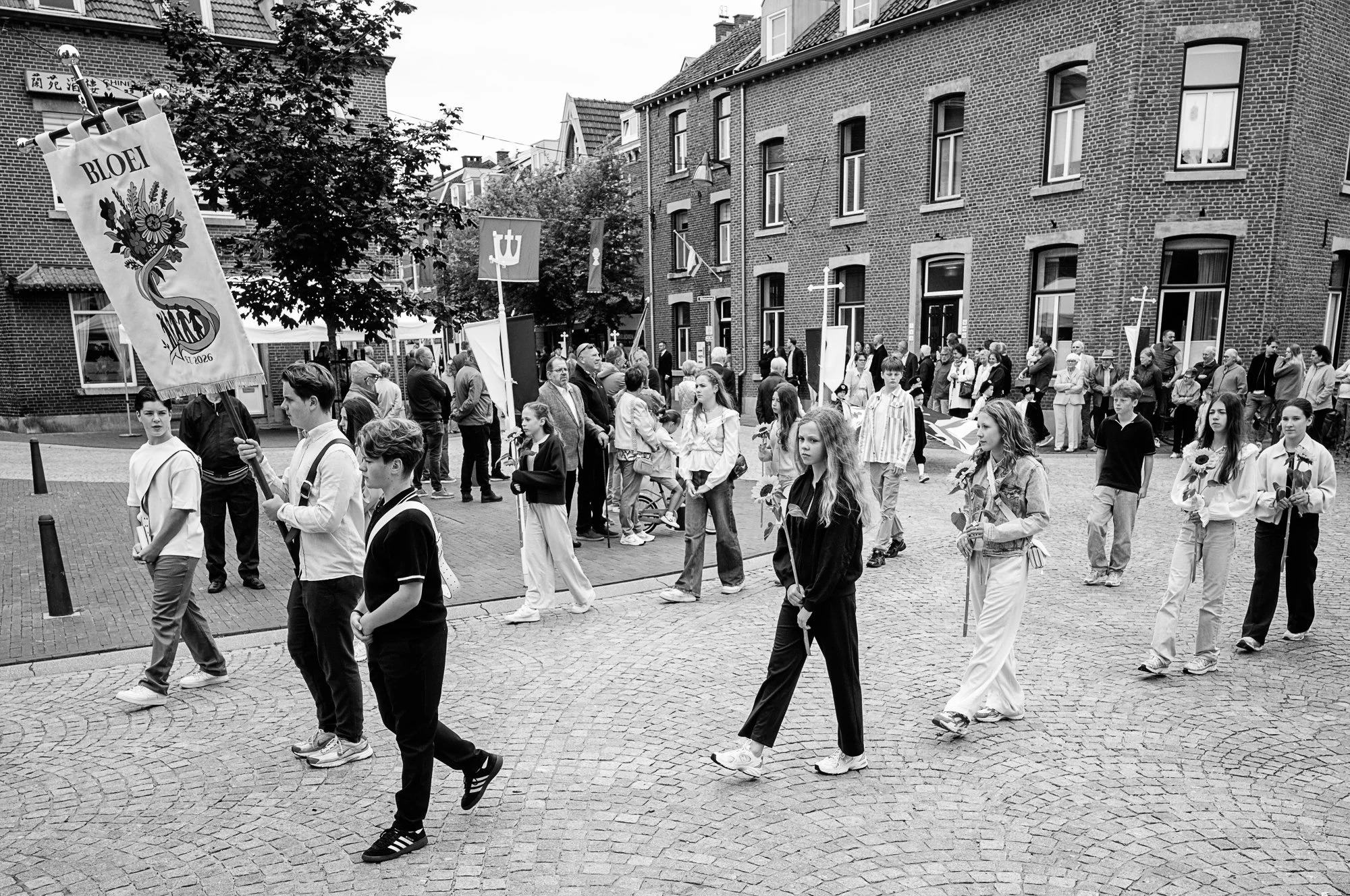
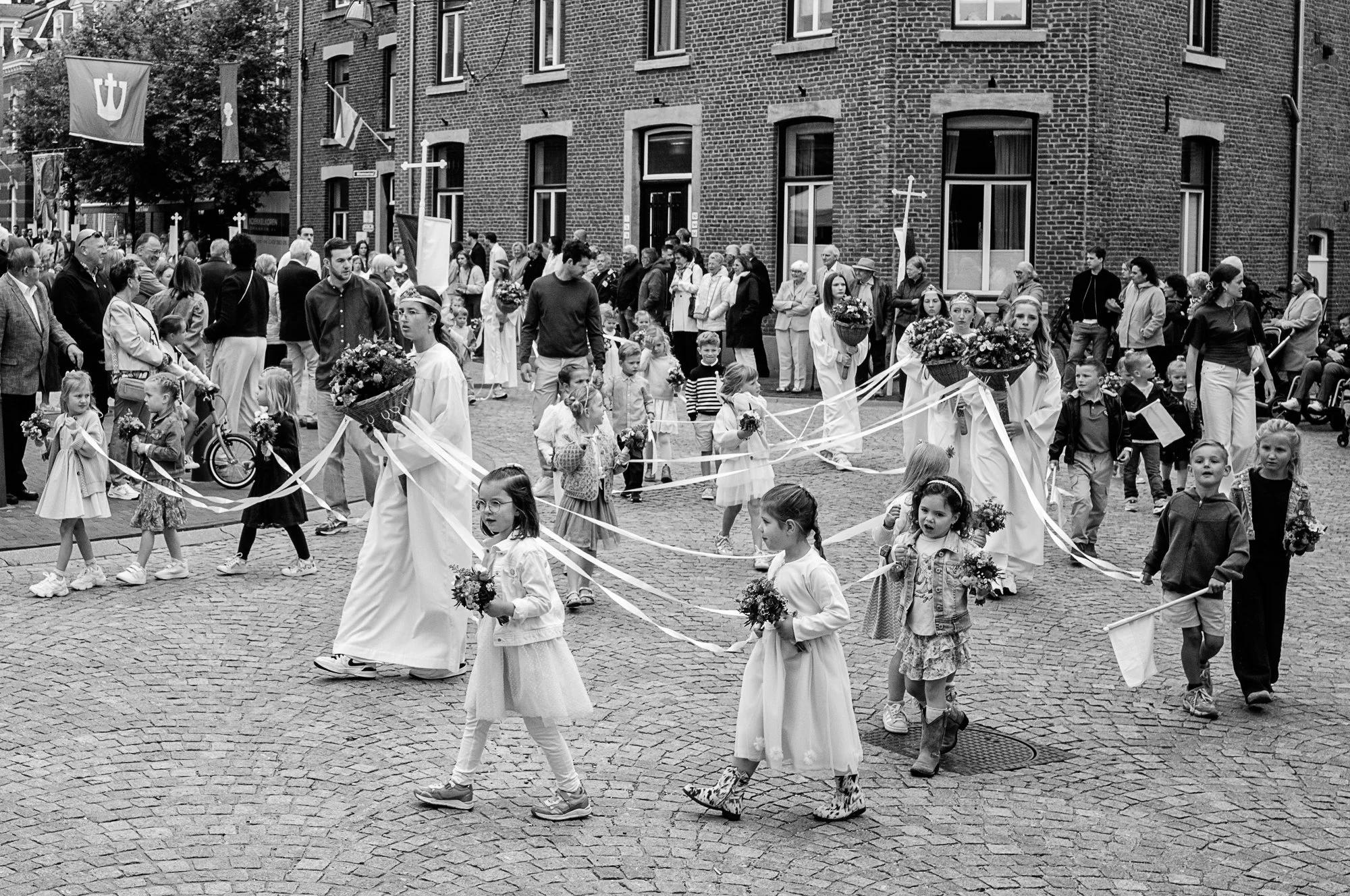
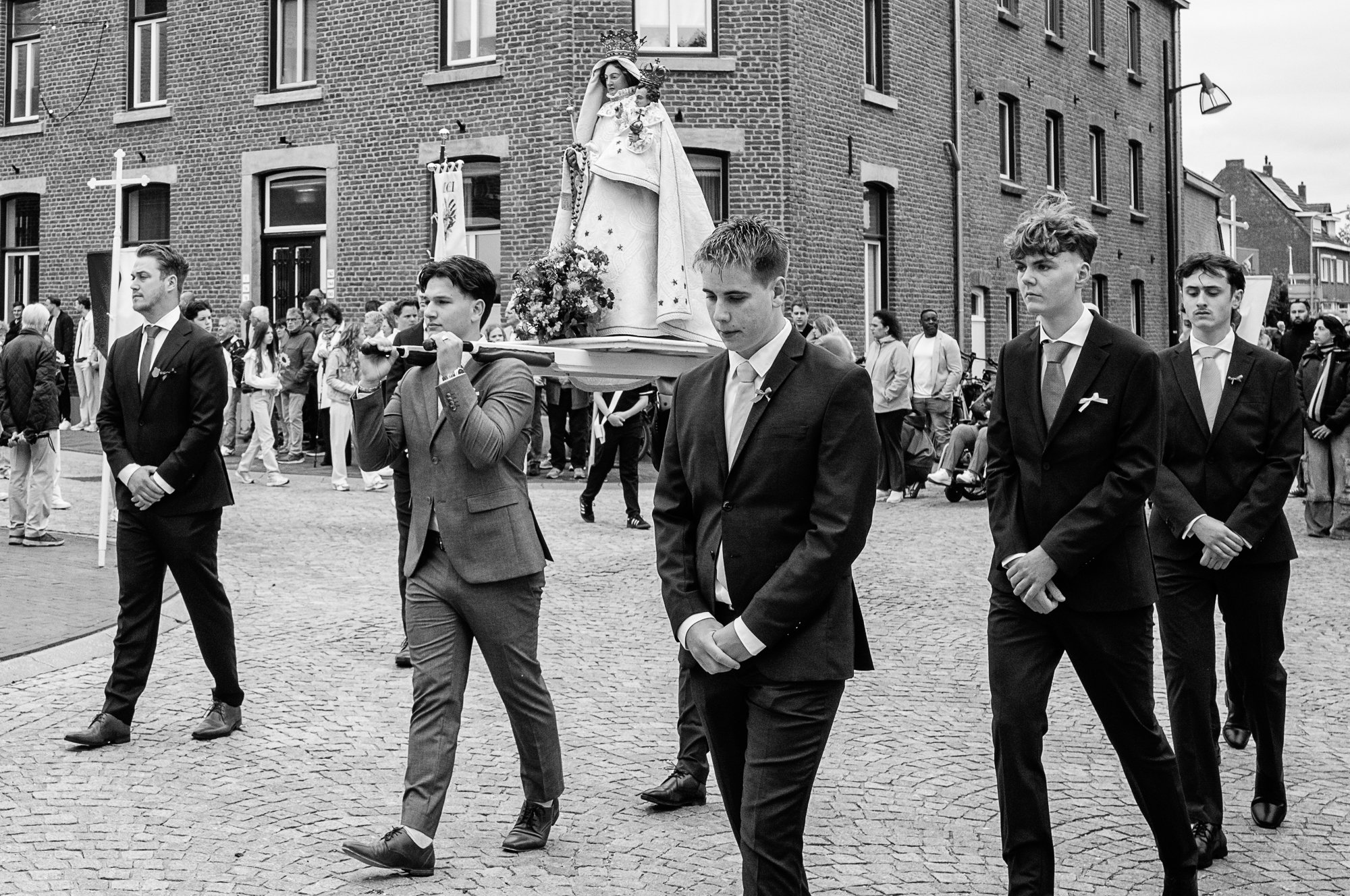
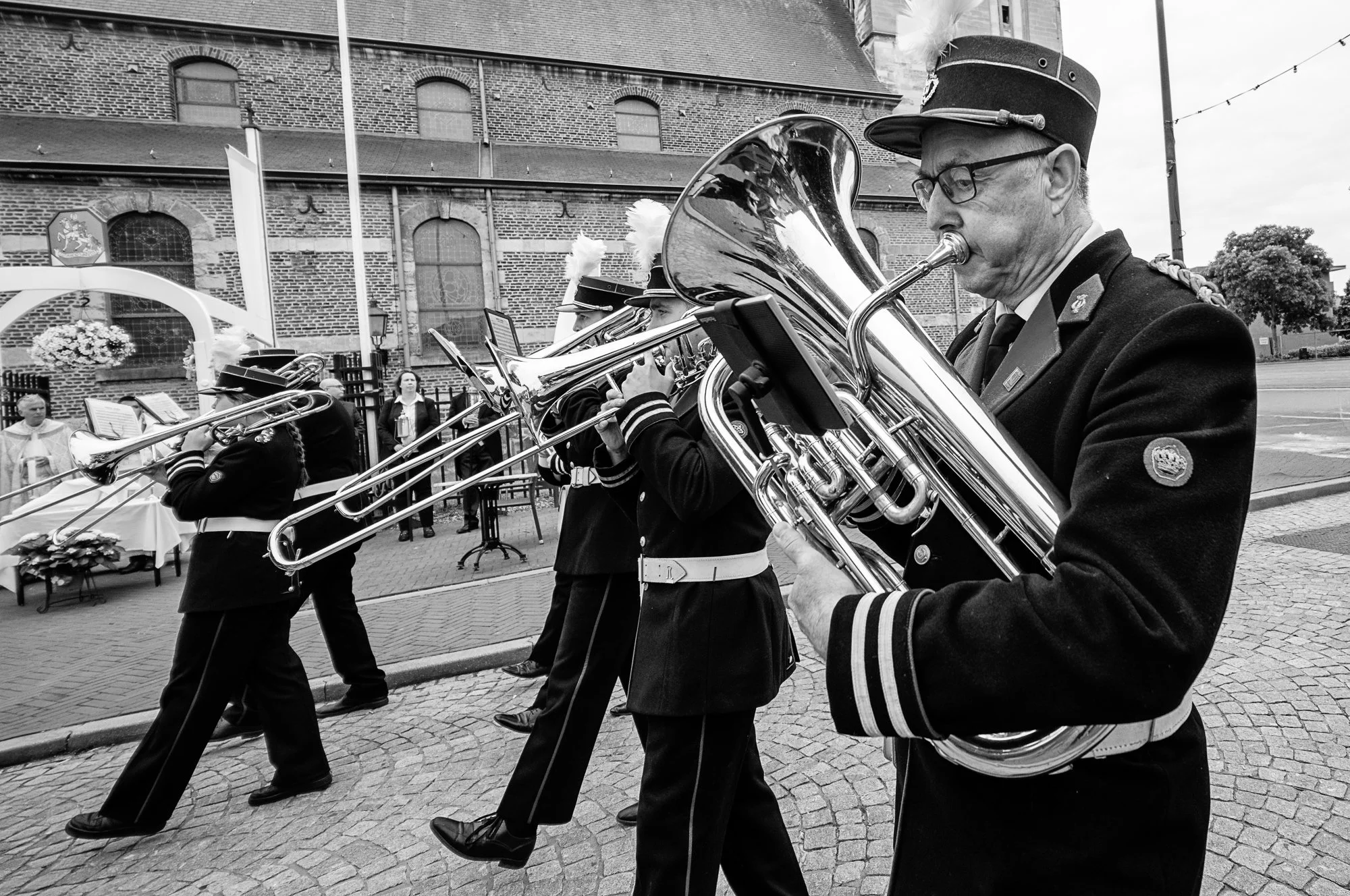
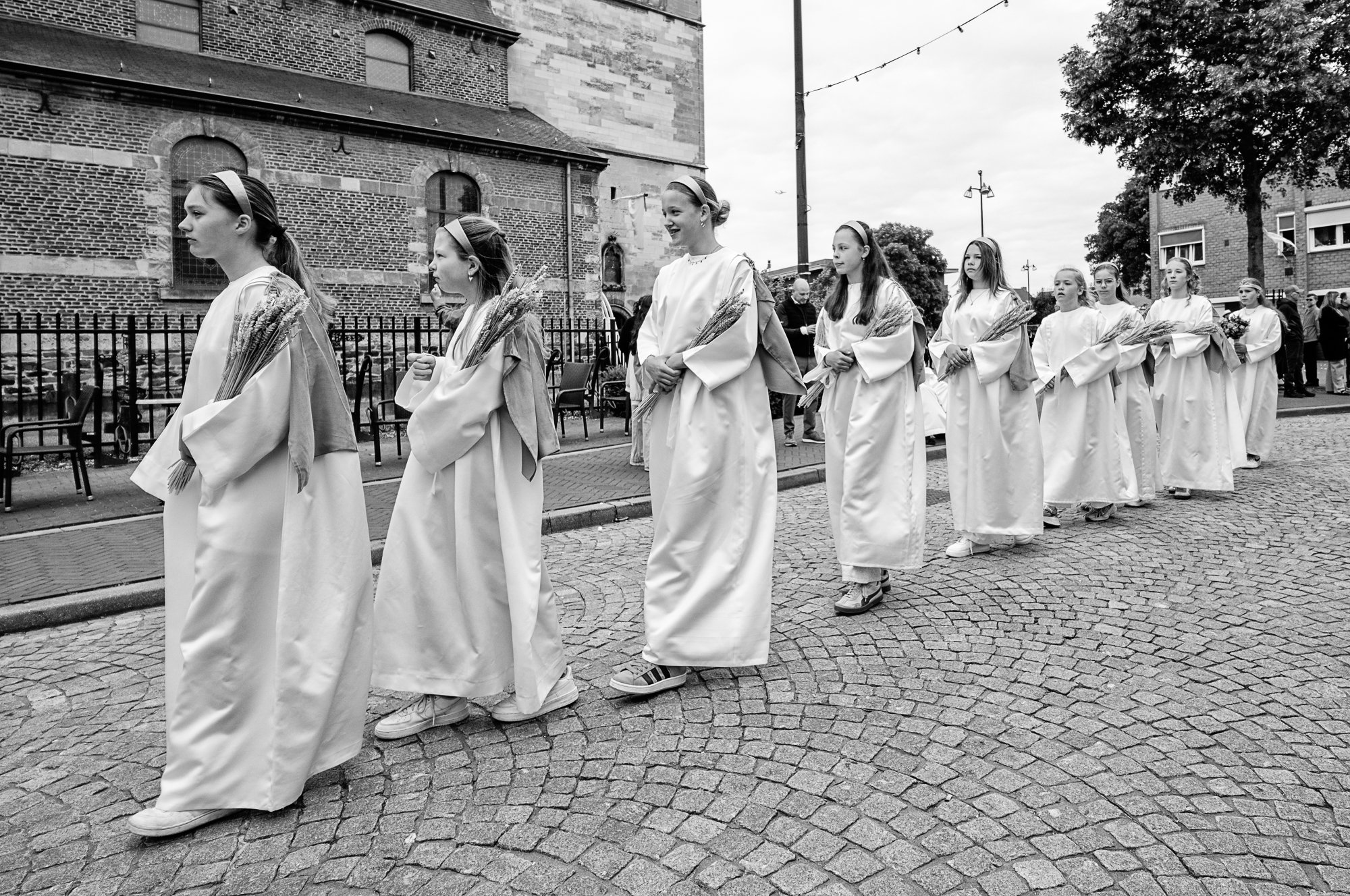
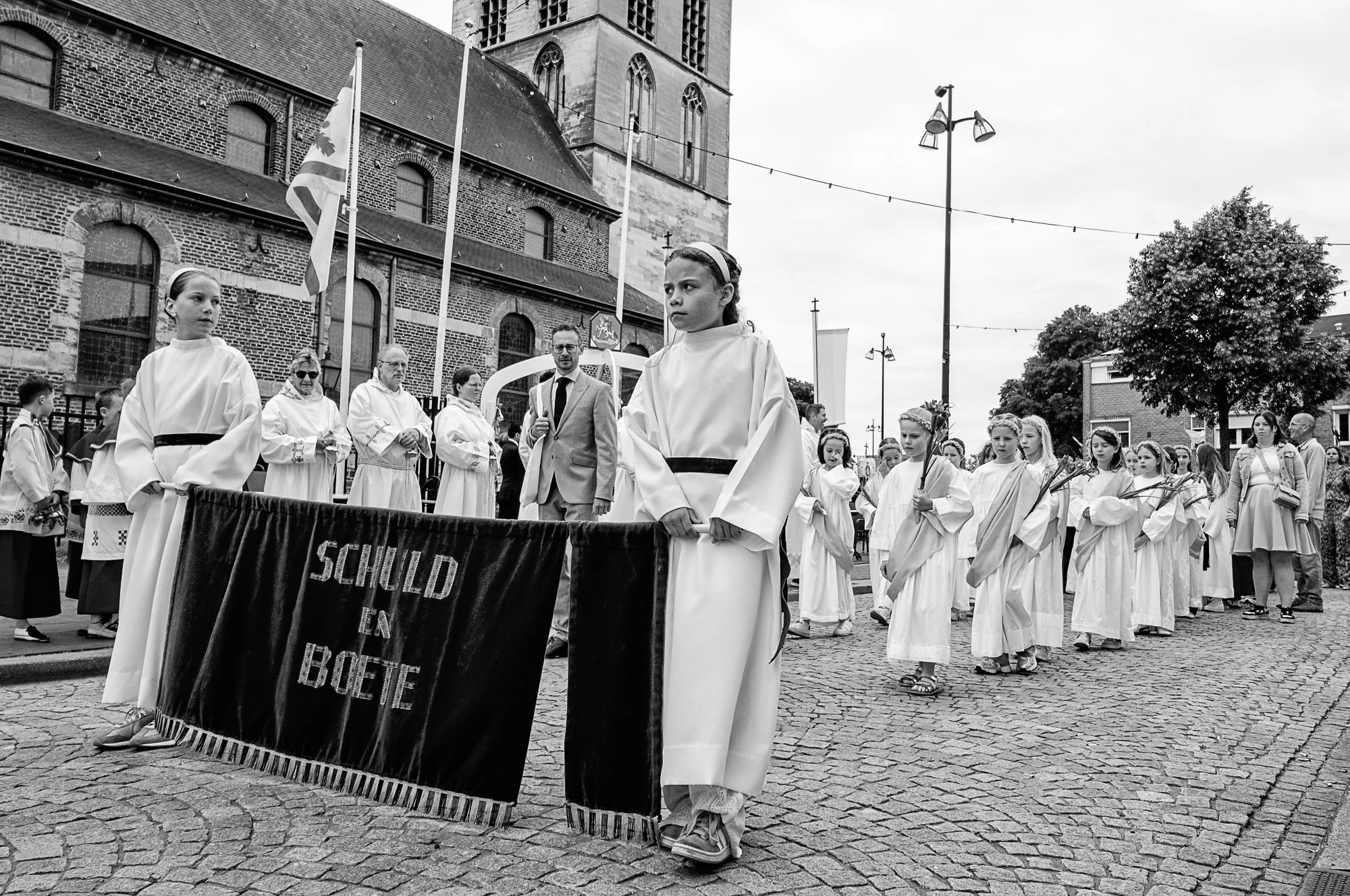
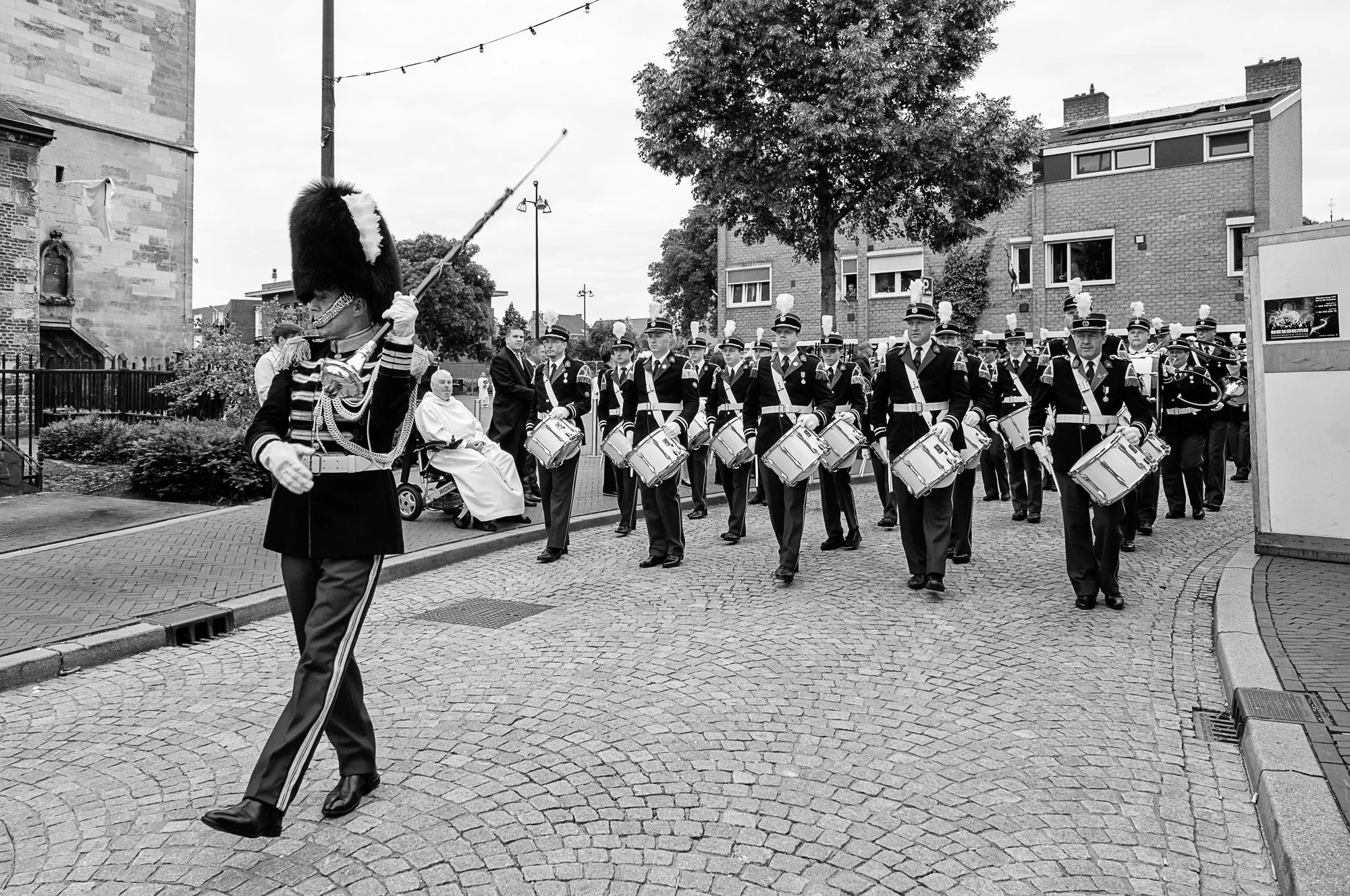
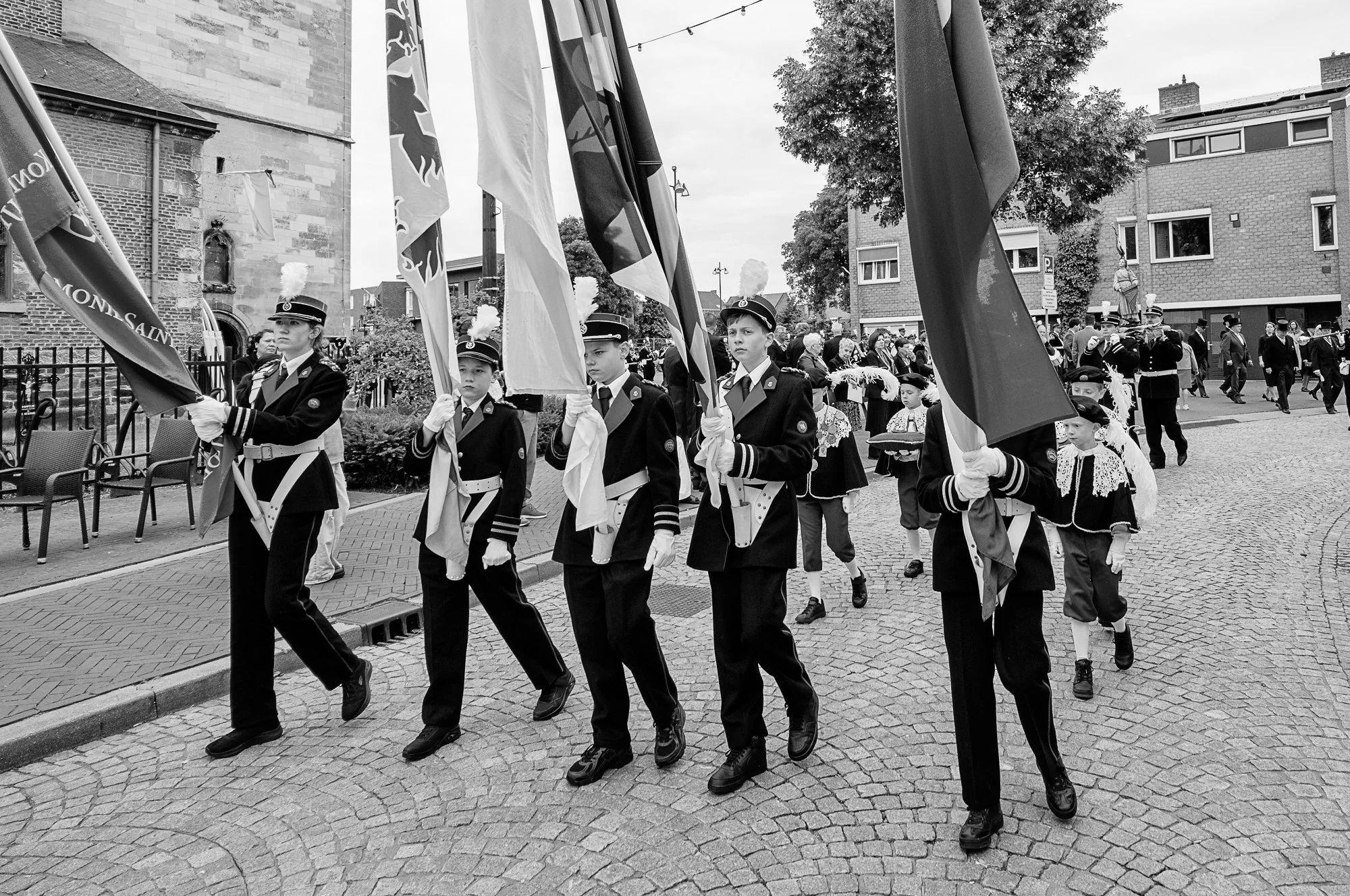
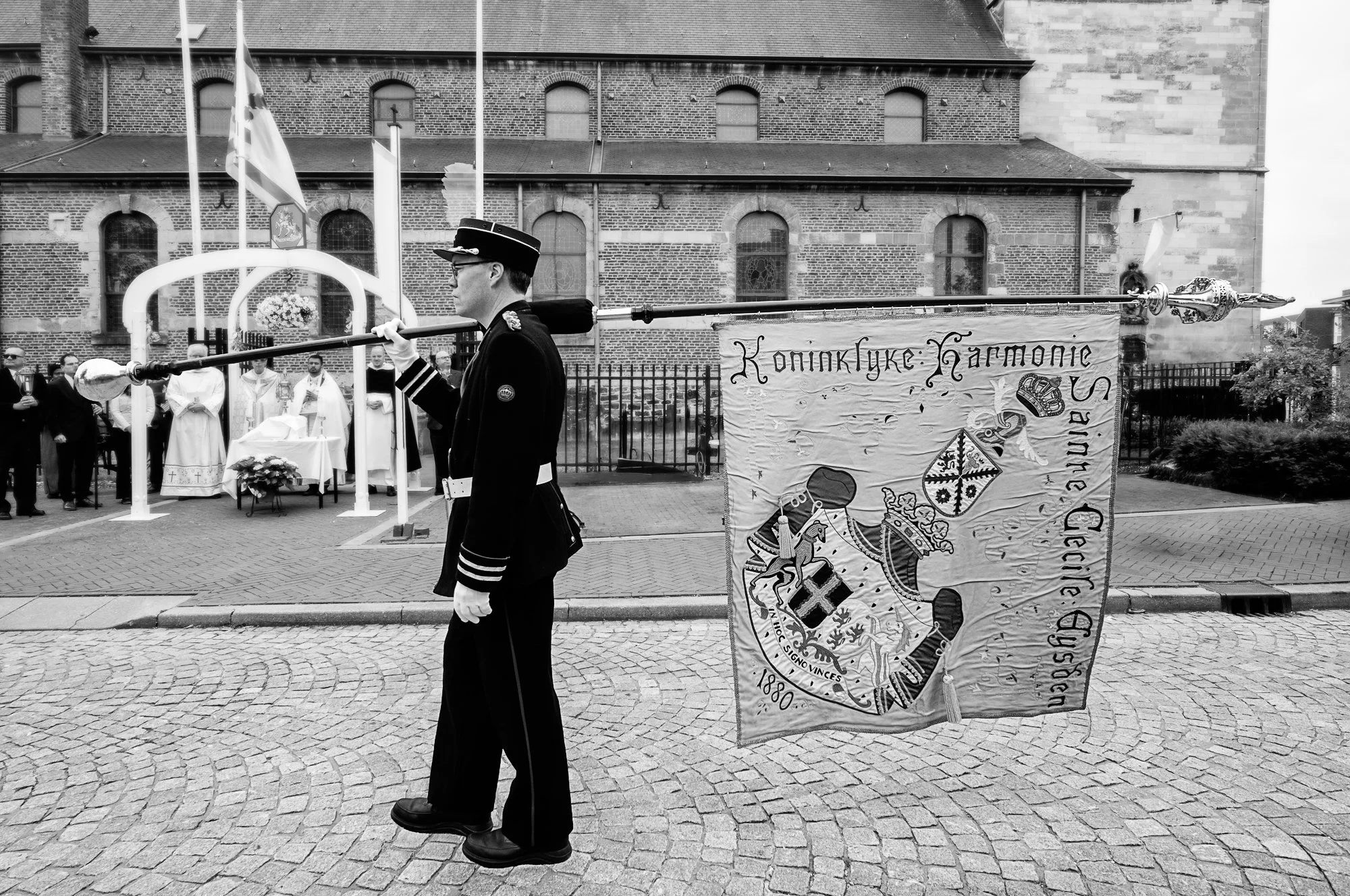
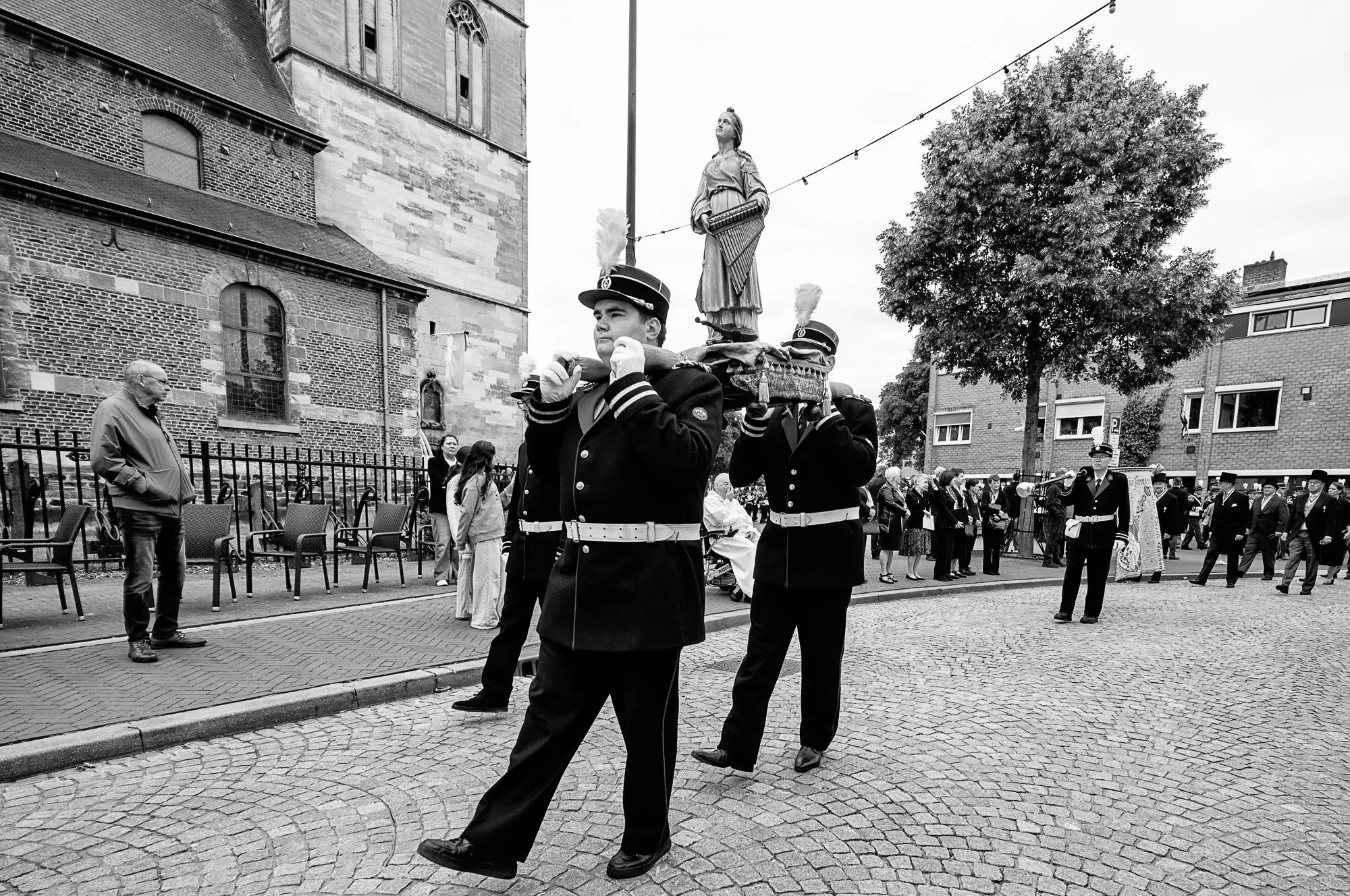
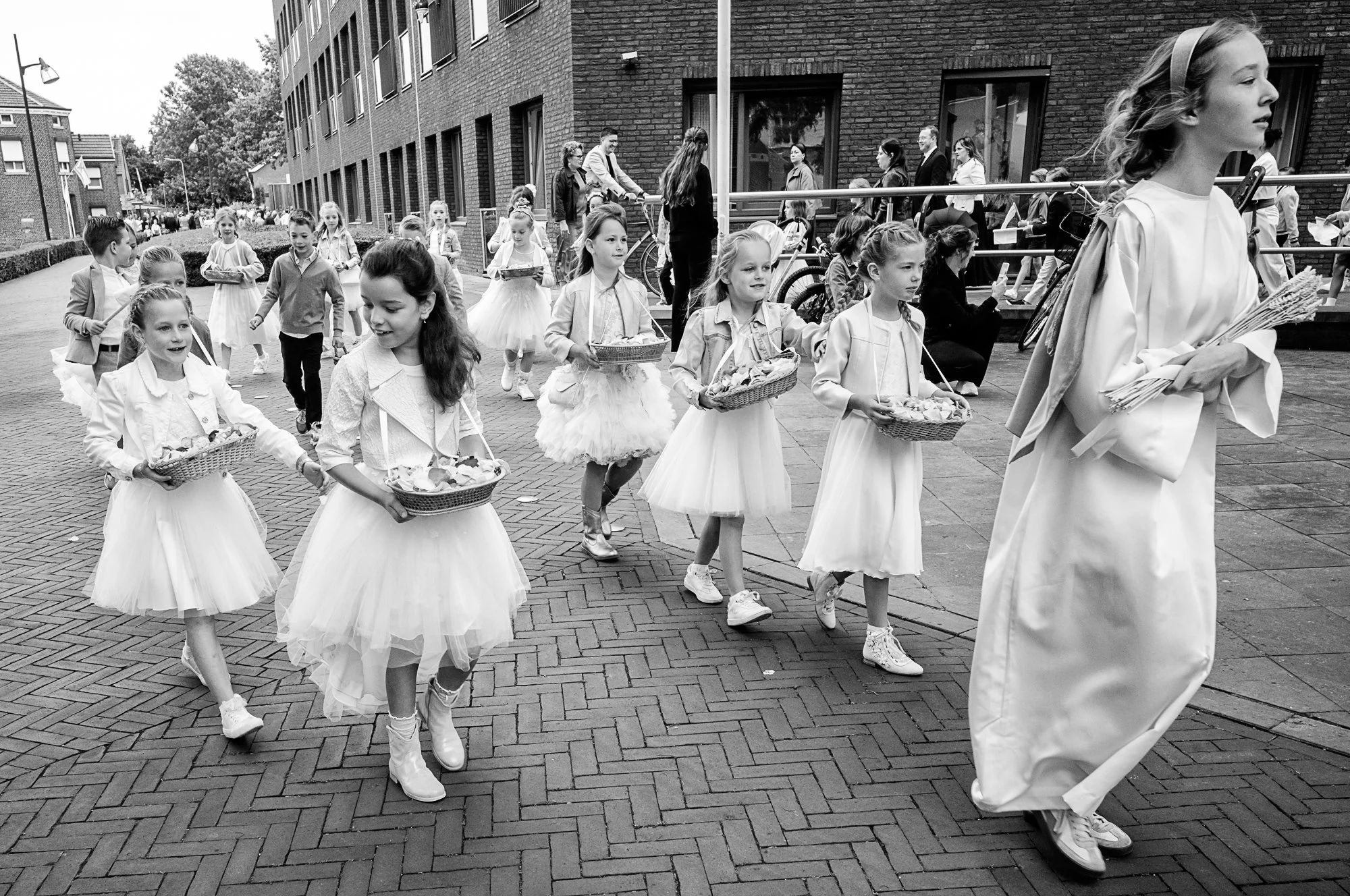
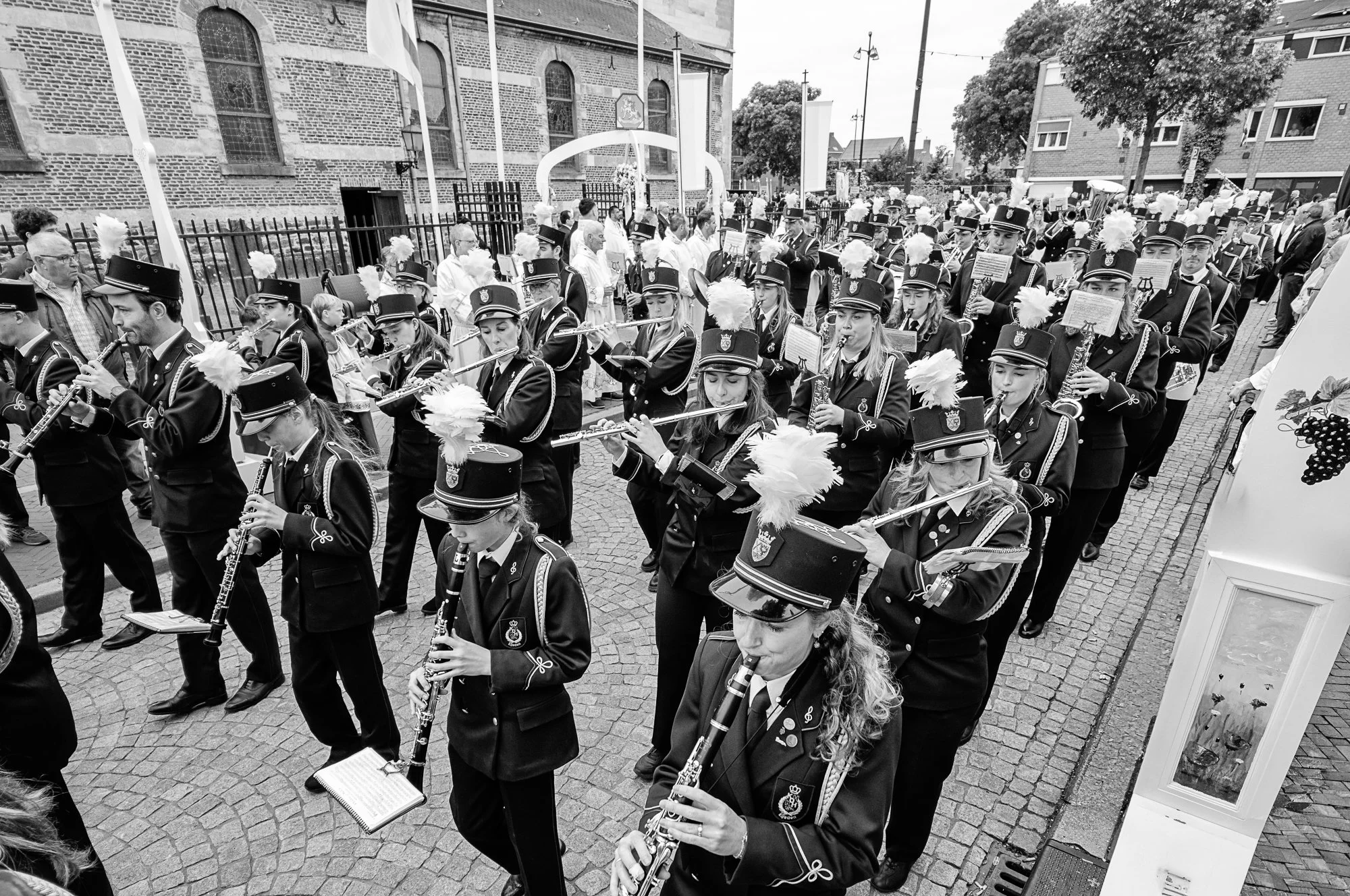
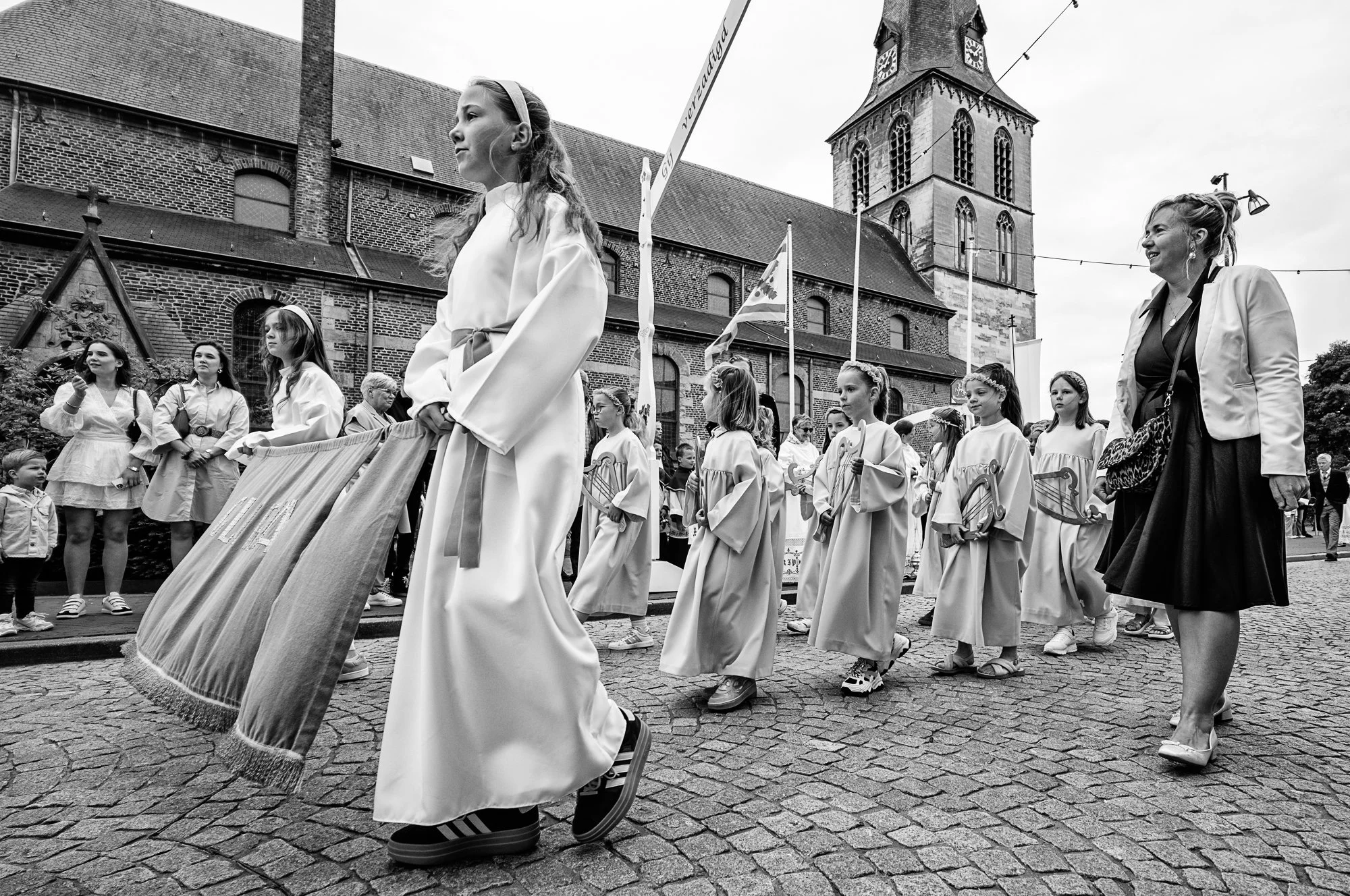
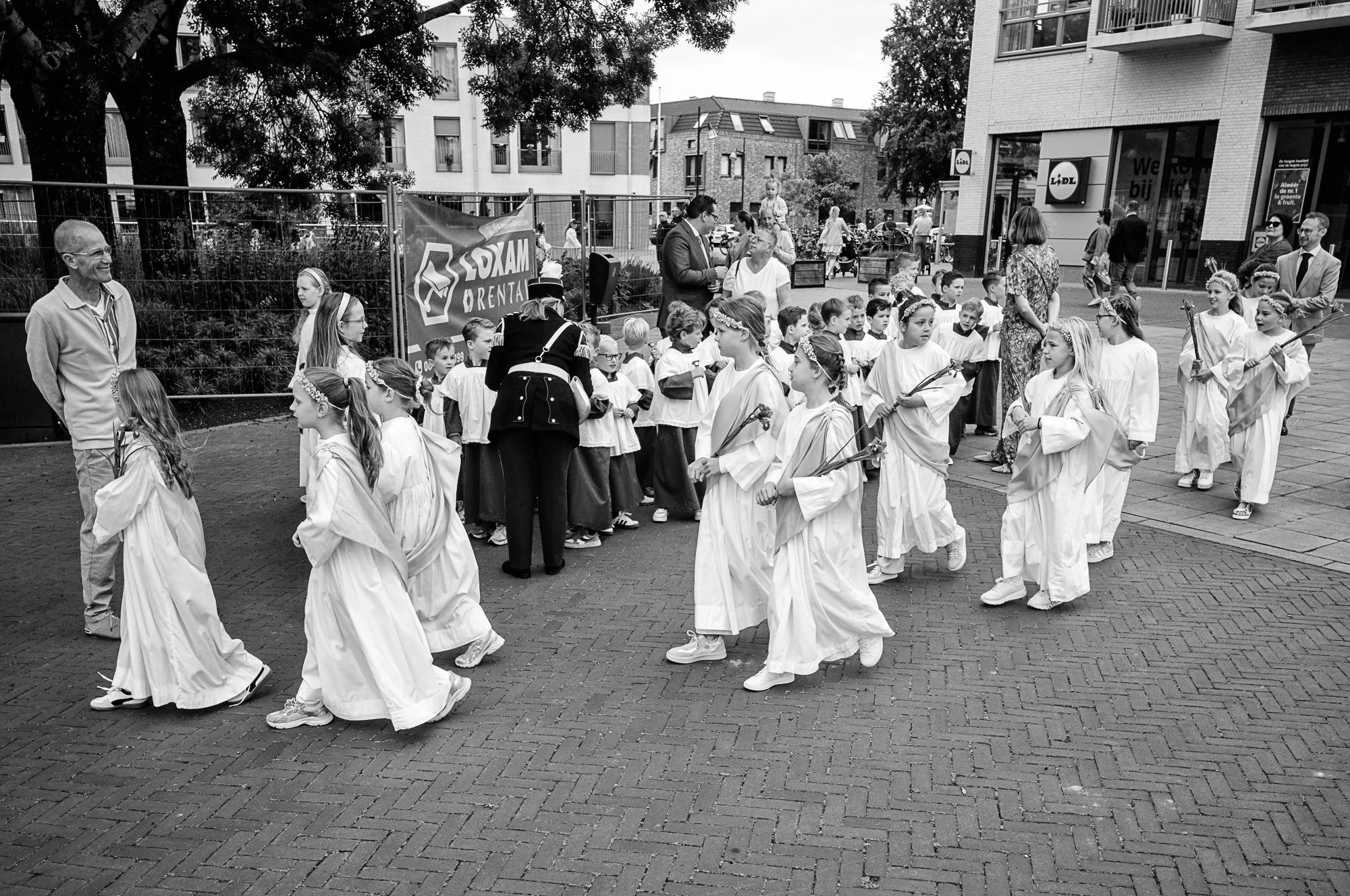
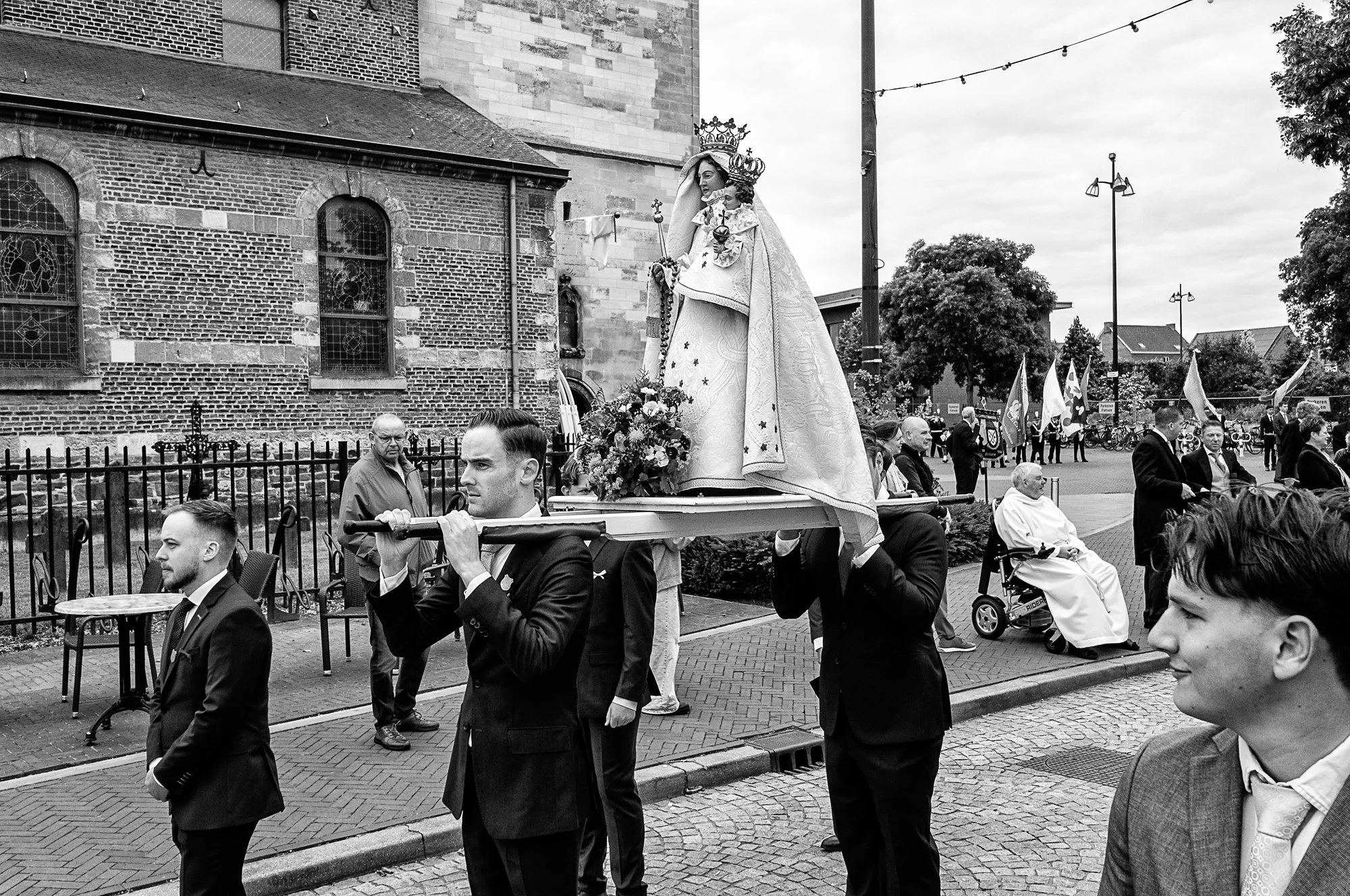
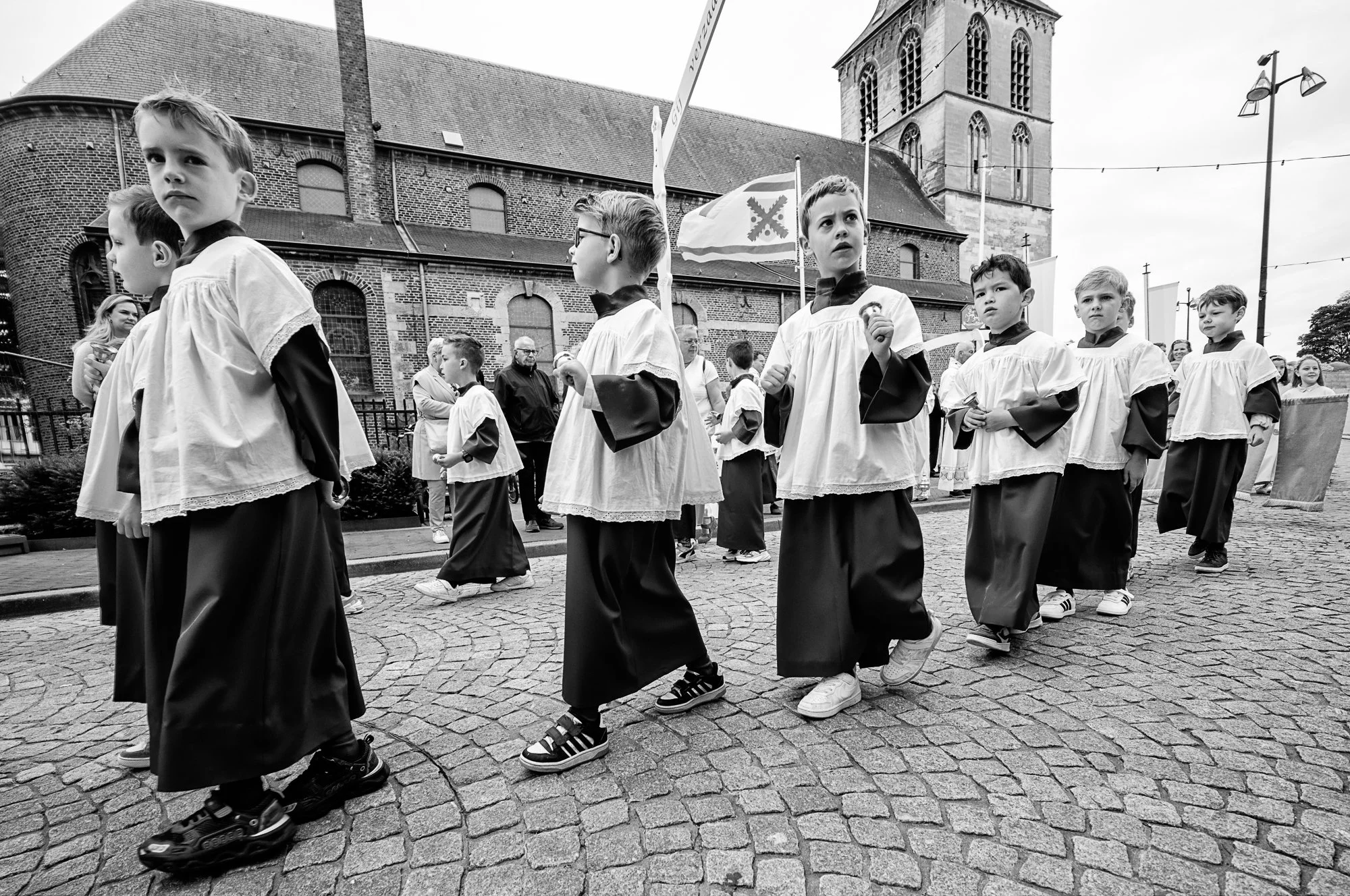
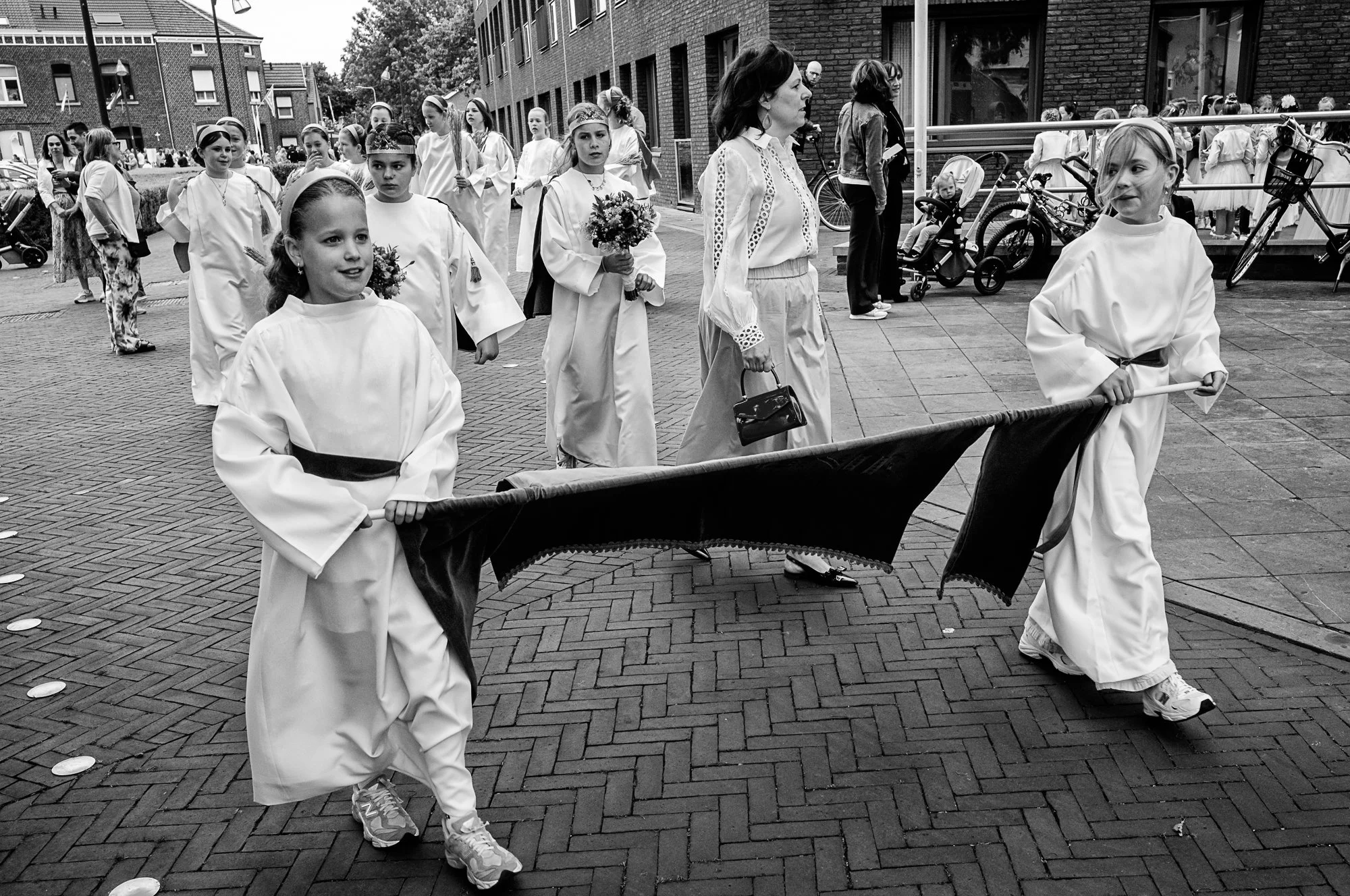
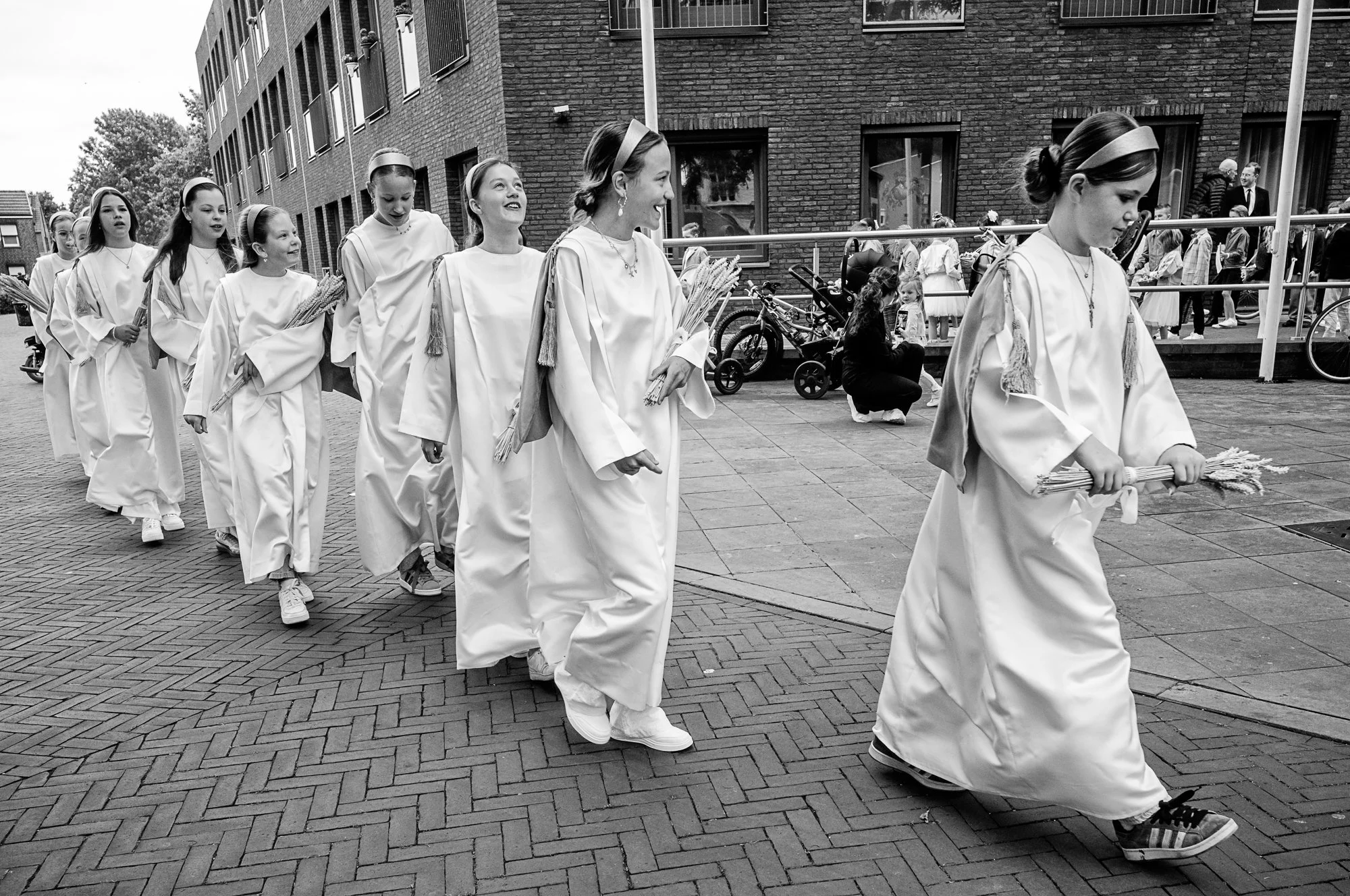
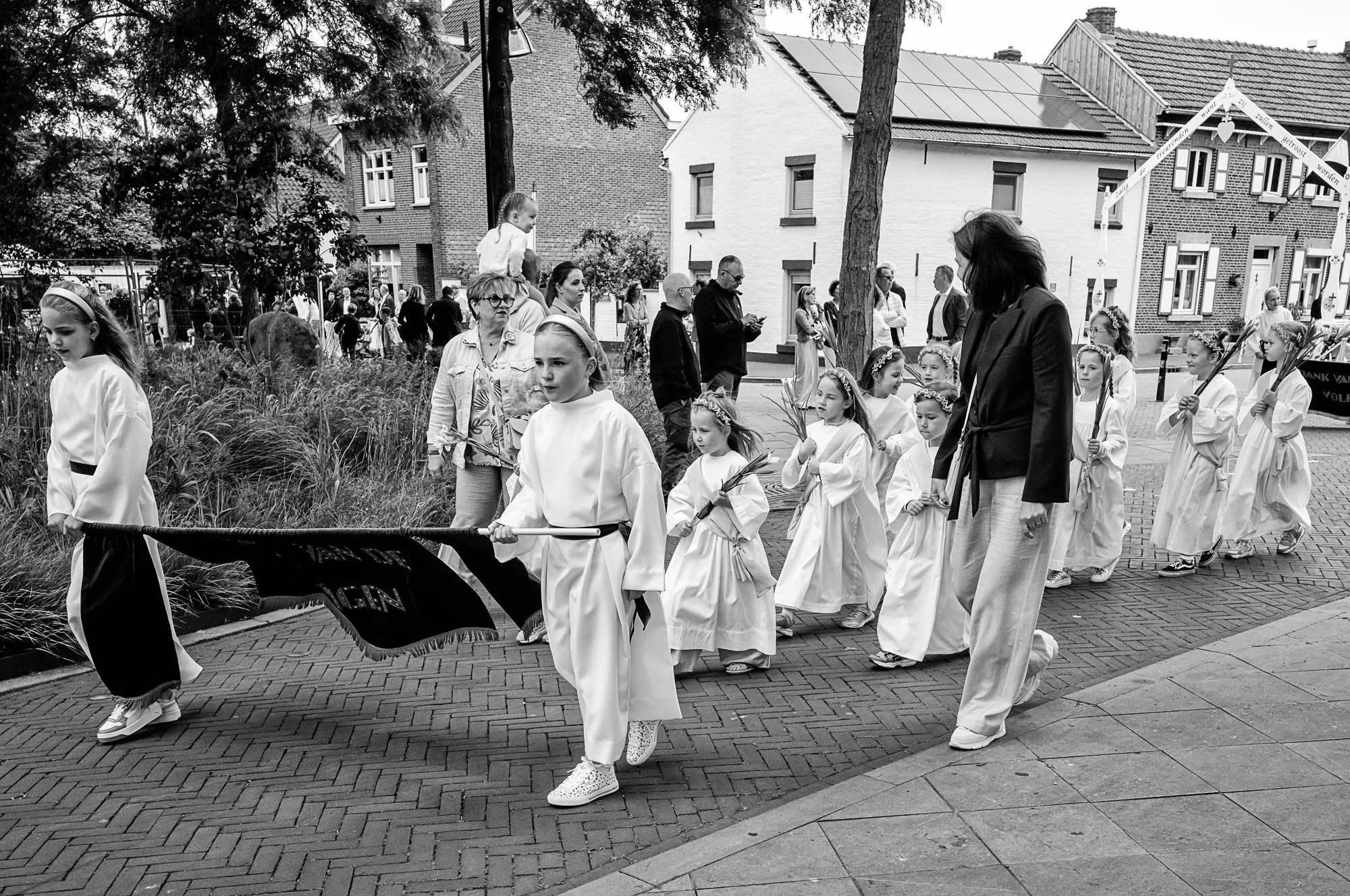
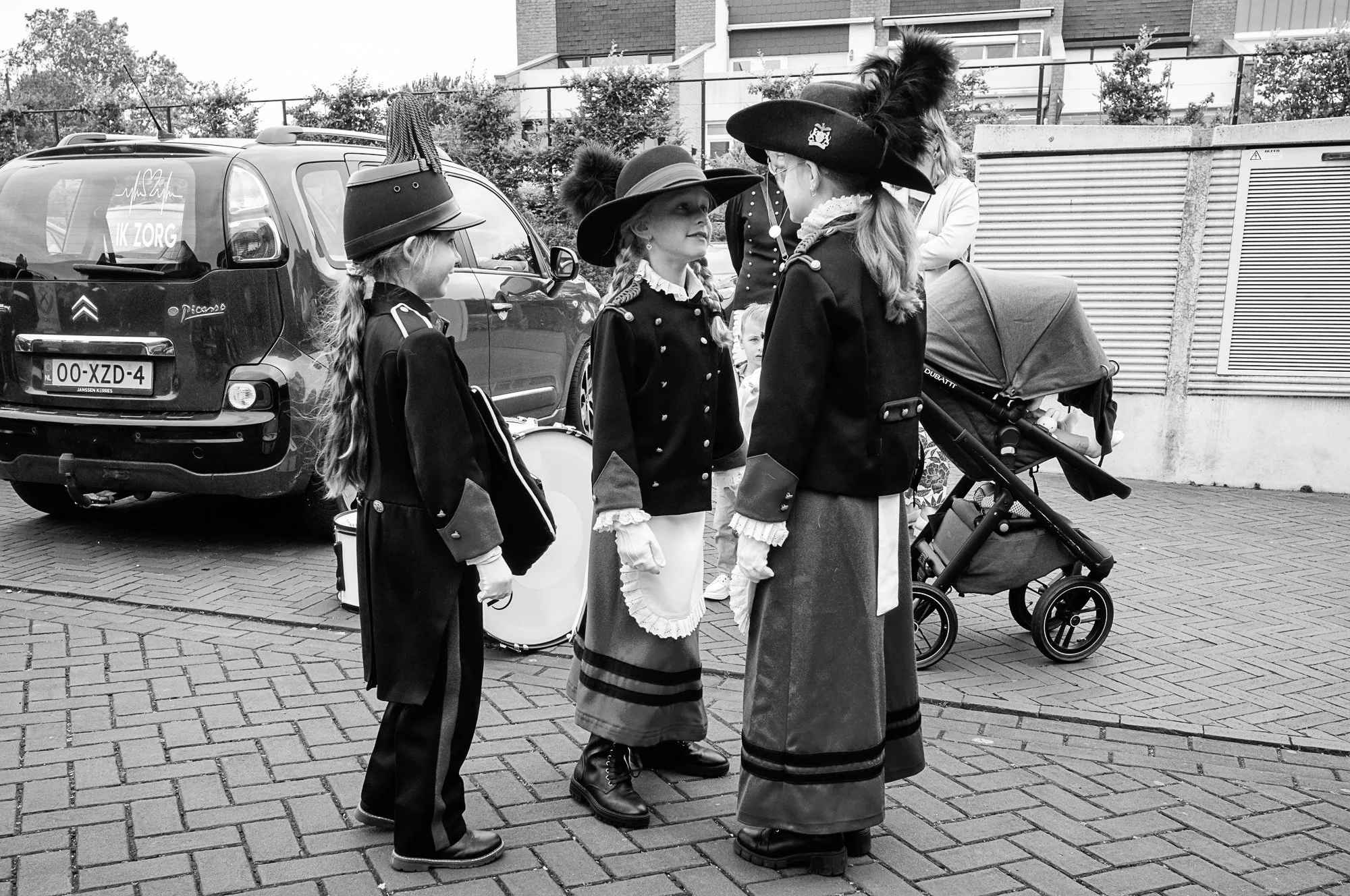
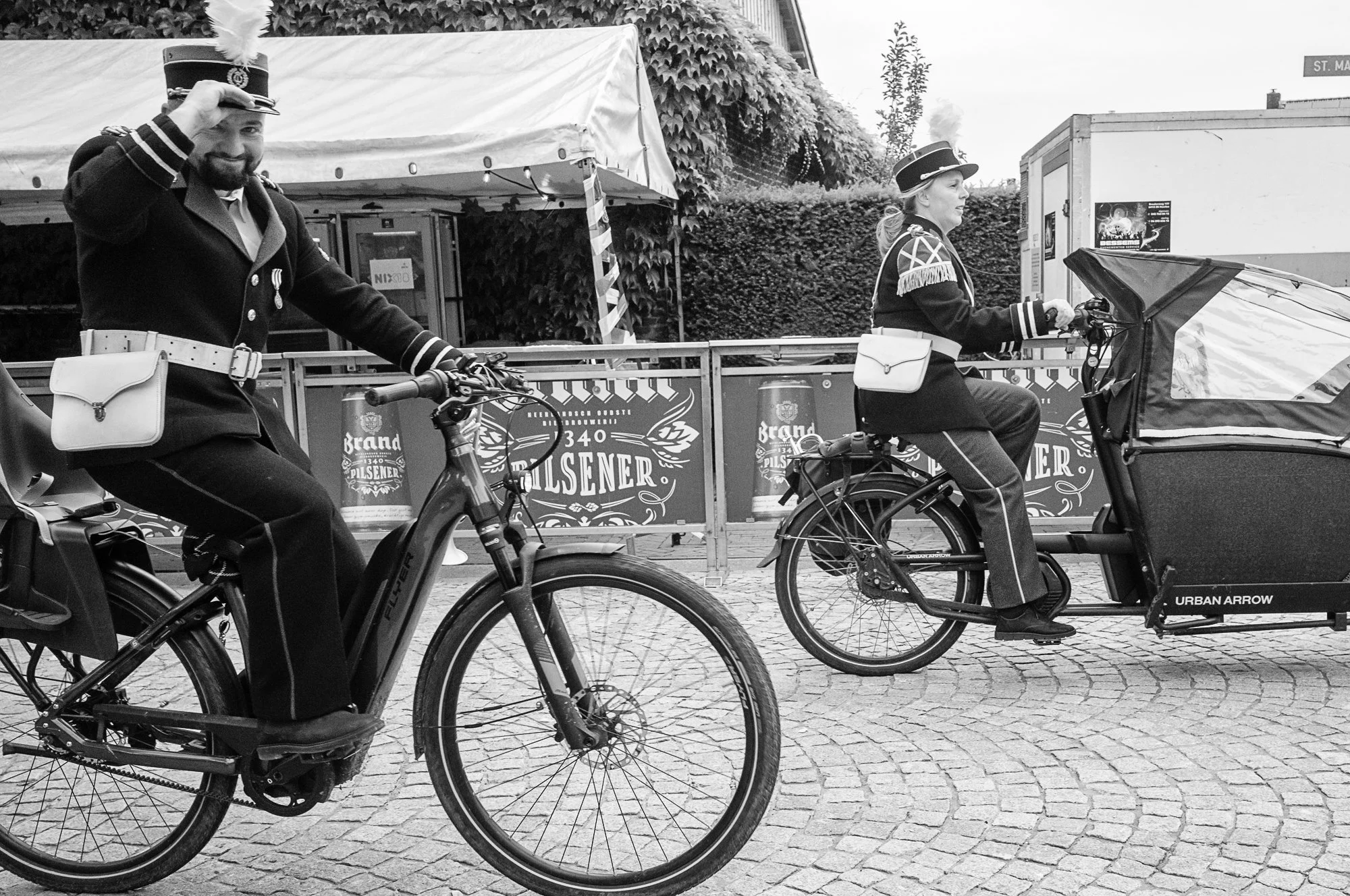
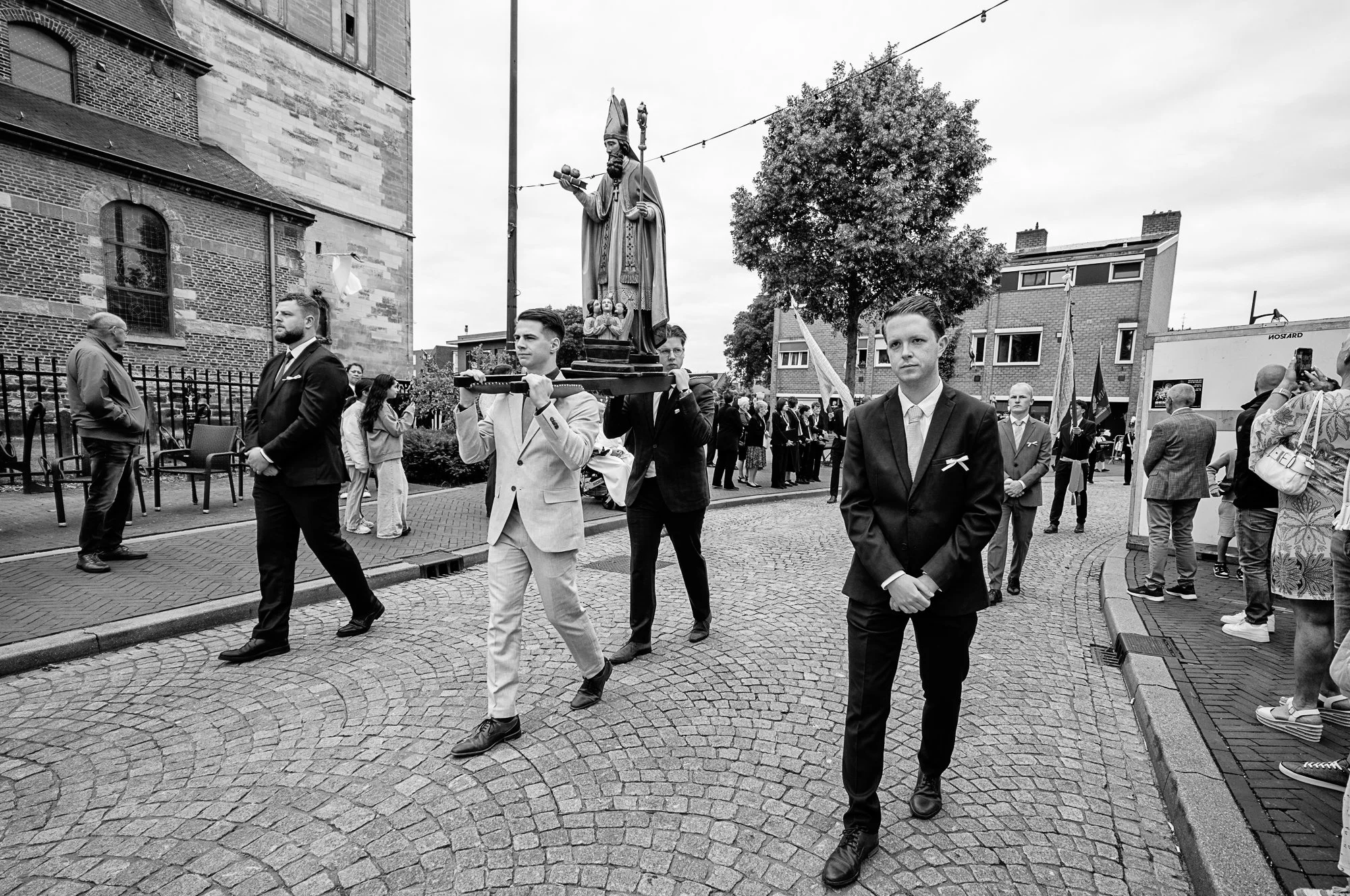
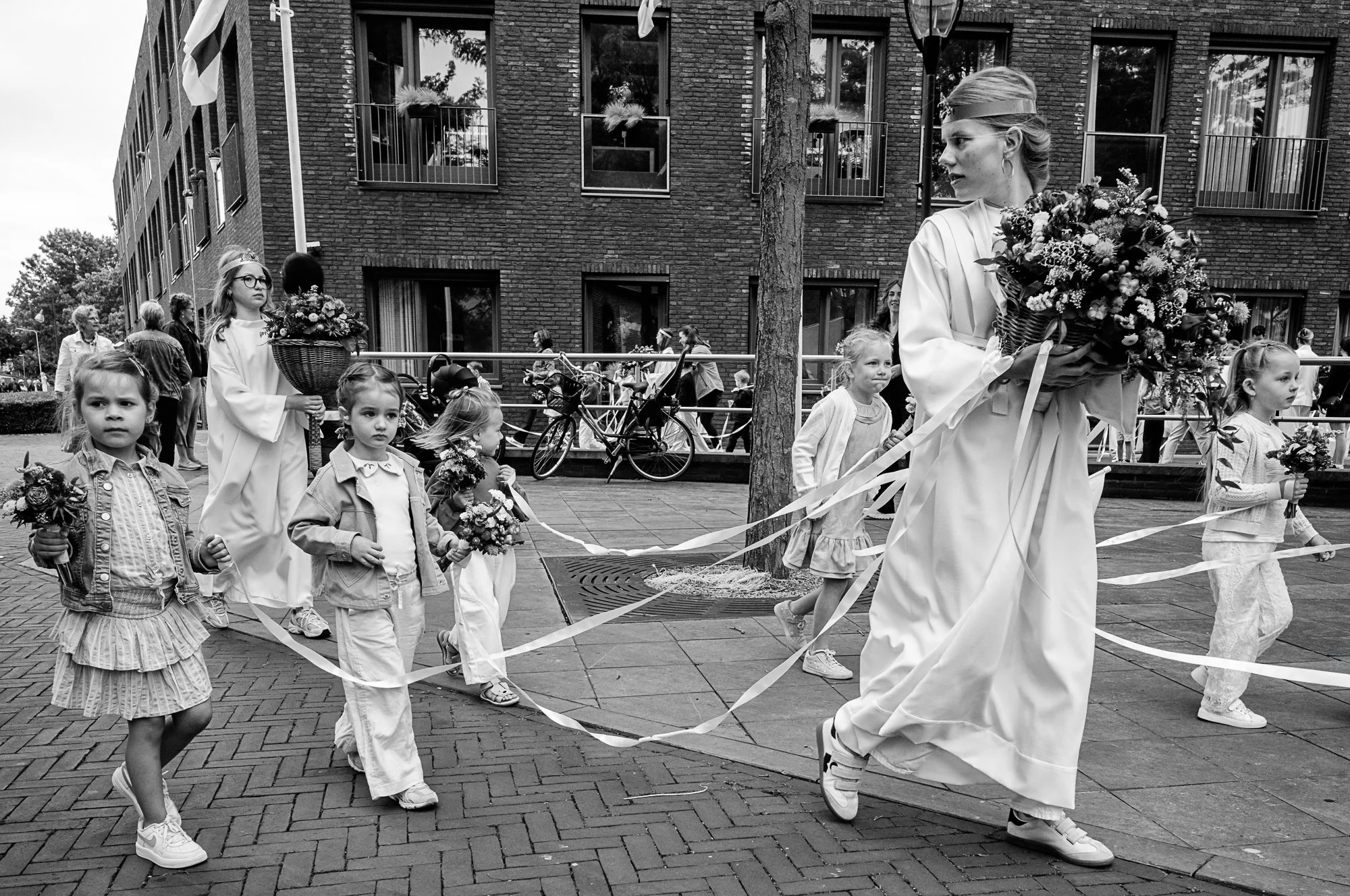
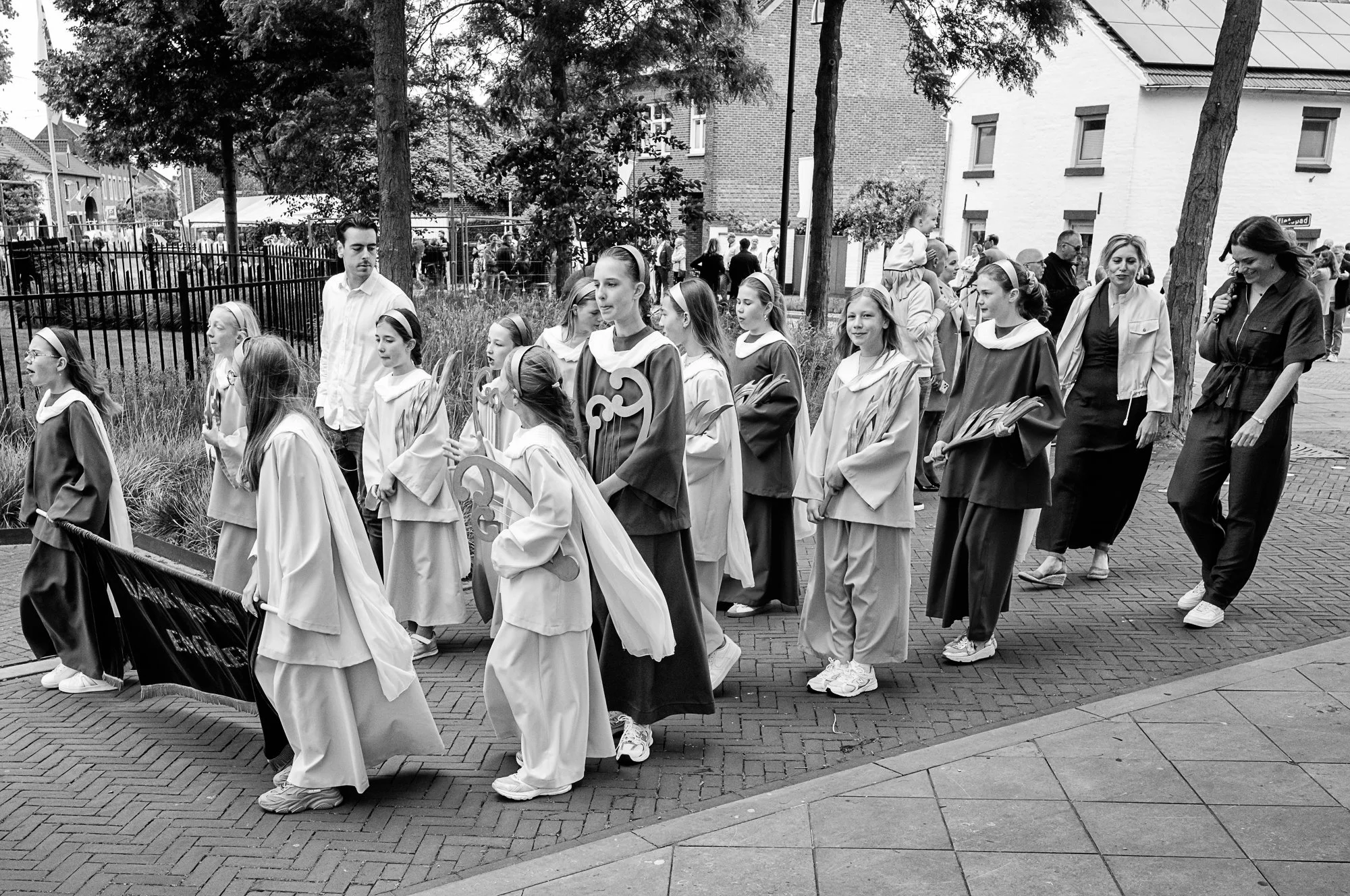
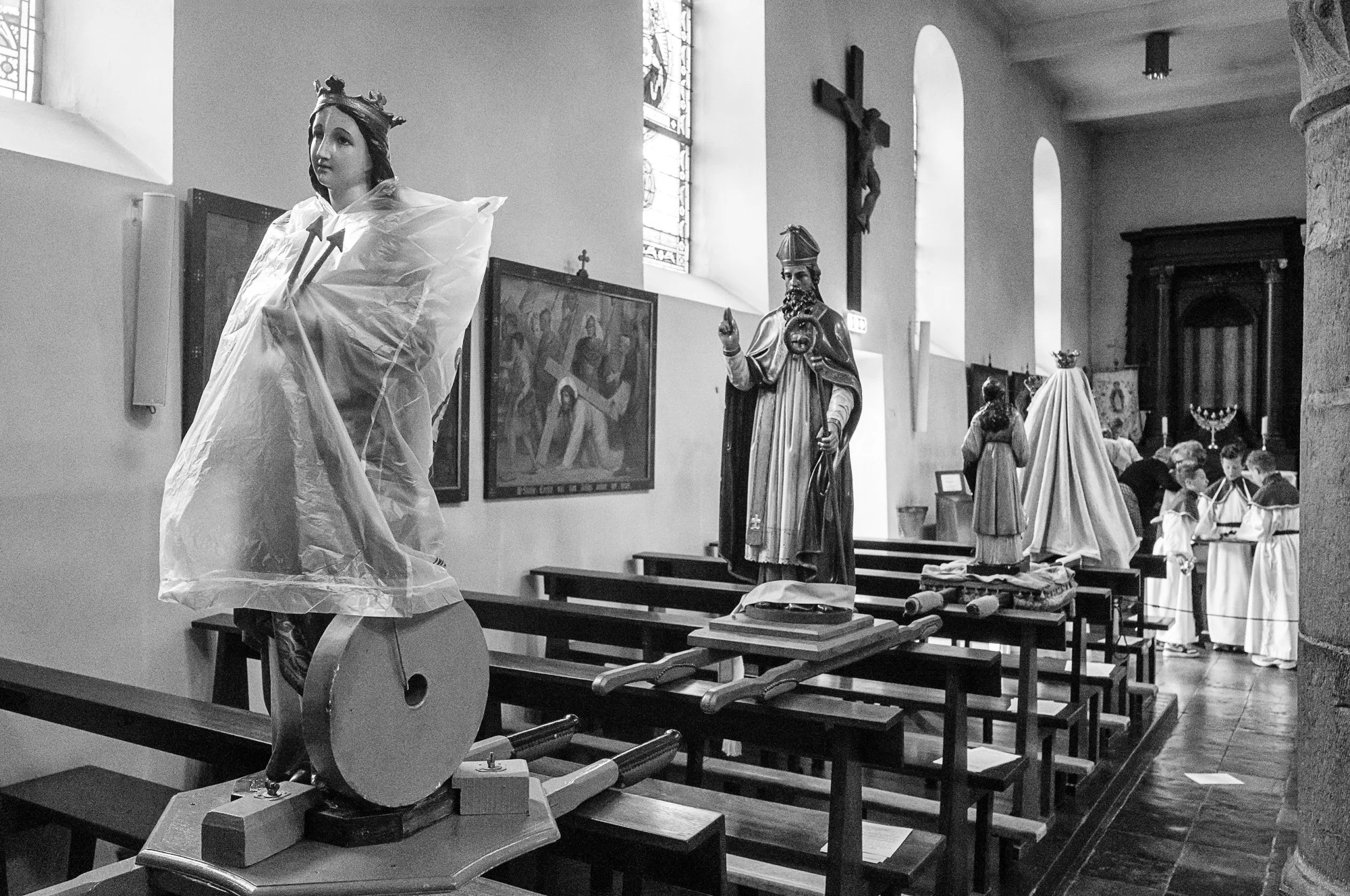
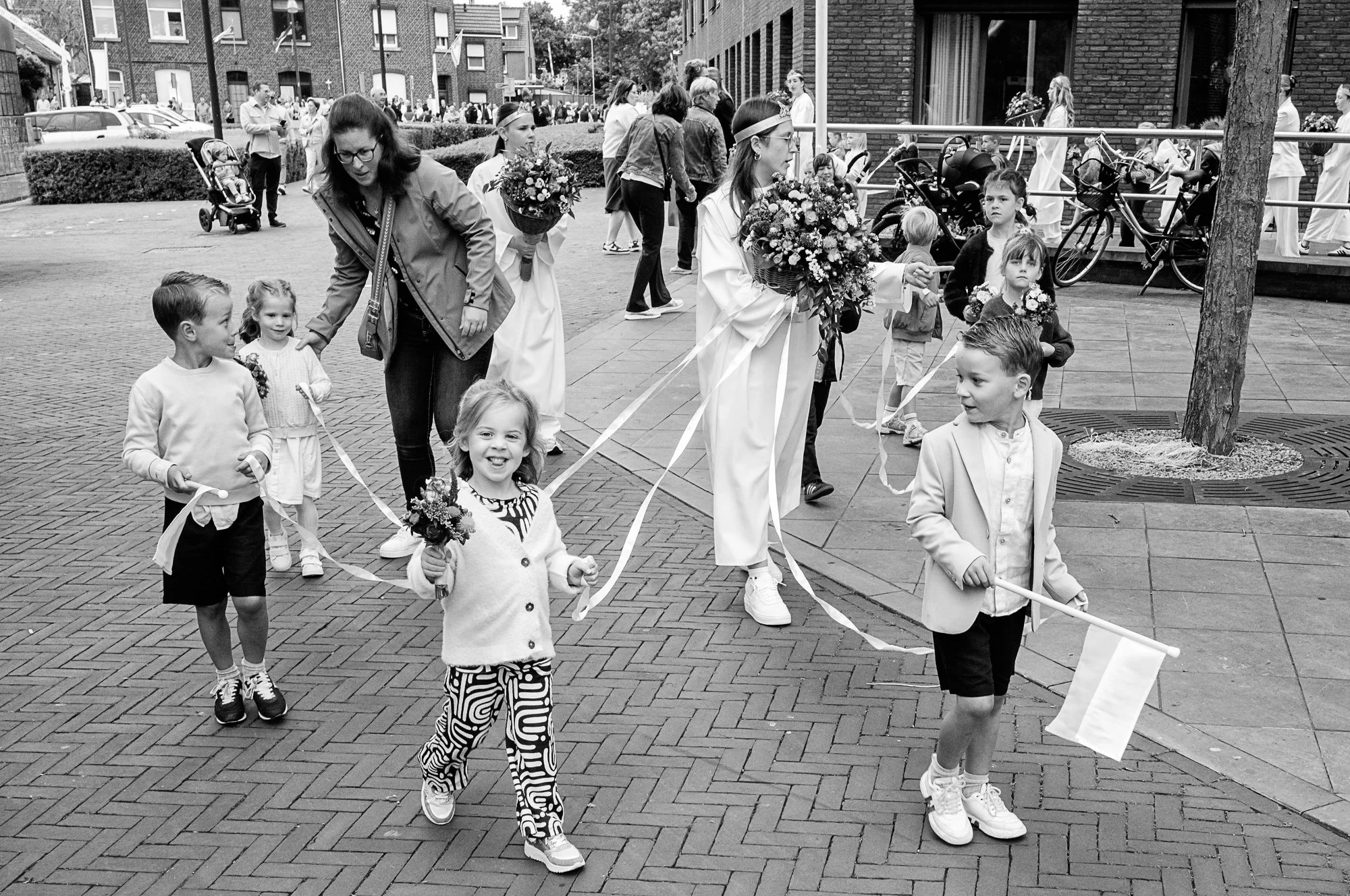
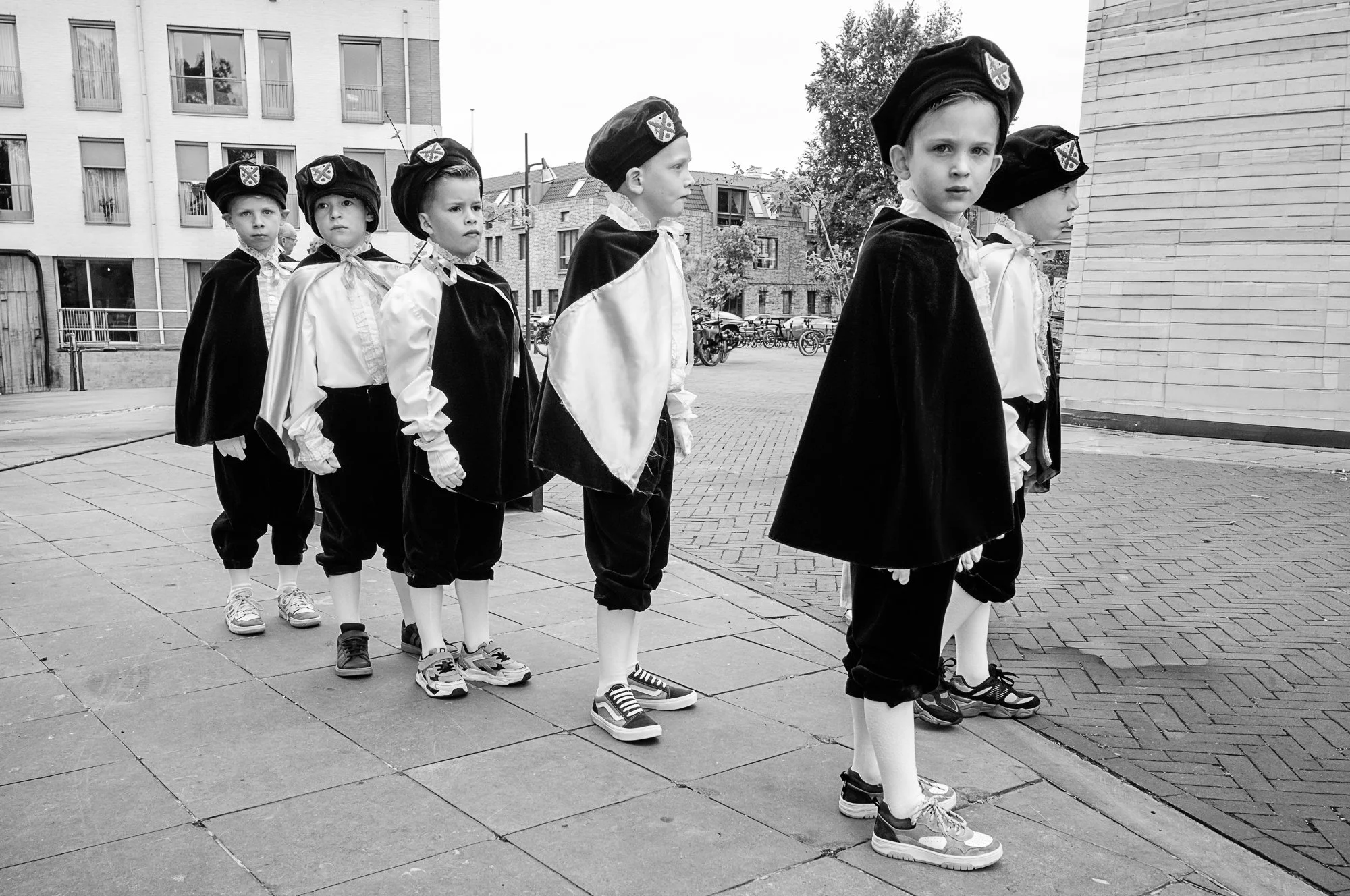
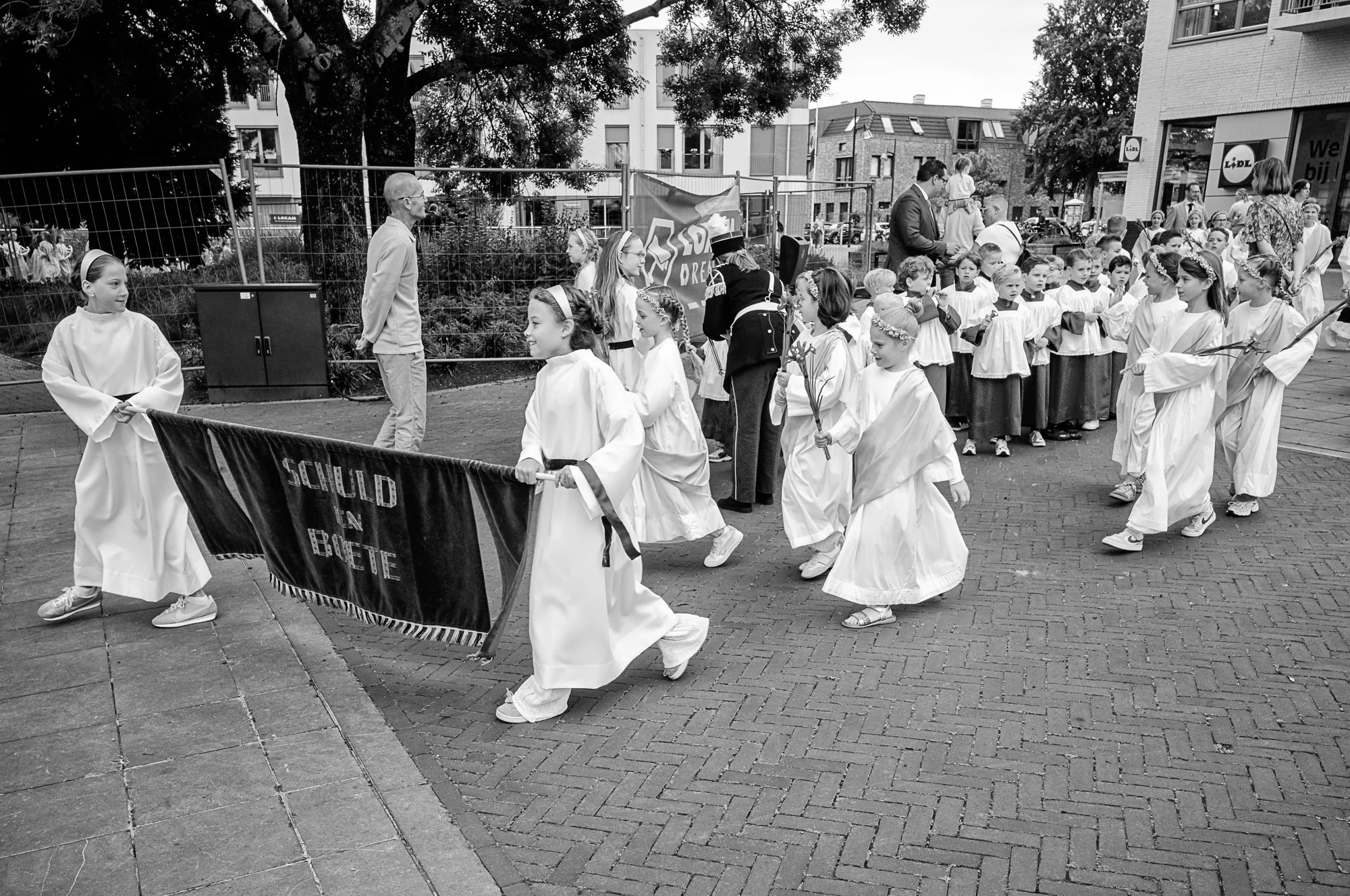
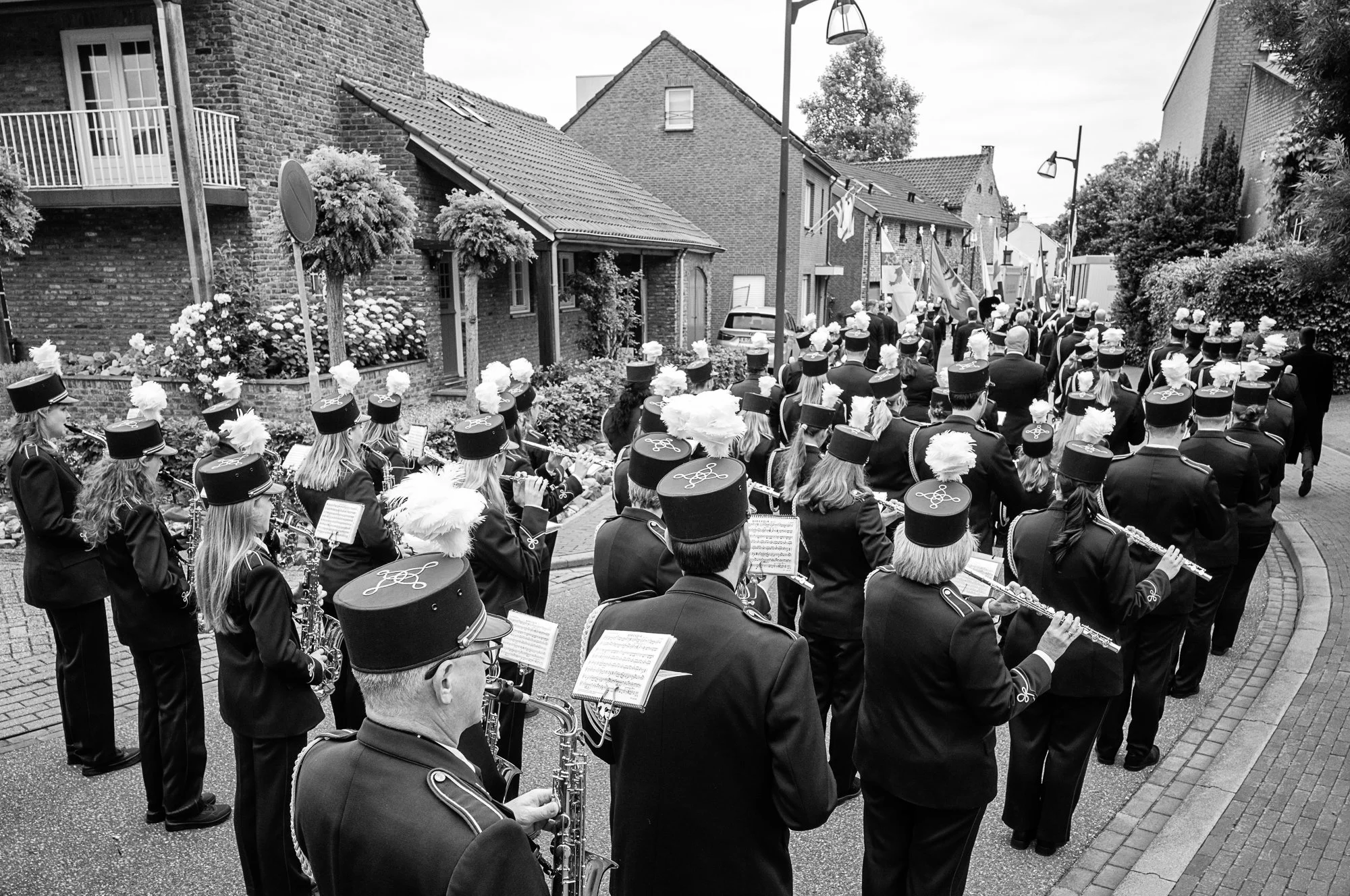
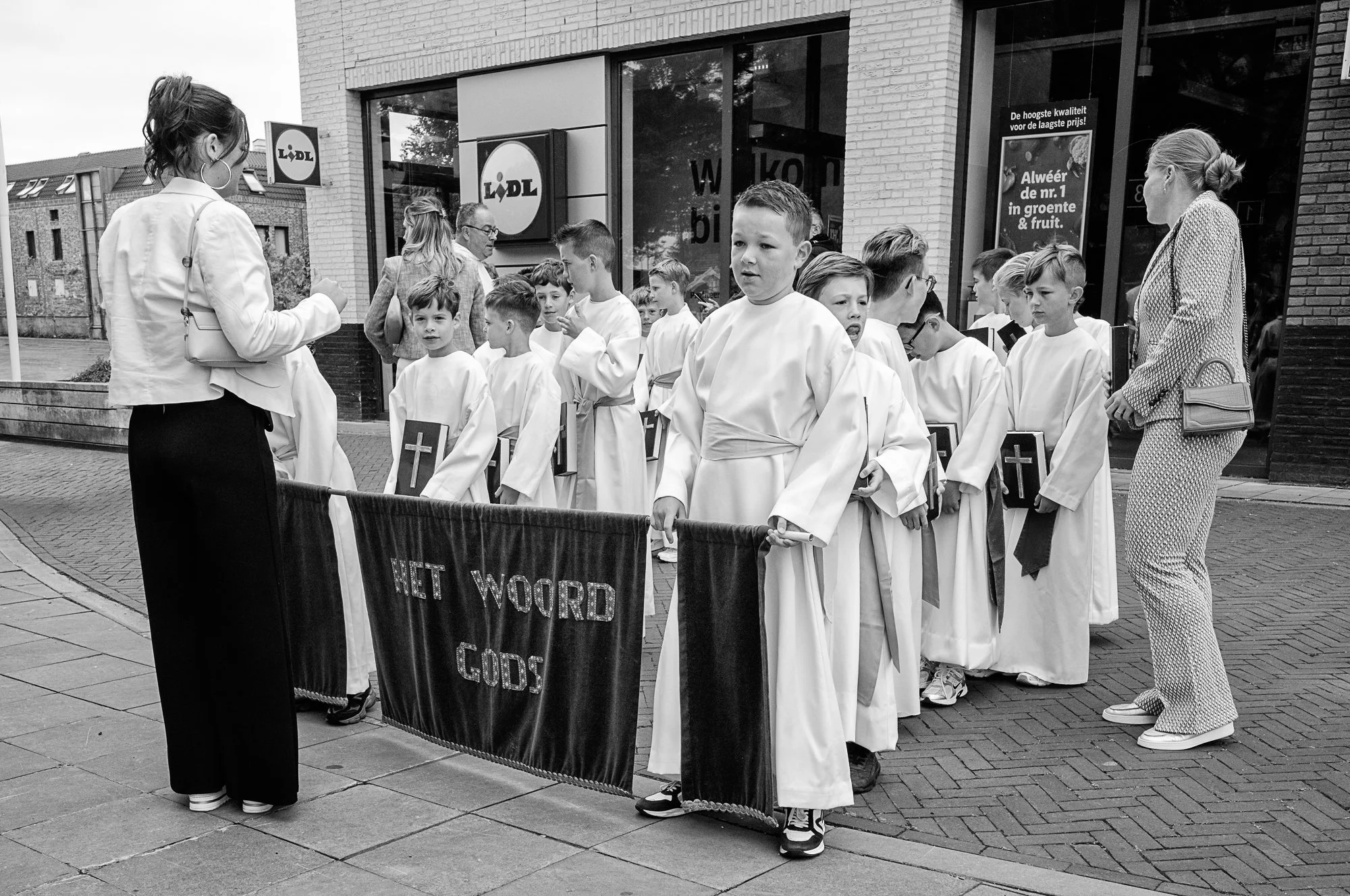
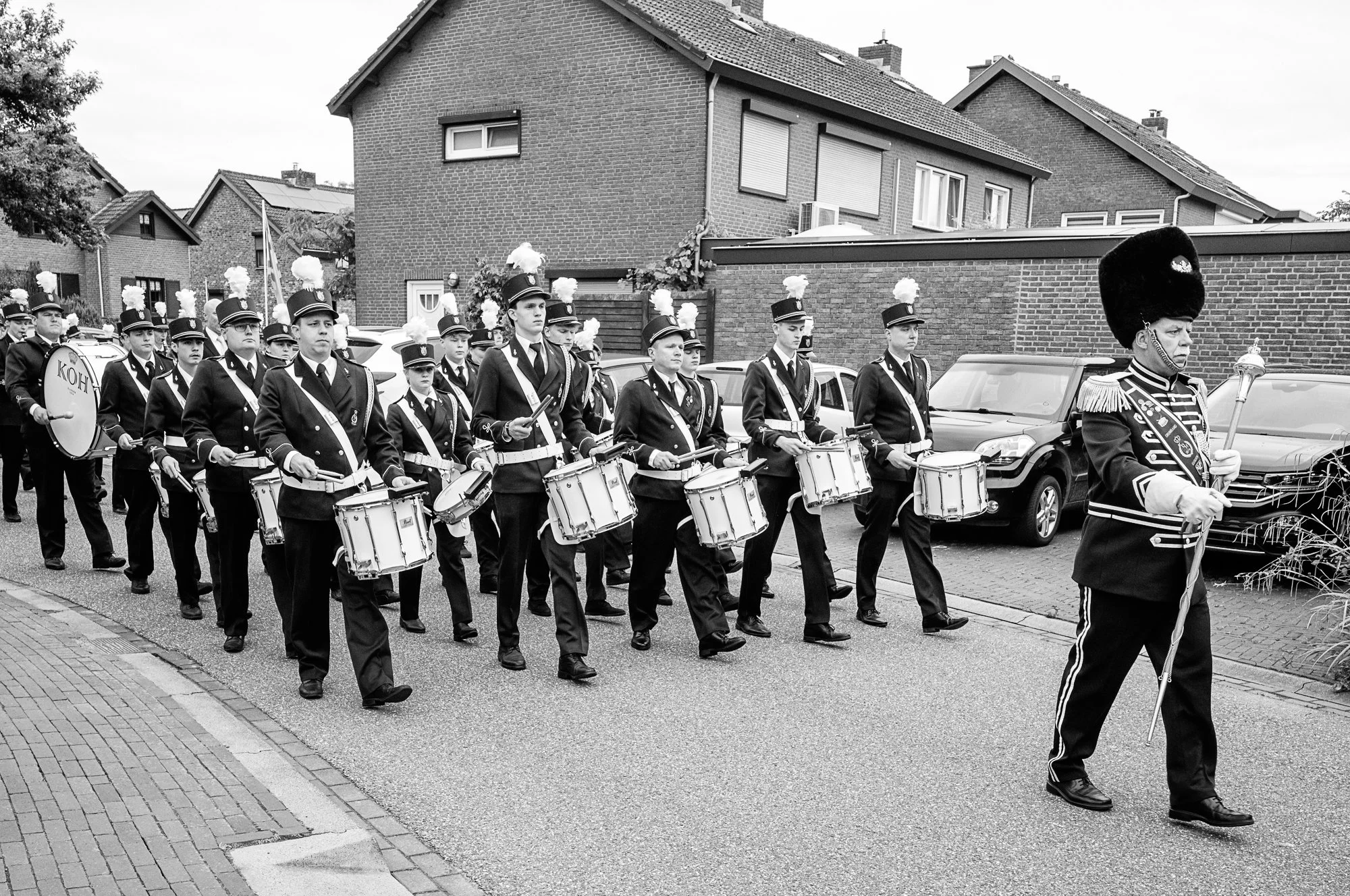
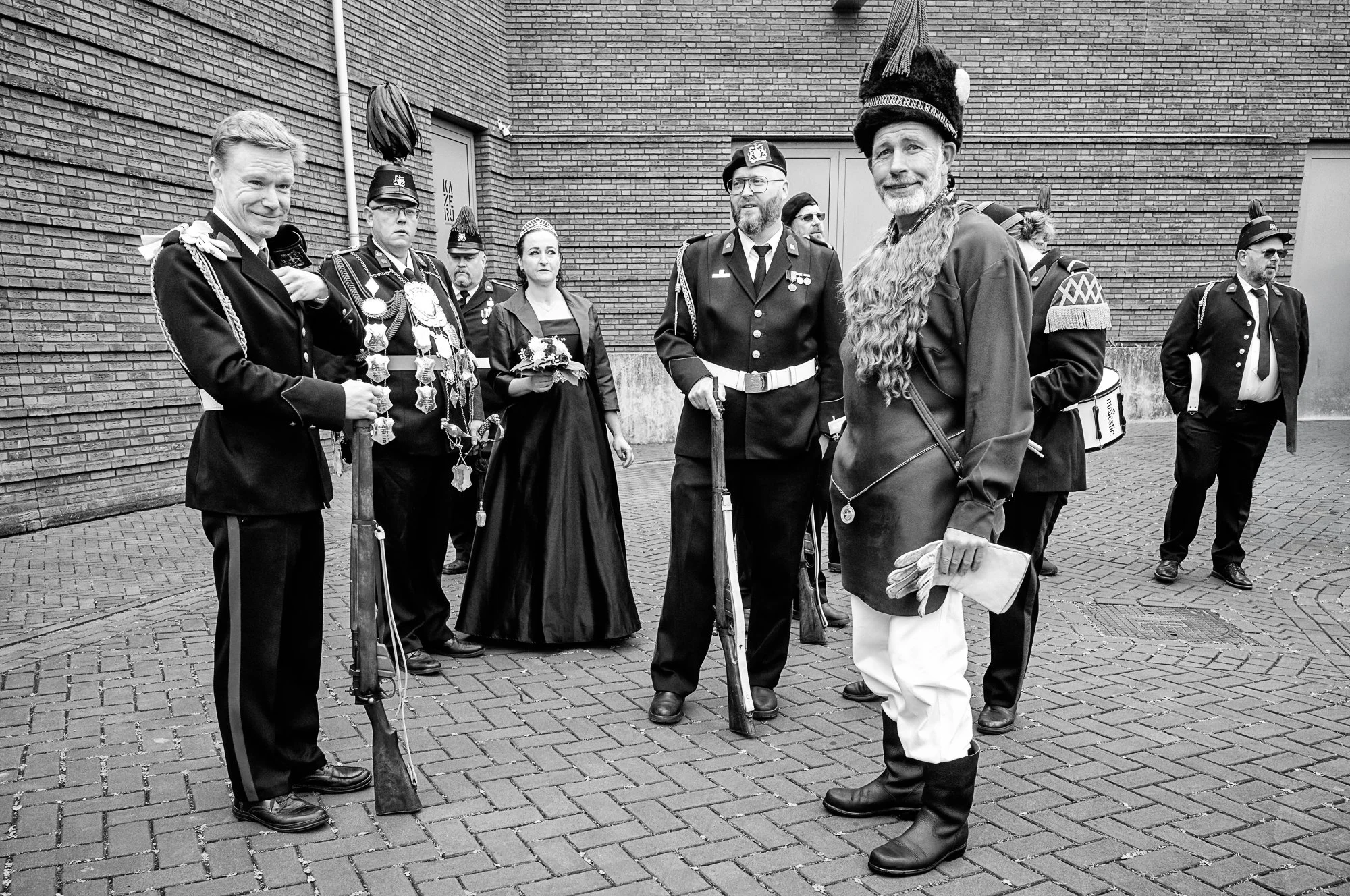
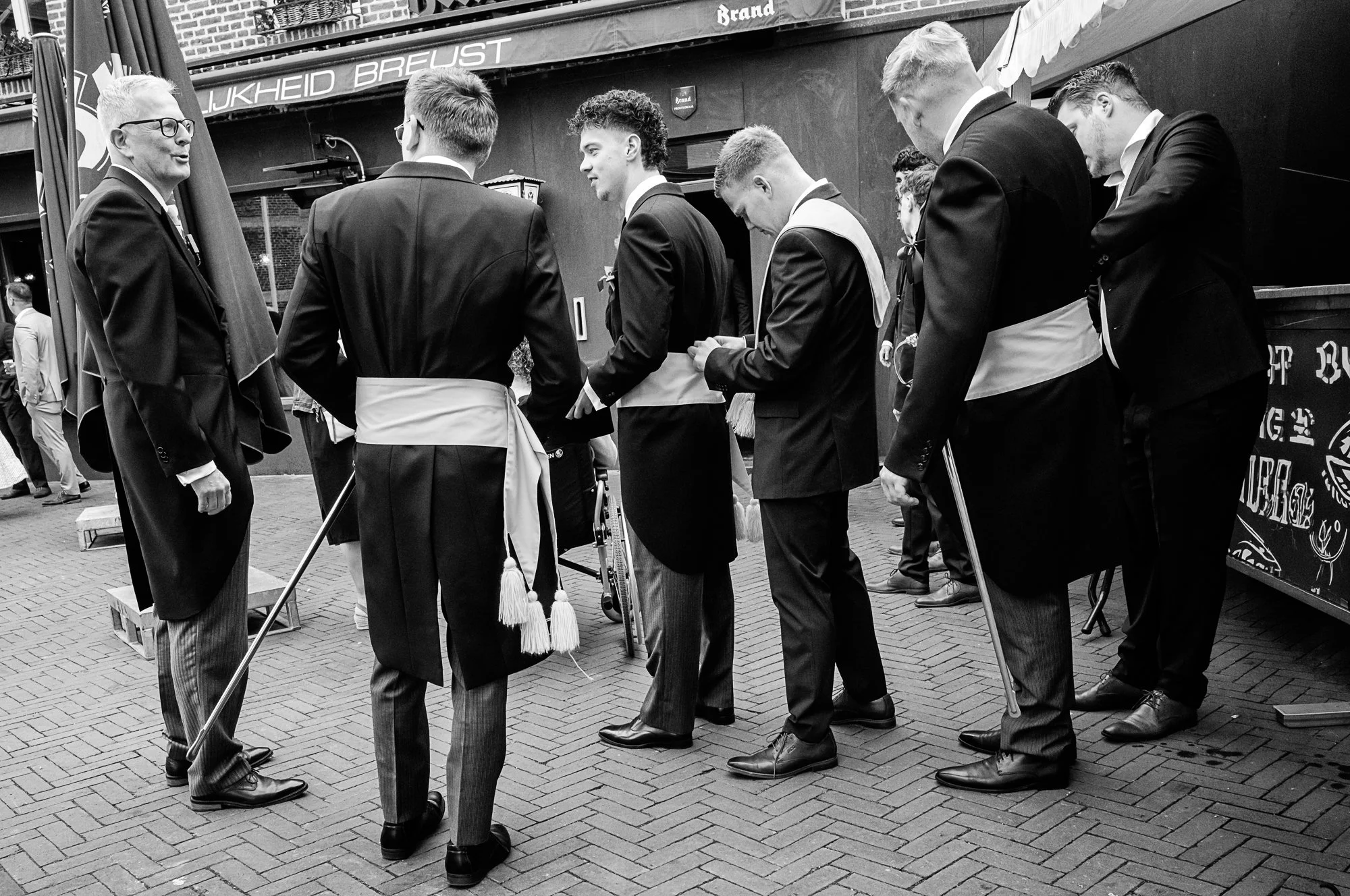
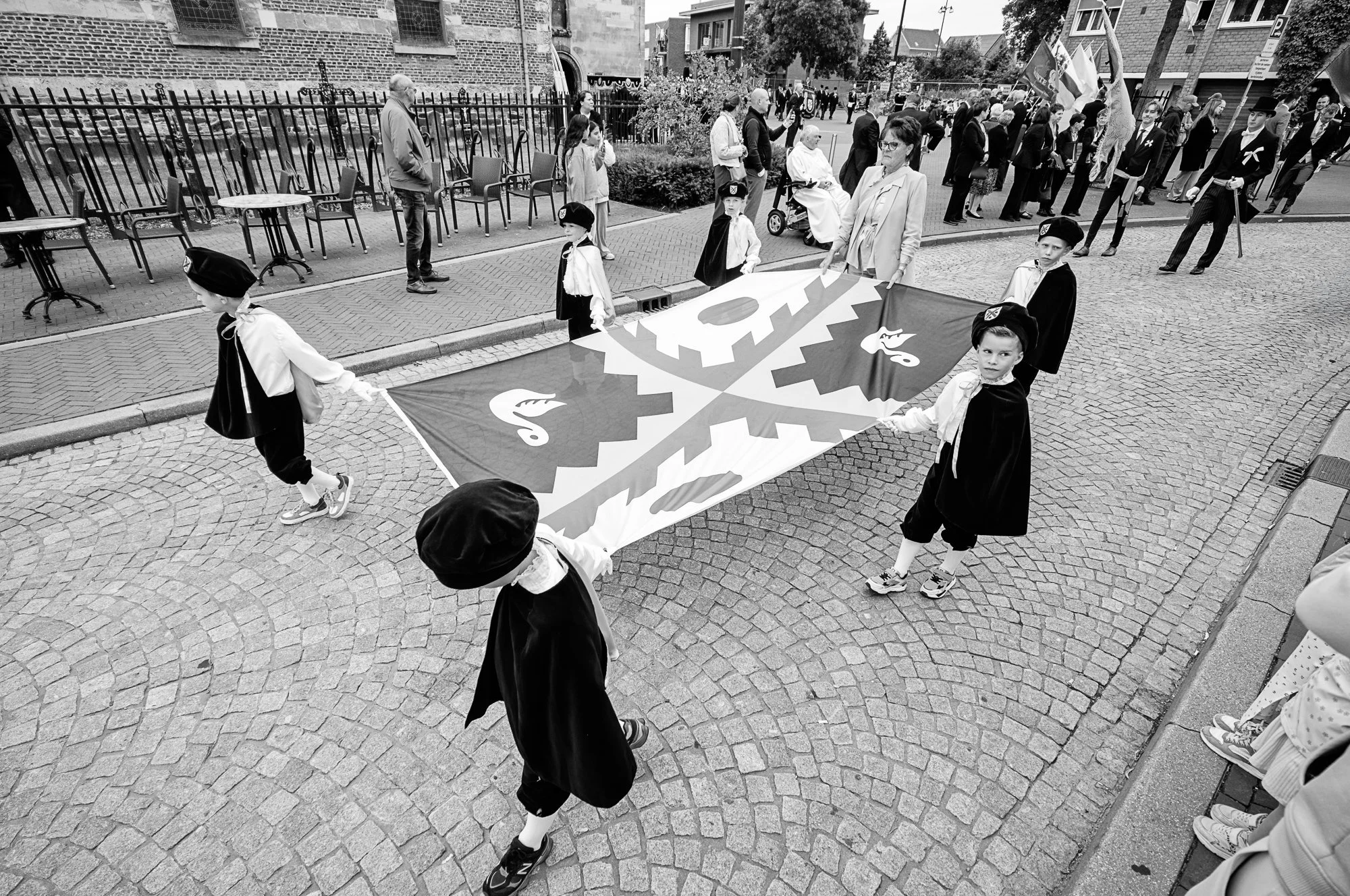
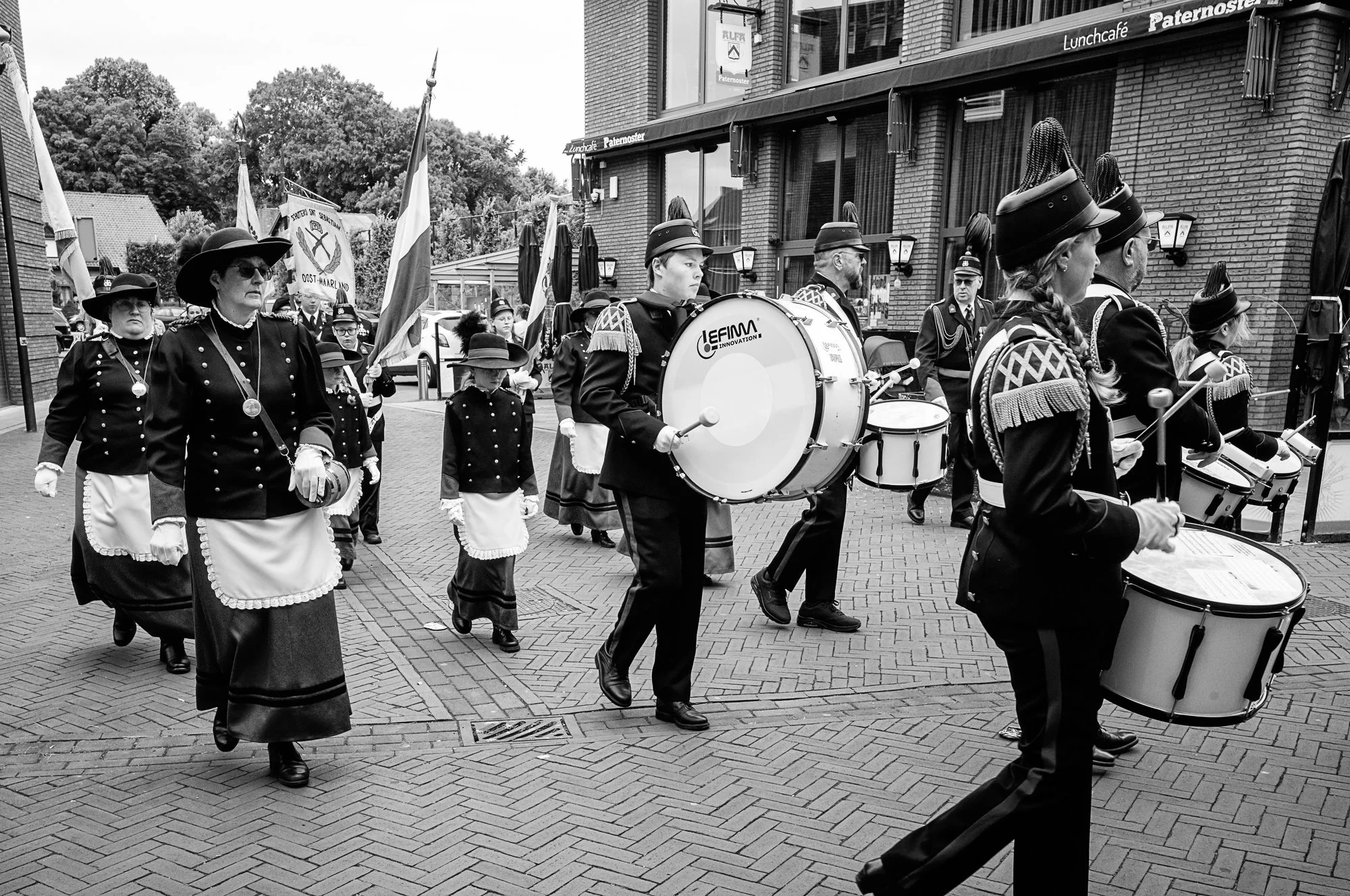
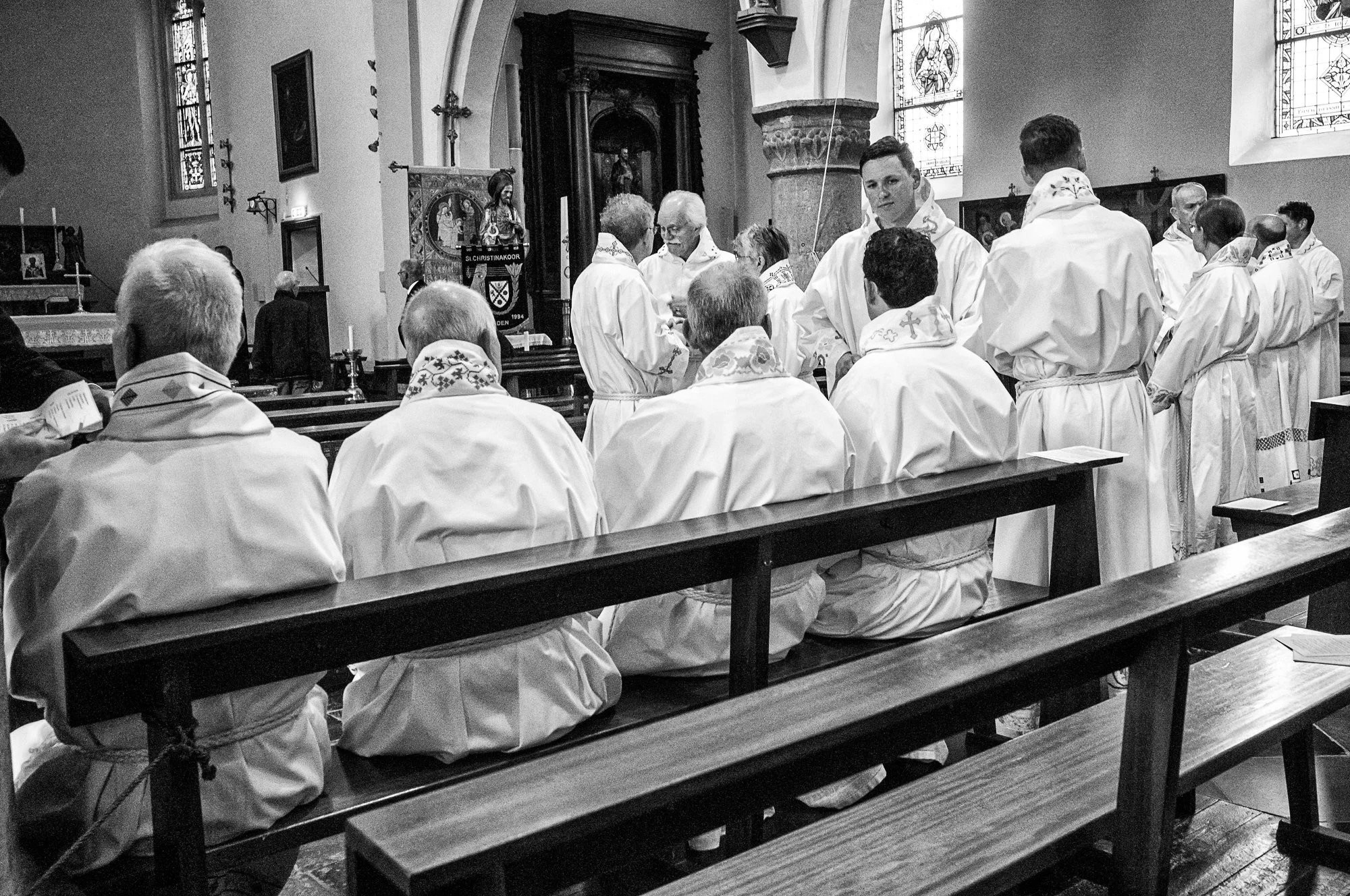
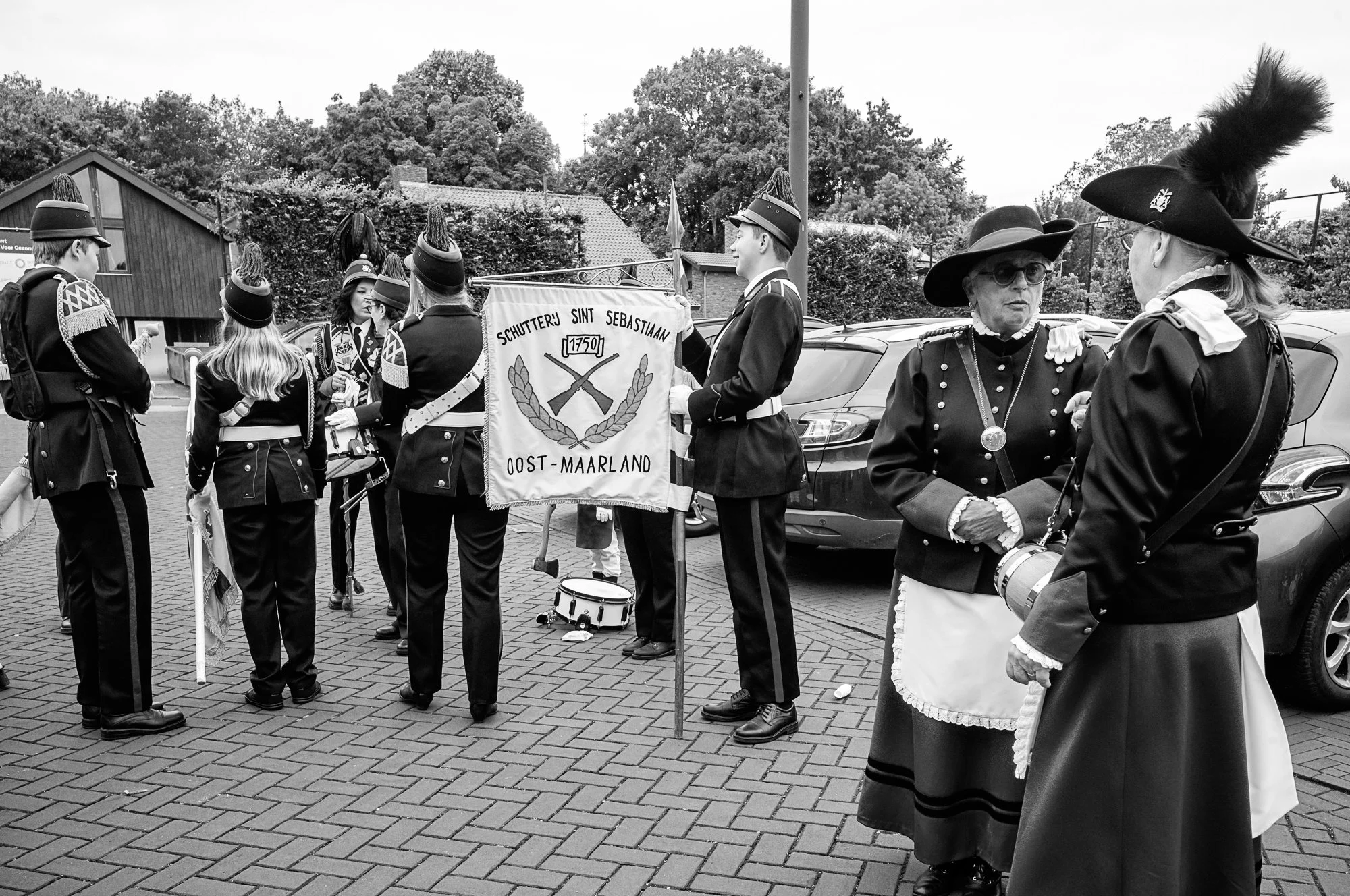
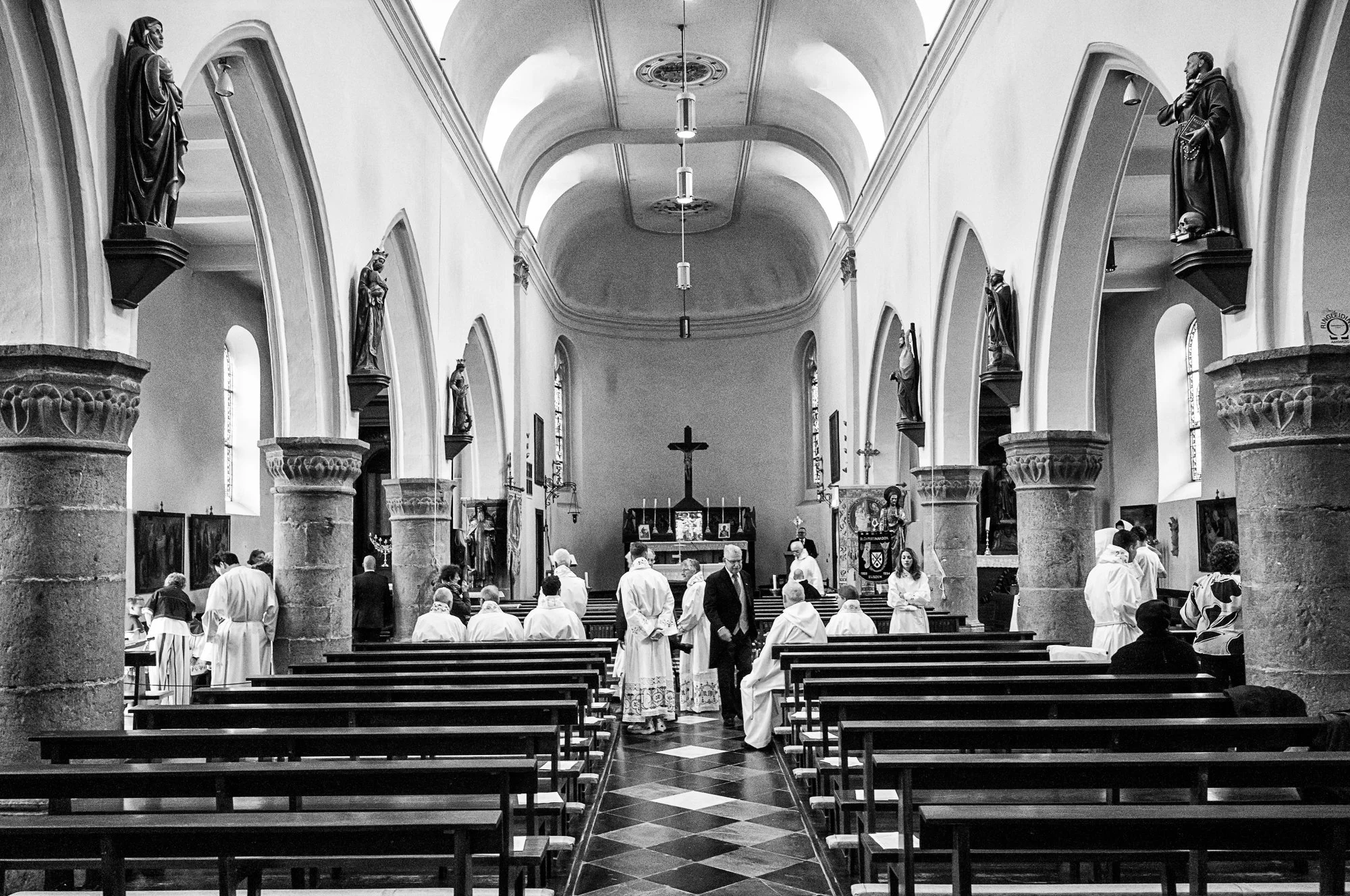
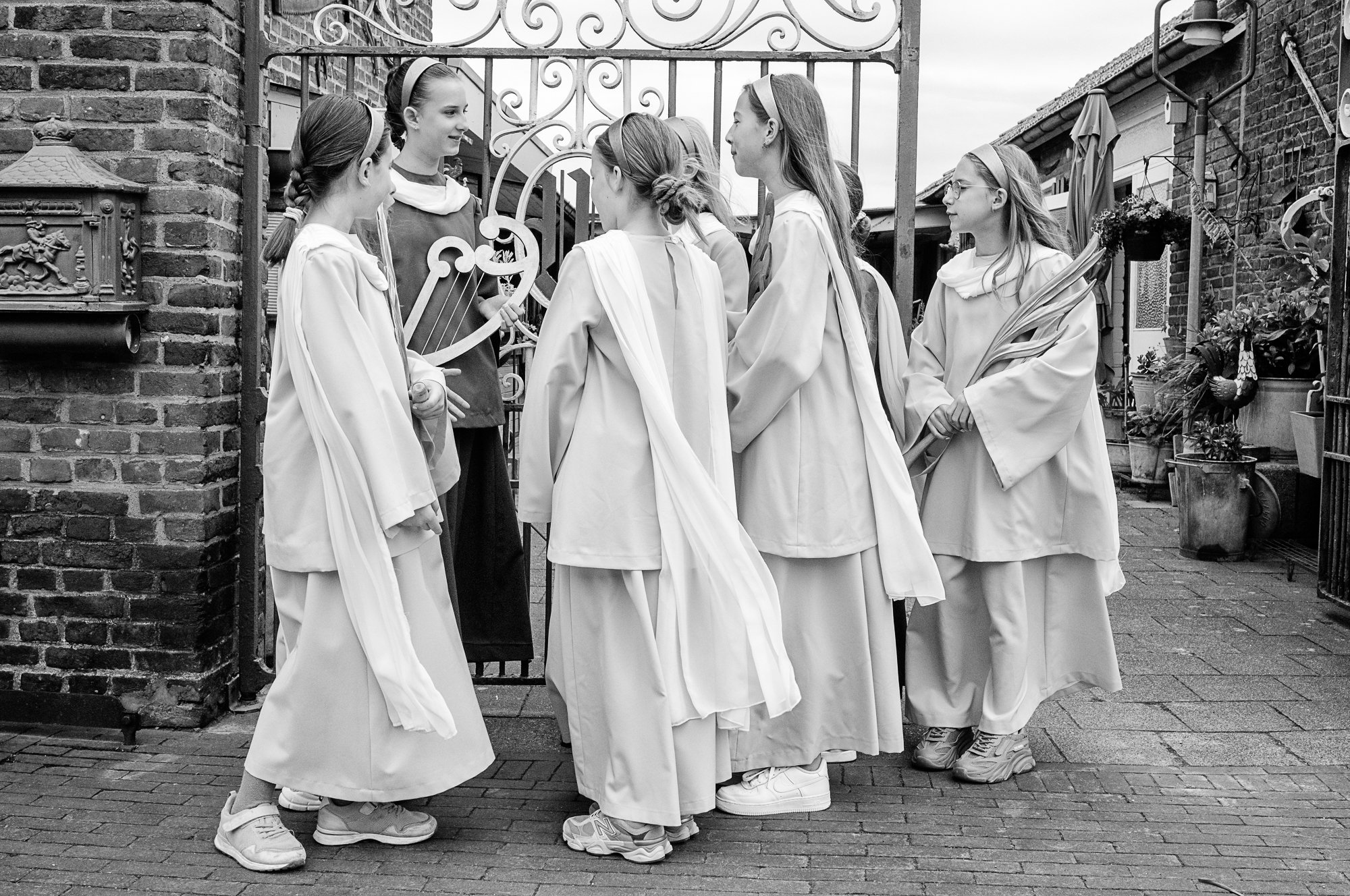
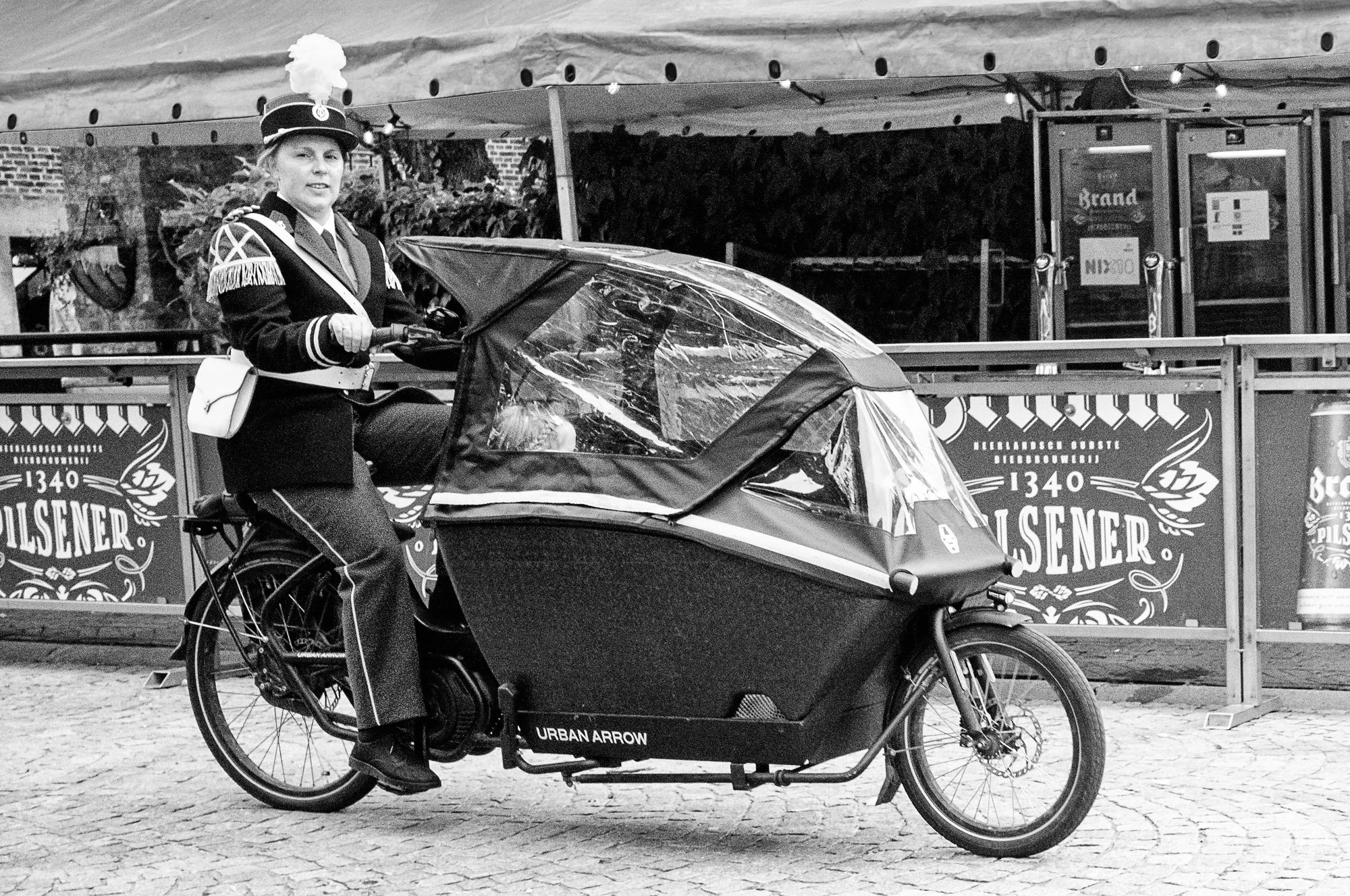
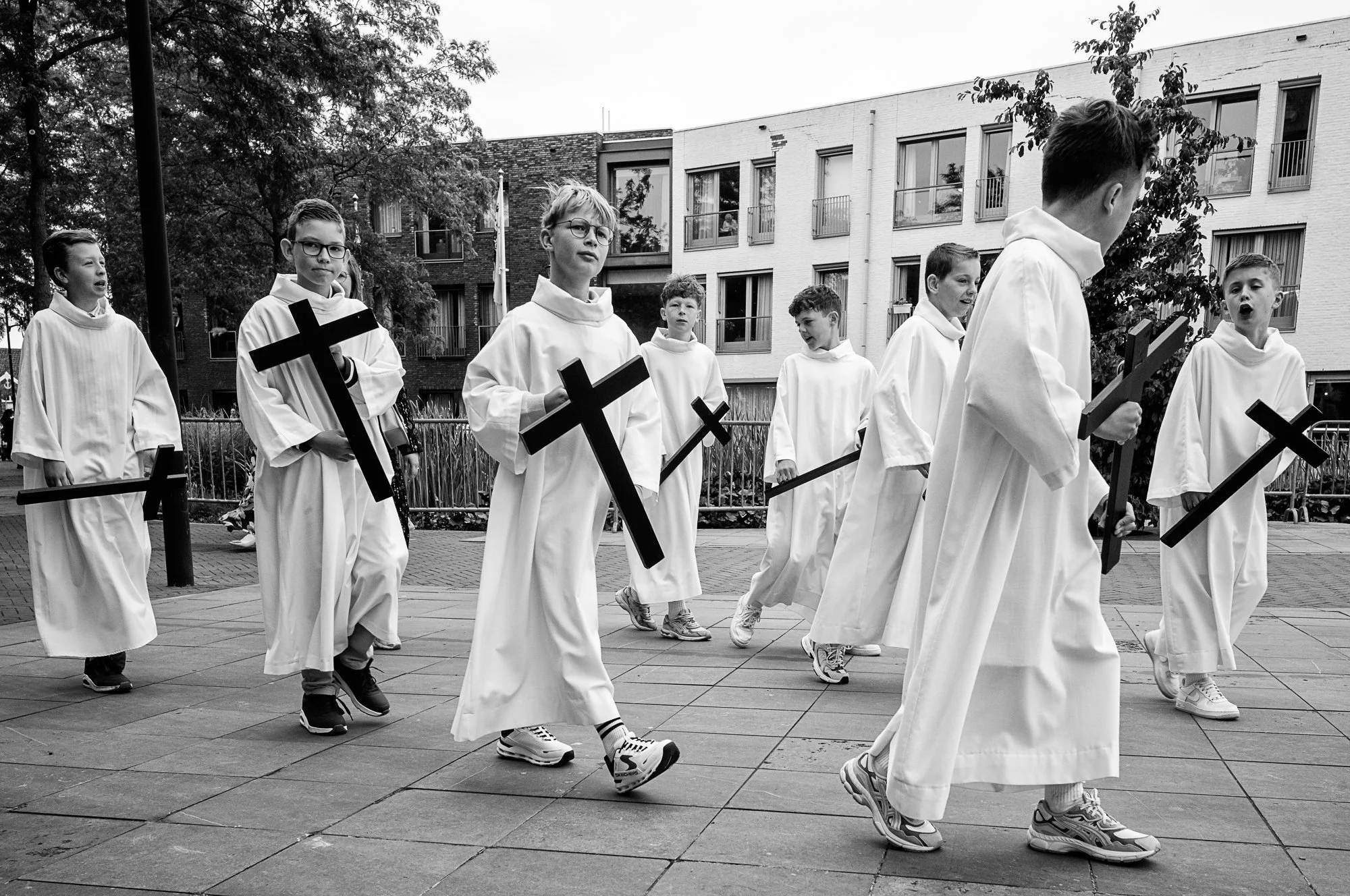
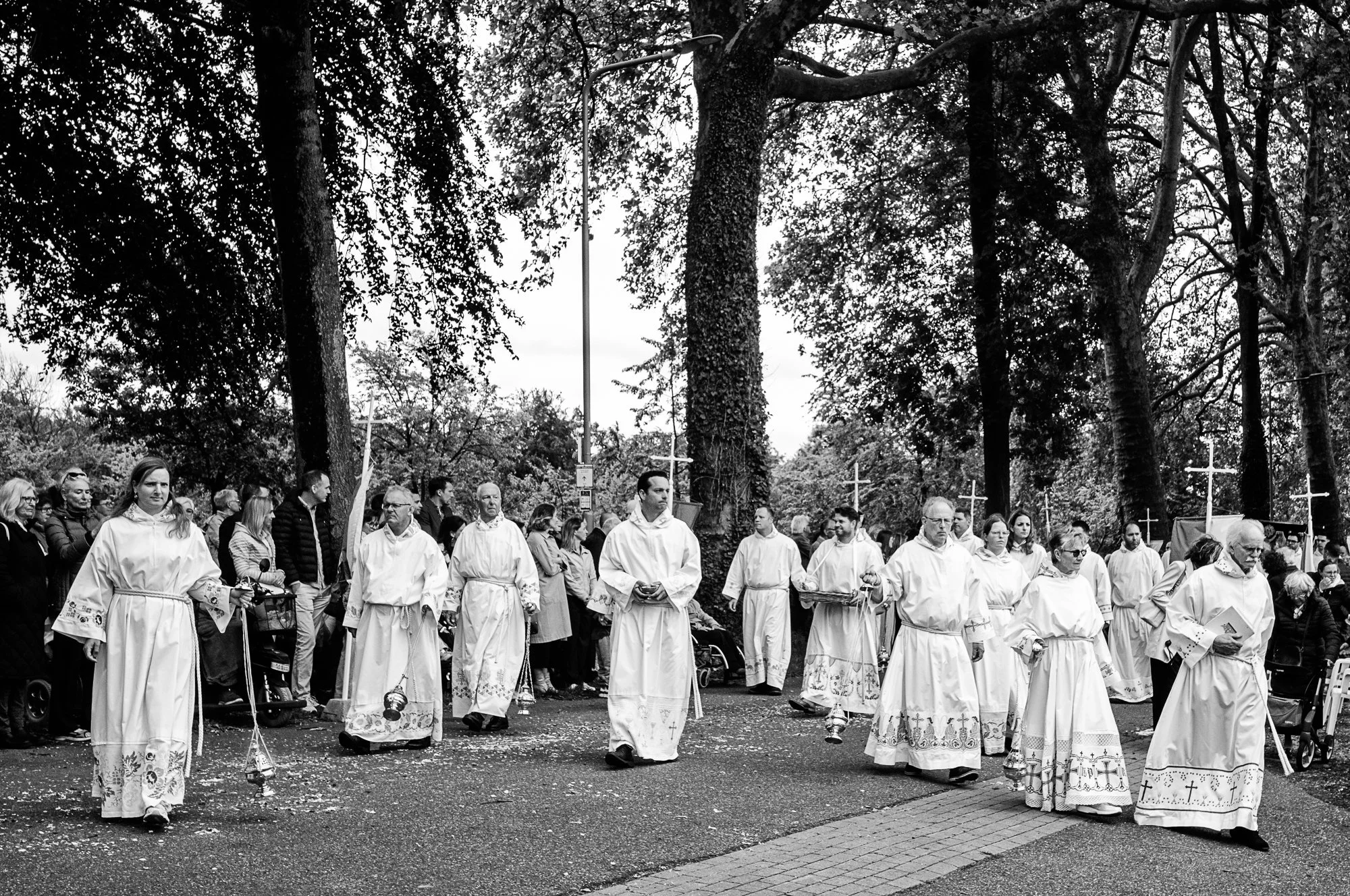
A slideshow of black-and-white photographs from the procession of the Bronk of Eijsden of 2026.
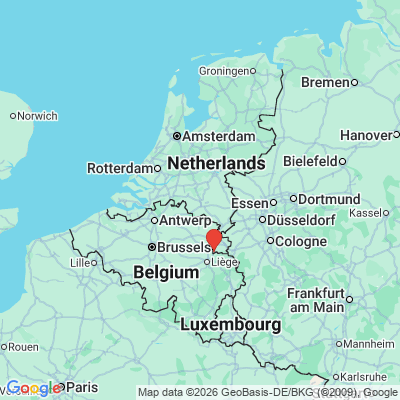
On Sunday morning, 7 June 2026, we visited the village of Eijsden, one of the southernmost villages in The Netherlands, located on the banks of the River Meuse, close to the Belgian border. We had come to see the famous Bronk, one of the oldest and most remarkable religious and cultural traditions in the country.
Unfortunately, we only had time for the morning part of the celebrations. We missed the afternoon procession, the Monday festivities, and the Tuesday events. After what we experienced, however, there is little doubt that we will return. Perhaps in 2027.
At first sight, the Bronk looks like a religious procession. And indeed, its origin lies in the medieval Feast of Corpus Christi, introduced throughout the Catholic world in the thirteenth century. In Eijsden, however, the Bronk is much more than a church event. It is a village-wide celebration that brings together almost every generation and every part of the community.
Long before the procession begins, the village is already awake. Streets are decorated, temporary altars are erected, flowers are arranged, and families prepare for a day that many residents consider the most important event of the year. The procession itself passes through streets lined with spectators, musicians, children, families, members of local associations, and representatives of traditions that have been passed down for centuries.
What impressed us most was not the religious aspect, important though it remains for many participants. It was the sense of community.
The Bronk is not organised for tourists. It is not a commercial festival. It is not designed to attract large crowds from outside the region. Instead, it is a celebration created by the village for the village itself.
That may sound simple, but in modern Europe it is becoming increasingly rare.
During the procession we saw people who clearly knew each other well. Families participated together. Local music societies marched proudly through the streets. Young people played important roles alongside older generations. Traditions were not presented as museum pieces but as living parts of daily life.
A documentary produced by regional broadcaster L1 (see above) captures this atmosphere beautifully. Young men form the traditional jonkheid groups, local harmonies spend weeks preparing their music, and volunteers create flower carpets and temporary shrines. Many participants describe the Bronk not primarily as a religious obligation but as a tradition they inherited from parents and grandparents and wish to pass on to future generations.
The history behind the celebration reaches back more than seven centuries. The Feast of Corpus Christi was introduced in the Prince-Bishopric of Liège, the historic region to which Eijsden belonged culturally and religiously for many centuries. The feast itself was inspired by the visions of Juliana of Cornillon, a nun from the Liège area. When Pope Urban IV officially established Corpus Christi in 1264, the tradition spread across Europe. In Eijsden, it survived where many similar processions disappeared.
One reason may be that the Bronk evolved into something larger than a procession. It became a celebration of local identity.
The festivities continue after Sunday. On Monday, groups visit various locations in the village, and one of the highlights is the Cramignon, a traditional chain dance found in parts of Dutch and Belgian Limburg. Hundreds of dancers can join hands and move through the streets to melodies that have been played for generations. The Cramignon has been recognised as Intangible Cultural Heritage and remains one of the most distinctive traditions of the Meuse Valley.
We only caught glimpses of this atmosphere. We heard stories about the dances, saw preparations, and sensed the excitement among participants. It left us wanting more.
For travellers interested in local culture, Eijsden offers something increasingly difficult to find. Here, tradition is not performed for visitors. Visitors are simply allowed to witness a community celebrating itself.
And perhaps that is precisely why it feels so authentic.
Practical Information
The centrepiece of the Bronk is the Corpus Christi procession, which today takes place on the Sunday after Corpus Christi, eleven days after Pentecost. Monday is devoted to community celebrations, including the famous Cramignon dances and traditional visits throughout the village. On Tuesday, the Bronk gradually draws to a close with music, dancing, and gatherings that allow neighbours, families, and friends to enjoy one final day together before the village returns to its normal rhythm.
Eijsden is located approximately ten kilometres south of Maastricht and can easily be reached by car, bicycle, or train.
Visitors are welcome to watch the procession and festivities, but it is worth remembering that this is first and foremost a community event. Respectful observation, patience, and a willingness to simply enjoy the atmosphere are rewarded with an experience that feels genuinely local.
If possible, stay for several days. Sunday's procession is impressive, but Monday's celebrations and the famous Cramignon dances are an essential part of the story.