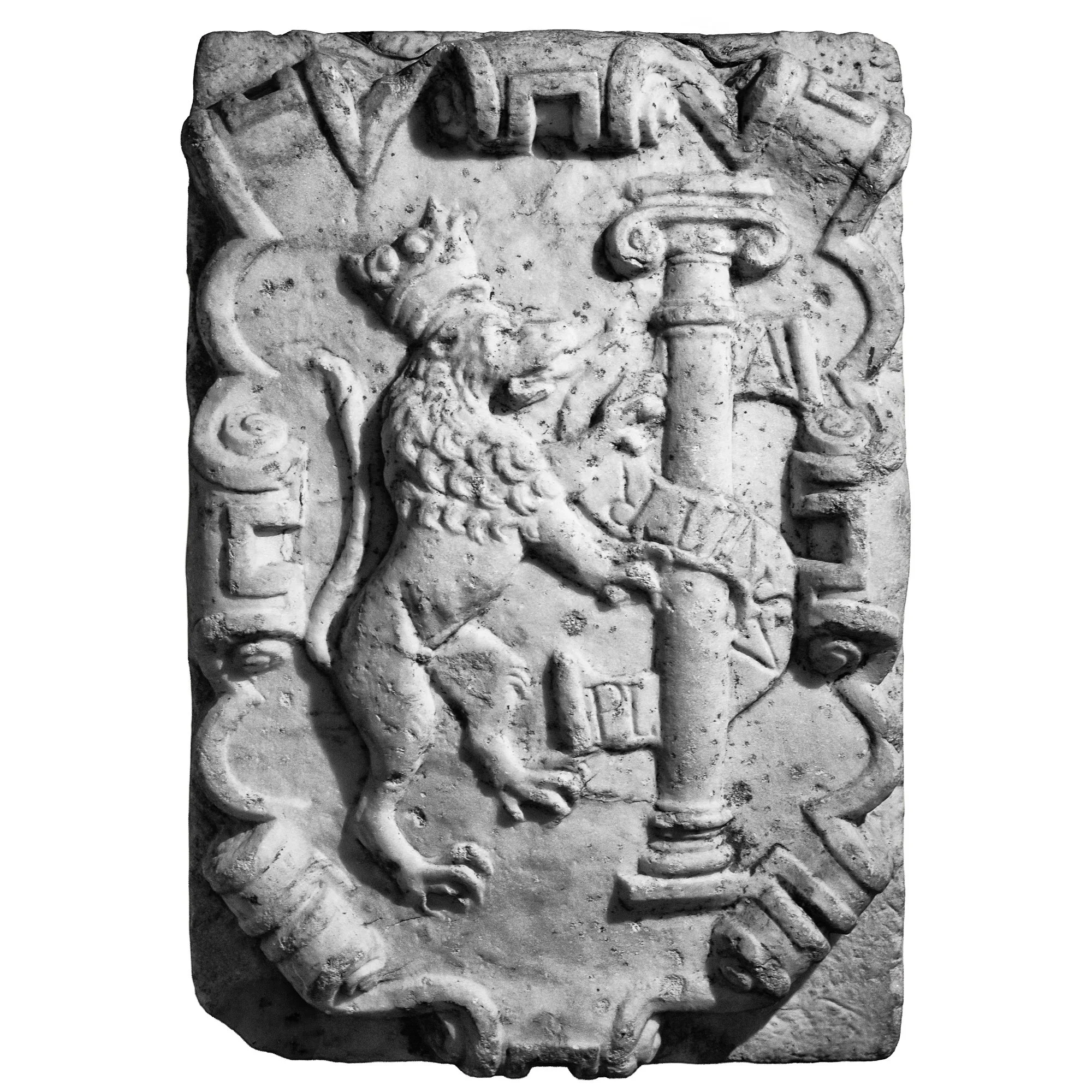
The Coat of Arms of Badajoz.
A city shaped by its position
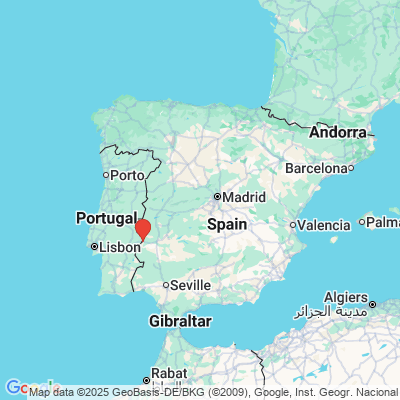
To understand the coat of arms of Badajoz, you first need to understand where you are. This is a city on the edge—close to Portugal, and for centuries on the shifting frontier between Islamic and Christian worlds.
From the 8th century onwards, Badajoz was part of al-Andalus, at times even the centre of its own taifa kingdom. Only in the 13th century did it become part of the Christian north. Even then, its role did not change: it remained a border city, now between Castile and Portugal.
That sense of being “in between” is key. It is also where the name Extremadura comes from: a land at the extremes, at the edge of power.
The lion: conquest and royal power
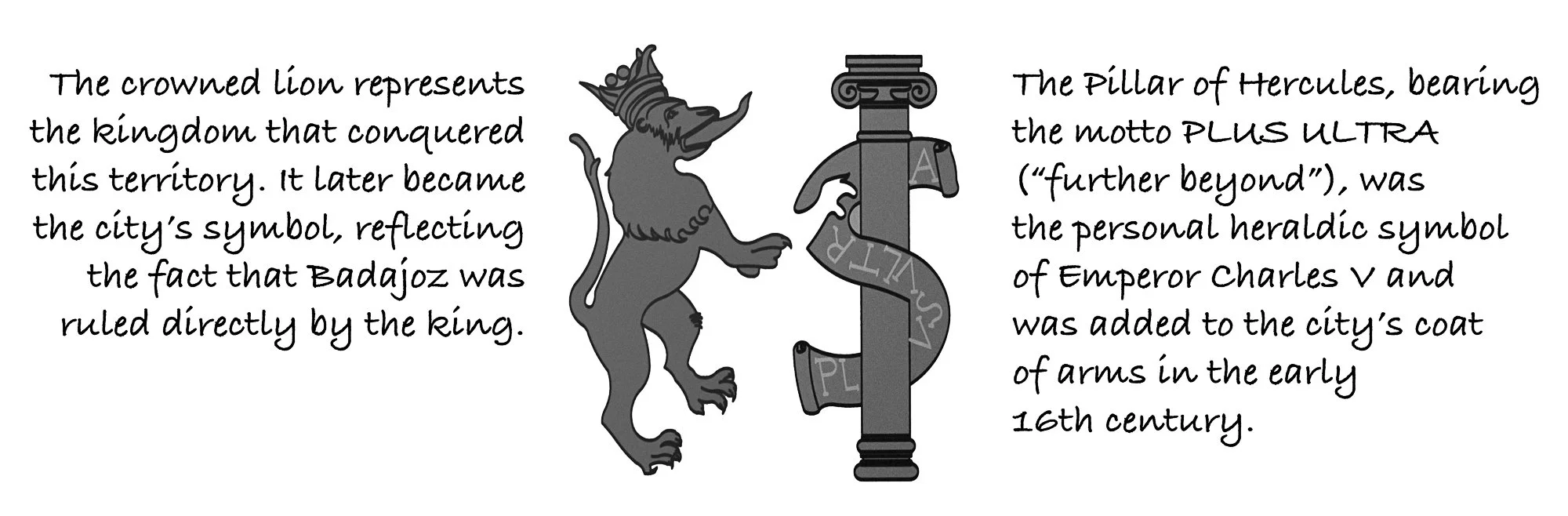
The crowned lion in the coat of arms points back to that turning point in the 13th century, when Badajoz was incorporated into the Kingdom of León. But it also says something about how the city was governed.
Badajoz was not handed over to a local noble. It became a royal city, ruled directly by the king. In a frontier zone, that mattered. The crown kept a firm grip on places like this, both to defend the border and to control a strategically important region.
The lion, then, is not just about conquest. It represents royal authority anchored at the edge of the kingdom.
The pillars: from edge to expansion
Next to the lion stands a very different symbol: the Pillars of Hercules, wrapped with the motto Plus Ultra—“further beyond.”
In the ancient world, these pillars marked the end of the known world, somewhere beyond the Strait of Gibraltar. By the 16th century, under Charles V, that meaning had changed. The old boundary became a starting point. The motto encouraged movement, exploration, and expansion.
By adding this symbol to its coat of arms, Badajoz became part of that new outlook. A city that had long defined itself by borders was now connected to a world that stretched far beyond them.
A story in one image
The coat of arms brings these layers together. The lion speaks of conquest and royal control; the pillars point to a horizon that keeps moving outward.
Together, they tell the story of Badajoz: a place that was first defined by its limits, and later by what lay beyond them. What looks like a simple emblem is, in fact, a compact history—of borders, power, and changing horizons.