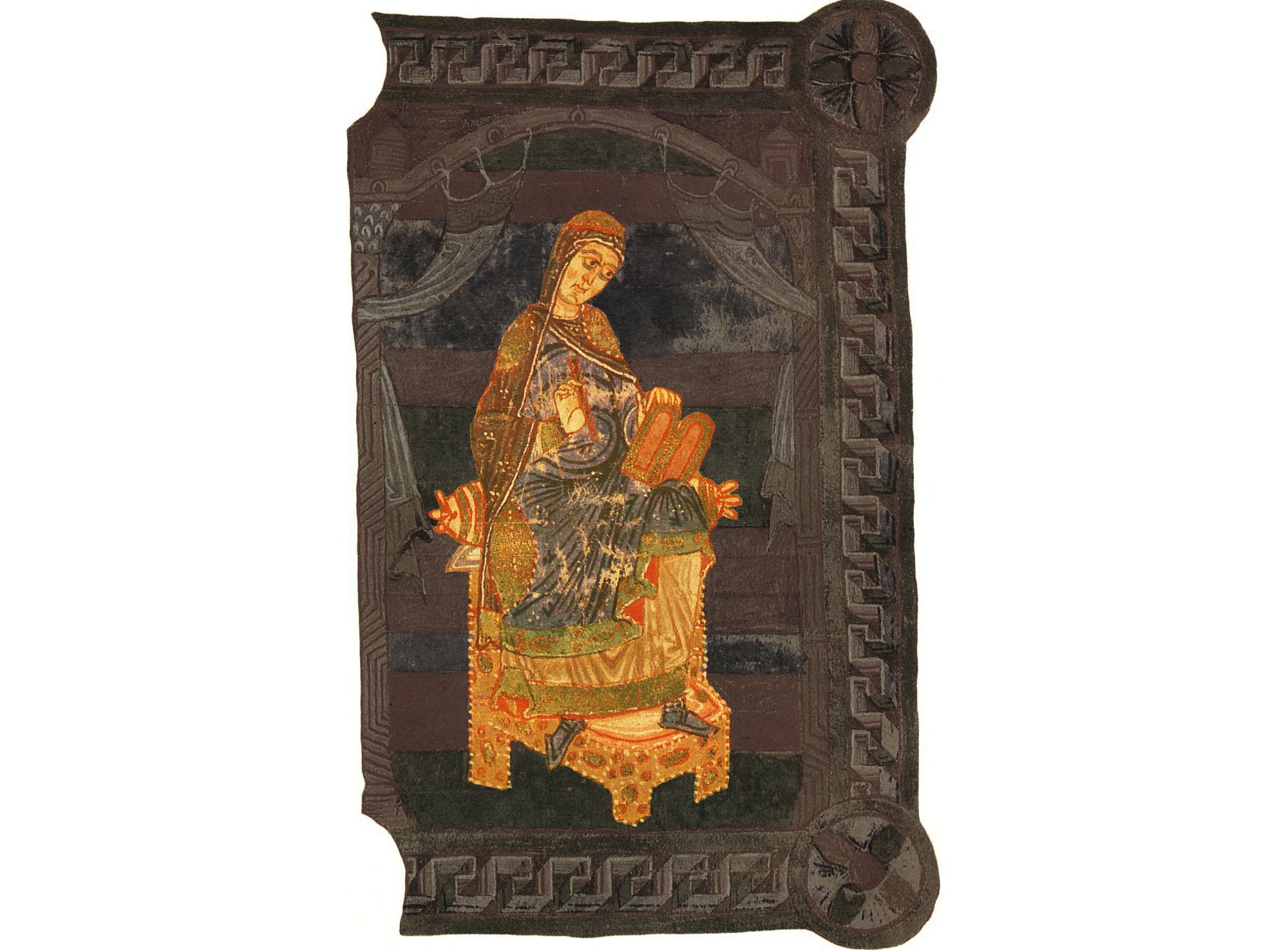
Saint Radegonde. Life of Saint Radegonde, 11th century. Poitiers Municipal Library.
When Radegonde was born around 520 CE, Western Europe was still reeling from the collapse of the Roman Empire. Gaul was ruled by the Merovingians—Frankish warrior-kings who wielded power through conquest, family alliances, and an often-brutal politics of survival. Amid these shifting frontiers, a young Thuringian princess would chart an extraordinary course that defied the expectations of her age.
Radegonde’s childhood was torn apart when Frankish armies under Clotaire I invaded her native Thuringia. Taken as a war prize to the royal villa of Athies near Soissons, she received a classical Latin education that sharpened her intellect and nourished an early Christian piety. Eventually Clotaire made her his queen. Yet the splendor of the Merovingian court—lavish feasts, precious jewels, and the intrigue of power—never captured her heart. She was known to slip away from banquets to pray on the cold stone floors of her chapel, a silent protest against the violent world around her.
That world turned bloodier still when Clotaire ordered the murder of her younger brother, fearing he might challenge Frankish rule. For Radegonde this was the breaking point. She fled the royal household and sought protection from Bishop Médard of Noyon, who, despite the king’s fury, consecrated her as a nun. Legend tells of a miraculous escape: as Clotaire’s men pursued her near Saix, newly sown oat fields suddenly sprang to full height, hiding her and two companions from view. The episode became known as the “miracle of the oats.”
Radegonde’s choice was more than a personal act of faith. It symbolized a profound shift in early medieval society. Across Merovingian Gaul, Christian monasteries were becoming alternative centers of authority—repositories of learning, wealth, and moral power that could rival kings. From her new foundation at Poitiers, the abbey of Sainte-Croix, Radegonde embodied this spiritual counterweight. She secured from the Byzantine emperor a fragment of the True Cross, turning her monastery into a major pilgrimage site and inspiring the hymn Vexilla regis, still sung in Holy Week liturgies.
Her influence reached far beyond cloister walls. By caring for the sick, feeding the poor, and mediating between warring Frankish princes, Radegonde became a broker of peace in a violent age. Gregory of Tours, the great historian-bishop of the Merovingians, portrays her funeral in 587 as a moment of immense popular devotion, the culmination of a life that had turned royal power inside out.
Radegonde’s story reminds us that the early Middle Ages were not merely an age of swords and dynasties. They were also an age when women, through the Church and the new monastic networks, could carve out spaces of autonomy and moral authority. In a world where kings ruled by might, a captive queen transformed her captivity into freedom—and in doing so became a saint whose influence outlasted the empire that once claimed her.
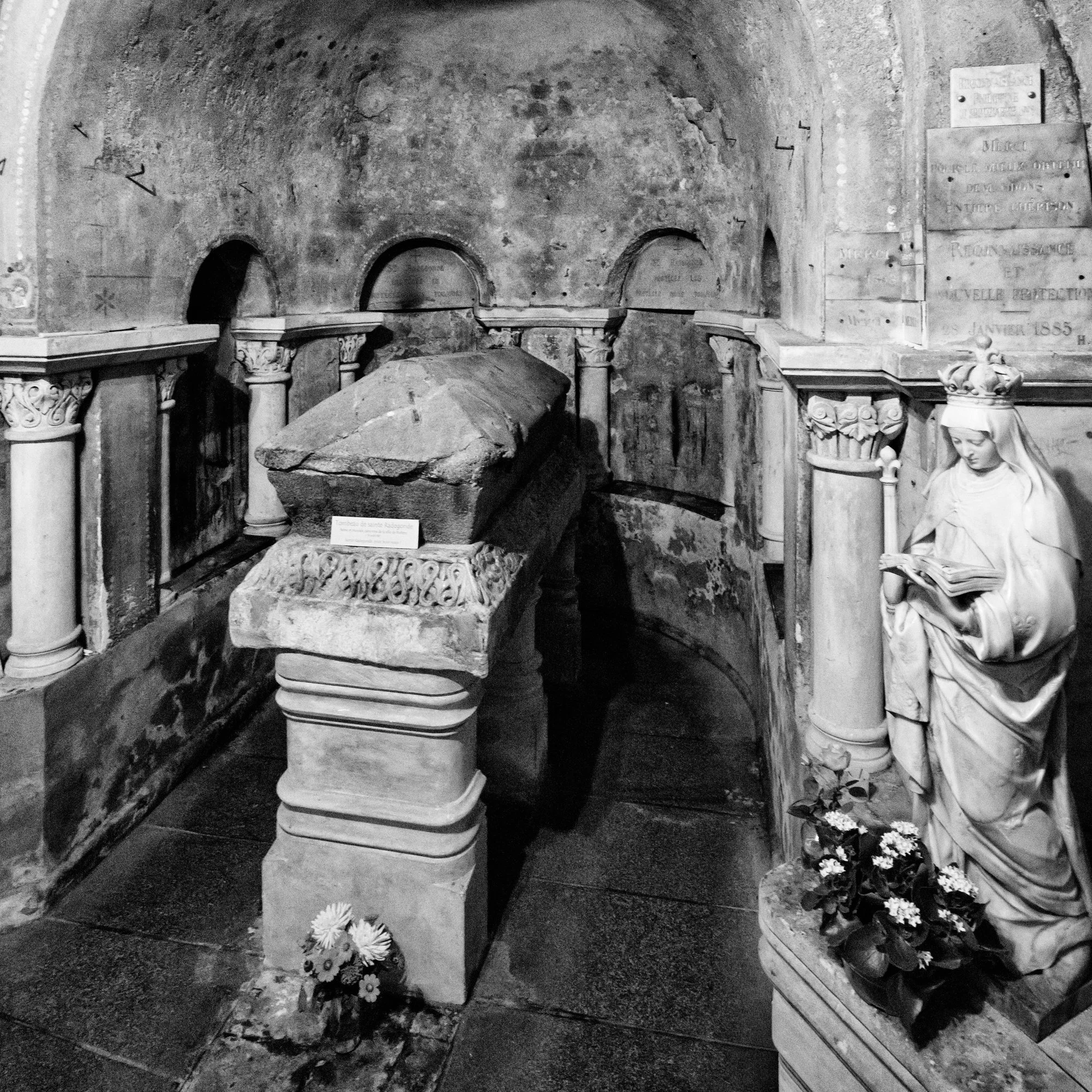
The casket of Saint Radegonde in the Church of Sainte-Radegonde in Poitiers.
Further reading
Gregory of Tours, History of the Franks
Ian Wood, The Merovingian Kingdoms, 450–751
Jo Ann McNamara, Sainted Women of the Dark Ages
Pauline Stafford, Queens, Concubines and Dowagers: The King’s Wife in the Early Middle Ages