
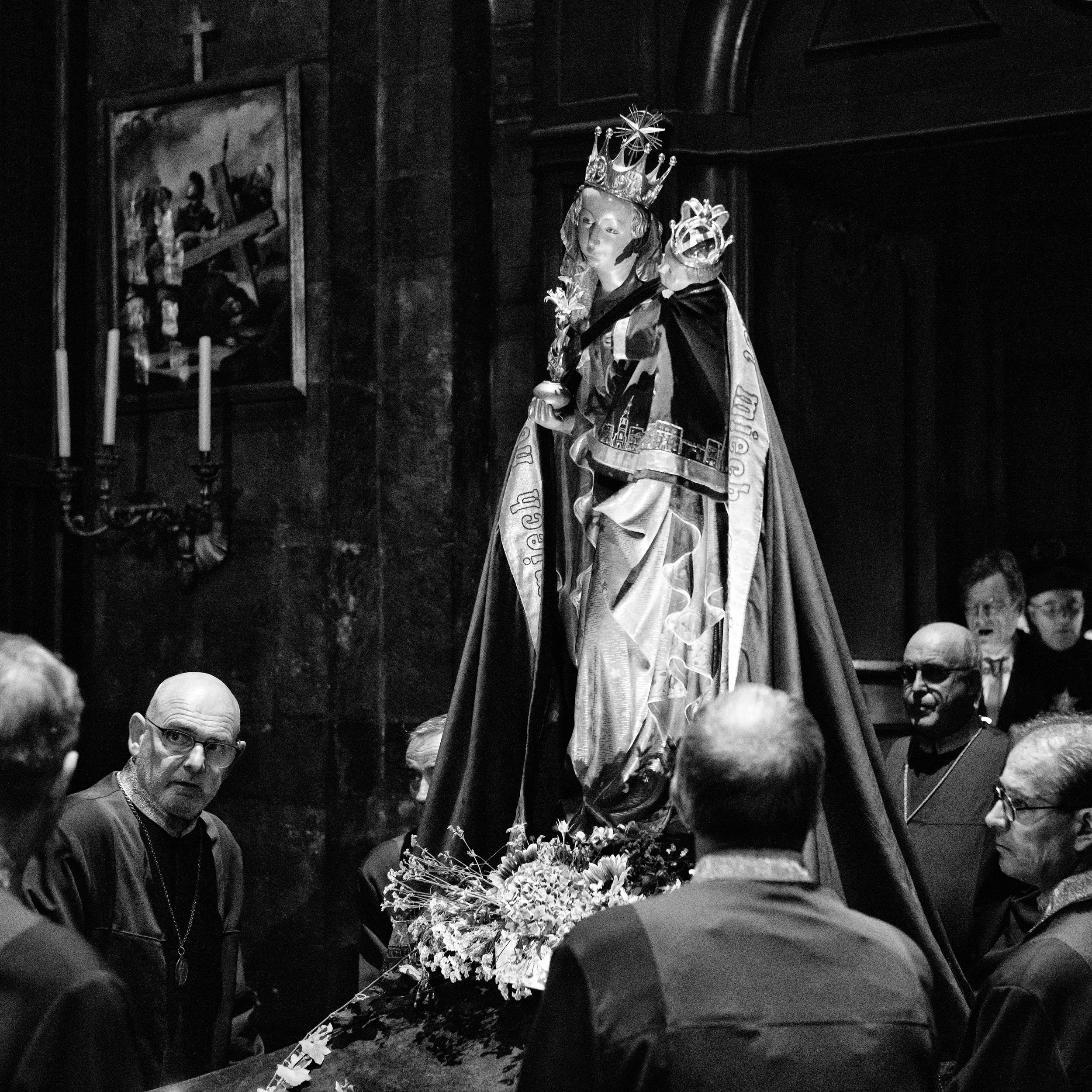
Maria, Sterre der Zee (Maastricht).
The "Maria, Sterre der Zee" procession on October 10th in Maastricht is a cherished tradition, honoring the Virgin Mary under the title "Star of the Sea." This annual event draws worshippers and pilgrims to celebrate Mary’s protective role over the city, symbolizing hope, guidance, and refuge. The tradition dates back centuries, with Maastricht’s faithful attributing their devotion to Mary as a source of blessings and miracles, especially for those who seek protection during life’s journeys.
The title "Sterre der Zee" (Star of the Sea) originates from Saint Jerome’s translation of the Bible in the 4th century. In his Latin Vulgate, he referred to Mary as "Stella Maris," a term that underscores her role as a spiritual compass for Christians, much like stars have long been used to guide sailors across treacherous waters. This metaphor of Mary as a guiding star became one of her most enduring titles in Catholic tradition.
The name also has deeper roots beyond Christianity. Scholars often draw parallels between Mary and the Egyptian goddess Isis, who was similarly revered as a protector of sailors and depicted with celestial imagery. Another significant connection lies with Venus, the "Morning Star" and "Evening Star," a planet that has symbolized guidance and light through the ages. The blending of these ancient symbols with Christian devotion to Mary enriches the meaning of "Sterre der Zee," linking her to an enduring legacy of hope and guidance from both pagan and biblical traditions.
In Maastricht’s procession, these layers of history and symbolism are celebrated, uniting past and present devotion in an event that honors Mary as a spiritual light for all.

Maastricht’s Sterre der Zee procession (October 10th).


