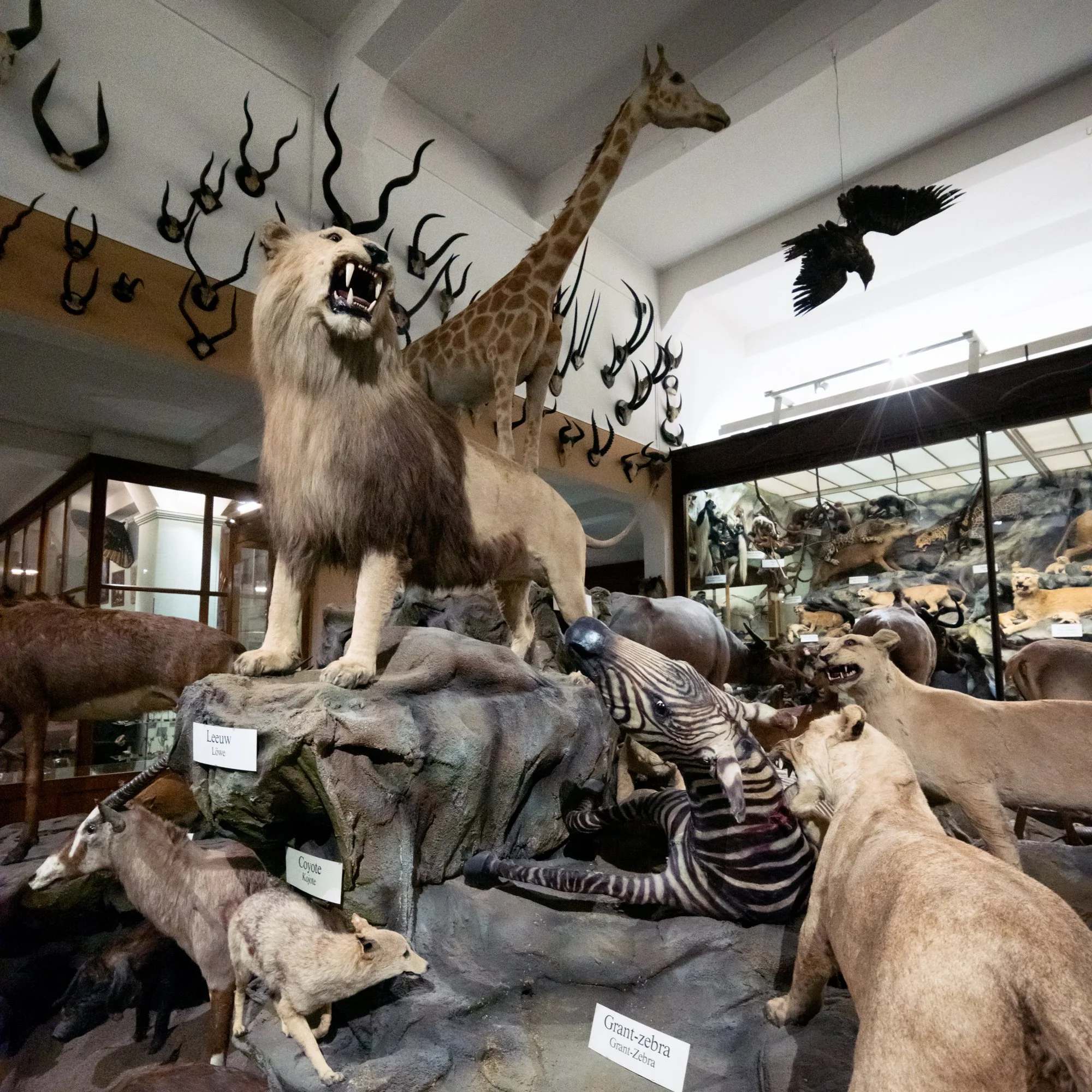
Stuffed animals at the Missiemuseum in Steyl — a 19th-century vision of faith, science, and the irresistible urge to collect the world.
In the late 19th century, the quiet monastery of Steyl on the river Maas became the unlikely center of a global enterprise. The Missionaries of the Divine Word sent brothers and priests to every corner of the world — to preach, to teach, and, as it turned out, to collect. From the tropics and the savannas, from jungles and islands, they shipped back not only souls saved but animals stuffed.
What began as a pious wish — to show the richness of God’s creation — soon grew into something much larger. Crates arrived from China, Indonesia, New Guinea, and Africa, filled with birds in brilliant plumage, coiled snakes, monkeys, and even big cats. In Steyl’s Missiemuseum, they were arranged behind glass: lions beside antelope, parrots beside penguins, all labeled with elegant handwriting and missionary pride.
Over time, the collection grew into a menagerie of wonder and contradiction — part natural history, part sermon, part obsession. The monks called it education; visitors might have called it awe. Looking at it today, with rows upon rows of creatures staring out through dusty glass eyes, one senses how missionary zeal and Victorian collecting fever merged into a single act of devotion — and domination.
The result is astonishing and a little unsettling: a frozen ark, a world gathered in faith and fervor. In Steyl, the brothers tried to bring God’s creation home — and ended up capturing the wildness of an entire world inside the stillness of glass.