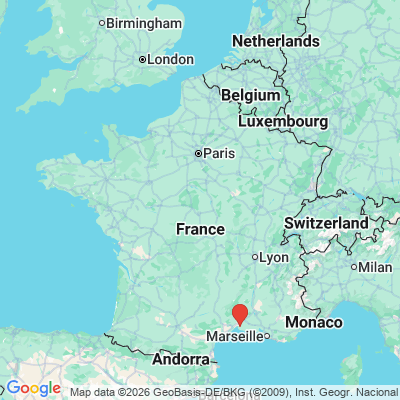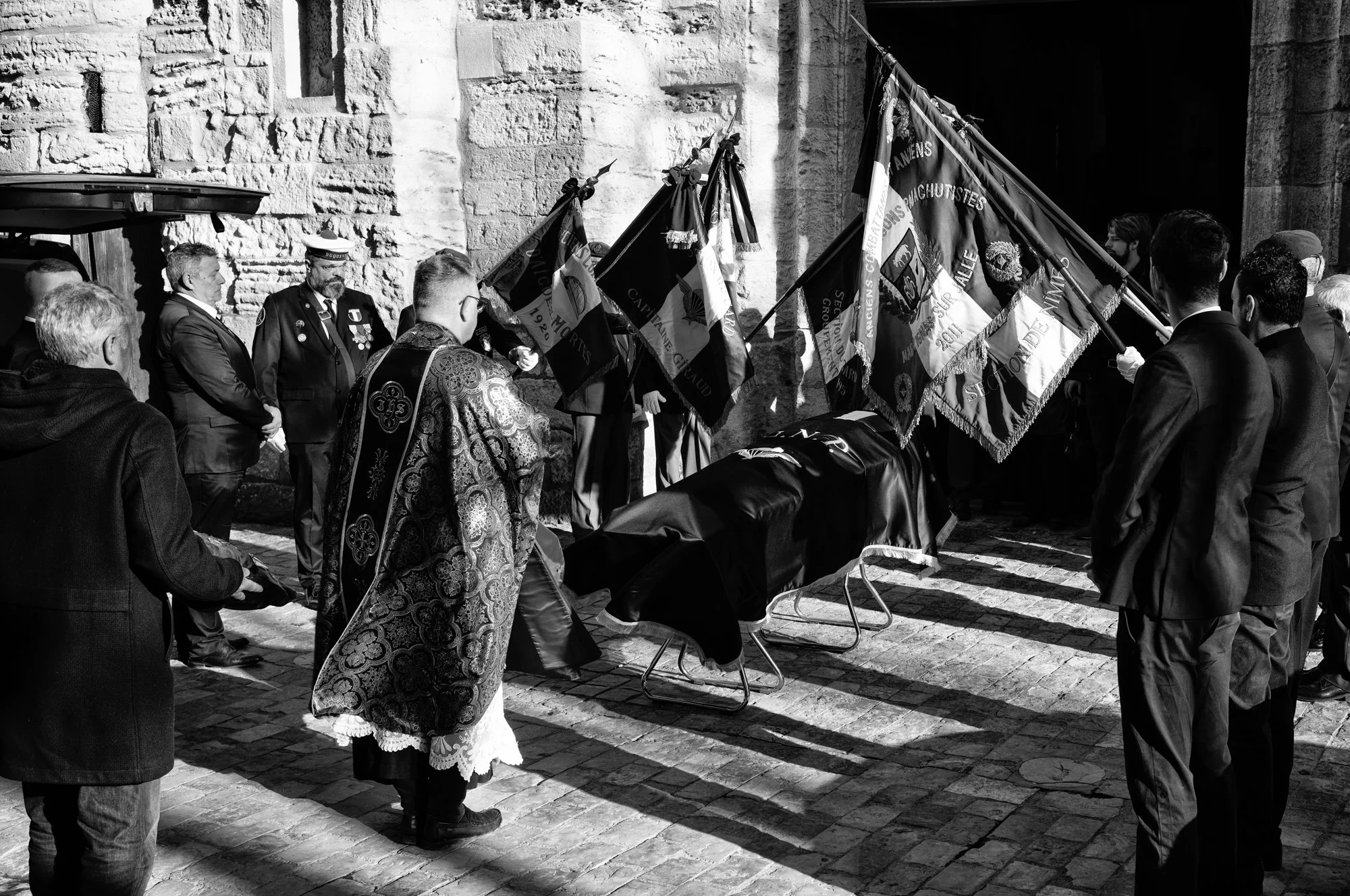
At the funeral of Jean Lacombe (1943 - 2026) at the Eglise Notre-Dame des Sablons in Aigues-Mortes (France, 3 feb. 2026). Jean Lacombe served in the 80s with the 12e Régiment de Cuirassiers in Germany (5e escadron, 1er peloton) and was later associated with the 13e Régiment de Dragons Parachutistes and the Union Nationale des Parachutistes (UNP), as part of the Forces françaises en Allemagne.
In the late 1970s and early 1980s, Europe lived with a quiet tension that shaped everyday life in ways that are easy to forget today. There was no shooting war, no ruins in the streets—but the expectation of war was always present, like bad weather on the horizon. For thousands of French soldiers stationed in West Germany, this was not theory. It was routine.
A man serving in a regular French unit such as the 12e Régiment de Cuirassiers around 1980 lived and trained on what was, in practical terms, the front line of the Cold War.
Why Germany?
After the Second World War, Germany became the hinge of Europe. West Germany faced the armies of the Soviet-led Eastern Bloc across a heavily fortified border. If a war were to begin, it would begin there. France therefore stationed large forces in Germany as part of a long-term strategy of deterrence: war would be prevented by making it too costly to start.
These forces were known as the Forces françaises en Allemagne—French forces permanently deployed on German soil. They were not occupiers, and not guests either. They were a standing reminder that Europe expected the worst and prepared accordingly.
Daily Life Under Permanent Readiness
For a soldier of the 12e RC—an armoured cavalry regiment—the rhythm of life was demanding and repetitive by design. Training was constant. Vehicles had to be ready, crews drilled, procedures rehearsed again and again. Exercises often simulated sudden escalation: alarms in the night, rapid mobilisation, columns moving out before dawn.
The logic was simple. If war came, there would be no time to improvise.
Yet daily life was not cinematic. It involved long stretches of waiting, maintenance, instruction, and routine discipline. Soldiers lived in barracks or nearby towns like Müllheim, often with families. Children went to French schools, groceries were bought locally, and weekends were sometimes spent crossing borders that today feel trivial but then carried enormous symbolic weight.
Normal life, lived under abnormal assumptions.
What Was He Training For?
Contrary to popular images of nuclear apocalypse, most soldiers trained for conventional war: tanks, reconnaissance, delaying actions, manoeuvre. The expectation was that any conflict would begin as a fast-moving conventional clash before escalation was even considered.
For cavalry units like the 12e RC, this meant mobility and information. Knowing where the opponent was mattered as much as firepower. Units trained to move quickly, observe, report, and—if necessary—fight while buying time for larger formations.
Nothing about this was abstract. Maps were studied with real villages on them. Rivers were crossed that still exist today. Routes were memorised because, in wartime, they would become lifelines or death traps.
France and NATO: Close, But Not the Same
One complexity often forgotten is that France, at this time, was not part of NATO’s integrated military command. That did not mean neutrality. French forces coordinated closely with allies but retained national control.
For soldiers, this meant a double identity: defending Western Europe alongside allies, while operating under a distinct French doctrine and command structure. Pride in independence was strong—but so was awareness of shared risk.
UNP: Brotherhood After the Uniform
Many of these soldiers later became active in the Union Nationale des Parachutistes (UNP). By the time they joined veterans’ organisations, the Cold War had ended. The wall fell. Barracks closed. Germany reunified.
But the shared experience remained.
UNP membership was not about nostalgia for conflict. It was about preserving a lived understanding of service in a period when peace depended on preparation for catastrophe. The ceremonies, the discipline, the insistence on memory—all grew from years spent training for a war that everyone hoped would never come.
A Life Shaped by Readiness
To serve in Germany around 1980 was to live with contradiction: stability built on constant alert, normal family life framed by contingency planning, peace maintained through the acceptance of potential destruction.
For those who stood watch there, history did not arrive with explosions. It arrived quietly, through decades of restraint.
And that restraint—rarely celebrated, never dramatic—may be one of Europe’s most significant achievements.