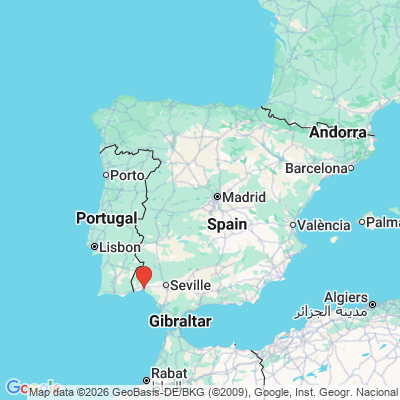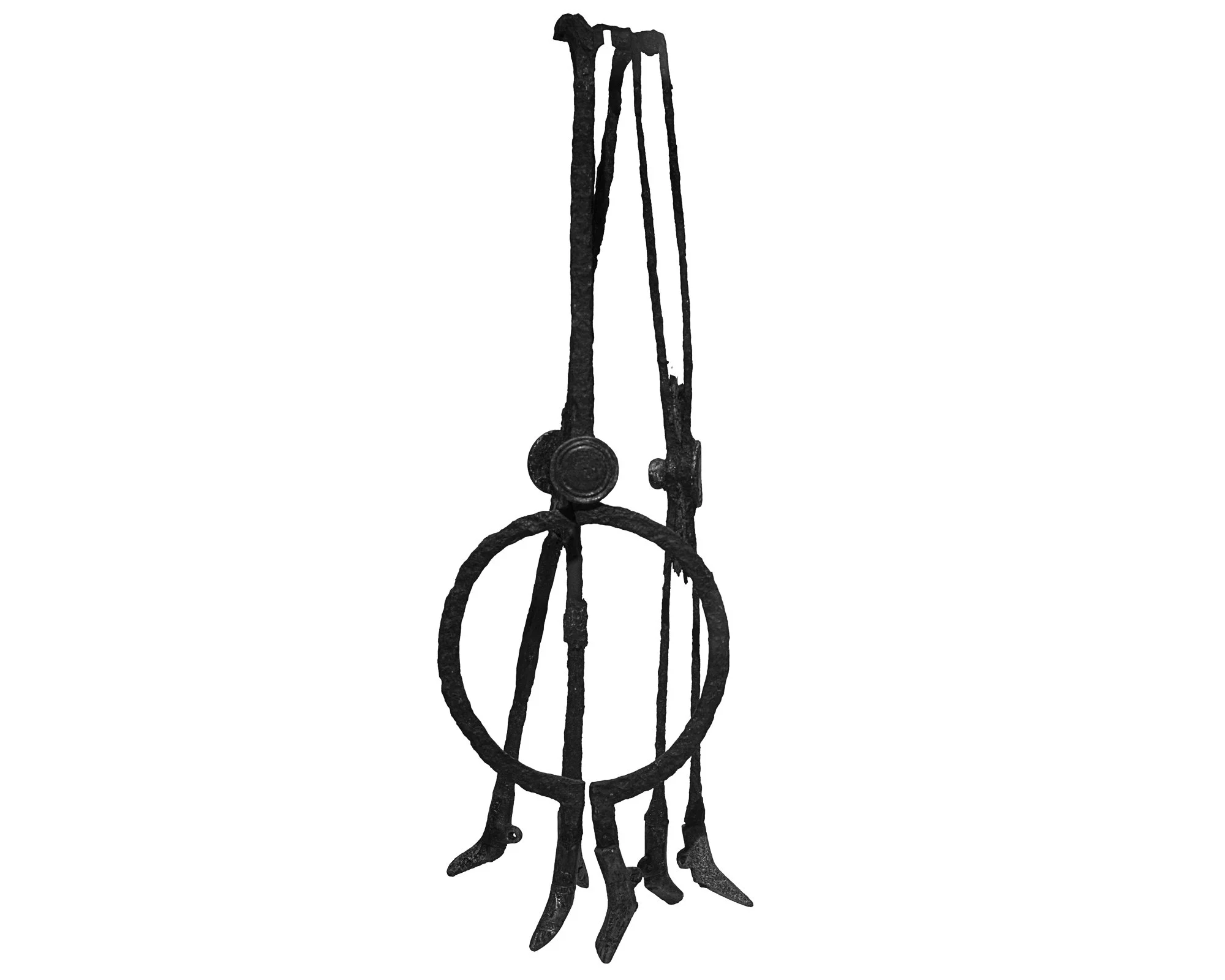
A Roman folding bronze tripod (1st–2nd century AD) from the Riotinto mining region, now in the Museo de Huelva. Used to support a bowl, brazier or oil lamp, it may also have served to bring light into the mine galleries — though this remains uncertain.
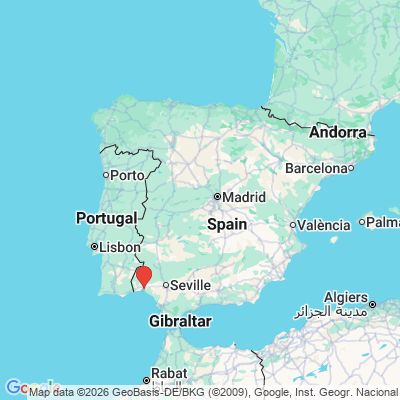
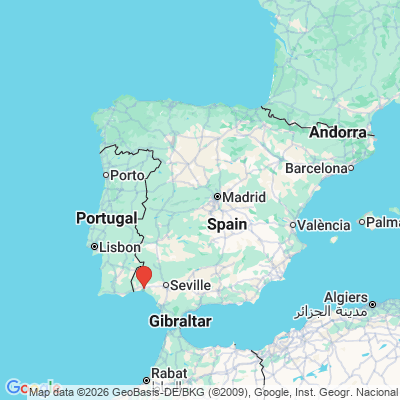
At first glance, it is easy to overlook: three slender legs, ending in small human feet, forming a simple stand. But this object — now in the Museo de Huelva — comes from the Roman mining region of Riotinto, one of the industrial heartlands of the ancient world.
Tripods like this were used to support everyday items: a bowl, a brazier, or an oil lamp. Their purpose was simple — to lift something off the ground, to make it usable. Yet this example adds an unexpected layer. It is foldable. The legs can be collapsed, making it portable. That alone is striking. We tend to imagine ancient tools as solid and heavy, not designed to move easily. And yet here is a Roman object that folds, built for mobility.
Its exact use is less certain. It may have stood in a domestic space, holding a small fire or a vessel. In the specific context of Riotinto, another possibility emerges. In the mine galleries themselves, no fixed lighting installations have been found, and some researchers suggest that lamps may have been placed on stands like this to bring light into the underground spaces. It is a compelling idea — though not something we can prove.
What we can say is that this object belongs to a world that was both highly practical and carefully designed. Even here, in a landscape defined by extraction and labour, attention was given to form. The small human feet at the base of each leg serve no strict function, yet they change how the object is perceived. It does not just stand — it almost stands like something.
Seen on its own, the tripod is modest. But placed in context, it speaks of movement, adaptability and daily life. It reminds us that even in one of the largest mining complexes of the Roman Empire, life depended on small, well-designed tools — objects that could be carried, adjusted, and put to use wherever they were needed.