
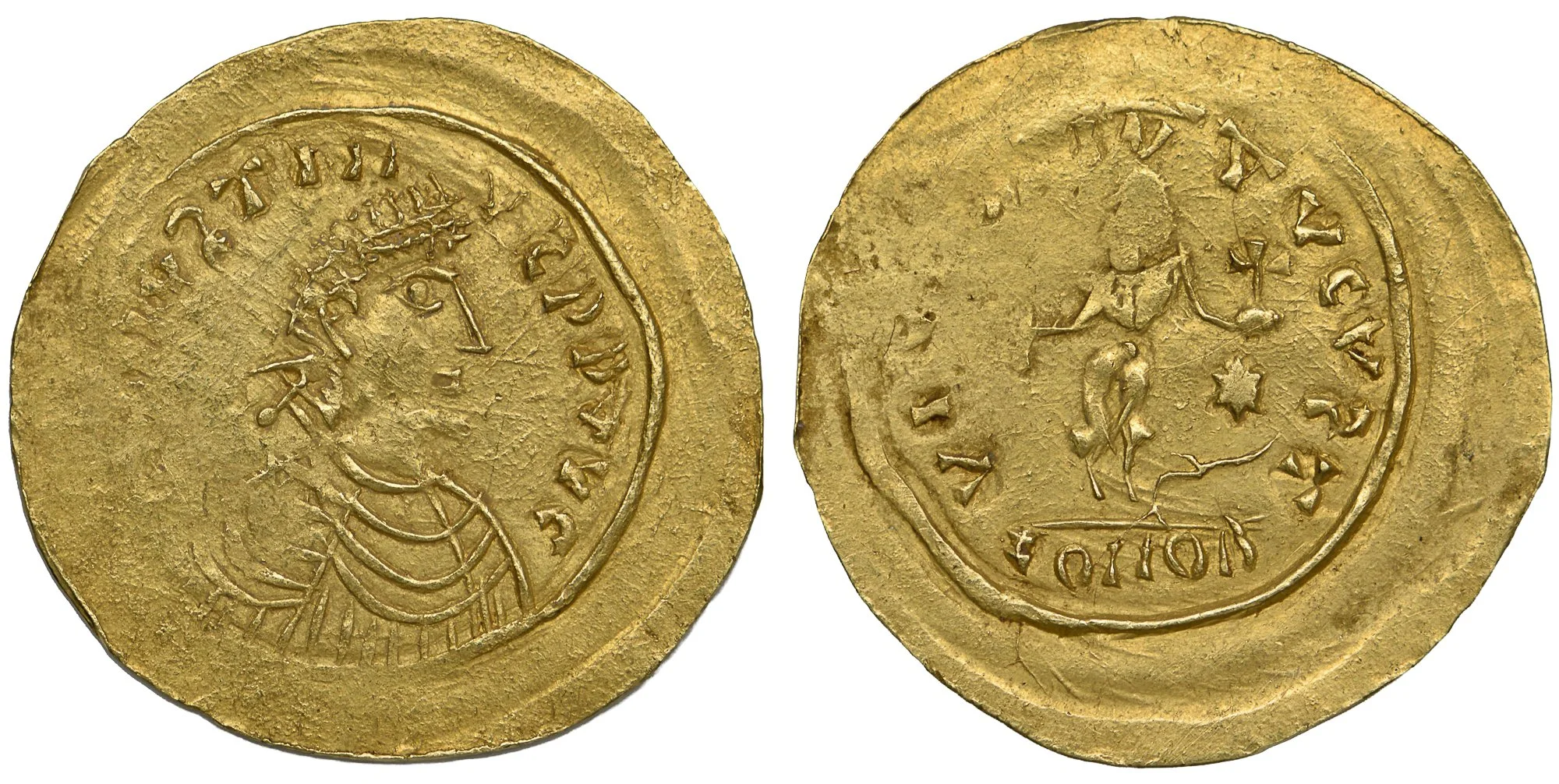
Gold tremissis of Justinus II (565–578), minted in Cartagena (Byzantine Spania), showing the emperor’s bust and Victory with globus cruciger.
In the middle of the 6th century, the Iberian Peninsula looked stable on paper. The Visigoths ruled from Toledo, and Roman structures still shaped daily life. But beneath that surface, the kingdom was fragile—held together by shifting loyalties and contested power.
The crisis began in 548 with the murder of the Visigothic king Theudis. His successor, Theudigisel, lasted barely a year before accusations of licentious conduct led to his own violent end. With the monarchy destabilised, authority splintered and rival factions emerged. One group rallied behind the new reigning king, Agila I, while another coalesced around a challenger, Athanagild, who rose in open rebellion. What began as a contest for the throne soon widened into a broader conflict, particularly in the south of the peninsula, where royal control was weakest and resistance most entrenched.
Athanagild found himself in a familiar dilemma: strong enough to challenge the king, but not strong enough to win. His solution was bold—and risky. He reached out across the Mediterranean to the most powerful ruler of his time: Justinianus I, emperor of the Eastern Roman Empire.
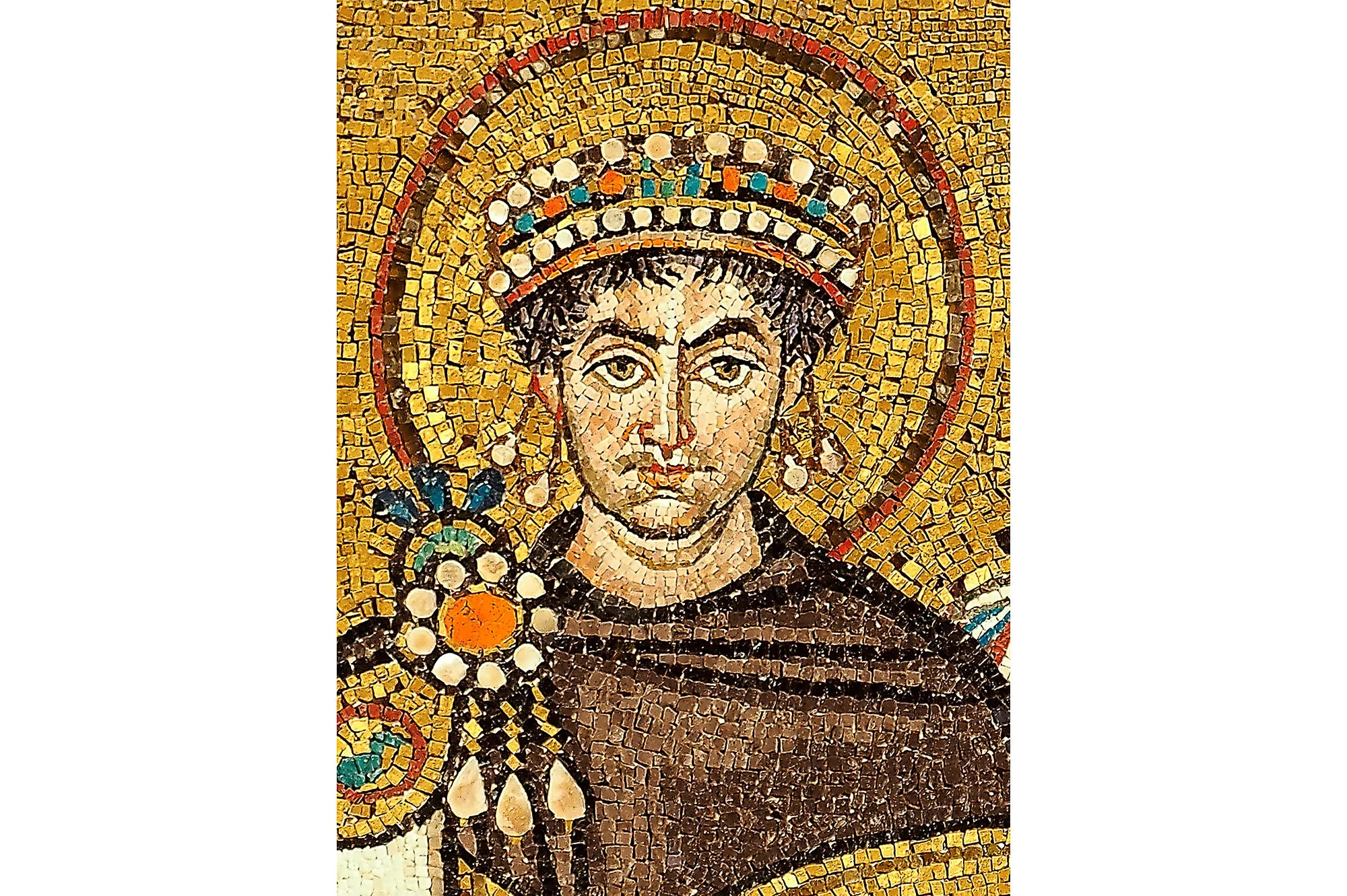
Mosaic of Iustinianus I (Justinian) - San Vitale (Ravenna) - from Wikipedia.
For Justinian, this was not an unexpected request. His reign was defined by attempts to restore Roman authority in the western Mediterranean. North Africa had already been retaken from the Vandals. Italy was being fought over in a long and costly war. Spain, by comparison, was peripheral—but an opportunity like this was hard to ignore.
Around 552, Byzantine forces landed on the southern coast of Iberia. Officially, they came as allies, supporting Athanagild in his struggle. In practice, they behaved as something else: they secured ports, occupied cities, and established a permanent presence.
The civil war eventually ended in Athanagild’s favour. He became king. But the Byzantines did not leave.
Instead, they stayed and organized their holdings into a small province known as Spania. It was not a vast territory. There was no sweeping reconquest, no deep penetration inland. What they held were coastal enclaves—places like Cartagena—linked by the sea rather than by land. From there, they could control routes, project influence, and remain part of Iberian politics without fully dominating it.
For the Visigothic kingdom, this created a new reality. The war had ended, but its consequences lingered. The south was no longer entirely theirs. For decades, a shifting frontier separated Visigothic inland territories from Byzantine coastal strongholds. Conflict, negotiation, and uneasy coexistence followed.
Seen from a wider perspective, the episode fits a broader pattern of the age. Empires did not always expand through overwhelming force. More often, they moved into the cracks—into regions weakened by internal division. Spain in the 550s was one such place.
By the early 7th century, the balance had changed. Visigothic kings gradually regained strength and pushed the Byzantines out. Around 625, the last Byzantine positions in Spain disappeared, almost as quietly as they had been established.
What remained was not a lasting province, but a telling episode: a moment when a civil war opened the door to an empire—and when that empire chose not to conquer everything, but just enough.
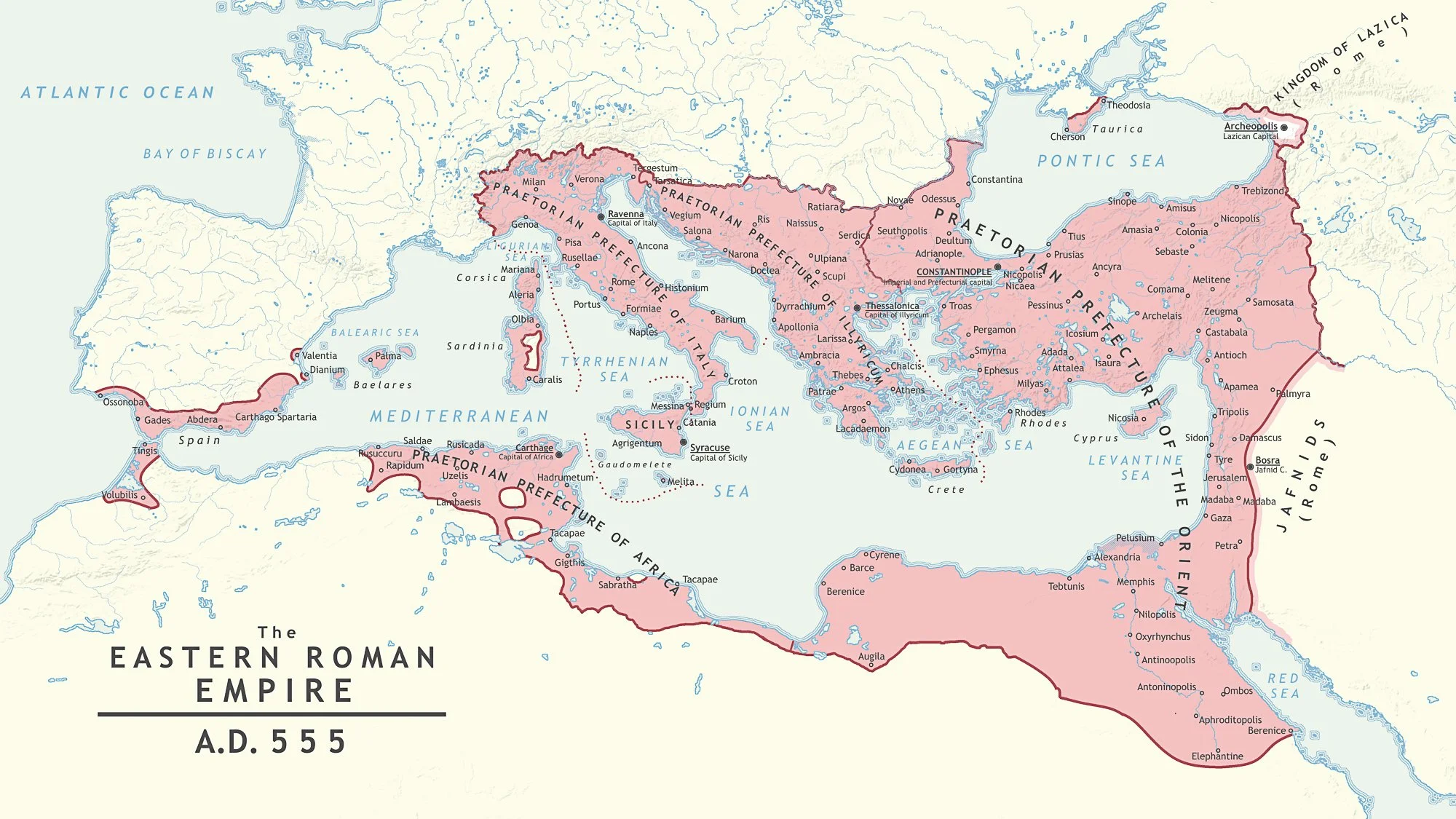
Map of the Byzantine Empire in AD 555 (Wikipedia).