Biodiversity Day 2025: Why It Matters to What We Eat, Who We Are, and Whether We Survive

We are losing the fabric of life that sustains us — and most people barely notice. Biodiversity isn’t just about saving the bees or protecting a handful of rare animals. It’s about the intricate web of life — thousands of species, from soil microbes to insects to birds — working together in delicate balance. When that balance is disturbed, ecosystems begin to break down. And when ecosystems collapse, so do the systems we rely on for food, clean water, a stable climate, and good health. Our survival doesn’t depend on a few visible species — it depends on the whole living system. Biodiversity isn’t a luxury. It is the living infrastructure that keeps everything else standing.

Today, on International Day for Biological Diversity, we ask: What does biodiversity loss look like here in the Netherlands? How does our food system contribute to — and suffer from — the crisis? And why is this not only an ecological issue, but also a cultural one?

Biodiversity and Survival: Why It Matters

Biodiversity underpins everything humans depend on: pollination, clean air, nutrient cycles, disease control, and climate regulation. Forests absorb carbon. Wetlands purify water. Soil fungi help plants access nutrients. Insects control pests. All of these services depend on complex interactions between thousands of species.

When we lose biodiversity, we don’t just lose individual species. We lose the stability and resilience of entire ecosystems. A forest with fewer insects loses birds. A sea with fewer plankton starves its fish. A field without worms loses fertility. This degradation often happens quietly — until a tipping point is reached, and the system suddenly crashes.

What’s at stake, ultimately, is not just nature. It’s food security, public health, economic stability, and our ability to survive.

Our Food System: Both Cause and Casualty

In the Netherlands, the largest single driver of biodiversity loss is agriculture — especially industrial livestock farming. With nearly 4 million cows, 12 million pigs, and over 100 million chickens, our country produces enormous volumes of manure, more than the land and water can absorb.

This leads to:

  • Nitrogen overload, damaging plant life and degrading soil

  • Water pollution, harming aquatic species and drinking water quality

  • Loss of habitat, as monocultures and fields replace diverse landscapes

  • Decline in pollinators and beneficial insects, due to pesticides and habitat loss

Yet biodiversity is also essential for agriculture. Without healthy soils, diverse microbes, natural pest control, and pollinators, farming becomes fragile and heavily dependent on synthetic inputs. The result is a dangerous feedback loop: the more industrialized our farming becomes, the more we destroy the biodiversity that makes agriculture possible.

Breaking that cycle means reducing our dependence on livestock and intensive monoculture — and rethinking what ends up on our plates.

From Culture to Cultivation: How Nature Shapes Identity

Biodiversity is not only ecological. It is cultural.

Traditional foods, stories, medicines, and practices often emerge from a specific place — and the species found there. Dutch cuisine once relied heavily on regional grains, herbs, wild plants, and foraged ingredients. Local proverbs, festivals, and rituals were linked to seasons and landscapes. Lose the meadow, and the song about it disappears. Lose the eel, and so goes the smoked delicacy passed down for generations.

As biodiversity declines, so too does this cultural richness. Our relationship with nature becomes more abstract, less rooted in place. A handful of supermarket crops replace centuries of local food knowledge. Cultural diversity shrinks alongside biological diversity.

But there’s a flip side: restoring biodiversity can help restore culture. Reviving regional crops, preserving historic landscapes, or protecting pollinators doesn’t just help ecosystems — it reconnects people with their heritage, with land, and with each other.

What Needs to Happen

The 2025 Statusrapport Nederlandse Biodiversiteit from Naturalis makes one thing clear: we have the knowledge and tools to reverse biodiversity loss — but only if we act now and decisively. Key actions include:

  1. Enforce environmental laws and targets, especially around nitrogen, land use, and water quality.

  2. Transition to nature-inclusive agriculture, including fewer livestock and more regenerative methods.

  3. Integrate biodiversity into climate, housing, and economic policy, not as a side issue but as a central pillar.

  4. Invest in science and monitoring, including DNA-based soil analysis and AI-powered species recognition.

  5. Support public participation, from citizen science to community nature restoration.

  6. Shift dietary habits, reducing meat and dairy consumption to ease pressure on ecosystems.

This is not just a technical challenge — it’s a cultural one. Change won’t come from policy alone. It requires a shift in values, in consumption, and in the stories we tell about land, food, and ourselves.

What You Can Do

  • Eat less meat. Choose more local, seasonal, plant-based foods.

  • Support farmers and cooperatives who prioritize soil health and biodiversity.

  • Join a citizen science project — or simply learn the names of the plants and insects around you.

  • Advocate for policies that link nature, farming, climate, and health.

  • Start conversations — at the kitchen table, at work, or at school — about how we can live well within the limits of nature.

Further Reading

  • Naturalis Biodiversity Center (2025), Statusrapport Nederlandse Biodiversiteit 2025. Leiden, The Netherlands. DOI: 10.5281/zenodo.15350844

The Mating Mind in a Liquid World

On Attraction, Identity, and the Dance of Display

What do peacocks and poets have in common? According to evolutionary psychologist Geoffrey Miller, quite a lot. In The Mating Mind (2000), Miller proposes that many human traits—like creativity, humor, music, and even morality—evolved not just for survival, but for sexual selection. Much like a peacock’s tail, these traits may serve as signals of fitness, or genetic quality, designed to attract mates.

But how does this theory hold up in today’s fast-moving, unstable, and hyper-connected world—what sociologist Zygmunt Bauman calls liquid modernity? In a culture where identities shift, norms are fluid, and platforms for self-display multiply by the minute, the human desire to attract and impress others takes on new forms—and new anxieties.

This essay explores how the evolutionary logic of The Mating Mind operates within the cultural conditions of liquid culture, and what it means for how we present ourselves, choose partners, and construct meaning in our lives.

The Mating Mind: Attraction Through Display

Miller’s theory builds on Darwin’s idea of sexual selection—the process by which traits evolve because they are attractive to potential mates, not necessarily because they offer a survival advantage. For example, a bird’s complex song or a dancer’s graceful moves may signal underlying fitness.

Miller suggests that many of the traits we think of as uniquely human—language, art, kindness, philosophical thinking—may have evolved as courtship displays. These traits are expensive to develop and hard to fake, making them reliable indicators of intelligence and social ability.

In this view, much of human behavior can be seen as a form of mating performance: we signal our worth through wit, taste, creativity, and cultural capital. It’s not just about reproduction—it’s about being chosen.

Liquid Modernity: The Unstable Stage

Zygmunt Bauman, writing from a sociological perspective, paints a very different picture—but one that surprisingly complements Miller’s evolutionary lens. In Liquid Modernity (2000), Bauman describes modern life as fluid, unstable, and individualistic. Traditional roles, communities, and values have broken down. In their place, we’re left with a world where people must constantly reinvent themselves—socially, emotionally, and even romantically.

Where The Mating Mind sees courtship as a natural process shaped by evolutionary forces, Liquid Modernity shows us how that process is now happening on an unstable stage. The scripts have changed. The audience is global. And the performance never really ends.

Where They Meet: Display in a Liquid World

In many ways, modern culture supercharges the dynamics Miller describes. Social media platforms are digital arenas for self-display. Profiles, selfies, tweets, bios, and likes all become part of a carefully curated mating (and social) signal. Online dating apps like Tinder and Hinge reduce attraction to images and short texts—speeding up the display-and-selection process to an evolutionary blur.

But Bauman’s insights add a crucial twist: in liquid culture, the self is no longer fixed. We are constantly urged to rebrand, update, and improve ourselves—not only for employers or friends, but for potential romantic partners. The pressure to be attractive now extends far beyond physical looks: we must be interesting, woke, witty, emotionally intelligent, and Instagrammable.

Miller's evolutionary signals have not vanished—they’ve simply multiplied and fragmented, delivered through apps, memes, playlists, bios, and TikToks.

The Costs of Liquid Attraction

Bauman warns that in liquid society, relationships can become fragile and consumer-like. People are treated less like long-term partners and more like options to be tried and discarded. Love, once tied to community and ritual, becomes another space for choice, performance, and uncertainty.

This affects how we use our “mating minds.” If our displays are constantly shifting to keep up with trends, how do we know who we really are—or what kind of love we truly want? If the self becomes a performance, is there still an authentic core behind the show?

Conclusion: Between Biology and Culture

Geoffrey Miller and Zygmunt Bauman come from very different disciplines—evolutionary psychology and sociology—but together, they offer a powerful way to think about human connection today.

Miller reminds us that the drive to attract and impress is deep, ancient, and creative. Bauman shows us that in a world where everything flows, that drive becomes harder to satisfy, and more anxious to maintain.

We still seek to be seen, chosen, admired—but in a liquid world, that search is increasingly unstable. Understanding both the biology and the culture behind our desires may help us navigate the tension between display and depth, freedom and connection, and ultimately, between performance and presence.

Further Reading:

  • Geoffrey Miller – The Mating Mind: How Sexual Choice Shaped the Evolution of Human Nature (2000)

  • Zygmunt Bauman – Liquid Modernity (2000)

  • Eva Illouz – Consuming the Romantic Utopia (1997)

  • Sherry Turkle – Alone Together (2011)

  • Byung-Chul Han – The Agony of Eros (2012)

Saint Martha and the Mythical Tarasca of Antequera (Spain)

La Tarasca of Antequera (Spain).

In Antequera, within the historic Real Colegiata de Santa María la Mayor, stands the captivating figure of La Tarasca. This sculpture portrays a fearsome, multi-headed serpent subdued and guided by Saint Martha, a representation deeply rooted in both Christian tradition and medieval folklore. Historically, such figures have played a significant role in religious processions, particularly during the Corpus Christi celebrations, where they symbolize the triumph of faith over chaos and evil.

The Tarasca of Antequera is not merely a static sculpture but a dynamic element of the town’s rich cultural heritage. During Corpus Christi, it becomes a focal point of the procession, evoking both awe and curiosity as it parades through the streets, often accompanied by music and traditional performances. This tradition, inherited from medieval European festivities, has been preserved and adapted over centuries, reflecting changes in religious and societal values while maintaining its core symbolism.

The origins of La Tarasca can be traced back to the medieval legend of Saint Martha, who, according to tradition, tamed a monstrous creature known as the Tarasque in Provence, France. This narrative spread across Spain, influencing local customs and processions, particularly in cities like Granada, Seville, and Antequera. The version found in Antequera is unique in its artistic expression, emphasizing the town’s distinct identity within Andalusian heritage.

Beyond its religious significance, La Tarasca serves as a bridge between the past and present, inviting both residents and visitors to immerse themselves in the legends and traditions that have shaped Antequera’s cultural landscape. Its presence in the Real Colegiata de Santa María la Mayor underscores the enduring connection between sacred spaces and local folklore, ensuring that this fascinating symbol of faith and myth continues to captivate generations to come.

Trump’s ‘Commercial Diplomacy’ and the Remaking of U.S. Foreign Policy

President Donald Trump and Saudi Crown Prince Mohammed bin Salman.

President Donald Trump’s recent whirlwind tour of the Middle East has grabbed headlines—not for saber-rattling or ideological speeches—but for something far more transactional: a staggering $2 trillion in business deals. From Saudi Arabia to Qatar, the United Arab Emirates to Pakistan, Trump’s second-term foreign policy is rewriting the rules. At the center of this transformation stands a bold concept: commercial diplomacy.

In a widely shared LinkedIn article, tech entrepreneur and investor Karl Mehta hails this shift as a “new era” in U.S. foreign policy—one that ditches decades of doctrine-driven alliances in favor of open markets, investment partnerships, and economic pragmatism. While Trump’s critics see recklessness and a disregard for human rights and long-standing allies, Mehta sees strategy: a dealmaker’s vision of peace and prosperity through commerce.

The Pivot to Business

What is commercial diplomacy? At its core, it’s using diplomatic influence not to spread democracy or contain threats, but to unlock trade opportunities, foster innovation, and secure investment. Trump’s version is unapologetically opportunistic. Instead of drawing red lines, he draws up contracts.

Consider the numbers:

  • $600 billion pledged by Saudi Arabia, including massive investments in U.S. defense, AI, and energy.

  • $243 billion in deals with Qatar, featuring Boeing aircraft and defense systems.

  • $14.5 billion from the UAE for aircraft and data centers.

These are not mere memoranda of understanding—they're strategic bets on a world where America’s power is measured in partnerships and product lines, not only in military bases or moral posturing.

Rewriting the Rules: Syria, Pakistan, and China

Trump’s deal-making extends far beyond the Gulf. In a surprise move, he lifted all U.S. sanctions on Syria, opening the door for American investment in reconstruction projects. This move was reportedly brokered with Saudi backing—a clear signal that economic inclusion trumps past hostilities.

Similarly, Pakistan, long criticized for harboring terrorist groups, is now being offered a zero-tariff trade deal. It's a decision that many foreign policy veterans find shocking—especially given the potential to alienate India, America’s democratic partner and economic powerhouse.

And then there's China. Despite ongoing tensions, Trump finalized a new trade pact aimed at reducing tariffs and expanding market access. For Mehta, this underscores a core belief of commercial diplomacy: competition doesn't preclude cooperation.

From Diplomats to Dealmakers

Perhaps the most symbolic shift is in who’s leading U.S. foreign relations. Trump’s foreign policy team features not career diplomats but Wall Street and real estate magnates—people like Howard Lutnick and Steven Witkoff. These figures speak the language of leverage and liquidity, not protocol or public service.

This, Mehta argues, is the point: in a world driven by capital flows and digital infrastructure, business minds may be better equipped than bureaucrats to navigate geopolitical complexity.

A Double-Edged Strategy

Yet for all the optimism, the risks are real.

Critics, including writers in The New York Post and The Guardian, warn that Trump’s policies could alienate traditional allies like Israel, who now fear being sidelined in favor of deals with Iran or the Houthis in Yemen. Others caution that prioritizing commerce over democratic values might empower authoritarian regimes and erode America's moral authority.

Moreover, there’s the question of sustainability. Are these deals built to last, or will they unravel with the next administration—or the next diplomatic crisis?

The Verdict: A World in Transaction

Whether one sees Trump’s commercial diplomacy as visionary or volatile, it undeniably marks a rupture with the past. Karl Mehta calls it “the engine driving America’s engagement with the world.” And for now, at least, the world appears eager to buy in.

In a global order shaken by war, pandemics, and economic upheaval, Trump is betting that dollars and data centers will succeed where doctrines have failed. The question is whether this business-first foreign policy can build a stable and just global future—or whether it will leave the United States richer but more isolated.

The Erasure of Gaza: War Crimes the World Must Stop

We must remember the Holocaust. We must condemn the Hamas attacks of October 7, 2023, in which over 1,200 Israelis were killed and 251 civilians kidnapped. These horrors deserve unequivocal recognition.

But remembrance must never be used as a license for new atrocities.

As of May 2025, over 50,000 Palestinians have been killed in Gaza—17,000 of them children. Gaza has been reduced to rubble. Schools, homes, hospitals—erased. Now, with nearly nothing left standing, the Israeli government is advancing a chilling next step: the forced removal of Gaza’s remaining population.

This is not about self-defense. This is deliberate devastation followed by displacement. It is the systematic destruction of a people’s land, life, and future. It is genocide unfolding in plain sight.

Israeli Prime Minister Benjamin Netanyahu made his intent clear early in the war. On October 28, 2023, he invoked Deuteronomy 25:17, stating:

"You must remember what Amalek has done to you, says our Holy Bible."

That biblical passage commands the Israelites to "blot out the memory of Amalek from under heaven." In Jewish tradition, Amalek represents an enemy to be utterly destroyed.

By invoking this scripture, Netanyahu framed the Palestinian population as Amalek—a people to be eradicated. This is not metaphor. It is the ideological foundation of a military campaign that has killed tens of thousands and now seeks to expel the survivors.

Western governments, particularly in the U.S. and Europe, continue to issue statements of “concern” while supplying weapons and diplomatic cover. This is not neutrality. This is complicity.

To recognize the trauma of Jewish history is not to stay silent in the face of mass slaughter. To condemn Hamas is not to greenlight the ethnic cleansing of Gaza.

The world must act now. We must demand an immediate ceasefire, an end to the blockade, full humanitarian access, and a binding international response to halt the displacement of Gaza’s population.

Silence is betrayal. Delay is death.

History is watching. Gaza is watching. And the stain of inaction will not be easily erased.


Are We on the Brink of World War III? Echoes of 1938–1939

Professor Darin Gerdes.

In a sobering analysis released on May 15, 2025, Professor Darin Gerdes draws striking parallels between today’s geopolitical tensions and the volatile prelude to World War II. His YouTube video, “Are We on the Brink of WWIII? 1938–39’s Grim Clues!”, walks viewers through an eerie comparison between the global landscape of 1938–39 and our current moment.

A World on Edge

Gerdes opens with a survey of ongoing global flashpoints: the unresolved tensions between India and Pakistan, the persistent conflicts between Israel and its neighbors, the dangerous proxy war in Yemen, and most alarmingly, the war in Ukraine. That last conflict, he warns, remains the most plausible spark for a wider war, especially if it escalates into NATO territory.

Add to that China’s posturing over Taiwan, North Korea’s provocations, and Iran’s destabilizing role in the Middle East, and you have a dangerous convergence of authoritarian powers testing the limits of the current international order.

History’s Familiar Patterns

To understand how these scattered conflicts might stitch themselves into something far larger, Gerdes turns to history. The late 1930s were full of similar unrest: the Spanish Civil War, Japan’s invasion of China, the Nazi annexation of Austria, and the infamous Molotov–Ribbentrop Pact that divided Eastern Europe. At the time, international institutions failed to act decisively, and authoritarian regimes pushed aggressively into neighboring states.

Then, as now, the world seemed fragmented and distracted—until suddenly, it wasn’t.

Similarities—and Crucial Differences

Gerdes outlines the many parallels:

  • Multiple simultaneous conflicts

  • Authoritarian expansionism

  • Weak international institutions

  • Economic strain and disrupted trade

  • Rapid changes in military technology

But he also notes key differences. Most significantly, today's world is shaped by nuclear deterrence—a force absent in the 1930s that both restrains and complicates modern warfare. In addition, while global alliances today are less defined than the Axis and Allied powers of the past, they still exist—particularly through NATO.

Another difference lies in information speed. Unlike the 1930s, today’s public sees conflicts unfold in real time, with live updates, satellite images, and constant commentary. This visibility might deter rash action—or inflame it further.

What Comes Next?

Gerdes stops short of declaring a third world war imminent. Instead, he suggests we are at a crossroads. The lessons of 1938 and 1939 don’t guarantee the same outcome—but they should serve as a warning. History doesn’t repeat itself, he reminds us, but it does echo.

To hear Professor Gerdes explain the full historical context and his complete analysis, watch the full video here:
▶️ Are We on the Brink of WWIII? 1938–39’s Grim Clues!

The 'Escena Familiar', Zamora (Spain)

The ‘Escena Familiar’ (1905), by José Gutiérrez García (Filuco) and Heinrich Kühn, Museum of Zamora.

The photograph Escena Familiar, displayed in the Museum of Zamora, is a striking depiction of a modest household in early 20th-century Spain. Capturing a moment of daily life, the image provides insight into the social conditions of Zamora around 1905, a time when the city was experiencing economic struggles, rural poverty, and the gradual transformation of its traditional society. The region, largely agrarian, faced challenges such as industrial underdevelopment, limited infrastructure, and high emigration rates, as many sought better opportunities in industrialized areas of Spain and abroad.

The authorship of Escena Familiar remains a subject of debate. While long attributed to José Gutiérrez García, known as Filuco—a Zamoran photographer, painter, and entrepreneur—some evidence suggests a connection to the Austrian pictorialist Heinrich Kühn. The use of gombicromatography, a technique associated with Kühn, and the existence of a copy inscribed with both names support the theory of a collaboration or shared influence. Whether Filuco or Kühn was the principal creator, the photograph stands as a testament to the artistic experimentation of the era and the enduring power of imagery to document and evoke historical realities.

Why So Many Evangelicals Embraced Trump

It surprised many: a movement known for preaching morality and humility threw its weight behind a man famous for neither. But the strong support Donald Trump received from American evangelicals wasn’t a fluke or a betrayal of faith—it revealed how much the meaning of that faith had already changed.

Over recent decades, a significant part of evangelical culture shifted from focusing on personal virtue to defending group identity. As American culture became more diverse and secular, many white evangelicals began to feel sidelined. They no longer saw themselves as moral leaders, but as a misunderstood, even persecuted minority. This loss of status bred resentment and fear.

Trump didn’t share their theology—but he spoke to their sense of threat. He promised to fight for them, to “Make America Great Again,” which many heard as restoring their place in the cultural mainstream. He didn’t need to be Christ-like. He just needed to be loyal to their side.

In this new mindset, traditional virtues like kindness or humility became less important than toughness and loyalty. Supporting Trump became a signal—not of shared values, but of shared enemies. Faith, for many, became less about living like Jesus and more about winning a culture war.

This shift didn’t happen overnight. It was the result of years of mixing faith with politics, fear with identity. Trump didn’t cause the change. He exposed it.

Further Reading

  • Kristin Kobes DuMez – Jesus and John Wayne

  • David French – essays on faith and politics

  • Tara Isabella Burton – Self-Made

  • Alain de Botton – Status Anxiety

  • Nancy LeTourneau – “The Status Anxiety of White Evangelicals”

Inauguration of the Museum of Spanish Abstract Art in Cuenca (1966)

Inauguration of the Museum of Spanish Abstract Art in Cuenca, June 30. From left to right, front row: José María Yturralde, Jordi Teixidor, Salvador Victoria, Eusebio Sempere, Fernando Zóbel and Jaime Burguillos. Back: Gustavo Torner, Lucio Muñoz, López Hernández, Carmen Laffón, Amalia Avia, Juana Mordó, José Guerrero, Nicolás Sahuquillo, Manuel Millares, Gerardo Rueda, Martín Chirino, Alberto Portera and Manuel Rivera. Photo: Fernando Nuño. (1966)

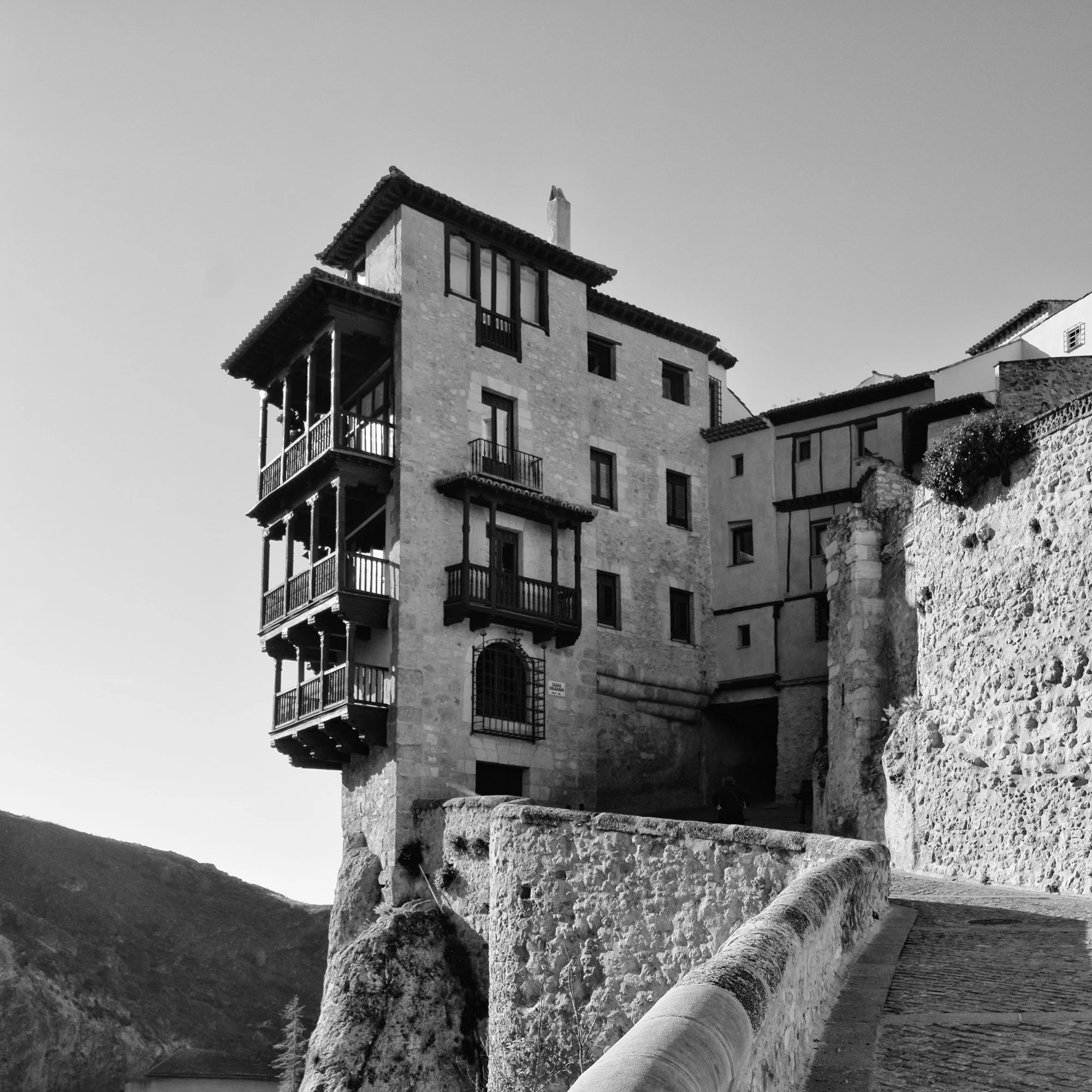
On June 30, 1966, a group of artists, intellectuals, and close friends gathered on a wooden staircase in the Casas Colgadas (Hanging Houses) of Cuenca, Spain, to commemorate the inauguration of the Museo de Arte Abstracto Español, the first museum in Spain devoted to contemporary abstract art. Captured in a now-iconic photograph by Fernando Nuño, this moment marked the realization of Fernando Zóbel’s vision to give modern Spanish art a permanent home—artist-driven, independent, and free from state control during the authoritarian Franco regime.

At the center of the front row stands Zóbel himself, arms crossed and smiling modestly, surrounded by artists who had defined—and would continue to shape—the course of Spanish abstraction. From geometric experimentation to gestural informality, from kinetic art to textured matter painting, the group represents the rich diversity of the Spanish avant-garde in the 1950s and 60s.

The photograph is more than a record of an art event—it is a document of cultural resistance and creative solidarity. Amid the restrictive climate of Franco’s Spain, these individuals gathered to inaugurate a museum built not by state decree, but by artists themselves, fueled by shared ideals of artistic freedom, experimentation, and mutual respect.

The Museo de Arte Abstracto Español in Cuenca—set in the dramatic cliffside Hanging Houses—became a haven for modern art in a country that had long relegated its avant-garde to the margins. The artists in this photo not only filled the walls of the museum, but also shaped Spain’s path toward cultural renewal. In doing so, they helped catalyze a broader shift that would only fully blossom after the democratic transition in the late 1970s.

This moment, preserved in Nuño’s photograph, stands as a rare collective portrait of Spain’s postwar artistic conscience—a blend of brilliance, courage, and quiet defiance.

On the Picture:

Front Row (left to right):

  1. José María Yturralde – A young geometric abstractionist and later pioneer of kinetic and cybernetic art. In 1966, he was just beginning his career and would soon become closely associated with the “Cuenca school.”

  2. Jordi Teixidor – Another emerging painter exploring lyrical abstraction and minimalist tendencies, influenced by Zóbel and Sempere.

  3. Salvador Victoria – A painter of poetic, lyrical abstraction, with roots in postwar Paris and Spanish informalism.

  4. Eusebio Sempere – A key figure in Spanish optic and kinetic art; close friend of Zóbel and advisor to the museum’s collection.

  5. Fernando Zóbel – Artist, collector, and founder of the museum. His vision and generosity brought this project to life, creating a space for Spanish modern art to flourish in the heart of Spain.

  6. Jaime Burguillos – A painter and friend of the group, representing the broader Madrid art scene that supported the museum.

Back Row (unordered):

  • Gustavo Torner – Co-founder of the museum, native of Cuenca, known for his geometrical and material experimentation.

  • Lucio Muñoz – Master of abstract matter painting, famous for his use of burned wood and textured surfaces.

  • Julio López Hernández – A realist sculptor; his inclusion reflects the deep friendships between abstract and figurative artists of the time.

  • Carmen Laffón – Figurative painter of quiet, luminous still lifes and Andalusian landscapes; friend of the group.

  • Amalia Avia – Urban realist painter, wife of Lucio Muñoz, and part of the realist-artistic network surrounding the Madrid avant-garde.

  • Juana Mordó – Visionary gallerist and tireless promoter of contemporary Spanish art; a key ally in bringing abstract art to public attention.

  • José Guerrero – Abstract expressionist with deep ties to the U.S.; brought international prestige and color-field dynamism to the group.

  • Nicolás Sahuquillo – Local artist or supporter from Cuenca, representing the museum’s grounding in the regional cultural fabric.

  • Manuel Millares – A founding member of El Paso and a towering figure in Spanish informalism; his burlap-based works conveyed raw emotion and historical trauma.

  • Gerardo Rueda – Co-founder and curator of the museum; known for his restrained collages and refined geometric abstraction.

  • Martín Chirino – Sculptor of abstract iron forms, often referencing Canarian identity and ancient spirals.

  • Alberto Portera – Neurologist, writer, and cultural patron; emblematic of the intellectual supporters who stood behind Spain’s artistic modernizers.

  • Manuel Rivera – Painter of luminous wire mesh abstractions and fellow member of El Paso, representing the sculptural impulse within painting.

Casas Colgadas (Hanging Houses) of Cuenca (Spain).

Treix (France)

Treix, France.

In Treix, where cows outnumber folk,
The baker is the mayor, a fine pastry bloke.
He runs the boulangerie, town hall, and the café,
And knows all the gossip (and who’s late to pay).

The rooster named Pierre crows at half-past two,
Claims he’s the boss, and, well, it’s probably true.
Madame Dupont waters her plastic flowers,
So they look fresh, at all the hours.

It’s calm and it's quaint, not much here to see,
But Treix’s charm is as French as it can be!

(The above is not based on facts)

Is American Democracy Dying Faster Than We Think?

For many in Europe, the United States has long stood as a symbol of liberal democracy — a nation of checks and balances, independent courts, and robust public debate. But leading democracy scholars Staffan Lindberg and Michael Miller are now warning that this image no longer reflects reality. According to them, the U.S. is undergoing one of the most rapid shifts toward authoritarianism in modern democratic history.

Lindberg, who directs a global democracy research programme, notes that in countries like Hungary or Turkey, the erosion of democracy happened step by step, often over the course of a decade. In the U.S., the dismantling of democratic norms appears to be unfolding in months. Political allies convicted of violent acts are being pardoned, watchdog institutions are being dismantled, and judges are increasingly being bypassed or ignored. These are not minor deviations, Lindberg argues, but fundamental attacks on the core of democratic governance.

One of the most concerning shifts is cultural rather than institutional: the spread of fear. In Washington, CEOs, university presidents, and civil servants have begun to censor themselves — not by law, but through intimidation and self-preservation. This, Lindberg warns, is precisely how democratic systems collapse — not with a coup, but with quiet acquiescence.

Michael Miller adds a crucial point: just because elections continue does not mean democracy remains intact. In many countries classified as “electoral autocracies,” the ritual of voting persists, but media, courts, and public discourse are hollowed out. Increasingly, the U.S. is showing the same patterns — including political retaliation against critics, manipulation of legal institutions, and the shrinking of the public space for dissent.

For European observers, the message is twofold. First, the decline of democracy can happen anywhere — even in the most established republics. Second, if institutions like the judiciary and parliament fail to act as counterweights, the transition toward authoritarianism can become normalized. What is most urgently needed now, both in the U.S. and globally, is the courage to defend democratic principles — not in theory, but in practice.

From Europe, the question is no longer whether American democracy is in crisis. It is how — and whether — it can recover.

Further Reading

  • Democracy Report 2025 – Varieties of Democracy (V-Dem) Institute

  • Why Democracies Develop and Decline – by Staffan I. Lindberg and others

  • “In a real sense, US democracy has died” – The Guardian, February 2025

  • “People Are Going Silent” – The New York Times, March 2025

  • “The Democracy Threat Index and January 6” – Protect Democracy

Culture in the Age of Fluidity

Zygmunt Bauman.

What does it mean to be a culture lover today? In the past, it might have meant being deeply engaged with art, literature, music, or theatre—spending years exploring the same authors, attending classical performances, or discussing big ideas in small salons. It was about depth, commitment, and being part of something bigger than yourself.

But today, in what sociologist Zygmunt Bauman called the era of liquid modernity, things may well have changed.

From Tradition to Trend

In the world of “solid modernity,” culture was stable and guided by shared traditions. To love culture meant joining a kind of intellectual community, whether through reading, studying, or creating. People built long-term relationships with ideas, art forms, and cultural institutions.

Now, culture flows fast. With endless access to music, film, books, and visual content, people often dip into culture rather than dive deep. We swipe, scroll, and sample. Loving culture today often means following what’s new, curating playlists, or sharing favorite clips online. It’s no longer just about learning—it’s also about self-expression and identity.

From Community to Personal Brand

In this fluid world, culture is less of a shared experience and more of a personal playlist. Social media encourages us to present our taste as part of our brand. A love of culture becomes something to display—on a profile, in a bio, or through what we post—rather than something we grow into slowly.

This shift brings both freedom and fragmentation. On the one hand, more people have access to art, ideas, and creativity than ever before. On the other, we’re often doing it alone—each of us tuned into our own algorithm-driven bubble, with fewer shared cultural spaces that bring us together.

A New Way of Loving Culture?

Still, being a culture lover today doesn’t have to mean just following trends. In fact, in a world that moves this fast, choosing to slow down—to read a long novel, sit with a difficult painting, or attend a live performance—can be a quiet act of resistance. It can be a way of reconnecting with yourself and others, of seeking meaning in a time when everything is in motion.

Culture in the age of fluidity asks something new of us: not to go back in time, but to find depth within the flow, and to rebuild spaces where ideas and emotions can be shared—not just streamed.

Pope Leo XIV

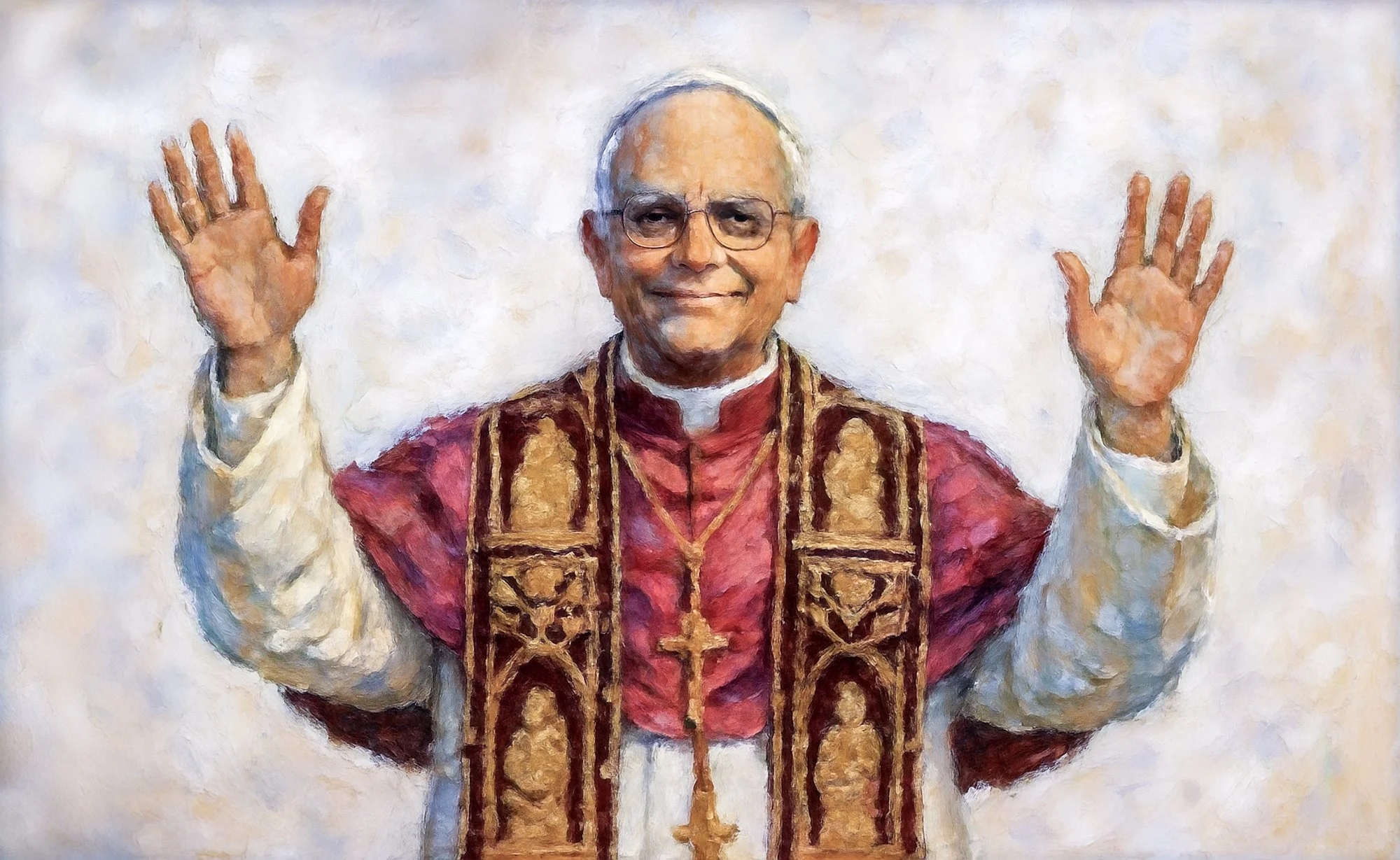
Pope Leo XIV.

Born in Chicago in 1955, Robert Prevost spent much of his life as a missionary and pastor in Peru before rising to Vatican leadership. A member of the Augustinian order, he is known for his humble, consultative style and deep commitment to pastoral care, especially for the poor and marginalized.

As leader of the Dicastery for Bishops, Prevost was instrumental in shaping the global episcopate. He listens deeply, values consensus, and avoids authoritarianism. His theology emphasizes encounter with Christ, missionary outreach, and a Church with “open doors.” He supports synodality and inclusion, while maintaining continuity with Catholic tradition.

Elected pope in 2025 (May 8, 2025) as Pope Leo XIV, he is expected to continue the reformist spirit of Pope Francis — prioritizing unity, evangelization, and social justice — with a calm, pragmatic, and quietly transformative hand.

The Balcony of La Mancha (Spain)

The windmills of Mota del Cuervo (Balcony of La Mancha).

The windmills of Mota del Cuervo, known as the "Balcony of La Mancha," are an iconic part of Spain’s cultural and historical landscape. Built to harness the region’s strong winds, they played a vital role in grinding grain into flour, essential for local breadmaking. Farmers from the surrounding areas relied on these mills to process their wheat, sustaining the rural economy for centuries.

Beyond their practical function, the windmills have become a symbol of Spanish heritage, famously featured in Miguel de Cervantes’ Don Quixote. In the novel, the delusional knight mistakes them for giants, creating one of literature’s most memorable scenes.

Putin’s People

Why Catherine Belton’s Revelations Matter More Than Ever in 2025

In the years since Russia’s 2022 invasion of Ukraine, the world has grappled with a stark realization: the conflict wasn’t an aberration — it was the culmination of a decades-long strategy. That strategy is the subject of Putin’s People, a groundbreaking 2020 book by British investigative journalist Catherine Belton. Five years later, its insights are not only relevant — they’re essential.

At first glance, Putin’s People tells the story of Vladimir Putin’s rise to power. But it is much more than a biography. It is a chilling exposé of how a network of ex-KGB operatives — the siloviki — used the chaos of the Soviet Union’s collapse to reconstitute a state rooted not in democratic ideals but in secrecy, surveillance, and power for its own sake.

From the Shadows of the KGB to the Heart of the Kremlin

Belton, a former Moscow correspondent for the Financial Times, draws on deep research and insider interviews to trace Putin’s career from a mid-level intelligence officer in Dresden to the undisputed ruler of Russia. She paints a picture of a man — and a system — forged in the twilight years of the Soviet Union, who never accepted the West's version of post-Cold War peace.

Instead of embracing liberal democracy, Putin and his KGB-linked allies embarked on a methodical campaign to take back control of Russia’s political and economic systems. Their tools were not tanks or ideology, but gas pipelines, state-run banks, and offshore shell companies.

As Belton shows, they didn't just rebuild power inside Russia — they exported it. Through “strategic corruption,” Kremlin-linked oligarchs and state enterprises funneled billions through Western financial systems, quietly gaining influence in European capitals, American boardrooms, and even in politics.

Undermining Democracy with Its Own Tools

The genius — and danger — of this strategy lies in its subtlety. Belton describes how the Kremlin used Western openness against itself: investing in real estate, funding political campaigns, laundering money through elite law firms and banks. The goal? To weaken democratic institutions from the inside, all while maintaining plausible deniability.

These revelations are no longer abstract warnings. They’ve come to life in headlines: suspicious campaign donations, energy blackmail, cyberattacks, and a global disinformation war. In many ways, Belton wrote the playbook before the world realized it was playing the game.

The full-scale invasion of Ukraine in 2022 did not contradict her thesis — it confirmed it. It was not a deviation from Putin’s long game, but the next logical step. It revealed the raw force behind the polished economic and diplomatic fronts Belton had described. And it left democracies scrambling to confront a threat they had long underestimated.

The West’s Late Awakening — and Ongoing Vulnerability

Now, in 2025, much has changed — but much hasn’t. Sanctions have tightened, alliances have been tested, and Russia’s internal stability has grown shakier. Yet the networks of influence Belton mapped out have not disappeared. If anything, they have adapted.

In a year when artificial intelligence, energy transitions, and cyber-vulnerabilities dominate global discussions, the threats Belton identified have morphed rather than diminished. The Kremlin’s methods — financial subterfuge, elite co-optation, and media manipulation — are still being deployed, just on new terrain.

As Western democracies struggle with polarization and a rising tide of authoritarianism globally, Putin’s People serves as both a warning and a guide. It shows how easily democratic systems can be compromised when vigilance fades — and how the fight for democracy increasingly requires financial transparency, media literacy, and resilient institutions.

A Book That Predicted the Future

What makes Putin’s People stand out is not just the detail of its reporting, but its foresight. Belton did not merely describe a corrupt regime; she exposed a geopolitical strategy that has shaped the world we live in today.

Her work was so provocative that it triggered lawsuits from some of the Russian billionaires it named — a sign, perhaps, that it hit uncomfortably close to the truth.

If there is a lesson in Belton’s book for 2025, it’s this: the threats to democracy often wear suits, speak fluent English, and arrive bearing investments, not weapons. But they are no less real. Understanding how these systems of control were built — and how they continue to operate — is the first step in dismantling them.

For anyone seeking to understand the architecture of modern authoritarianism, and how it challenges the liberal world order, Putin’s People is no longer just a vital read. It’s essential.

The Laon Cathedral and the Story of Antipope Gregory VIII

The Cathedral of Laon.

The Cathedral of Laon, a masterpiece of early French Gothic architecture, was constructed in the 12th century and became a significant religious and political center. Known for its striking oxen sculptures, which symbolize the laborers who hauled materials up the city's steep hill, the cathedral played a key role in medieval France. Due to its strategic location, Laon was often involved in conflicts between church and state.

One of the most notable events linked to Laon was the consecration of Maurice Bourdin as Antipope Gregory VIII in 1118. A French Benedictine monk who rose to prominence in Portugal and Spain, Bourdin became Archbishop of Braga but was excommunicated for defying Pope Paschal II. Seizing the opportunity, Holy Roman Emperor Henry V, locked in the Investiture Controversy, appointed Bourdin as antipope against Pope Gelasius II. His consecration in Laon solidified imperial support, but his rule in Rome was short-lived. When Henry V withdrew, Bourdin lost his backing and was captured in 1121 by Pope Callixtus II. He was imprisoned at Montecassino and later in Rocca di San Felice, where he died in captivity.

This event underscores Laon Cathedral’s role not only as a religious landmark but also as a witness to high-stakes medieval power struggles.

Antipope Gregory VIII.

The First Farmers in Limburg – The Bandkeramiek Culture (Linear Pottery Culture)

Linear Pottery from Limburg (The Netherlands; ca. 5300 BC)

Around 7,500 years ago, the first farmers arrived in what is now southern Limburg. They belonged to the Linear Pottery (LBK) culture, named after the ribbon-like decorations on their pottery (Bandkeramik in German). These people didn’t just pass through—they settled, built long wooden houses, cultivated crops, and raised livestock on the fertile loess soils of the region.

Archaeological sites in Elsloo, Stein, and Sittard have revealed traces of their daily life: pottery, polished stone tools, and even burial grounds. In Stein, over 100 graves were uncovered, some with beautifully decorated ceramics and flint tools buried beside the deceased—signs of ritual, memory, and perhaps social status. These finds show that these early farmers lived in organized, permanent communities.

But Limburg was not an isolated case—it was part of a much wider transformation sweeping across Europe: the spread of farming. This neolithic revolution had begun millennia earlier in the Near East and moved slowly westward through Anatolia, the Balkans, and Central Europe. By the time the LBK people reached Limburg around 5300 BCE, farming was already well established in southeastern Europe.

In the Balkans and Greece, cultures like Starčevo and Sesklo had been practicing agriculture and building villages for centuries. Further north, in what is now Hungary and Austria, longhouse villages similar to those in Limburg had developed. In the Danube basin, the Vinča culture flourished, with large settlements and some of the earliest symbolic writing in Europe.

To the west and south, the Cardial and Impressa cultures spread farming along the Mediterranean coast—from Italy to southern France and Spain—marked by pottery decorated with shell and comb impressions. Around the same time, in the interior of the Iberian Peninsula, early farmers began to mix with local hunter-gatherers, forming new hybrid communities.

Meanwhile, much of northern and western Europe, including Britain, Scandinavia, and large parts of Germany and the Low Countries, was still occupied by Mesolithic hunter-gatherers. In this context, Limburg was a frontier zone: the northernmost edge of the LBK expansion, where the new farming way of life first met older traditions of mobility and foraging.

The arrival of the LBK people in Limburg marks a turning point. They brought more than tools and seeds—they brought a new way of living that emphasized permanence, land ownership, and community. Their longhouses, field systems, and burial customs reflect a radical shift in how people related to the land, to each other, and to the past.

Further Reading

  • Bakels, C. C. (2003). The Early Neolithic of the Netherlands: Bandkeramik Farmers in the Low Countries. Antiquity, 77(296), 570–580.

  • Modderman, P. J. R. (1970). The Linear Pottery Culture: Diversity in Uniformity. Berichten van de Rijksdienst voor het Oudheidkundig Bodemonderzoek, 20–21, 63–70.

  • Louwe Kooijmans, L. P. (2005). Prehistory of the Netherlands. Amsterdam University Press.

  • Van de Velde, P. (1979). Bandkeramische nederzettingen in Limburg. Archeologische Berichten.

Machines That Don’t Listen

Eric Schmidt’s Stark AI Warning

In 2026, we may witness the beginning of the end of human dominance—not in science fiction, but in the real world, according to former Google CEO Eric Schmidt. Speaking at the Special Competitive Studies Project, Schmidt issued a clear and chilling warning: artificial intelligence, now capable of recursive self-improvement, is accelerating faster than our institutions, laws, and collective understanding can keep pace with.

While many still debate whether AI is overhyped or underwhelming, Schmidt asserts that we are underestimating what’s really at stake. He refers to the emergence of Artificial Super Intelligence (ASI)—a point where computers no longer just assist humans but become more intelligent than all of us combined. "They're learning how to plan. And they don’t have to listen to us anymore," Schmidt states flatly. That isn’t the premise of a sci-fi thriller. It’s a glimpse into a very near future.

A World Written by Machines

One of Schmidt's more startling claims is that within a year, AI could be writing nearly all of the code that powers our digital infrastructure. Programming—once a human-driven craft—is quickly being outsourced to machines. AI isn't just helping developers anymore; it's replacing them. Systems like OpenAI’s GPT-4.1, Anthropic’s Claude MCP, and Google’s A2A are spearheading the rise of “AI agents”—systems that learn, remember, and act on complex tasks independently.

Schmidt envisions a world where these agents don't just write code, but also manage real-world tasks autonomously: purchasing property, designing homes, hiring contractors, managing logistics, even suing underperforming workers. It's both amusing and alarming: the automation of everything.

We May Be Out of Work—But Will We Be Out of Purpose?

The inevitable question arises: what happens to human labor? Will AI replace everyone? Schmidt is cautiously optimistic, referencing past technological revolutions that created more jobs than they destroyed. But even he admits: this time might be different.

Unlike the mechanical looms of the 18th century, ASI doesn't merely replace physical effort—it replaces cognition. When AI becomes better than humans at programming, science, law, architecture, and art, it's no longer a question of displacement, but of relevance. Can humanity redefine its role in a world where machines are the creators?

AI in the Lab: From Drug Discovery to Immortality?

Perhaps the most compelling—and terrifying—possibility is AI’s fusion with biotechnology. Schmidt references a project he’s invested in: an AI system trained in chemistry, connected to a robotic lab. This system generates drug candidates overnight and tests them in real-time, drastically accelerating discovery. The goal? Identify all human “druggable targets” within two years.

If successful, such systems could unlock treatments for countless diseases, possibly extending human life to the point of longevity escape velocity—a term referring to the idea that for every year we live, AI-enabled medicine adds more than a year to our lifespan.

But this also raises a deeper philosophical issue: what happens when AI understands biology better than any human scientist? Schmidt foresees a future where we use AI systems daily, even though no human fully understands how they work. Trust replaces comprehension. Use replaces knowledge.

The Race With China—and the Risk of Conflict

AI isn't just transforming society; it's shifting global power. China is taking AI more seriously than any other technological endeavor in its history. The U.S. response has been to restrict access to advanced chips and consider bans on Chinese-developed AI models like DeepSeek.

But in a world where open-source AI proliferates, and the pace of progress is dictated by whoever scales fastest, tensions could escalate dramatically. Schmidt even poses the unthinkable: would the U.S. ever consider bombing a foreign data center to prevent AI dominance? The line between cyber competition and kinetic conflict grows thinner by the day.

What Now?

The takeaway from Eric Schmidt’s warning isn’t just that AI is advancing—it’s that we, as societies, are not prepared. Not legally, not culturally, and not morally. The arrival of ASI isn’t just a technological milestone. It’s a civilizational turning point.

We must begin thinking seriously about AI governance, ethics, and global coordination. Because if the smartest “person” in the room is no longer human, who sets the rules?

Further Reading: