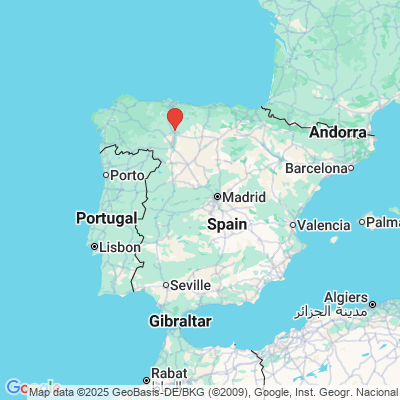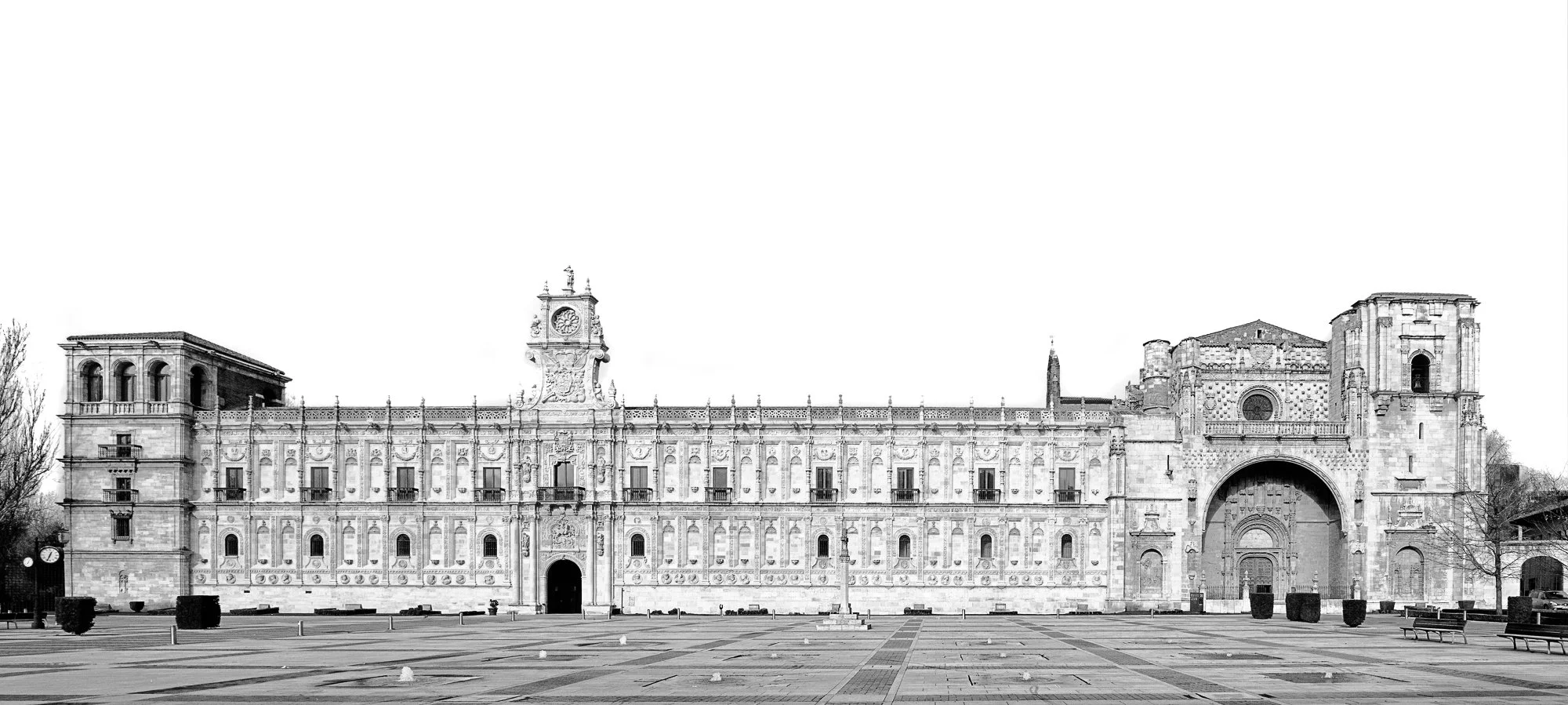
The Convent of San Marcos, León.
There are buildings that whisper of faith, and others that shout of power. The Convento de San Marcos in León does both — and with such splendour that even silence seems to echo inside its walls.
Once a humble monastery for pilgrims walking the Camino de Santiago, San Marcos grew over the centuries into a masterpiece of Spanish Plateresque architecture — a kind of Renaissance lacework sculpted in stone. Its long façade stretches across the square like a carved tapestry: saints, shells, medallions, and royal emblems woven into the pale limestone. The detail is dizzying, almost theatrical, as if each stone wanted to prove it could outshine the next.
Behind that beauty, though, lies a history of extremes. In the 12th century, the Order of Santiago built here a refuge for weary travellers heading west toward Compostela. By the 16th century, it had become one of Spain’s grandest religious houses — part convent, part royal lodging, part military symbol of empire. During darker times, the same walls served as a prison; even Francisco Franco’s regime held political detainees here.
Today San Marcos has found peace again. Much of it is now a Parador, one of Spain’s most atmospheric state-run hotels. Guests sleep in former monks’ cells, dine beneath vaulted ceilings, and step out onto the same plaza where pilgrims once arrived mud-splattered and star-eyed.
Stand before it in the morning light and you feel the layers of time unfold: the clang of armour, the murmur of prayers, the shuffle of travellers. Few places in Spain condense so much history into one façade.
San Marcos isn’t just a monument — it’s a reminder that beauty and power, faith and suffering, can share the same stones.
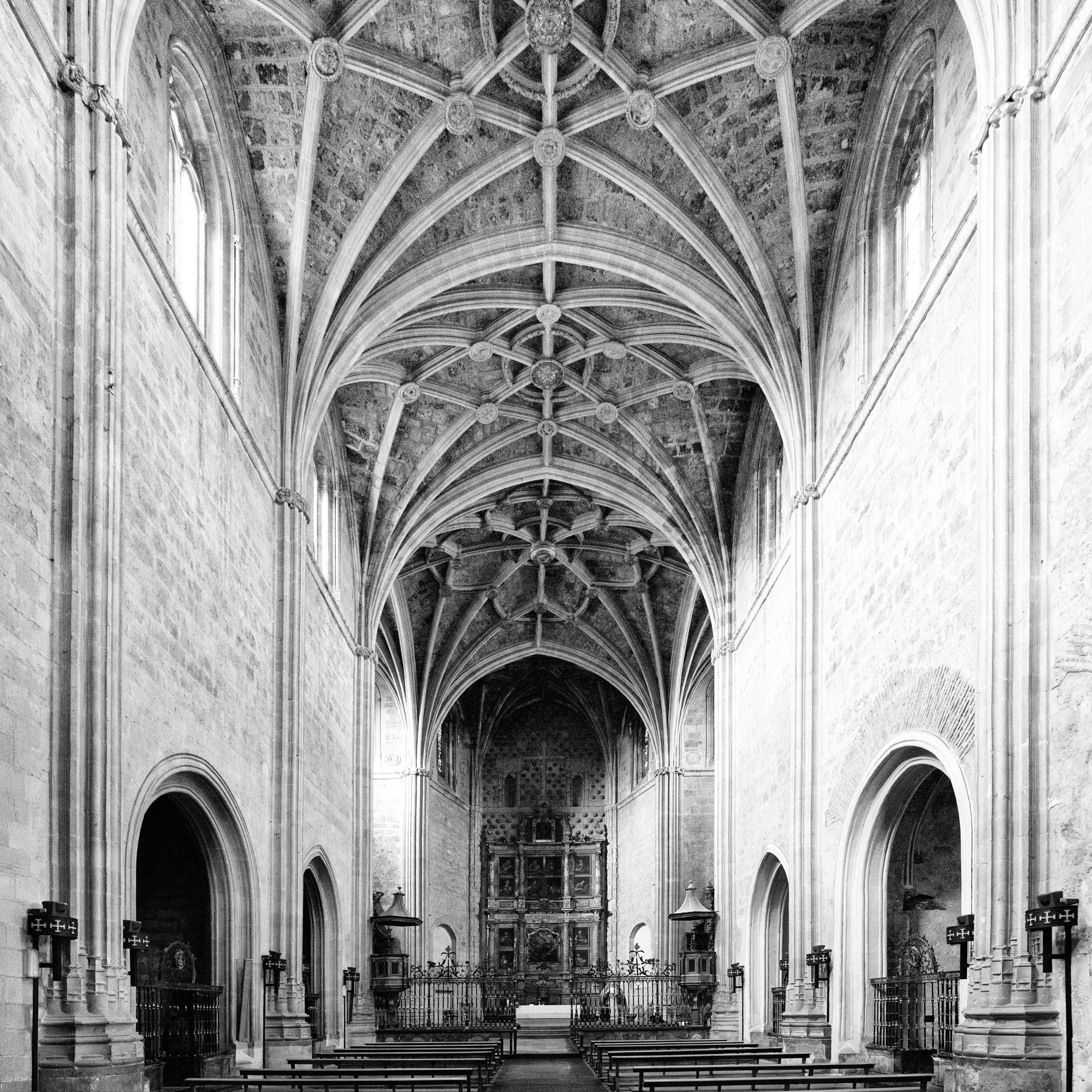
The interior of the church of San Marcos in León.