
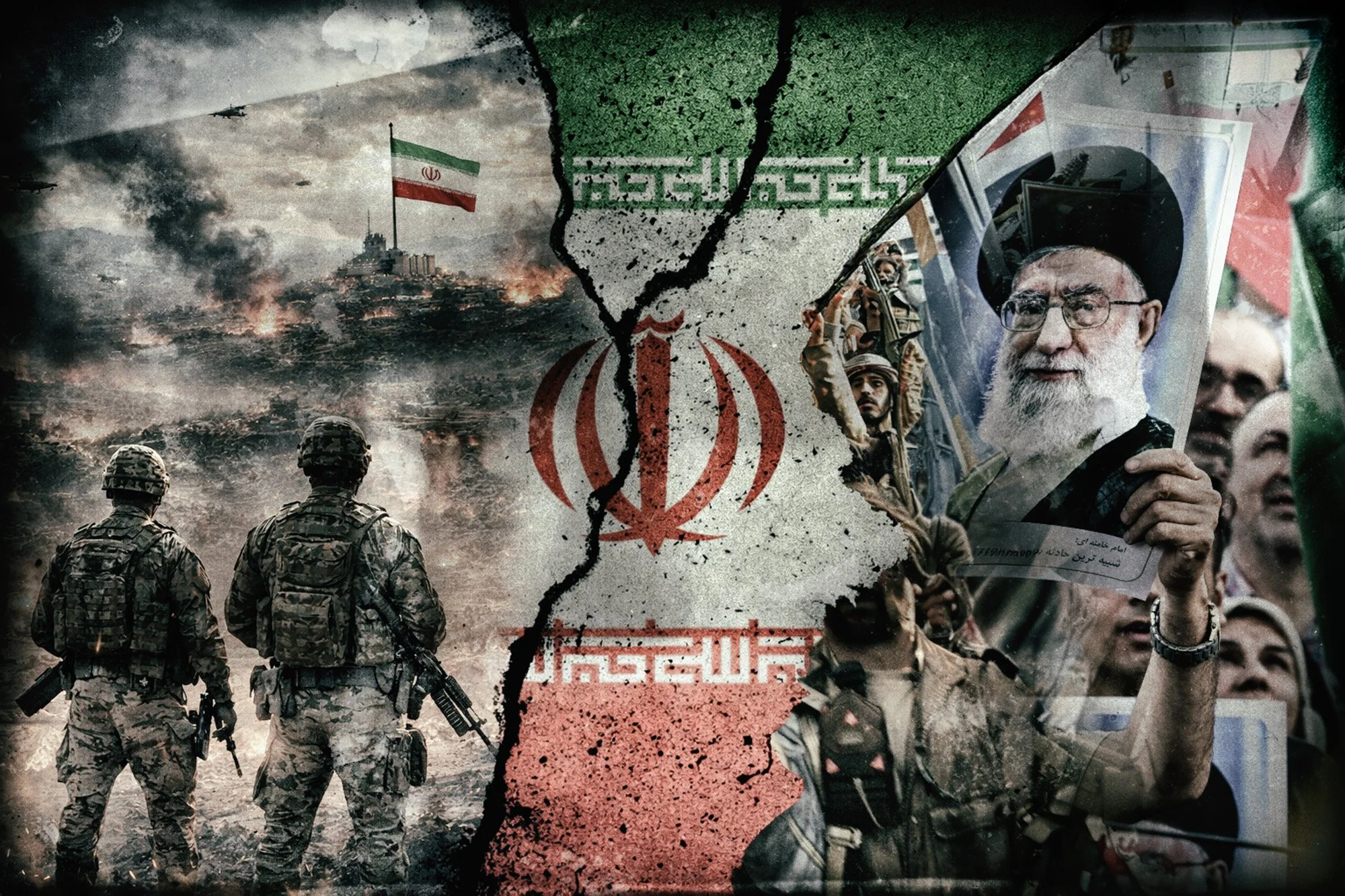
At the start of the war, the language was familiar: targets destroyed, capabilities reduced, pressure increasing. It is the language of progress — and ultimately, of victory.
But very quickly, a more difficult question emerges: what would “winning” actually look like?
Is it destroying Iran’s military capacity, stopping its nuclear ambitions, forcing regime change, or simply restoring deterrence? These are not the same objectives. Some are military, others political, and some may not be achievable at all. When goals diverge, even success on the battlefield can fail to produce a clear outcome.
More striking still is that the strategic rationale itself remains unclear. This is not just a hard war to win — it is a war whose end state is difficult to define.
Why Military Success Is No Longer Enough
For much of modern history, war followed a simple logic: defeat the enemy’s army, and political results would follow. That logic still matters, but it no longer works on its own.
Vietnam, Afghanistan, and Ukraine all show the same pattern: military superiority does not guarantee a lasting political outcome. Power can dominate the battlefield without shaping the result.
There is also a more practical constraint. Modern warfare depends on complex, expensive systems — missiles, interceptors, air defense — that cannot be produced quickly or in unlimited quantities. Stockpiles are limited, and production capacity is slow to expand.
A war can be started quickly. Sustaining it is much harder.
A War of Endurance, Not Decision
In this conflict, the asymmetry is clear. The United States and Israel need visible results. Iran may only need to endure.
At the same time, the war extends beyond the battlefield into a wider system of constraints:
Energy markets, where disruption affects global oil and gas flows
Regional stability, where escalation spreads beyond a single front
Military supply chains, where limited production constrains the pace of war
Domestic support, where public opinion limits how long governments can continue
These pressures reinforce each other. Rising costs, strained supply chains, and political fatigue make prolonged conflict increasingly difficult to sustain.
The burden is not evenly shared. The United States itself faces limited direct risk, but its allies depend heavily on scarce and expensive defensive systems. The ability to continue the war may depend less on offensive success than on whether these partners can hold out.
At the same time, the economic impact spreads far beyond the region — through oil, gas, shipping, and even fertilizer markets — often hitting the most vulnerable countries hardest.
Together, these pressures define what economic resilience now means in practice: the ability to absorb shocks, sustain pressure, and continue functioning under disruption.
In this kind of conflict, time works differently. The stronger side seeks a quick result. The weaker side benefits from delay. The longer the war lasts, the less likely a decisive outcome becomes.
Ending Without Losing Face
If objectives are unclear, resources constrained, and outcomes shaped by forces beyond direct control, then the question is no longer how to win, but how to end the war.
That is a harder problem. Ending such a conflict requires a way out that allows all sides to step back without appearing to lose. These exits are political, negotiated, and often ambiguous.
The longer the war continues, the harder this becomes. Costs rise, positions harden, and expectations can make compromise politically untenable. At the same time, the complexity of the conflict makes it increasingly difficult for any one actor to control its trajectory.
The real question, then, is not whether the United States and Israel can win this war, but whether their leaders are willing and able to shift from a logic of victory to a logic of termination.
If they are not, the war may continue not because it can be won, but because it has become too difficult to end.
Further Reading
Rupert Smith — The Utility of Force
Donald Stoker — Why Nations Lose Wars
Hew Strachan (ed.) — The Changing Character of War
Adam Tooze — lectures on war and the global economy (On YouTube)