
Ivan Krastev on a World Without a Story
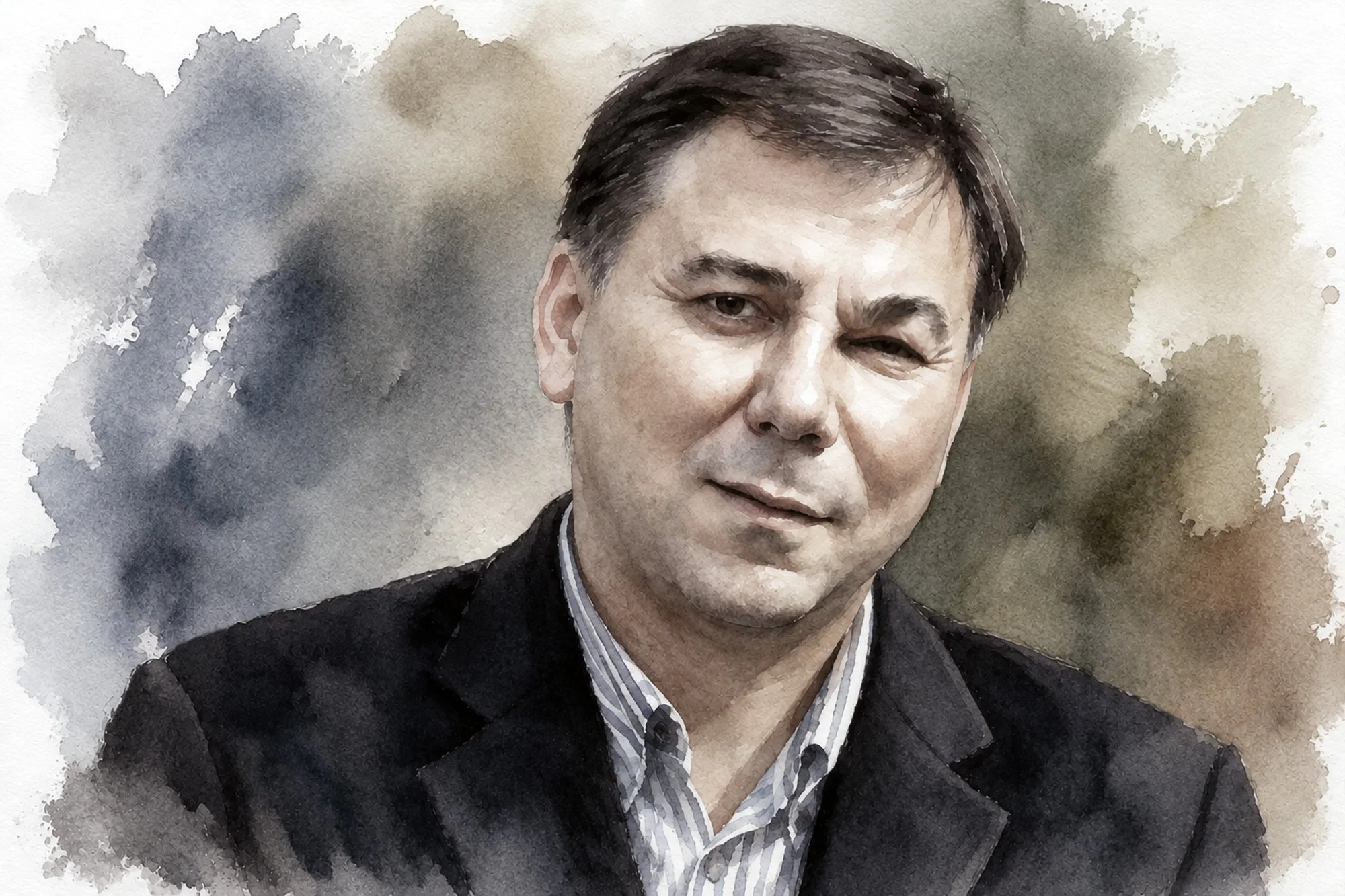
Ivan Krastev, Bulgarian political scientist and leading voice on Europe’s changing place in the world. (Image created with AI.)
We like to think history moves with a certain direction. Crises come and go, but the overall path remains visible. Ivan Krastev suggests that this sense of direction is now breaking down. What we are experiencing is not just instability, but the end of the framework that made the modern world understandable.
He calls it the end of the “long 20th century.” What is fading is not simply a period in time, but the belief that politics is driven by competing visions of the future.
For much of the last century, that belief held everything together. Capitalism and communism were not just systems—they were promises about tomorrow. Both sides assumed history would ultimately vindicate them. That confidence allowed for patience, even restraint.
Today, the future no longer feels like a promise. It feels like a source of anxiety. Climate change, demographic shifts, and technological disruption have turned tomorrow into something uncertain, even threatening. As a result, political ideas have lost much of their energy. The labels remain, but they no longer mobilize people in the same way.
This shift is especially visible in the United States. Krastev sees recent developments there as something closer to a revolution—fast-moving, reactive, and lacking a clear direction. What matters is not where it is going, but how quickly it moves.
More importantly, the American self-image is changing. For decades, power was linked to values and a sense of mission. Now, that connection is weakening. Power is increasingly seen as something that does not need justification beyond itself.
At the same time, the internal debate has shifted. Earlier criticism often came from those who believed the country had failed to live up to its ideals. Today, those ideals themselves are questioned. That marks a deeper loss: not just political consensus, but belief in a shared purpose.
Krastev draws a striking parallel with the late Soviet Union, where systems collapsed not because they were suddenly attacked, but because belief in them quietly disappeared.
This loss of confidence is not limited to one country. It affects the global order as well. As the United States becomes less predictable, the world does not simply divide into two camps. Instead, it becomes more fluid.
China’s rise, for instance, is increasingly seen as part of a rebalancing rather than a direct threat. At the same time, international politics is becoming less institutional and more personal. Relationships between leaders and informal deals matter more than formal structures.
This creates opportunities for countries that are neither superpowers nor small states. They can navigate between larger actors, adjusting their position as circumstances change.
For Europe, this is a difficult environment. It faces pressure from multiple directions—economic, military, and political—while the old certainties, especially about its relationship with the United States, are weakening. Yet Europe has not fully redefined its role. There is still an assumption that the future will resemble the present, only slightly worse.
Krastev doubts that this is realistic.
What makes the current moment so disorienting is the absence of a clear story. The 20th century, despite its conflicts, offered competing visions of where the world was heading. Today, that sense of direction is missing. Events unfold quickly, but without a shared narrative.
Looking back, major turning points often seem inevitable. At the time, they rarely feel that way. The collapse of the Soviet Union surprised almost everyone. Only later did it begin to look predictable.
We may be in a similar moment now. Not a sudden collapse, but a gradual shift in which the assumptions that once shaped political life are quietly losing their hold.
If so, the challenge is not just to respond to events, but to recognize that the deeper transformation is still unfolding.
Further reading
Ivan Krastev – After Europe
Ivan Krastev & Stephen Holmes – The Light That Failed
Ivan Krastev – Is It Tomorrow Yet?
Francis Fukuyama – The End of History and the Last Man