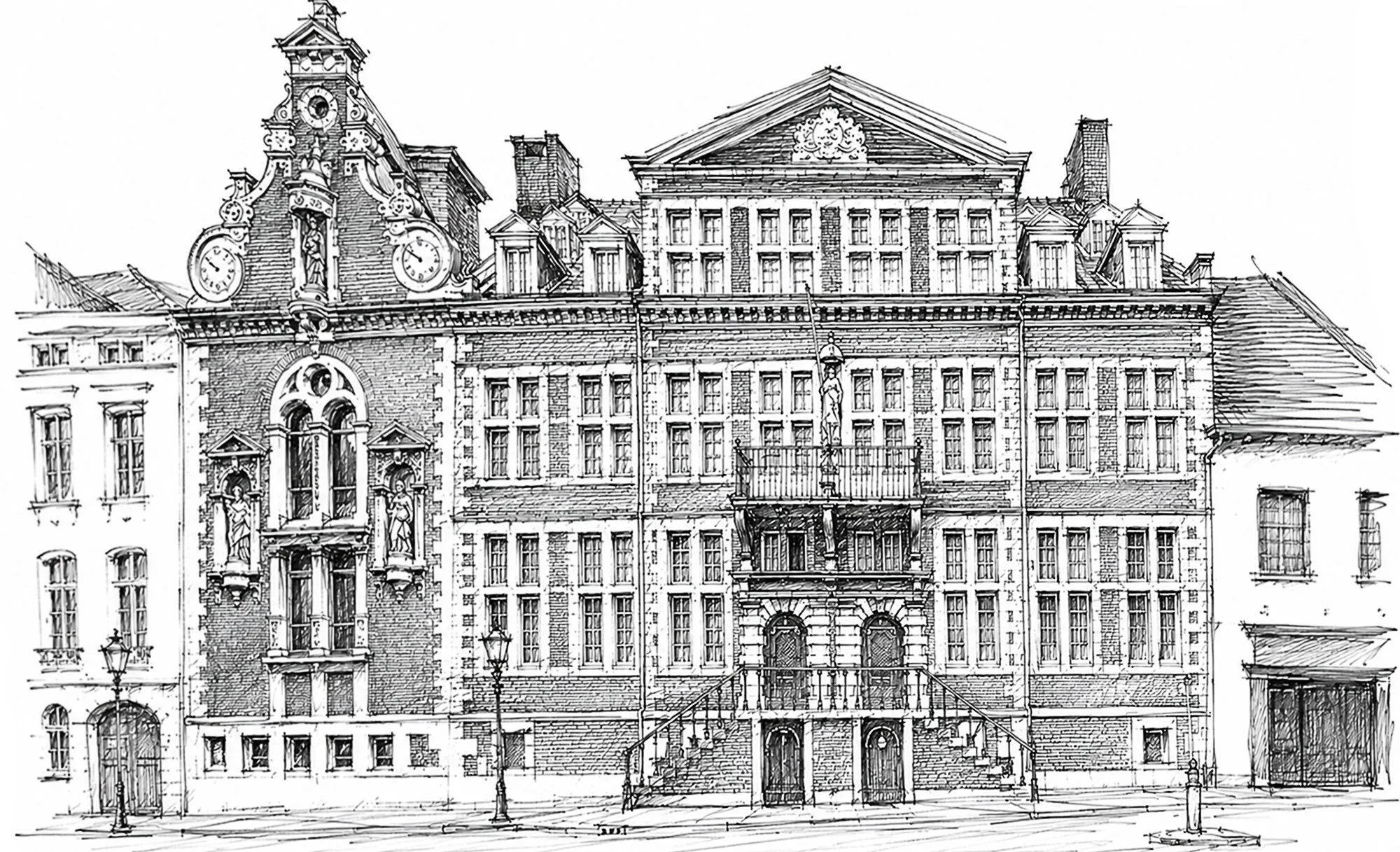
De Steenen Trappen, Roermond (The Netherlands).
In the Neerstraat, in the heart of Roermond, stands a building long known as De Steenen Trappen—the Stone Steps. It is a façade that suggests permanence and authority. And for centuries, it has carried both.
From Elite Residence to Children’s Home
The story begins not with children, but with status.
The main house was built in 1666, shortly after the devastating fire that burned down most of the city center. It was built as a grand double residence in Maasland Renaissance style. Behind its symmetry and heavy construction lies an even older history: this part of the city has been inhabited since at least the 12th or 13th century.
In the late 19th century, the building took on a new role. Around 1875, it became a convent for the Sisters of the Poor Child Jesus, and from 1908 onward it functioned as a children’s home—the phase that still defines how many people remember it.
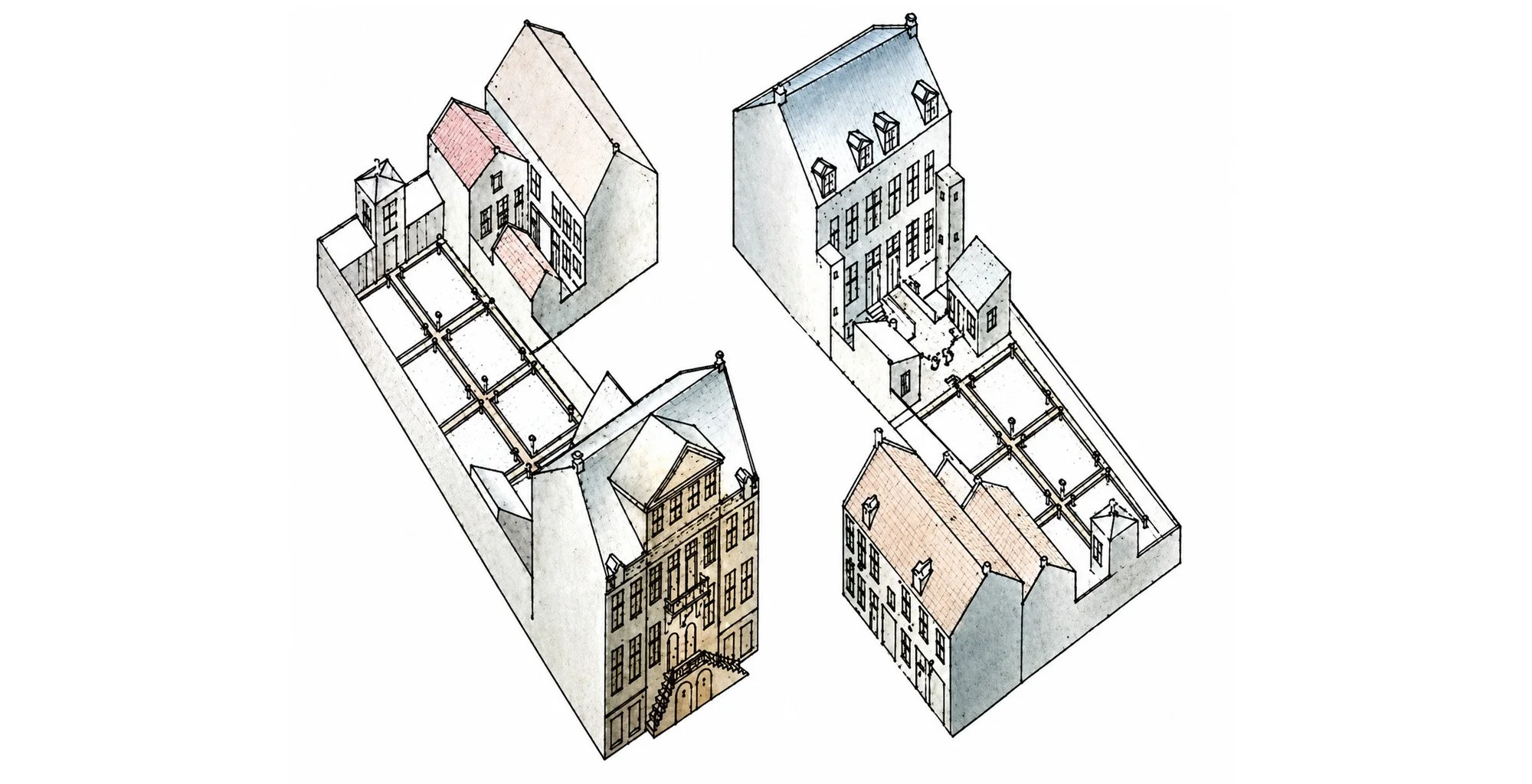
De Steenen Trappen, former girls’ orphanage in Roermond (The Netherlands). Image based on an image from “Limburgse Genealogie Wiki”.
Inside the Walls
Official records describe the function of the building. Personal memories describe its atmosphere.
People who entered the complex recall a sober and enclosed interior, dominated by dark wood and heavy construction. Movement inside was restricted; parts of the building felt unstable or off-limits. It was not a place one casually visited.
More striking is its reputation. For many, especially as children, the building inspired unease or even fear. Stories circulated, but rarely positive ones. The sense of a closed world—of things happening out of sight—remains part of its legacy.
Some recollections hint at a strict and austere regime:
children wearing hand-me-down clothing
daily routines shaped by discipline and labour
a distant, rule-driven environment
These are fragments rather than full accounts, but together they suggest a life that was structured, controlled, and not always gentle.
A Complex Transformed
The physical complex did not survive intact.
In the 1950s and 1960s, large parts were demolished or radically altered. Older buildings—some dating back to the period after the 1665 fire—disappeared. New structures replaced them, including a flat building along the Paredisstraat. Even the convent chapel was reduced largely to its front façade.
By the time the nuns left in 1994, the site was a mix of historic fragments and later additions, much of it standing empty.
From Institution to Housing
The redevelopment that followed reshaped the area once again.
Through a process of renewal and new construction, the complex was converted into a residential zone:
The main building and the chapel façade were preserved
Surrounding structures were rebuilt or replaced
Around 75 apartments were created, partly within the old fabric, partly new
The inner courtyard—once closed and inward-looking—became a network of small streets and shared spaces. Shops were added at ground level, with housing above.
What had been a secluded institution became part of the open city.
What Remains
Today, “De Steenen Trappen” is no longer a convent or a children’s home. Much of the original complex has vanished or been transformed.
And yet, the place still carries its past.
Not only in its architecture—the thick walls, the layered construction—but also in the way it is remembered. The building stands as a reminder that history is not just what survives in stone, but also what lingers in memory.
In Roermond, “De Steenen Trappen” is still there. The stories behind the building is harder to see—but not entirely gone.
Further reading
Stichting Ruimte, Ruimtelijk, March 2001 (article on De Steenen Trappen)