
Image created with AI.
What makes the current discussion around the Andes hantavirus so unsettling is not just its lethality, but the combination of several characteristics that together create a potentially dangerous epidemiological picture.
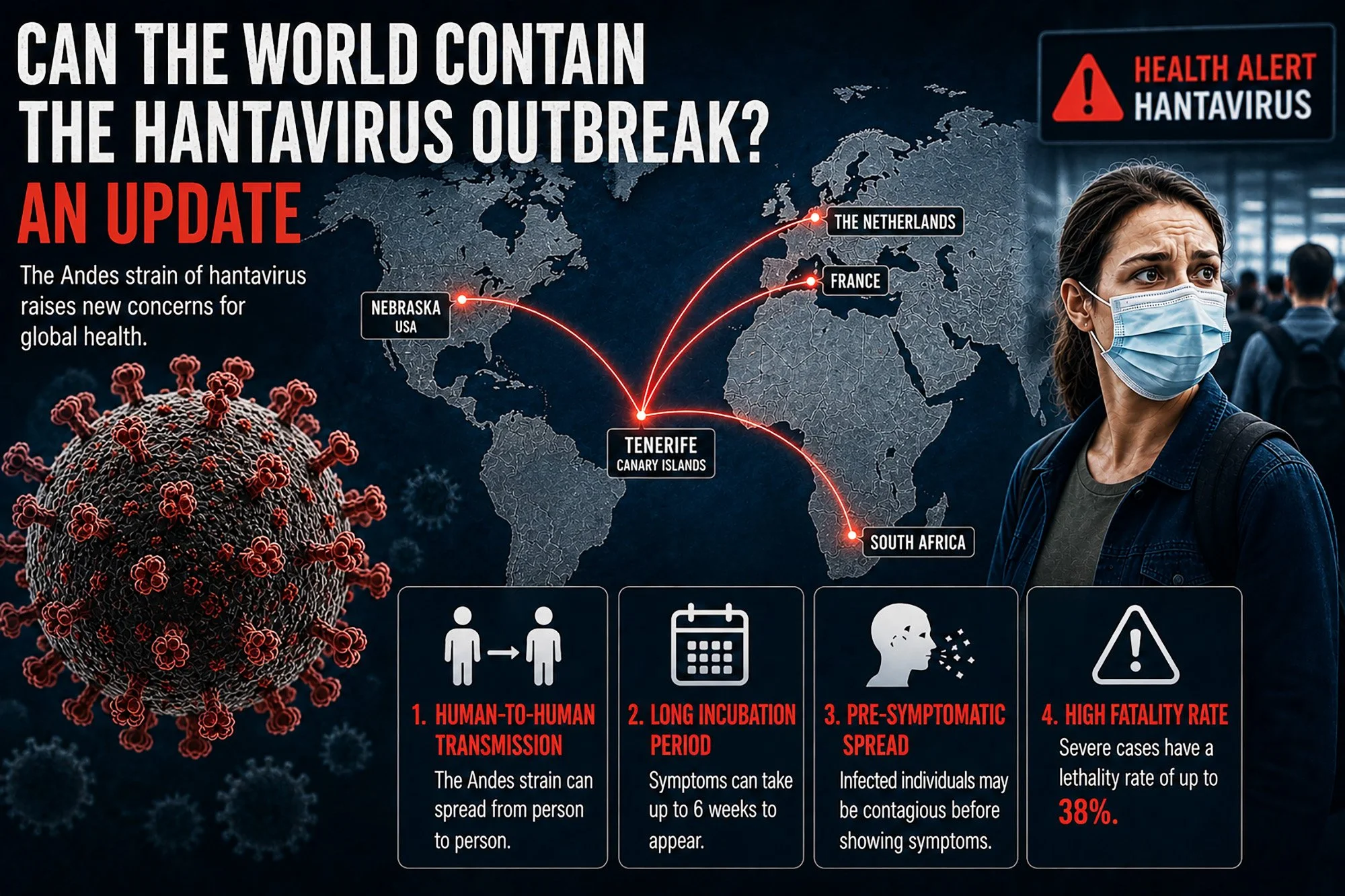
Health authorities now acknowledge that the Andes strain can spread from person to person. Even more troubling are growing indications that infected individuals may already be contagious before they themselves realize they are ill. Combined with reports that the incubation period may in some cases last up to six weeks, this creates a uniquely dangerous situation.
An infected person may unknowingly expose family members, colleagues, fellow travellers, healthcare workers, or others sharing the same spaces before recognizing the significance of their symptoms. By the time severe symptoms emerge and the infection is finally recognized, chains of transmission may already have spread beyond the original source, potentially crossing cities and borders in a world defined by constant human movement.
And then there is the fatality rate. Severe Andes hantavirus infections have been associated with mortality estimates approaching 38%. Even allowing for uncertainty in the numbers, that is an extraordinarily high figure compared to most modern respiratory outbreaks.
Taken separately, each of these factors would already concern epidemiologists. Combined — human-to-human transmission, possible pre-symptomatic spread, a long incubation period, and high lethality — they describe exactly the kind of outbreak epidemiologists fear most.
The central question is no longer whether the Andes hantavirus deserves serious attention. The real question is whether modern societies, after years of political fatigue, economic pressure, and declining trust in public institutions, still possess the collective will, discipline, and coordination required to stop a dangerous outbreak before it spreads beyond control.
Further reading
European Centre for Disease Prevention and Control (ECDC)
U.S. Centers for Disease Control and Prevention (CDC)
RIVM – Hantavirus updates