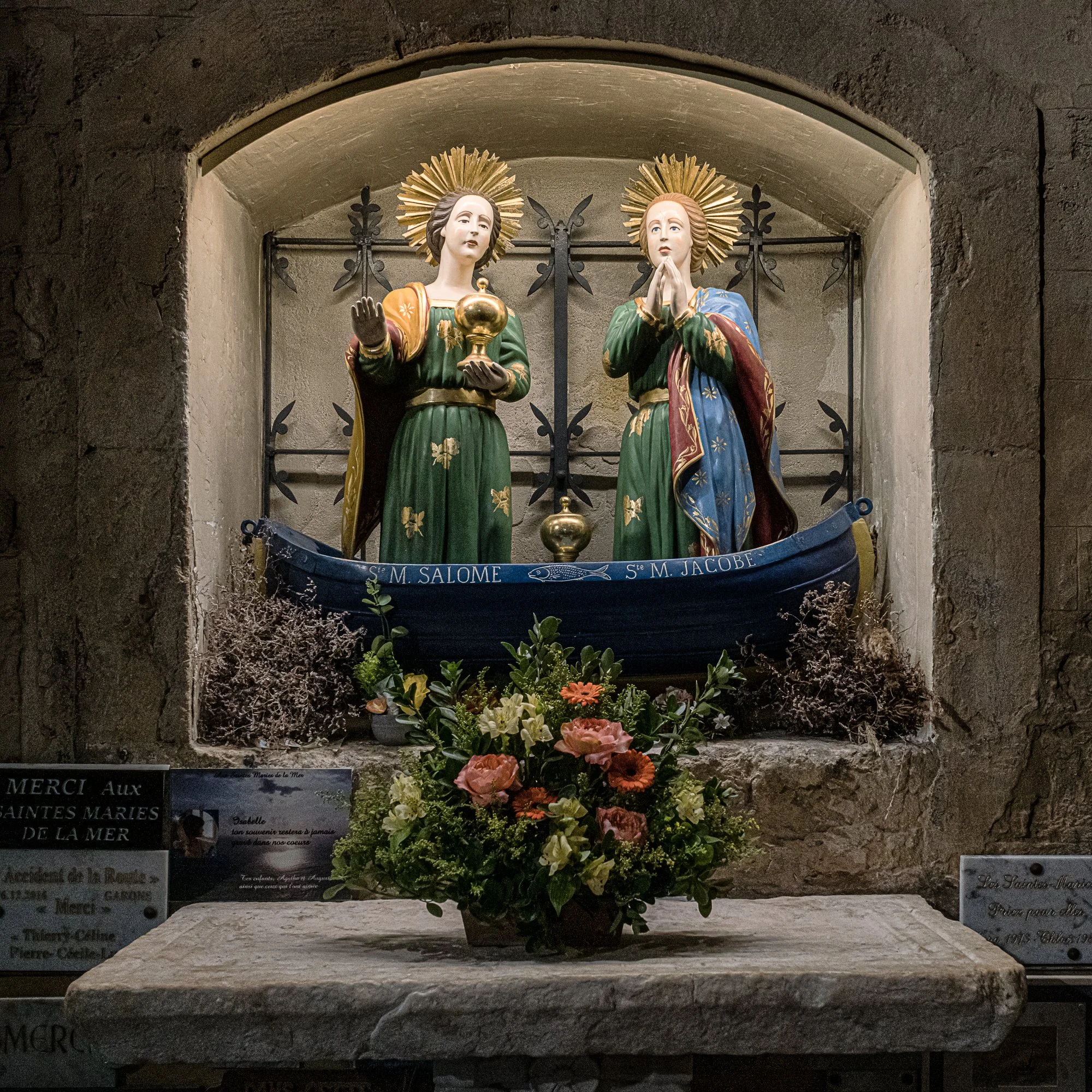
The two Marys in their boat, symbolizing the legendary arrival of early Christians on this shore.
A Story from the Sea
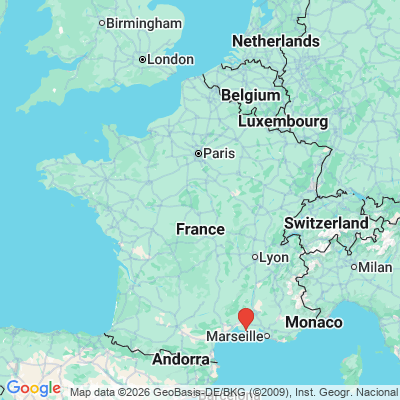
At the edge of the Camargue, where land fades into marsh and sea, stands a church that looks like a fortress. It is here that local tradition places a striking beginning.
The story does not start here, however, but far to the east, in the lands of Palestine. In the years following the death of Christ, his followers were increasingly under pressure—from both Roman authorities and local opposition. According to tradition, a small group of women and early believers were forced to flee. They were placed in a fragile boat, without sail or rudder, and cast out to sea.
Carried by currents rather than by human control, the boat drifted across the Mediterranean until it reached this remote coastline. On board were Marie Jacobé and Marie Salomé, close relatives of Jesus, and, in many versions, Mary Magdalene. With them was also a woman named Sara, whose story would take on a life of its own in the centuries that followed.
Whether history or legend, the power of the story lies in the journey itself: a passage from persecution to arrival, from uncertainty to landfall—here, at the edge of Europe.
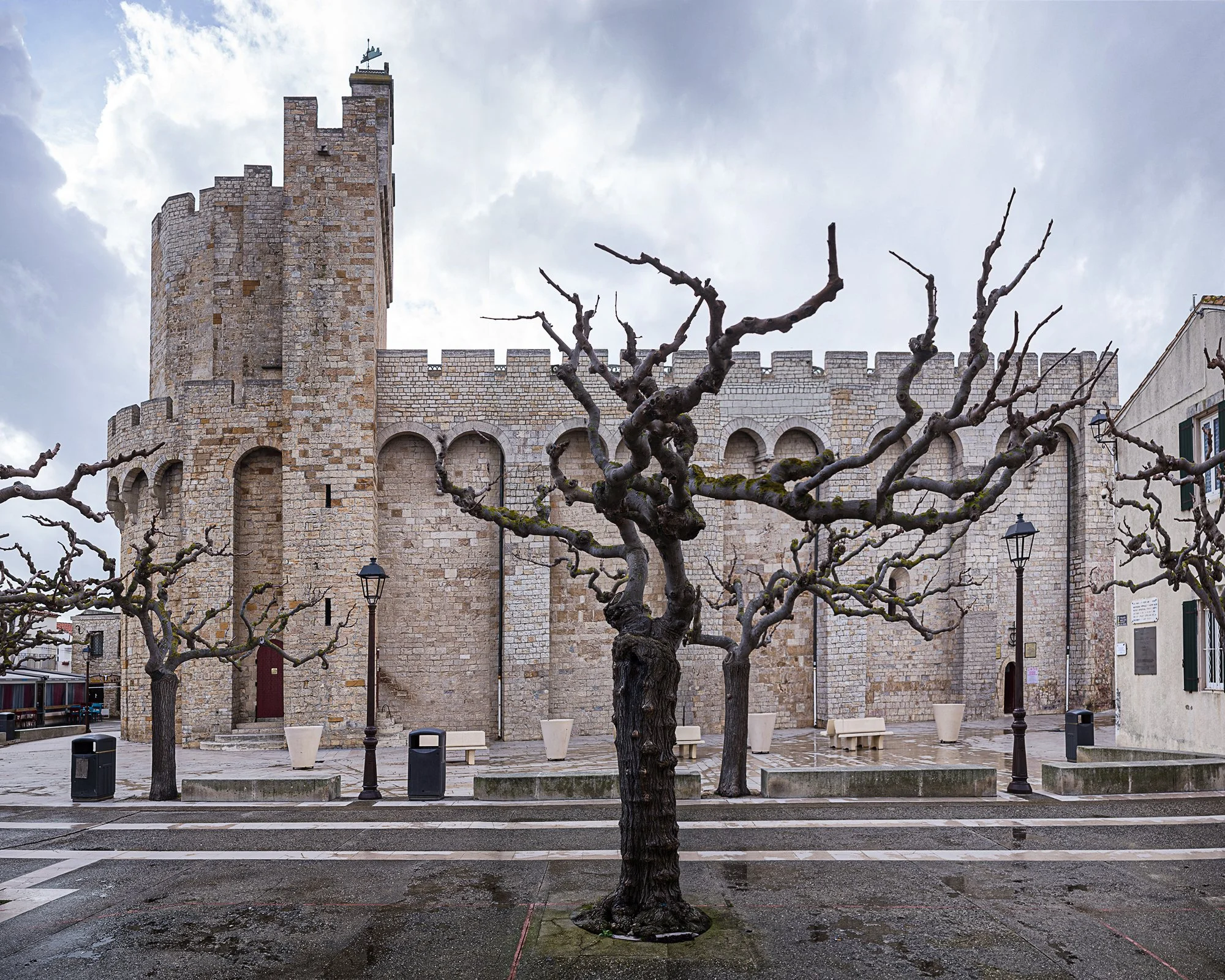
The fortified church of Saintes-Maries-de-la-Mer.
A Sanctuary of Stone and Presence
The church reflects both danger and refuge. Built as a defensive structure against attacks from the sea, it offered physical protection in turbulent times. Inside, however, the atmosphere softens. The Romanesque forms, filtered light, and quiet spatial rhythm create a sense of inward movement.
Above the altar, the two Marys are shown in a boat, a simple image that captures the essence of the story. Below, in the crypt, stands Sara—known as Sara la Noire—covered in layers of cloaks, jewelry, and offerings brought by pilgrims. These gifts are acts of gratitude or hope, not decoration.
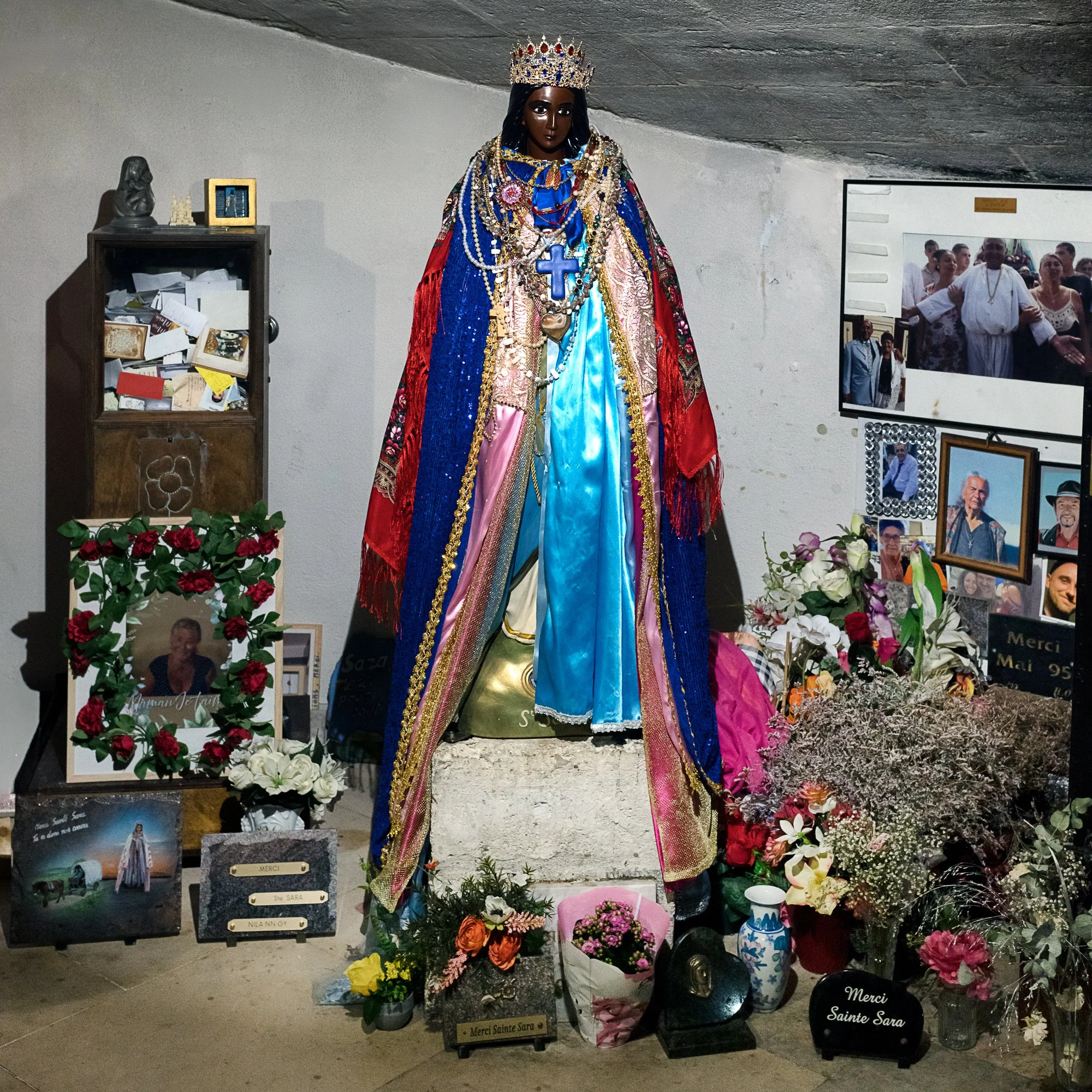
The statue of Sara la Noire, covered in offerings from pilgrims—an enduring symbol of listening, protection, and devotion.
Sara’s origins are uncertain, but her meaning today is clear. She is especially revered by Roma and travelling communities, who see in her a figure of recognition and protection. She has been described as one who listens—a presence for those who feel unheard.
Ritual, Memory, and Mystery
Each year, especially in May, the town fills with pilgrims. Statues of the saints are carried from the church to the sea, and often into the water itself, recalling their legendary arrival. These processions are not simply reenactments; they are lived experiences, marked by strong emotion and a sense of shared participation.
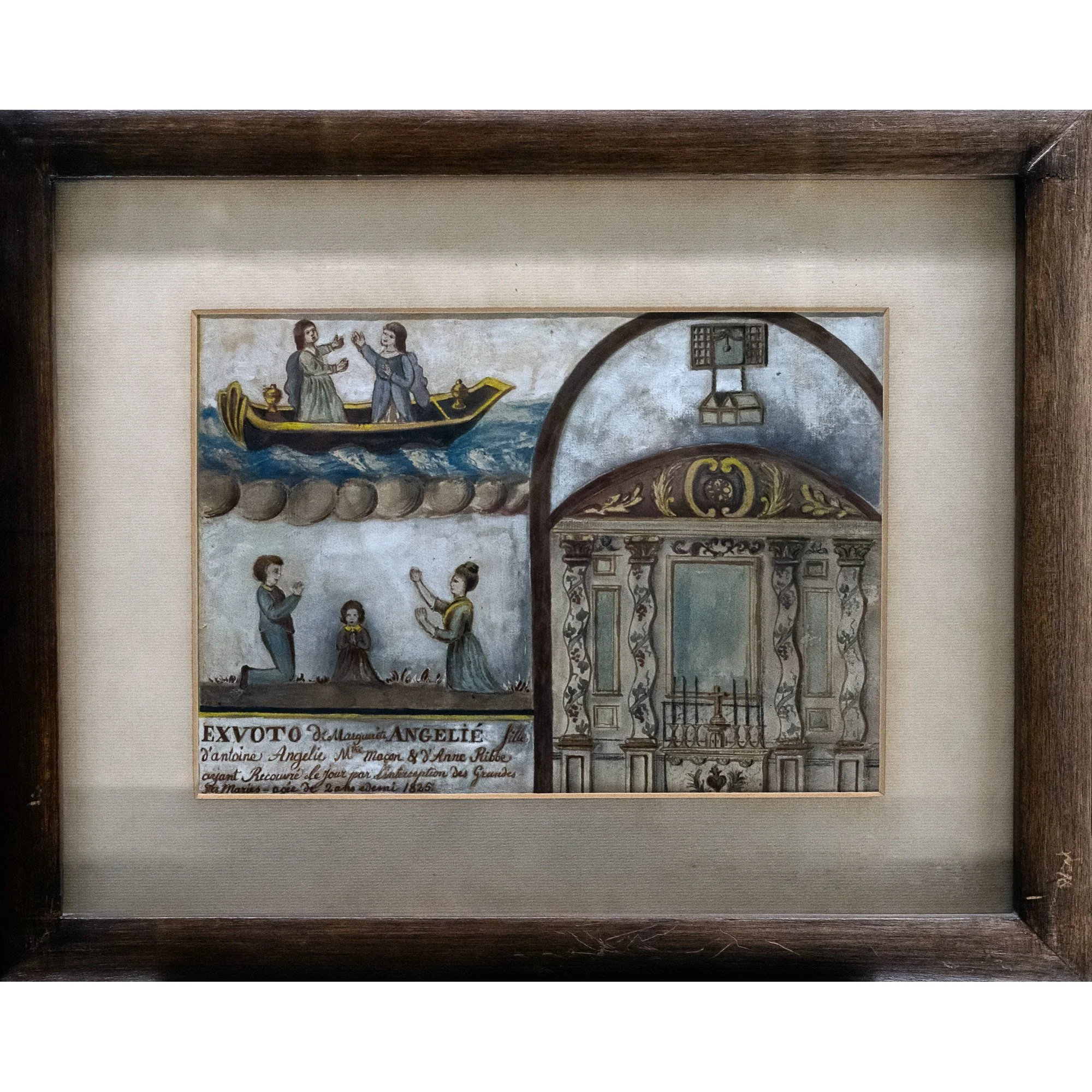
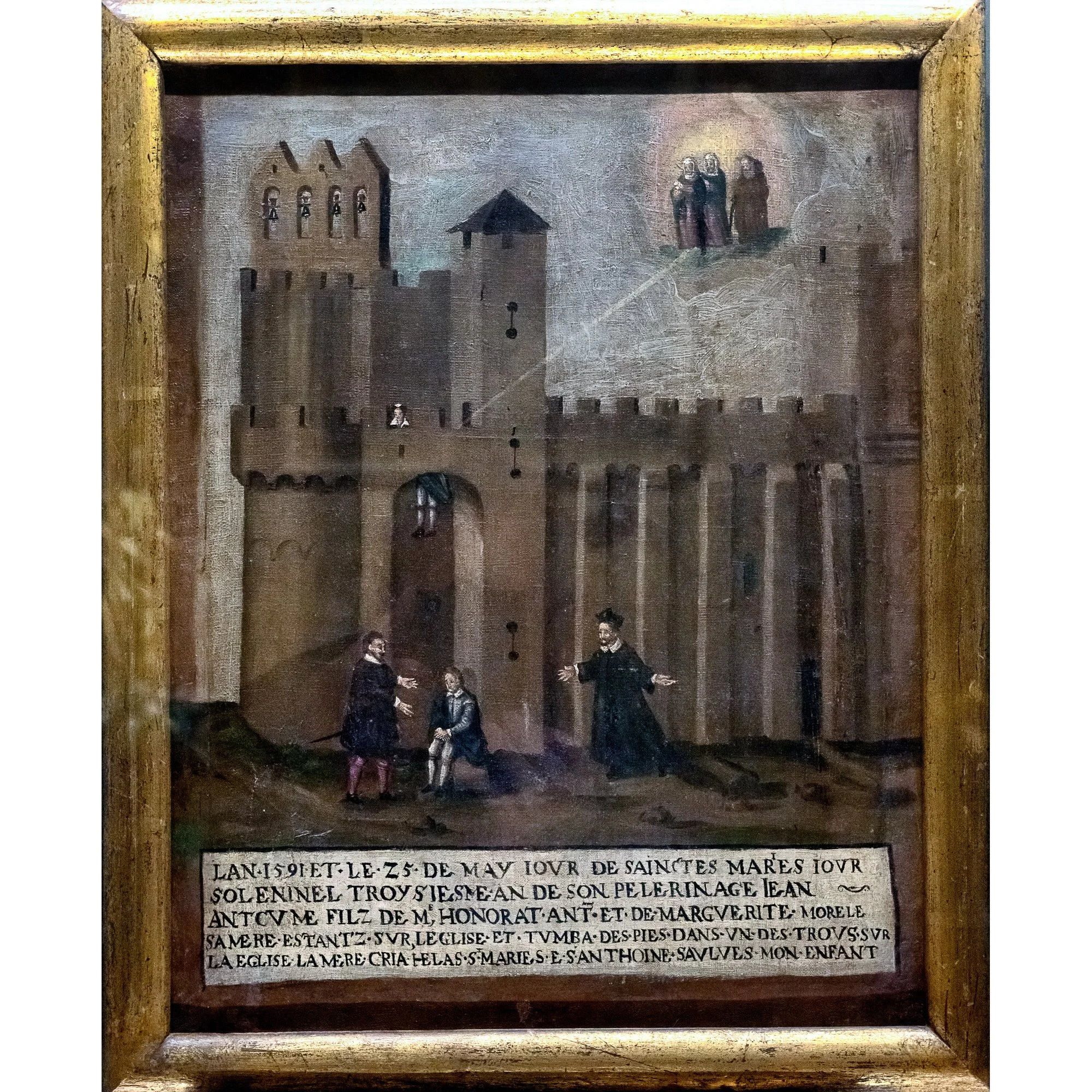
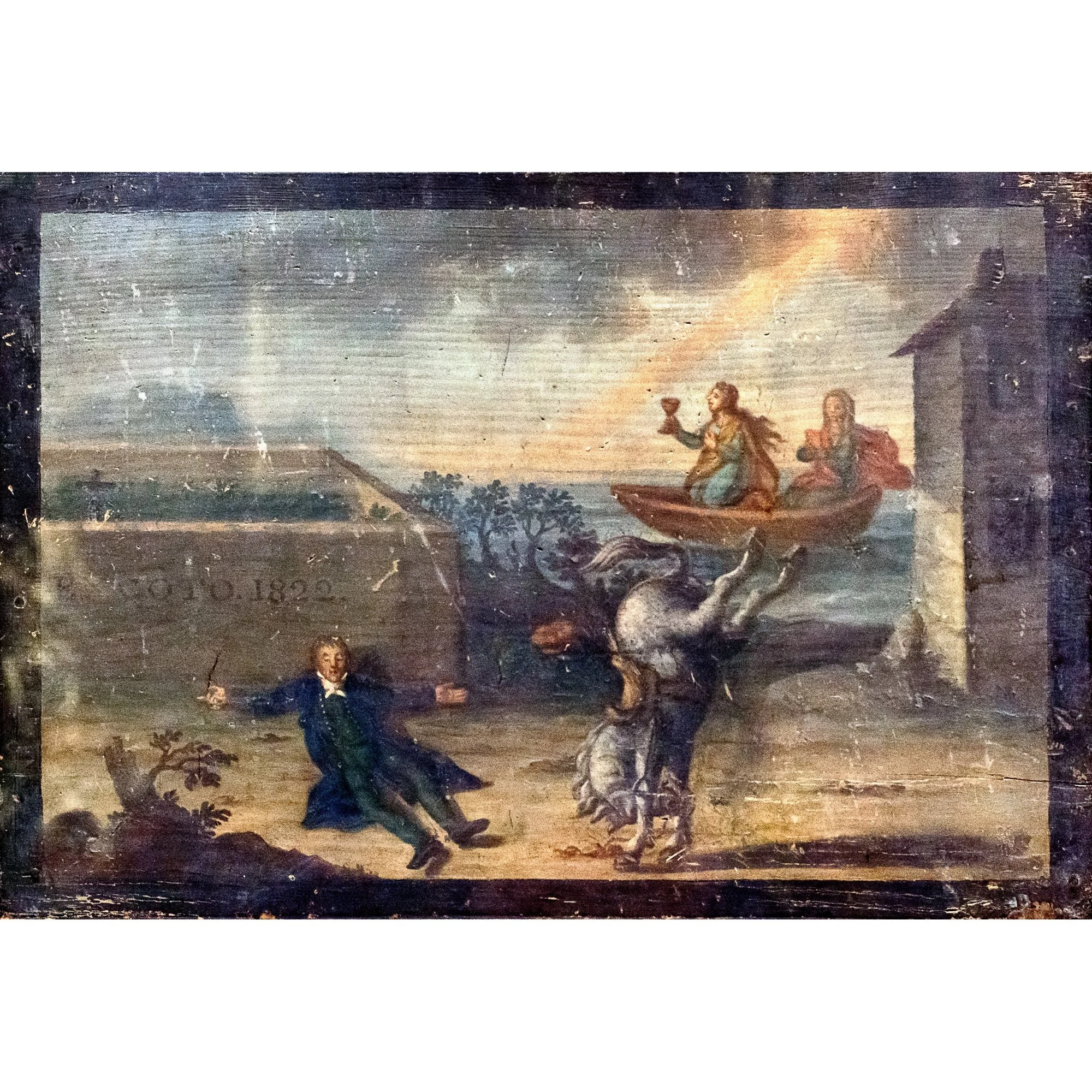
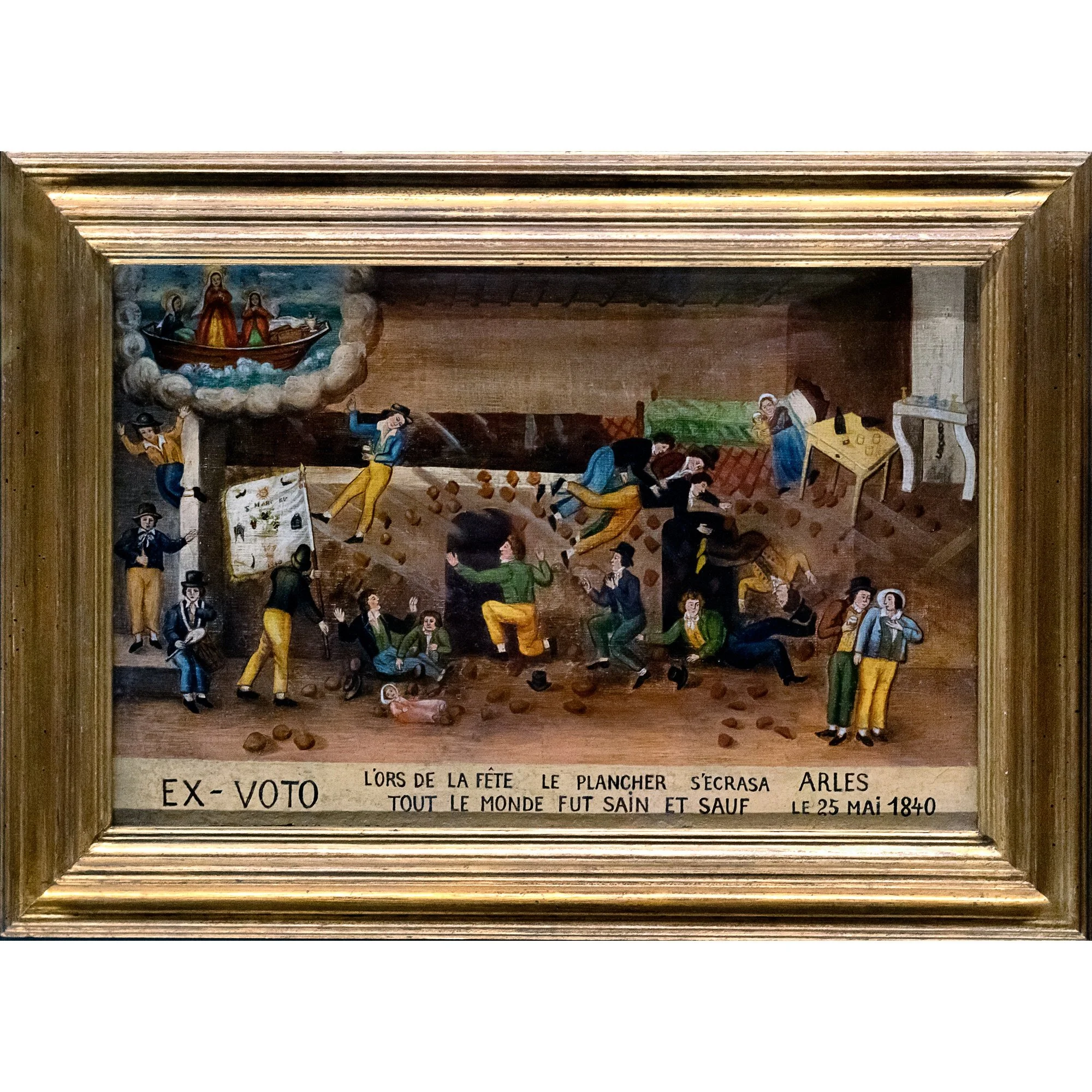
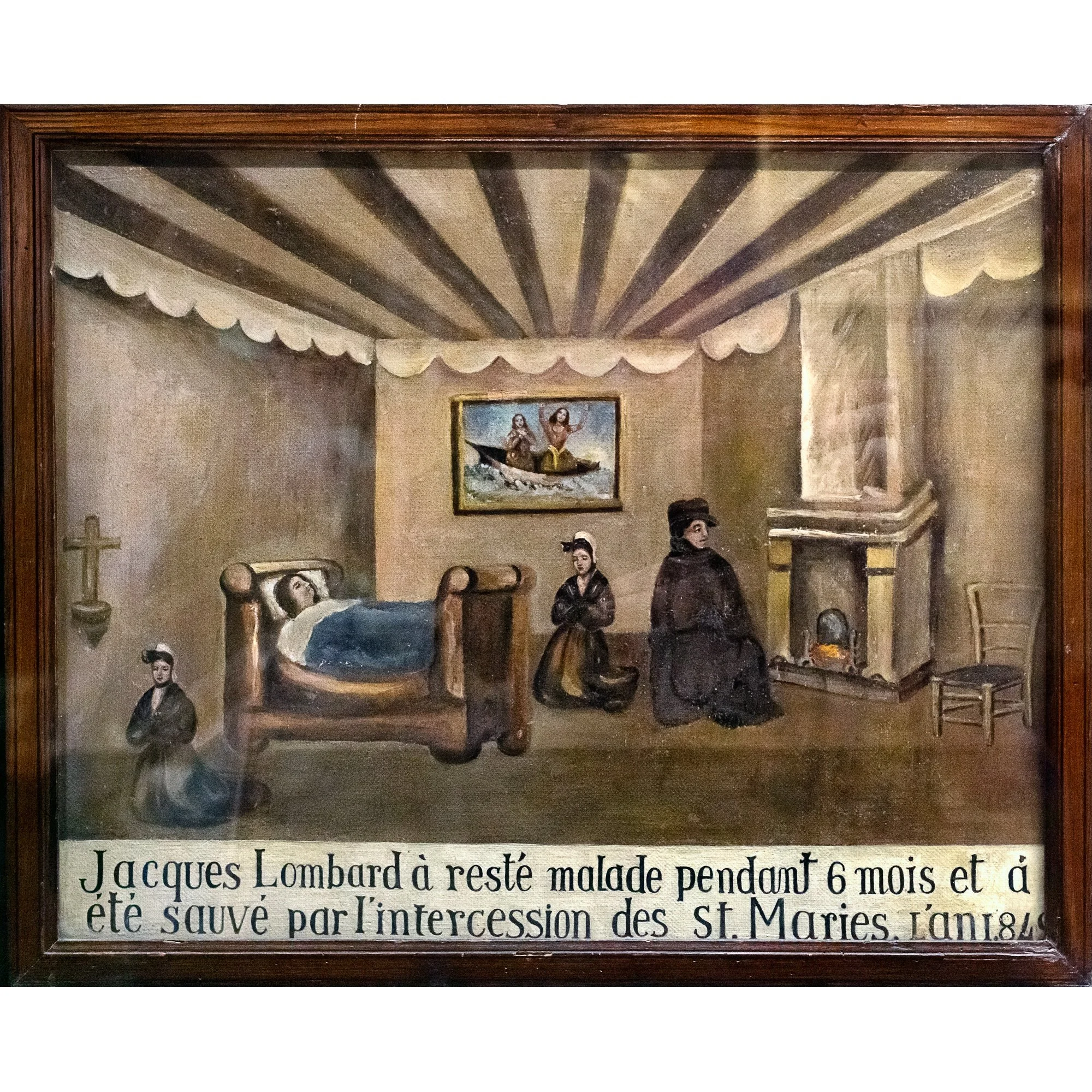
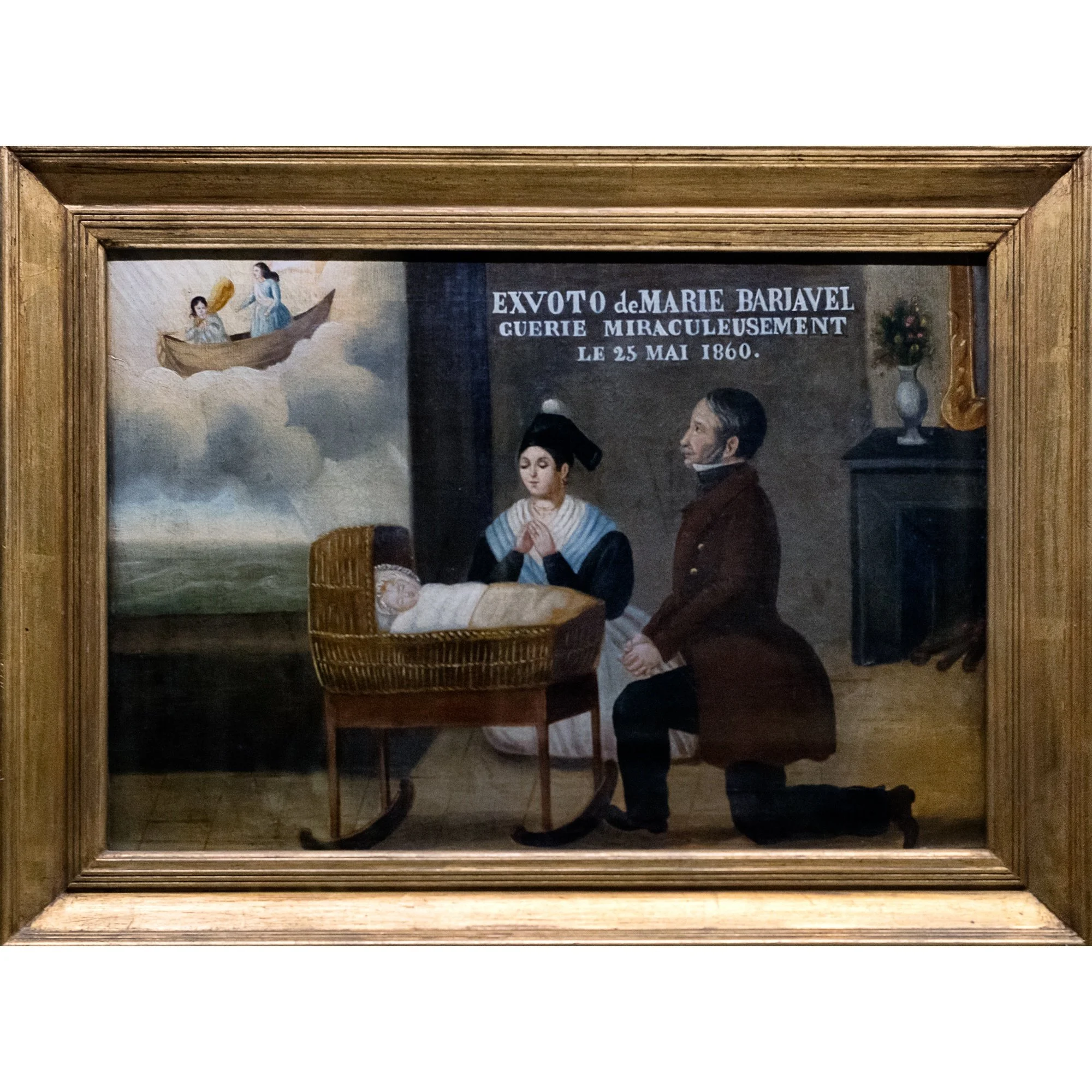
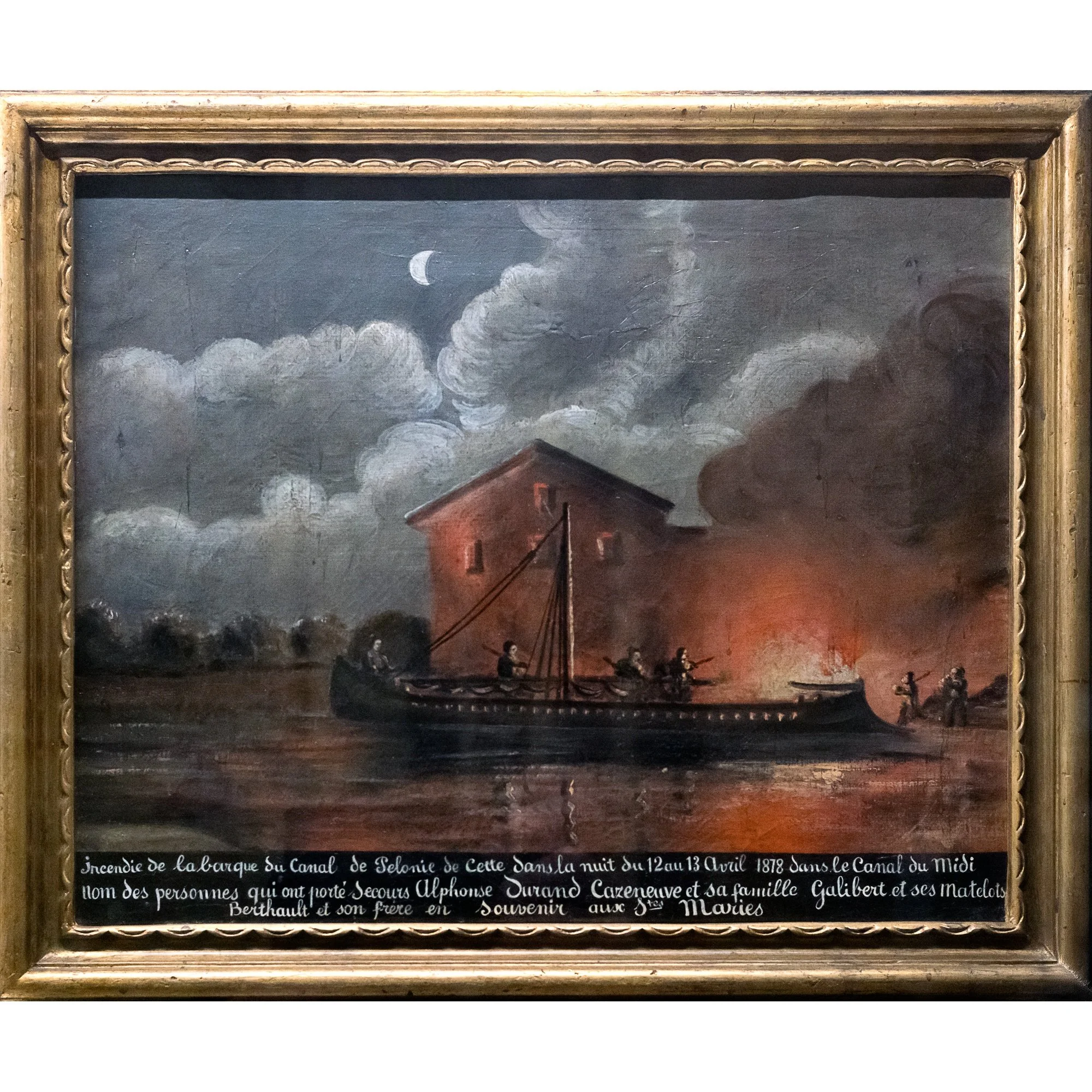
Throughout the church, ex-votos—small offerings left behind—tell personal stories of illness, survival, and gratitude. Together, they form a quiet testimony to the human need for meaning, connection, and hope.
Saintes-Maries-de-la-Mer resists simple explanation. It is a place where legend, history, and personal experience merge, and where the mystery itself becomes part of its power. People arrive out of curiosity or belief, but many leave with the sense that something has shifted—however slightly—within them.