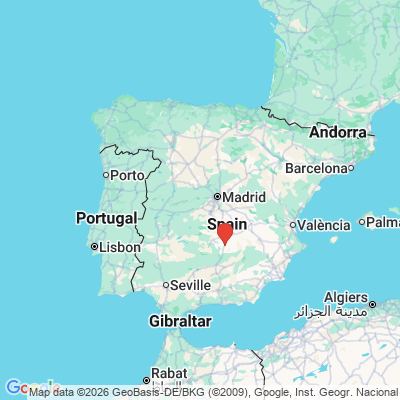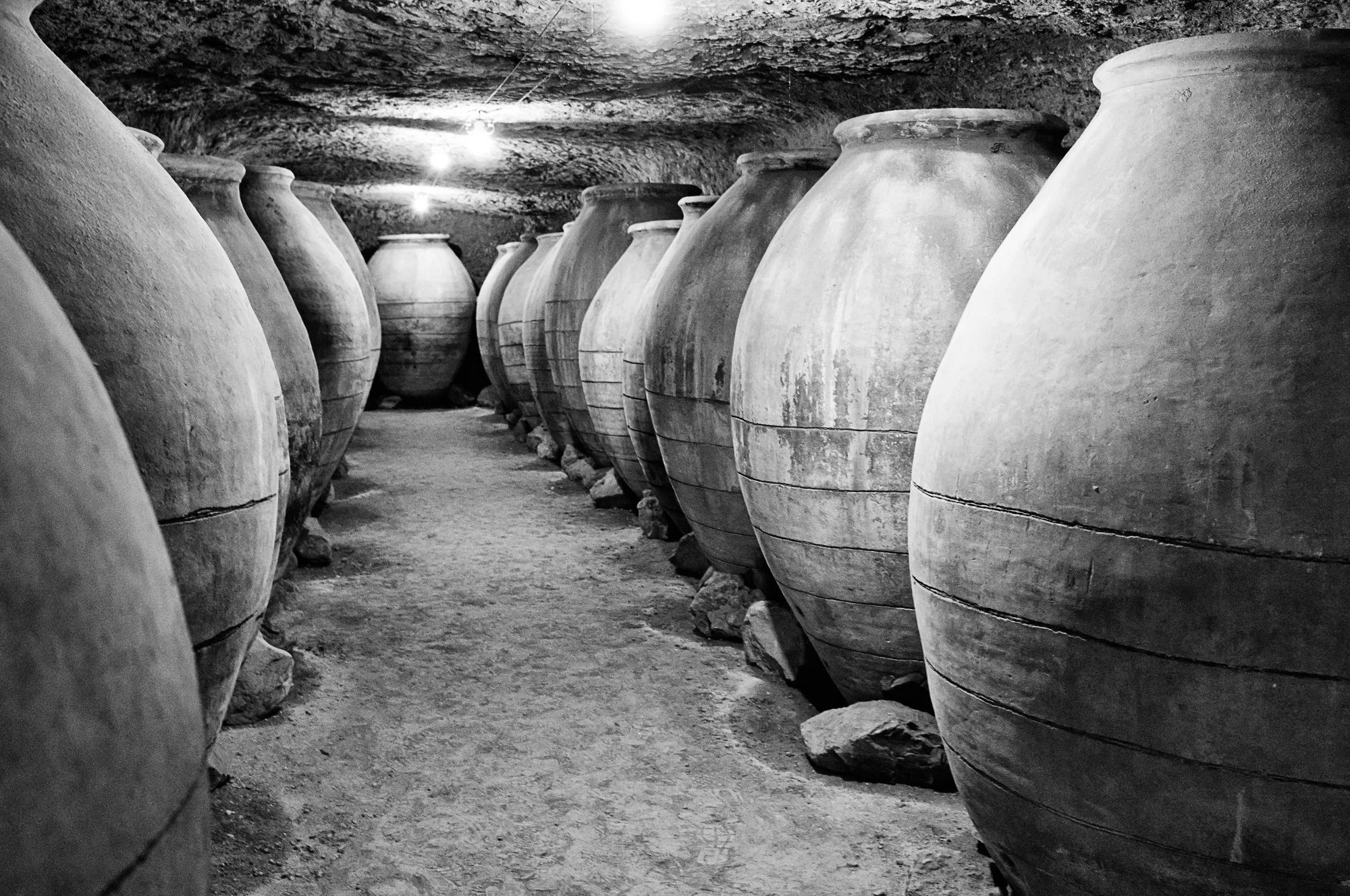
Rows of traditional clay tinajas in an underground cellar in Valdepeñas.
If you descend into one of the old wine cellars of Valdepeñas, you may find yourself walking through a silent forest of giant clay vessels. These monumental jars, called tinajas, once formed the heart of the region’s winemaking tradition. Some are taller than a person and can hold thousands of litres of wine.
Wine has been produced in this part of La Mancha for a very long time. Archaeological evidence suggests that vines were already cultivated here by Iberian peoples and later by the Romans. The written history of the town itself begins in 1243, when several small settlements in the “Valley of Stones” were united under the name Valdepeñas—a place already known for its wine culture.
By the early modern period, the region had become one of the major wine suppliers of central Spain. When Madrid became the royal capital in the 16th century, demand for wine increased dramatically, and the vineyards around Valdepeñas expanded to meet the needs of the growing city.
In those centuries, the wine was not stored in small oak barrels as we often imagine today. Instead, it was kept in enormous earthenware vats like the tinajas seen in the photo. Some traditional vessels held more than a thousand litres and were sometimes partly buried in the ground to keep the temperature stable during fermentation and storage.
The cellars themselves were often carved into the soft limestone beneath the town. In the cool darkness, rows of these giant jars stored the harvest of the surrounding vineyards. Wine could ferment slowly, settle naturally, and remain stable for long periods before being transported to other cities.
In the 19th century Valdepeñas entered a new phase. Railways connected the town to the rest of Spain, and large quantities of wine were shipped across the country and even overseas. The town became one of Spain’s best-known wine centres, a reputation that continues today with its protected designation of origin (D.O. Valdepeñas).
Modern wineries now rely mostly on stainless-steel tanks and smaller oak barrels. Yet many historic bodegas still preserve their old tinajas. Walking between them is like stepping back into an earlier chapter of European wine history—when wine was produced and stored on a monumental scale beneath the streets of Valdepeñas.