
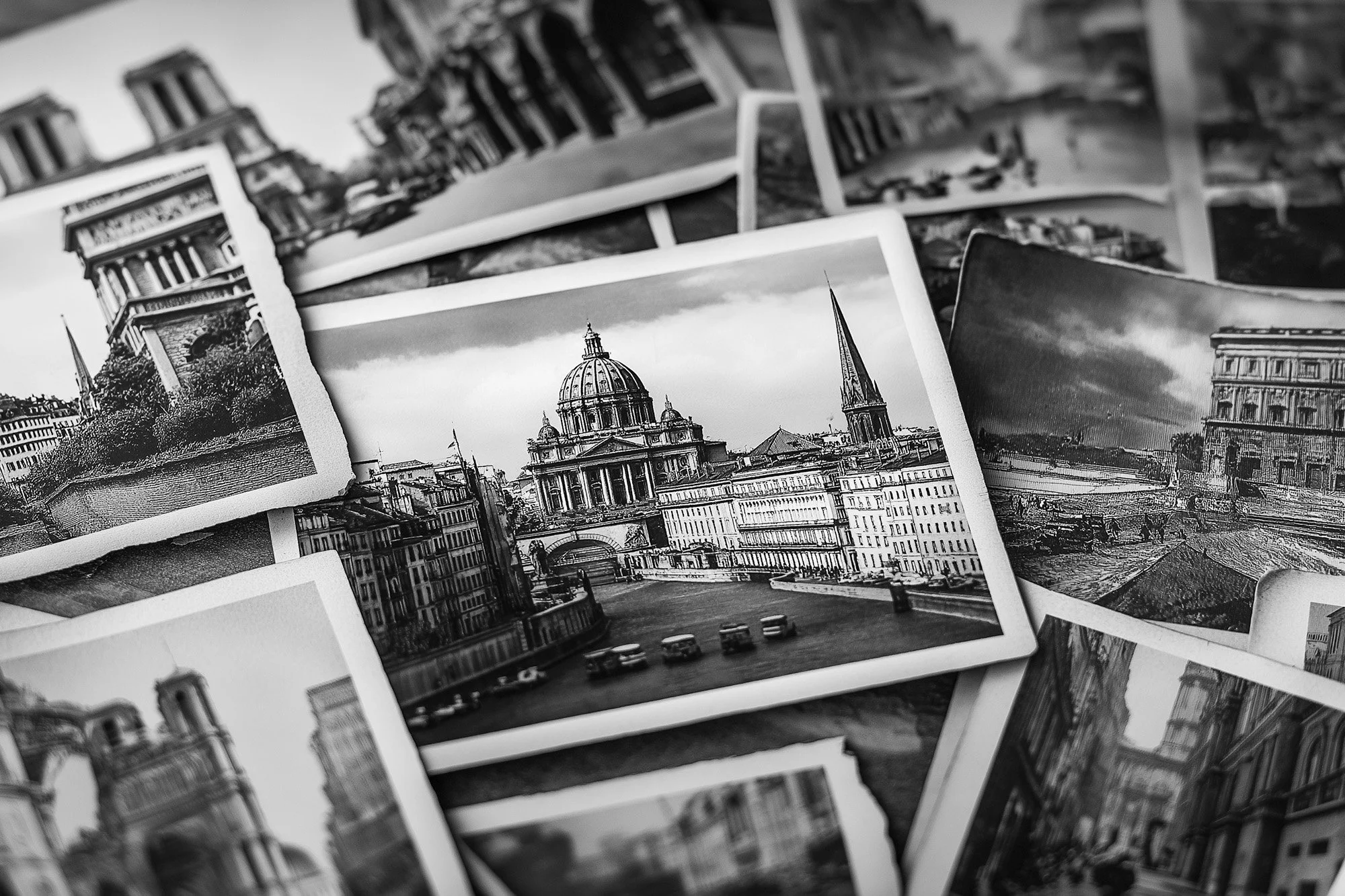
Image created with AI.
Europe is often described through borders, flags, or dates on a timeline. But anyone who actually travels through it knows that culture doesn’t live in abstractions. It lives in places. In streets that curve for reasons long forgotten, in village rituals that outlasted empires, in habits of speaking, trusting, arguing, or staying silent.
This series starts from a simple idea: European cultures are not the product of origin alone, but of experience. Of how places dealt with stability and rupture, with arrivals and departures, with power imposed and power negotiated. Across Europe, people learned to live together under very different conditions — sometimes for centuries without interruption, sometimes with their world repeatedly torn open by war, revolution, or migration.
That history shaped how meaning is shared. In some regions, culture became implicit: understood without explanation, carried in gesture, rhythm, and shared memory. Elsewhere, meaning had to be spelled out, written down, regulated — because too many people, too many changes, or too many traumas made assumption dangerous. Neither approach is more “advanced” or more “European” than the other. Both are deeply rational responses to lived history.
Rather than treating migration, borders, language or ritual as separate themes, this series looks at them as layers of the same landscape. Movement did not just bring people to Europe; it rearranged trust. Power did not just redraw maps; it reshaped everyday behaviour. Language did not only express identity; it protected people when speaking carried risks.
These essays are not about stereotypes or national character. They are about why things feel the way they do when you cross a region, enter a café, listen to a conversation, or misread a silence. They are written for travellers who want more than sights, and for readers who sense that Europe’s diversity is not noise, but memory.
Europe, seen this way, is not a puzzle to be solved. It is a landscape to be read — slowly, place by place.