Preparation, Power, and the Ships at Muelle de las Carabelas
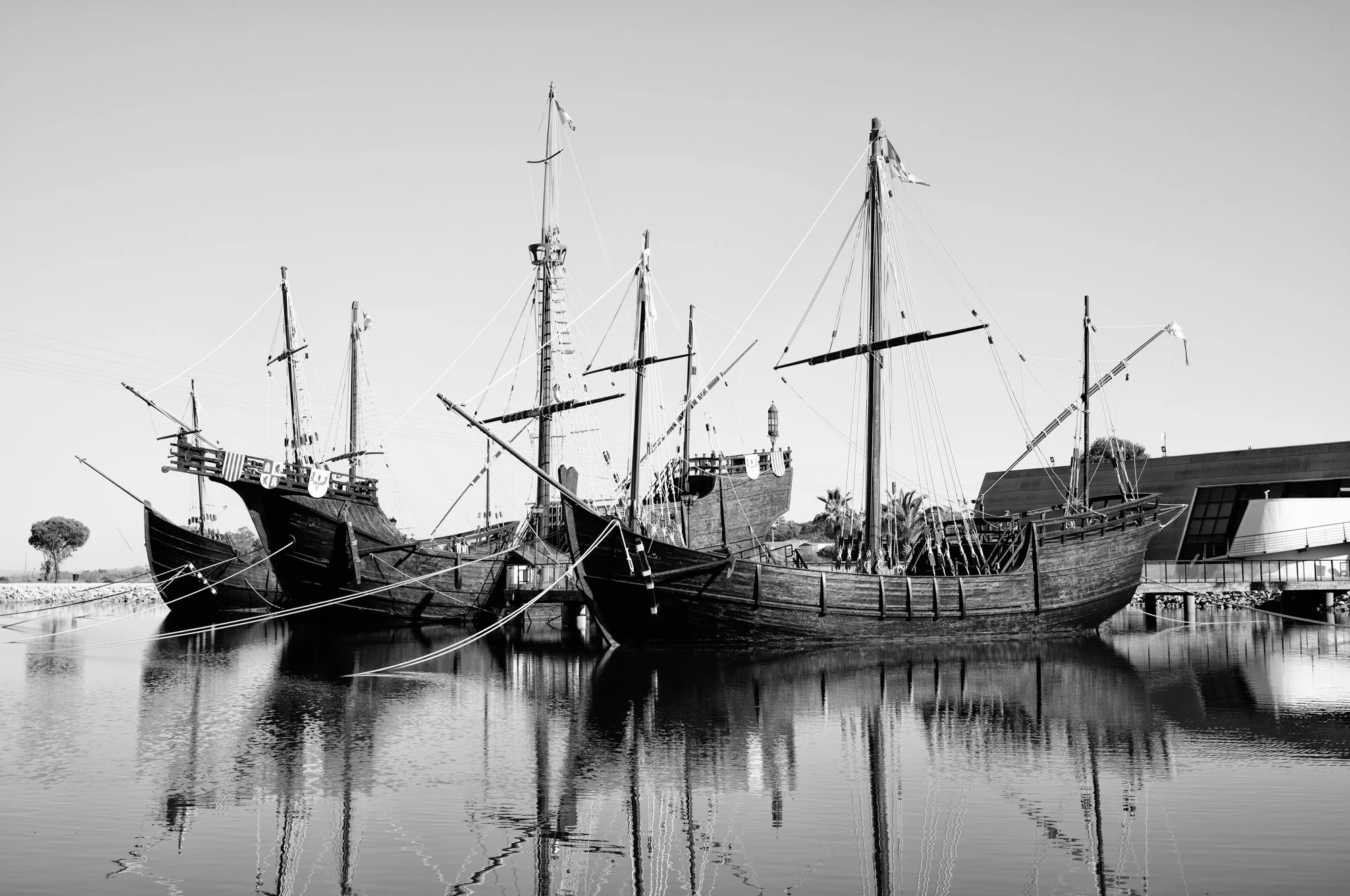
The replica’s of the “La Pinta”, the “Santa Maria”, and the “La Niña” at Muelle de las Carabelas; the three ships with which Columbus departed to the New World.
The story of Christopher Columbus does not begin with the open Atlantic, but with months of waiting, negotiation, and preparation along the rivers and monasteries of southern Spain. The Muelle de las Carabelas marks the physical end point of that long prelude: the place where plans, promises, and royal backing finally took shape as ships and crews.
Royal Backing at Last
Before arriving in Palos, Columbus had spent years trying to convince Europe’s rulers of his westward route to Asia. He was repeatedly rejected, until the decisive intervention of the Reyes Católicos—Isabella I of Castile and Ferdinand II of Aragon. Fresh from the conquest of Granada in early 1492, the Catholic Monarchs were consolidating power, expanding influence, and looking outward. Columbus’s proposal aligned with their ambitions: trade routes beyond Portuguese control, prestige, and the spread of Christianity.
The agreement reached in the Capitulations of Santa Fe granted Columbus titles, status, and a share of future profits. What remained was turning paper promises into seaworthy reality.
Waiting and Preparing in Palos
Columbus arrived in Palos de la Frontera in the spring of 1492 and remained there for several months. This was not idle time. Ships had to be found, repaired, and outfitted; provisions loaded; crews recruited—often reluctantly. Royal orders compelled the town to provide vessels, a sign that local enthusiasm was limited. Experienced sailors such as the Pinzón brothers proved crucial in making the expedition viable, lending both nautical expertise and local credibility.
This period of preparation is essential to understanding the voyage. Columbus was not simply a visionary setting sail; he was a man dependent on networks of power, coercion, negotiation, and practical maritime knowledge. The river port of Palos, modest and workmanlike, became a temporary hub of imperial ambition.
The Ships as Historical Evidence
Walking among the replicas at the Muelle de las Carabelas makes this preparatory phase tangible. The Santa María, larger and heavier, reflects royal expectations of command and control. The Niña and Pinta, agile caravels familiar to Atlantic sailors, reveal the practical compromises behind the expedition. These were not ideal vessels for a grand vision of Asia, but the best available tools for an uncertain gamble.
Their cramped interiors and exposed decks underline another truth: months of planning could not eliminate risk. Once these ships left the river mouth, royal authority, contracts, and titles meant little against wind, currents, and human endurance.

"The First Voyage", chromolithograph by L. Prang & Co., published by The Prang Educational Co., Boston, 1893.
An imaginary scene of Christopher Columbus bidding farewell to the Queen of Spain on his departure for the New World, August 3, 1492.
From Local River to Global Rupture
The Muelle de las Carabelas therefore represents more than a departure point. It is the place where royal policy, local obligation, and individual ambition converged. From here, in August 1492, three small ships carried not only Columbus westward, but Europe into a new Atlantic era—one marked by exchange, conquest, and profound violence.
Seen in this light, the ships are not merely symbols of discovery. They are the final material expression of months spent waiting, persuading, preparing, and assembling power on shore. Standing beside them today, it becomes clear that the so-called “voyage of discovery” was already deeply shaped by politics, monarchy, and negotiation long before the sails ever caught the wind.
See also: Columbus and the Catholic Monarchs: A Meeting That Changed History