
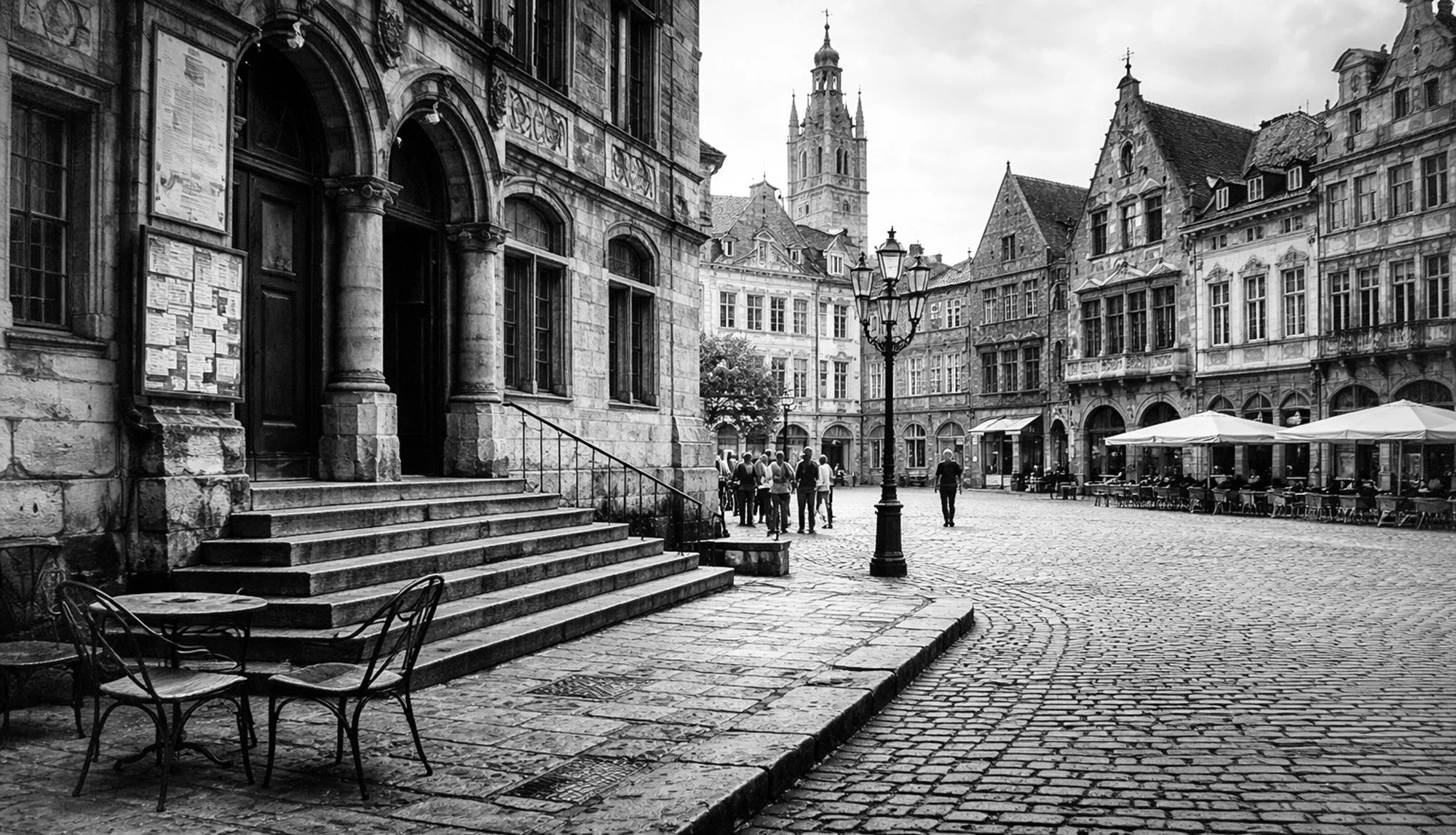
Image created with AI.
Across Europe, people share streets, markets, borders and laws — but they do not share a single idea of where order comes from. In some places, rules feel natural and protective. In others, they feel distant, negotiable, or even suspect. These differences are not political fashions. They are the result of long historical experience.
To understand European cultures, you have to ask a deceptively simple question: When things go wrong, where do people turn? To institutions, to community, to family, or to no one at all.
When Institutions Held — And When They Failed
In parts of Europe, strong institutions provided continuity for generations. Laws were enforced, administrations endured, and authority — while not always loved — was predictable. In such places, trust slowly attached itself to systems. Rules became something you could rely on, even if you disagreed with them.
Elsewhere, institutions were fragile or temporary. Borders shifted, regimes collapsed, rulers changed language and allegiance. In those regions, trusting abstract authority was risky. When the state failed, people turned inward: to neighbours, kinship networks, religious communities, or informal agreements that worked regardless of who was officially in charge.
Neither response is ideological. Both are practical.
Power Imposed, Power Negotiated
Europe’s history is full of imposed power: empires, occupations, centralising states. But it is equally full of negotiated power — charters, city rights, guilds, councils, pacts. Some societies grew used to being ruled; others learned to bargain, resist, or quietly circumvent authority.
Where power was imposed from above, people often became skilled at reading between the lines. Obedience and scepticism learned to coexist. Where power had to be negotiated locally, transparency and procedure mattered more. Decisions needed to be explained, recorded, defended.
These habits did not disappear with modern democracy. They simply adapted.
Trust as a Cultural Strategy
Trust is not evenly distributed in Europe, nor is it placed in the same locations. In some cultures, trust flows toward institutions: if the system works, people will work within it. In others, trust flows horizontally, between people who know each other and share history.
That difference shapes everyday behaviour. How contracts are written. How rules are followed. How conflict is handled. Whether disagreement is taken to the street, the court, the council chamber — or resolved quietly over time.
What looks like stubbornness in one context may be self-protection in another. What seems like blind faith in rules may actually be learned caution.
Revolution, Rupture, and Rebuilding Order
Wars and revolutions did more than change governments. They reset expectations. After violent rupture, societies had to decide how order would be rebuilt — through strict frameworks or through social bonds that survived the chaos.
Some chose clarity: written constitutions, legal precision, strong bureaucracies. Others relied on continuity at a smaller scale: local customs, shared memory, unspoken codes of behaviour. Often, both existed side by side, in tension.
Europe learned many ways to live with that tension.
Why This Matters
Today, misunderstandings across Europe often arise not from values, but from assumptions about trust. One society expects rules to guarantee fairness; another expects people to interpret rules humanely. One confronts power openly; another adapts around it.
Seen without context, these differences can feel frustrating or opaque. Seen historically, they make sense.
Europe’s cultures did not choose their relationship with power in a vacuum. They learned it — slowly, sometimes painfully — from experience.
Understanding that doesn’t solve every disagreement. But it explains why Europeans can share a continent, yet still disagree profoundly on how living together should actually work.