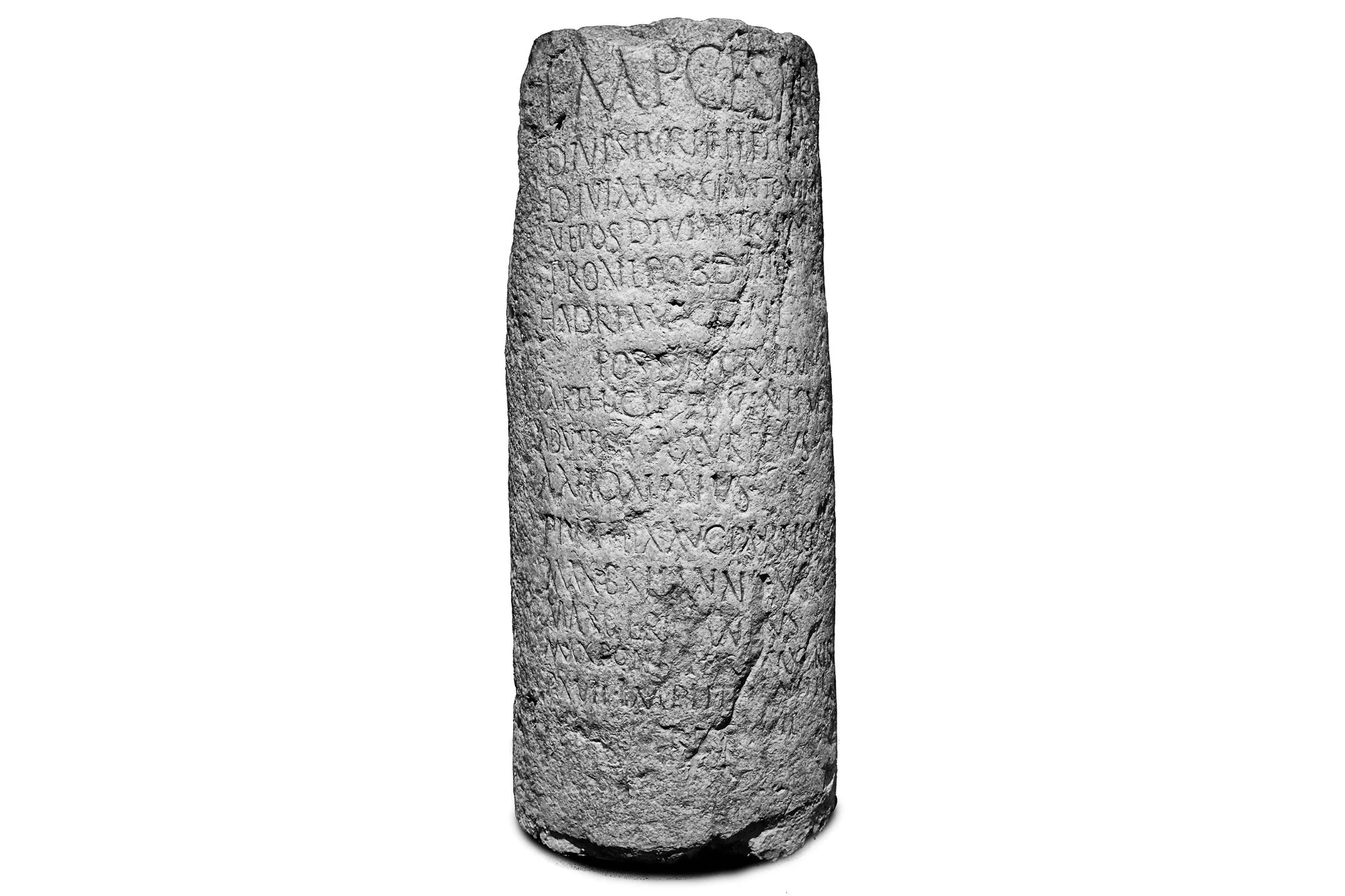
Roman milestone commemorating road repairs under Emperor Caracalla (AD 214), now displayed in the Museo de Málaga. Milestones were placed along Roman highways to mark distances and to record the construction or restoration of roads.
IMP CAES M AVR ANTONINVS PIVS FELIX AVG, DIVI SEVERI FILIVS, DIVI ANTONINI MAGNI NEPOS, DIVI PII PRONEPOS, PONTIFEX MAXIMVS, TRIB POT XVII COS III P P, VIAM RESTITVIT
(Translated: Emperor Caesar Marcus Aurelius Antoninus Pius Felix Augustus, son of the deified Severus, grandson of the deified Marcus Antoninus, great-grandson of the deified Antoninus Pius, chief priest, holding tribunician power for the seventeenth time, consul for the third time, father of the fatherland, restored the road.)
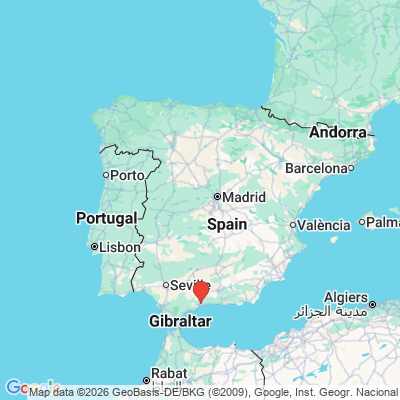
The inscription dates the monument to AD 214, when Emperor Caracalla ordered repairs to several highways in Roman Spain. Such stones were set up along the roadside both to mark distances and to advertise imperial investment in infrastructure. This milestone once stood beside a road connecting Malaca (modern Málaga) with other cities of the Roman province of Baetica, part of the extensive road network that linked the Iberian Peninsula to the wider Roman world.
When we think about Roman roads, we often admire how well they were built. Some of them still exist today after nearly two thousand years. But building the roads was only part of the story. The Roman Empire also had to maintain and repair them.
One of the most important clues about this maintenance comes from milestones—stone pillars placed along Roman roads to mark distances between cities. These stones often carried inscriptions with the name of the emperor. When a road was repaired, new milestones were sometimes erected to announce the work.
By studying these inscriptions, historians can trace the maintenance history of Roman roads in Spain (Hispania).
Roman Spain had an extensive network of highways linking cities such as Malaca (Málaga), Gades (Cádiz), Hispalis (Seville), Corduba (Córdoba), and Tarraco (Tarragona). One of the most important routes was the Via Augusta, which ran along the Mediterranean coast.
The inscriptions show that roads were not repaired regularly every year. Instead, emperors occasionally launched large repair campaigns. Major work took place under rulers such as Vespasian, Trajan, Hadrian, and Caracalla. One particularly large program was carried out in AD 214, when Emperor Caracalla ordered repairs on several Spanish highways.
These repairs were not just practical. Roads were essential for moving soldiers, goods, and information across the empire. Maintaining them was therefore a matter of imperial power.
Interestingly, the milestones also reveal something about the health of the Roman state. During periods of strong government, repairs were frequent. In times of crisis, they became rarer. By the late fourth century, inscriptions recording road repairs almost disappear—an indication that the empire was losing the ability to maintain its infrastructure.